Dead 10 Includes Drexel, who died of illness in June; during the retreat in July, three German climbers, Merkl, Welzenbach and Wieland, and six Sherpa porters died. Sources differ on the dates of death of some individuals.
Material
35 facts · 5 sources3 accounts differ and are shown side by side
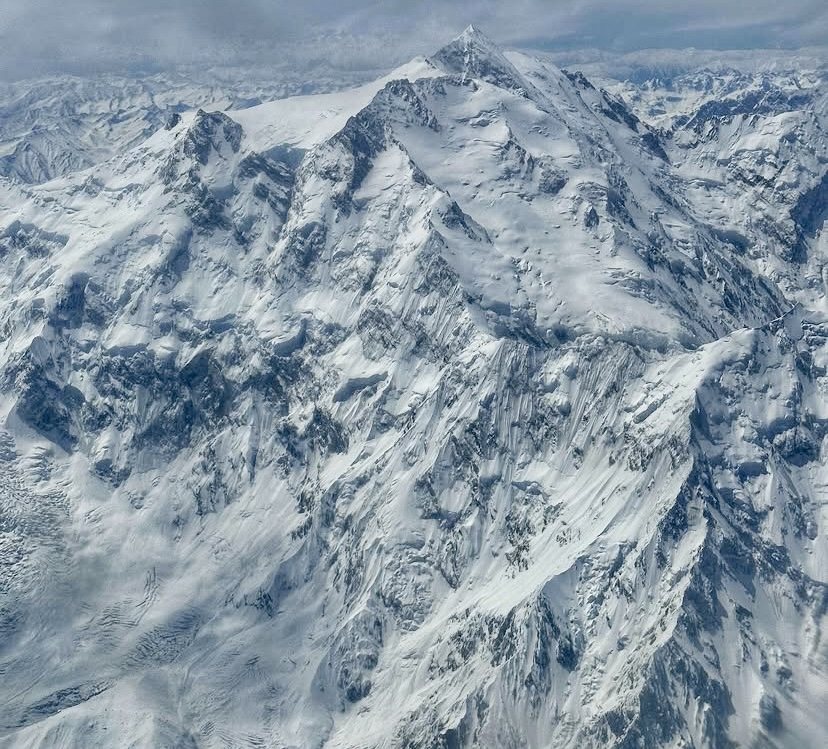
The Rakhiot Face on the north side of Nanga Parbat, viewed from Fairy Meadows, with locations including the Silver Saddle and Rakhiot Peak markedPhoto source: Explorersweb
The number at the end of a paragraph is how many facts it rests on; open it to see each fact and how well it is sourced:
Multiple sourcesSingle source. Conflicting accounts and speculation are kept out of the narrative.
ImgScene photos all from news coverage; copyright belongs to the original authors
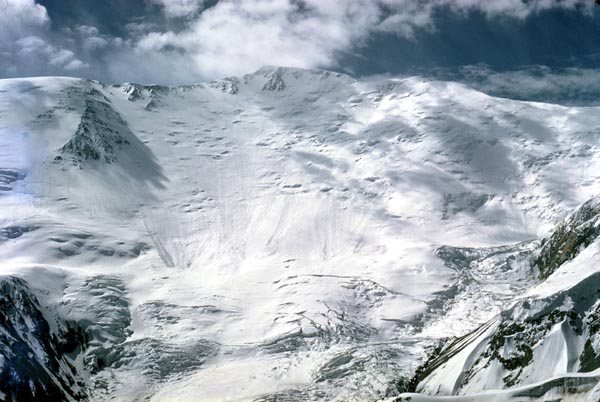
Panoramic view of the Rakhiot Face of Nanga ParbatPhoto source: ExplorerswebSketch of the route on the north side of Nanga Parbat, showing the approximate locations of Rakhiot Peak, the Silver Saddle and the campsPhoto source: ExplorerswebDistant view of the Rakhiot Face of Nanga ParbatPhoto source: Explorersweb
Scroll down and the map flies to where each part happened. The line is Schematic, Connects the reported waypoints in order, showing only the approximate direction, not the actual track.
01
Full route
The locations mentioned in reports are connected in sequence to show the approximate route (illustrative).
On 2 May, the entire team assembled in Srinagar. F05
On the evening of 8 June, Drexel died at Camp II; a doctor arrived but was unable to save him. F06
A total of 10 people died during the expedition, including 3 German climbers, Merkl, Welzenbach and Wieland, and 6 porters (Drexel also died of illness in June). F09
Rakhiot Peak proved more difficult to cross than expected. The team cut steps into a steep ice wall and fixed several hundred feet of rope to it. F10
On 4 July, 6 climbers and 18 porters established Camp VI beyond Rakhiot Peak. F11
On 6 July, Aschenbrenner, Schneider, Welzenbach, Merkl and Wieland reached the Silver Saddle with 11 porters. F12
The wind increased greatly from the evening of 6 July and became a violent hurricane during the night. F15
On 7 July, the storm was so fierce that it was almost impossible to breathe outside the tents. The planned summit attempt could not go ahead, and the team stayed in the tents. F16
Schneider and Aschenbrenner reached Camp IV that day, completing the descent from Camp VIII to Camp IV in one day in bad weather. F21
On 8 July, after a day and two nights of storm, the team decided to abandon the camp and retreat to Camp IV. F19
Wieland sat down in the snow near Camp VII and never woke up. F24
Four of the seven porters (Pasang, Kitar, Kikuli, Da Thondu) reached Camp IV that day, all with severe frostbite. F26
The porter Angtsering crossed Rakhiot Peak alone and descended to Camp IV on 14 July, with severe frostbite. F29
Under each fact is a verbatim quote from the original. "Single source" means only one outlet mentioned it; "Accounts differ" means sources contradict each other and this site adopts neither side; "Speculation" is an inference by a reporter or a person involved, not a fact.
Accounts differ on the cause of Drexel's death: the American Alpine Club says it was pneumonia, while Explorersweb says it may have been high-altitude pulmonary edema.
A total of 10 people died during the expedition, including 3 German climbers, Merkl, Welzenbach and Wieland, and 6 porters (Drexel also died of illness in June).
Sources differ in how they count the total: whether or not they include Drexel, who died of illness in June.
Quotes from the original 2
“The loss of ten men on a single expedition is a stunning blow”
According to Himalayan Journal, Rakhiot Peak proved more difficult to cross than expected. The team cut steps into a steep ice wall and fixed several hundred feet of rope to it.
Several quotations come from different reports by the same media outlet and are counted as one source
Quotes from the original 2
“This peak proved a great deal more difficult to cross than was anticipated”
On 6 July, the highest camp (Camp VIII) was established on the plateau near the Silver Saddle; the porters had found the climb to the Silver Saddle extremely difficult and could go no farther.
Quotes from the original 2
“Camp VIII, the highest camp, established at 25,000 ft. on July 6th”
Sources give different elevations for the highest point Schneider and Aschenbrenner reached while exploring ahead on 6 July: approximately 7700 metres, approximately 25600 feet (approximately 7800 metres), and 7895 metres.
Elevation figures differ because of different measurement and conversion methods
Quotes from the original 3
“a point about 25,600 ft., just below the first summit”
On 7 July, the storm was so fierce that it was almost impossible to breathe outside the tents. The planned summit attempt could not go ahead, and the team stayed in the tents.
Quotes from the original 2
“The storm increased in ferocity and became so strong that it was impossible to breathe in the open.”
According to AAC, According to the American Alpine Club, the tents and all the food and fuel were left at Camp VIII when the party departed, with the original intention of descending at least as far as Camp V.
Quotes from the original 1
“They had left the tents and all food and fuel at Camp VIII planning on reaching at least Camp V.”
According to Himalayan Journal, Three porters (Nima Dorje, Pintzo Norbu, Nima Tashi) died of extreme exhaustion in the Camp V area and on the ice wall of Rakhiot Peak; sources differ slightly on the exact locations.
Bechtold said two of them died on the fixed ropes on Rakhiot Peak and one died a few metres in front of the Camp V tent.; Several quotations come from different reports by the same media outlet and are counted as one source
Quotes from the original 2
“perished near Camp 5, dying on the track from sheer exhaustion”
The team members who had remained at Camp IV attempted to climb up to rescue them, but the snow was shoulder-deep and they could not reach the higher camps.
Welzenbach died at Camp VII, but accounts differ on the date: the American Alpine Club and Sangster's diary say it was on the night of 12–13 July, while Bechtold says it was on the night of 13 July.
Recorded dates of death differ by one day
Quotes from the original 2
“Welzenbach died here during the night of the 12th-13th July”
According to AAC, A commentator for the American Alpine Club believed that the team members' reluctance to eat substantial food, relying only on soup, may have been one reason people collapsed one after another during the storm.
Quotes from the original 1
“the reluctance to eat substantial food and the reliance upon soup”
According to AAC, The commentator noted that Camps VI and VII had no food, fuel or bedding, and that critics might cite this to argue against the rapid assault approach, but he believed the underlying cause was the poor physical condition of some team members.
Quotes from the original 1
“Camps VI and VII having no food, fuel, or bedding”
In the early 1950s, Merkl's half-brother, the physician Herrligkoffer, sought support for a new expedition, and he led and organised the 1953 expedition.
Quotes from the original 2
“warb der Arzt Karl Herrligkoffer, der Halbbruder Willy Merkls, für eine neue Expedition zum Nanga Parbat”
 GuituluGlobal Outdoor Accident Archive