The number at the end of a paragraph is how many facts it rests on; open it to see each fact and how well it is sourced:
Multiple sourcesSingle source. Conflicting accounts and speculation are kept out of the narrative.
ImgScene photos all from news coverage; copyright belongs to the original authors
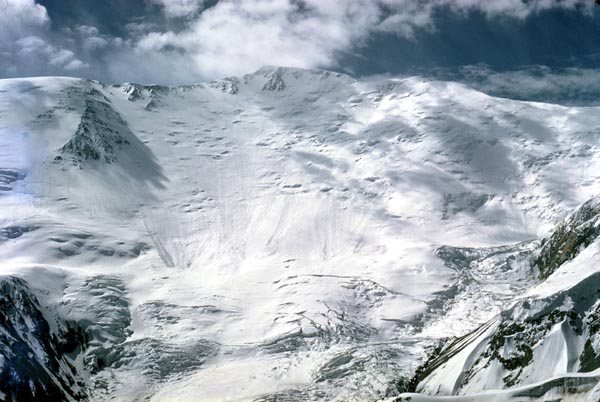
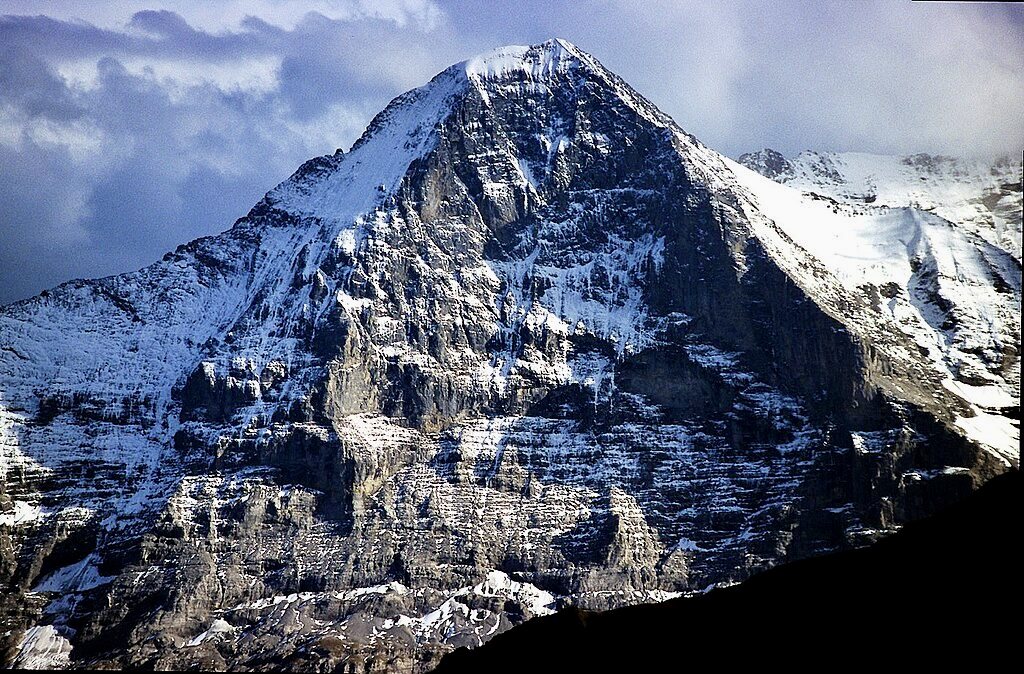
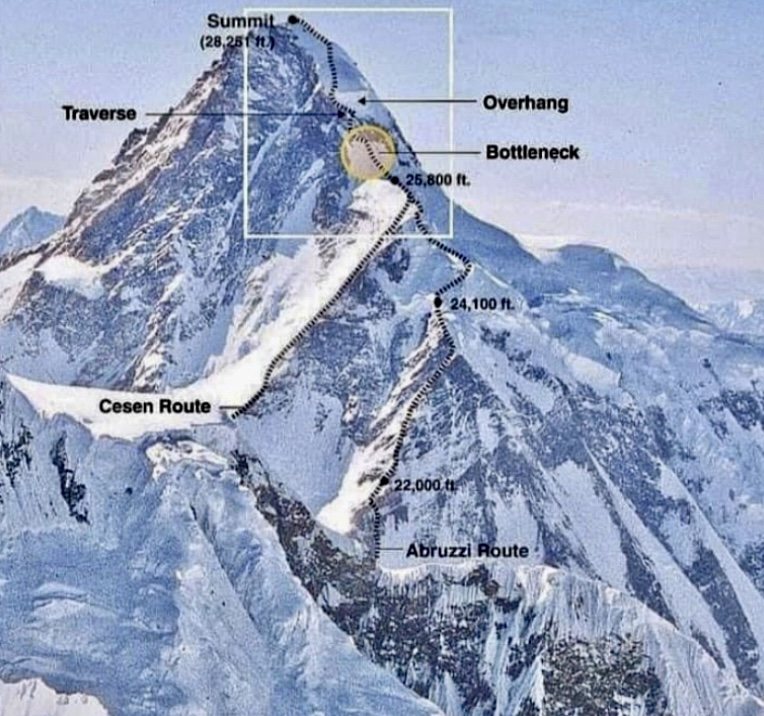
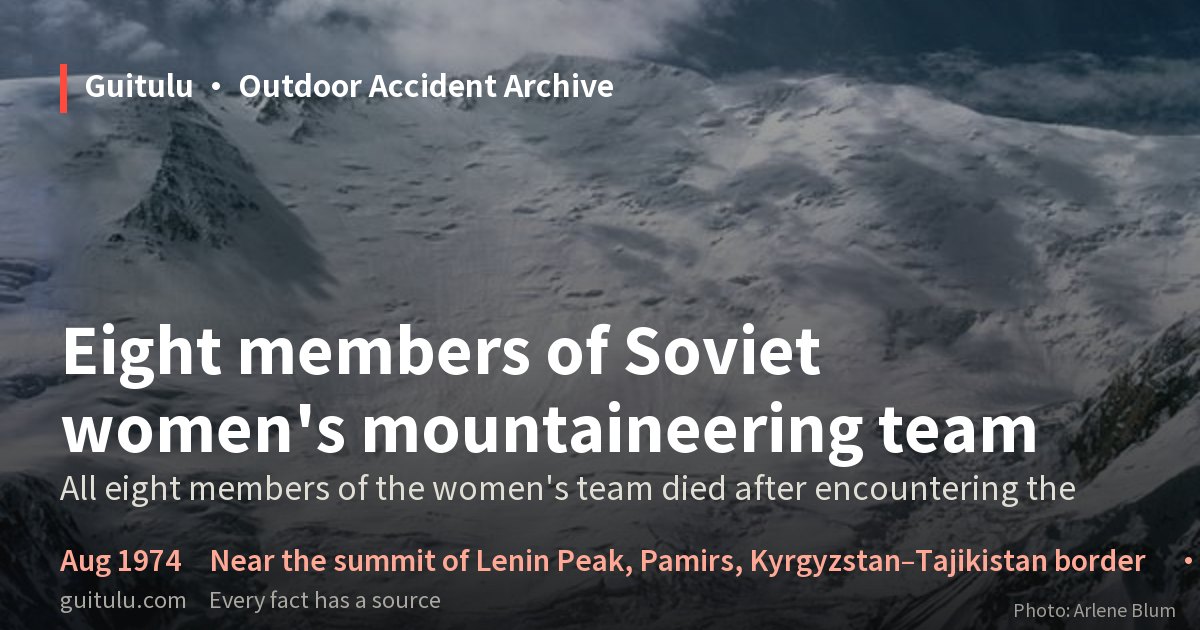
Snow slopes and ridges high on Lenin PeakPhoto source: Arlene BlumRidge and windblown snow near the summit of Lenin PeakPhoto source: Arlene BlumRidge and windblown snow near the summit of Lenin PeakPhoto source: Arlene BlumTents at a high-altitude campPhoto source: Arlene BlumLenin PeakPhoto source: ExplorerswebLenin PeakPhoto source: ExplorerswebDiagram of several major mountaineering routes on Lenin PeakPhoto source: ExplorerswebPanoramic view of snow-covered Lenin PeakPhoto source: CNNRidge and windblown snow near the summit of Lenin PeakPhoto source: CNN
Reported locations along the route (schematic)Schematic
Scroll down and the map flies to where each part happened. The line is Schematic, Lines connect the locations mentioned in reports in sequence and indicate only the approximate direction, not the actual track. Sources for the location coordinates are in places.json.
01
Full route
The locations mentioned in reports are connected in sequence to show the approximate route (schematic).
According to a member of the American team, the women's team began their Lenin Peak traverse on 30 July. F07
On 2 August, Shatayeva reported by radio that progress was going well and that the route was even “disappointingly easy”. F17
On 4 August, a Scottish mountaineer met the women's team near the summit. They were moving in single file, in high spirits and in good condition. F18
On 4 August, camp mountaineering instructor Abalakov advised all mountaineers to descend to base, but at least Steck's party did not receive the message. F19
According to a book by Craig, deputy leader of the American team, strong winds destroyed the women's team's two cotton tents during the night of 5–6 August. F21
The women's team reached the summit on the evening of 5 August and reported by radio at about 17:00 that visibility was deteriorating and the descent route was difficult to make out, and that they had pitched tents to wait for the weather to improve. F20
On 6 August, Shatayeva reported that a team member had fallen ill, and base told them to descend. Sources differ on the exact time and descent route. F23
Early on 6 August, about 13 centimetres of snow fell at base, with about 30 centimetres of snow at higher elevations and winds of about 110 to 130 kilometres per hour. F22
According to Craig, on 7 August, when base pressed them on whether they were descending, Shatayeva replied that they could not and would not leave their companions behind. F26
Hurricane-force winds destroyed the tents and blew away backpacks, stoves and gloves. Five people huddled in a tent without poles, with only three sleeping bags left. F25
At about 20:30 on 7 August, the women's team made its last radio call with any spoken content, saying they could no longer move and believed they were unlikely to survive; afterward, someone pressed the transmit button twice more, but there was no further response. F28
During the descent, one team member, identified in reports as Lyubimtseva, was the first to die, sometime between the night of 6 August and the early hours of 7 August. F24
The weather cleared on 8 August, and three members of the American team and the Japanese team found the bodies in succession on the eastern slope below the summit; Shatayeva was found first. F29
Under each fact is a verbatim quote from the original. "Single source" means only one outlet mentioned it; "Accounts differ" means sources contradict each other and this site adopts neither side; "Speculation" is an inference by a reporter or a person involved, not a fact.
According to CNN, The leader, Shatayeva, had previously organised the first all-women's ascent of a 7000-metre-class peak, Korzhenevskaya Peak (7105 metres) in Tajikistan, in 1972.
Quotes from the original 1
“Shatayeva had already organized the first all-women’s ascent of a 7,000-meter peak — Peak Korzhenevskaya (7,105 meters) -- in Tajikistan in 1972”
All eight team members were experienced Soviet mountaineers. Four, including the leader, had previously climbed Lenin Peak. The team members included Bardasheva, Mukhamedova, Vasilyeva, Fateyeva, Perekhodyuk, Lyubimtseva and Manzharova (original spellings: Бардашева, Мухамедова, Васильева, Фатеева, Переходюк, Любимцева, Манжарова).
Quotes from the original 2
“All were among the most experienced climbers in their country; four of them, including Team Leader Elvira Shatayeva, had scaled Lenin Peak before.”
In the summer of 1974, an international mountaineering camp was held in the Lenin Peak area, with nearly 200 mountaineers taking part; the eight-member Soviet women's team participated in the camp.
Quotes from the original 2
“In 1974, Lenin Peak hosted an international mountaineering camp, attracting nearly 200 climbers.”
Their plan was to reach the summit via Lipkin Ridge, then descend on the Razdelnaya side, traversing the entire mountain. They also planned to camp at the summit.
Quotes from the original 2
“planned a traverse, ascending via the Lipkin Ridge on the north face, and descending the Razdelnaya Route on Lenin Peak’s northern side.”
Seven were found that day. The eighth was found later near the platform where the others had died and was recovered by the Soviet search and rescue team and support personnel led by Shatayeva's husband; sources differ slightly on who found the eighth person.
Quotes from the original 2
“The eighth woman was later found by a Soviet search team”
Christopher Wren, a New York Times reporter accompanying the American team, said that the weather had taken their lives; Explorersweb described the storm as the fiercest in 25 years.
Quotes from the original 2
“"It was the weather that killed them," said Christopher Wren”
According to CNN, A CNN article argued that the goal of traversing the mountain required them to camp near the summit, directly exposing them to the fiercest part of the storm.
Quotes from the original 1
“The objective, as a traverse, put the women as camping on the summit, exposed to the worst of the storm.”
According to AAJ, American team member Jock Glidden wrote in the annual journal that the ultimate cause of the accident was a tactical error: they did not take the severity of summit storms seriously enough. This was his personal analysis.
Quotes from the original 2
“the ultimate cause of the accident must have been a tactical error.”
According to CNN, Wren believed that they had made a misjudgment by choosing to wait for visibility to improve rather than retreating immediately when the storm arrived.
Personal opinion from a single source
Quotes from the original 1
“they made a miscalculation to wait until the visibility improved.”
Speculation: Wren suspected that they did not want foreigners to think that Soviets were people who gave up halfway; another person present, Higgins, said they were a “test group” (test group). These are only the speculations of observers.
Quotes from the original 2
“I suspect that they did not want foreigners to think Russians were quitters.”
Regarding the total number of deaths in the area during the summer of 1974, CNN lists 13 people (3 Estonians, Ullin, Isenschmid and the 8 Soviet women's team members), while Arlene Blum wrote “15 people died”.
The counts use different criteria and are not used as the casualty figure for the women's team accident.
Quotes from the original 2
“Thirteen were lost: the three Estonians, Jon Gary Ullin, Eva Isenschmid and the eight Russian women.”
According to CNN, On 4 August, camp mountaineering instructor Abalakov advised all mountaineers to descend to base, but at least Steck's party did not receive the message.
The original text does not say whether the women's team received the advice.
The women's team reached the summit on the evening of 5 August and reported by radio at about 17:00 that visibility was deteriorating and the descent route was difficult to make out, and that they had pitched tents to wait for the weather to improve.
Other accounts give the summit date as 6 August or 7 August; see the relevant conflicting accounts.
Quotes from the original 3
“At 5:00 p.m. they radioed base camp and said that in the deteriorating visibility they were having difficulty making out the descent”
According to CNN, According to a book by Craig, deputy leader of the American team, strong winds destroyed the women's team's two cotton tents during the night of 5–6 August.
Quotes from the original 1
“according to Craig the wind wrecked two tents the first night.”
According to CNN, Early on 6 August, about 13 centimetres of snow fell at base, with about 30 centimetres of snow at higher elevations and winds of about 110 to 130 kilometres per hour.
mph converted to kilometres per hour.
Quotes from the original 1
“The morning of August 6 brought five inches of snow at base and, higher, a foot of snow and winds of 70 to 80 mph.”
During the descent, one team member, identified in reports as Lyubimtseva, was the first to die, sometime between the night of 6 August and the early hours of 7 August.
Sources differ on the order and timing of the deaths.
Hurricane-force winds destroyed the tents and blew away backpacks, stoves and gloves. Five people huddled in a tent without poles, with only three sleeping bags left.
Sources differ slightly on the exact time.
Quotes from the original 2
“hurricane-force winds hit, exploding the tents and blowing away rucksacks, stoves and mittens. Five women huddled in a tent without poles, with three sleeping bags.”
According to Craig, on 7 August, when base pressed them on whether they were descending, Shatayeva replied that they could not and would not leave their companions behind.
The timing is according to Craig; sources differ on the time.
Quotes from the original 2
“We cannot, we would not leave our comrades after all they have done for us.”
At about 20:30 on 7 August, the women's team made its last radio call with any spoken content, saying they could no longer move and believed they were unlikely to survive; afterward, someone pressed the transmit button twice more, but there was no further response.
The call is recorded as having taken place at either 20:30 or 21:12.
The weather cleared on 8 August, and three members of the American team and the Japanese team found the bodies in succession on the eastern slope below the summit; Shatayeva was found first.
Quotes from the original 3
“On August 8 the weather was clear and we went for the summit.”
Lenin Peak is about 7134 metres above sea level, in the Pamirs on the border between Kyrgyzstan and Tajikistan. It is regarded as a relatively easy 7000-metre-class peak to climb and is climbed by many people.
Quotes from the original 2
“Lenin Peak (7,134m) is located on the border between Kyrgyzstan and Tajikistan in the Pamir Mountains.”
Sources differ on the summit date: Time, CNN and a Russian-language magazine say 5 August; the American Alpine Journal, relaying an account from a Siberian team, favours 6 August; and Explorersweb gives 7 August.
The summit date is given as the 5th, 6th or 7th, with most sources pointing to 5 August.
According to Tech Insider, The accident became a pretext for the Soviet Union to restrict women's mountaineering, after which women were no longer allowed to form their own climbing teams.
This claim comes from a single source; no official documents have been found to corroborate it.
Quotes from the original 1
“трагедия стала предлогом запретить в СССР женский альпинизм.”
 GuituluGlobal Outdoor Accident Archive