GuituluGlobal Outdoor Accident Archive 中文
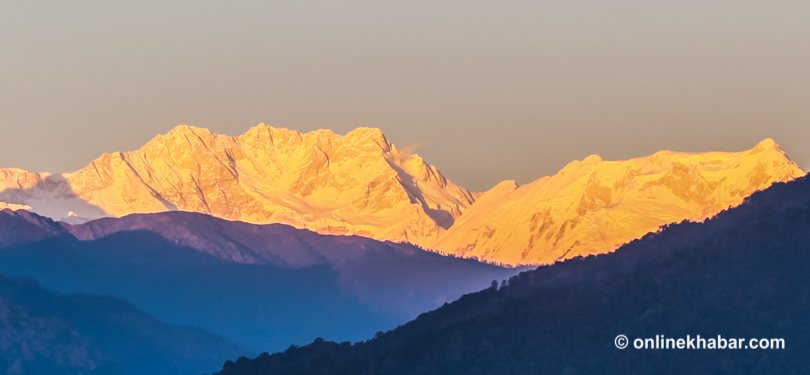
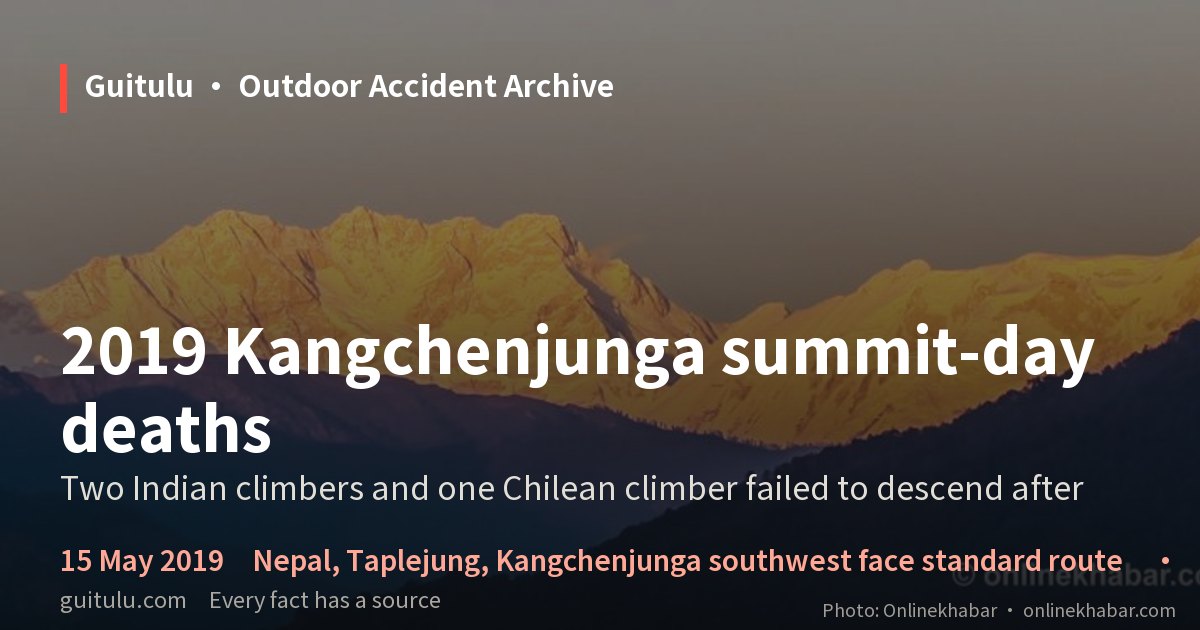
The Kangchenjunga massif in morning light

Archive / Mountaineering

2019 Kangchenjunga summit-day deaths

Two Indian climbers and one Chilean climber failed to descend after being stranded by a lack of oxygen on summit day

The bodies of the two Indian climbers were brought back to Kathmandu; the Chilean climber's body remains on the mountain.

Photo: Onlinekhabar · onlinekhabar.com

Date
Spring
Place
Nepal, Taplejung, Kangchenjunga southwest face standard routeNepal › Koshi Province · Himalaya88.138°E 27.705°N
Activity
MountaineeringInvolves: Hypothermia · Altitude illnessFive-person climbing team from West Bengal (Peak Promotion clients); Chilean climber Rodrigo Vivanco climbed alone
Casualties
Dead 3 Injured 2Indian climbers Biplab Baidya and Kuntal Karar died above Camp 4; Chilean climber Rodrigo Vivanco went missing after reaching the summit, and his body was not found. His family has confirmed that he will not survive. Two other team members were rescued by helicopter after suffering frostbite.
Material
45 facts · 14 sources5 accounts differ and are shown side by side

01What happened

Kangchenjunga is the world's third-highest peak. In May 2019, a five-person team from West Bengal, India, climbed the mountain in an expedition organised by Peak Promotion. Team members Biplab Baidya (48) and Kuntal Karar (46) were both clients of the company. Reportedly, the five set out from Camp 4 for the summit on the night of 14 May. Four of them, including Baidya, reached the summit on the morning of 15 May; Karar developed physical problems during the ascent and did not reach the summit.Facts it rests onF38Multiple sourcesKangchenjunga is the world's third-highest peak.F40Multiple sourcesBiplab Baidya, 48, and Kuntal Karar, 46, were climbers from West Bengal, India, and belonged to a five-person team.F43Multiple sourcesThe expedition was organised by Peak Promotion.F42Single sourceBaidya and Karar were clients of Peak Promotion.F05Single sourceAccording to reports, the five set out from Camp 4 for the summit on the night of 14 May.F06Single sourceAccording to reports, four of the five—Sahabuddin, Haldar, Roy and Baidya—reached the summit on the morning of 15 May.F07Multiple sourcesBaidya reached the summit. Karar developed physical problems during the ascent and did not reach the summit.

The Kangchenjunga massif in morning lightPhoto source: Onlinekhabar · onlinekhabar.com

The two were unable to continue descending from near the summit because of altitude sickness, hypothermia and snow blindness. According to a statement by rescuer Nirmal Purja, he encountered Baidya and his guide at an altitude of 8450 metres during his descent; both had run out of oxygen. Another 150 metres below, he found Karar, who had been left behind by his guide and team. By 14:30, Purja's team members had given all of their own oxygen to the two climbers. The team led by Purja moved the two towards Camp 4 from around 8400 metres.Facts it rests onF16Multiple sourcesThe two were unable to continue descending from near the summit because of altitude sickness, hypothermia and snow blindness.F09Single sourcePurja said in his statement that during the descent, they encountered Baidya and his guide at an altitude of 8450 metres. Both had run out of oxygen, and Purja's team gave them spare oxygen and began a rescue.F10Single sourcePurja said that 150 metres farther down, they found Karar, who had been left behind by his guide and team. Purja gave him his own oxygen.F11Single sourcePurja said that by 14:30, his team members had given all their own oxygen to the two climbers in distress.F17Multiple sourcesThe Project Possible team led by Purja carried out a rescue, moving the two from an altitude of about 8400 metres toward Camp 4.

Climbers ascending in a line along fixed ropes on Kangchenjunga in spring 2019Photo source: ExplorersWeb

Purja said he requested oxygen support by radio every 15–20 minutes and was told that 3 Sherpas were bringing oxygen up, but they never arrived. During the rescue, one team member developed mild high-altitude pulmonary edema and was sent down; by then, Karar had died. Another team member was later sent down, leaving only two people to continue rescuing Baidya without oxygen. Baidya and Karar ultimately died above Camp 4; the organiser said both died of altitude sickness.Facts it rests onF12Single sourcePurja said he requested oxygen support by radio every 15–20 minutes and was told that 3 Sherpas were bringing oxygen up, but they never arrived.F13Single sourcePurja said that during the rescue, team member Gesman Tamang developed mild high-altitude pulmonary edema and his feet began to suffer frostbite, so Purja sent him down the mountain. Karar had died by then.F14Single sourcePurja said the wind began to strengthen as they continued to rescue Baidya. He later sent Mingma down the mountain as well, leaving only Purja and Dawa to carry out the rescue without oxygen.F19Multiple sourcesBaidya and Karar died above Camp 4.F21Multiple sourcesAccording to the organiser, Peak Promotion, the two died of altitude sickness.

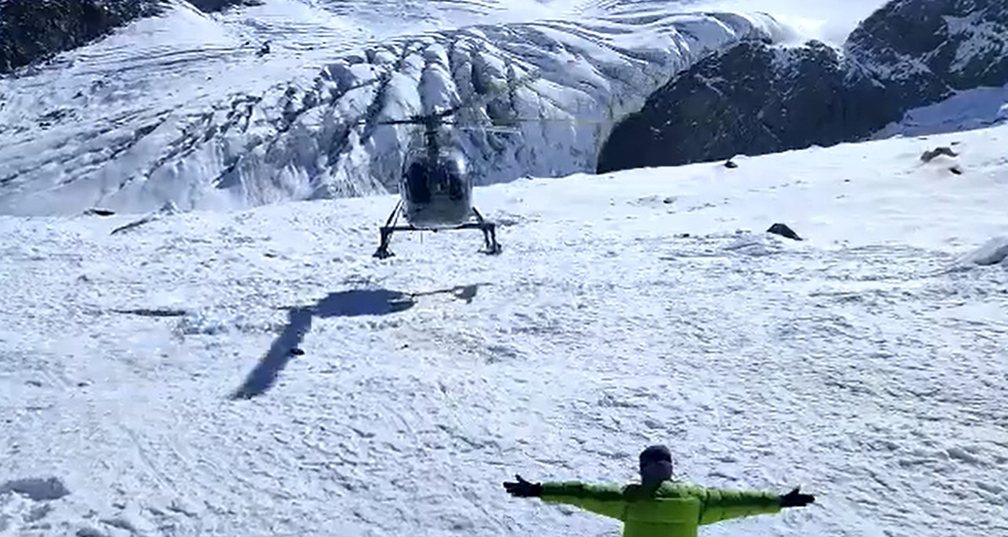
Their teammate Ramesh Roy suffered frostbite and was rescued by Sherpas to Camp 4 at around 10 p.m. on summit day. Rudra Prasad Halder also reportedly suffered frostbite, and the two were rescued by helicopter from Camp 2 on the morning of 17 May. Reportedly, a six-person Sherpa team carried the bodies of the two deceased climbers on 17 May, after which they were flown to Kathmandu by helicopter.Facts it rests onF23Single sourceTheir teammate Ramesh Roy also suffered frostbite and was rescued by Sherpas to Camp 4 at around 10 pm on summit day.F31Single sourceRudra Prasad Halder was also reportedly frostbitten; Sahabuddin was in good condition and returned safely to base camp on the evening of 16 May.F36Single sourceRoy and Halder were reportedly rescued by helicopter from Camp 2 at around 6:30 am on 17 May.F37Single sourceA six-person Sherpa team led by Dawa Ongchu Sherpa reportedly carried out the body recovery on 17 May, after which a rescue helicopter transported the two bodies to Kathmandu.

Chilean climber Rodrigo Vivanco climbed without supplemental oxygen or assistance from a guide or Sherpas, and went missing during his descent after reaching the summit. According to his family, data from the GPS he carried showed that he reached the summit at 17:30 on 15 May. More than a week after the signal was lost, his family issued a statement accepting that he would not come down the mountain.Facts it rests onF25Multiple sourcesVivanco did not use supplemental oxygen and had no guide or Sherpa assistance.F24Multiple sourcesChilean climber Rodrigo Vivanco lost contact while descending after reaching the summit.F27Single sourceAccording to Vivanco's family, based on data from the GPS he carried, he reached the summit at 17:30 Nepal time on 15 May.F03Single sourceMore than a week after the GPS signal was lost, Vivanco's family issued a statement accepting that he would not come down the mountain.

The number at the end of a paragraph is how many facts it rests on; open it to see each fact and how well it is sourced: Multiple sourcesSingle source. Conflicting accounts and speculation are kept out of the narrative.

Satellite imagery Sentinel-2 cloudless 2024 © EOX · Terrain AWS Terrain Tiles · Position is schematic, geocoded from place names · Place coordinates not individually verified

Route review

7 scenes to understand what happened

Scroll down and the map flies to where each part happened.

01

The incident area

The reports do not contain enough locations along the route, so the map shows only the approximate location and terrain of the incident area.

04

Rescue at 8400 metres

Purja said he encountered Baidya, who had run out of oxygen, during the descent and then found Karar farther below. His team members gave away all their oxygen.Facts it rests onF09Single sourcePurja said in his statement that during the descent, they encountered Baidya and his guide at an altitude of 8450 metres. Both had run out of oxygen, and Purja's team gave them spare oxygen and began a rescue.F10Single sourcePurja said that 150 metres farther down, they found Karar, who had been left behind by his guide and team. Purja gave him his own oxygen.F11Single sourcePurja said that by 14:30, his team members had given all their own oxygen to the two climbers in distress.

02Timeline

  1. More than a week after the GPS signal was lost, Vivanco's family issued a statement accepting that he would not come down the mountain. F03

  2. According to reports, the five set out from Camp 4 for the summit on the night of 14 May. F05

  3. According to reports, four of the five—Sahabuddin, Haldar, Roy and Baidya—reached the summit on the morning of 15 May. F06

  4. Purja said in his statement that during the descent, they encountered Baidya and his guide at an altitude of 8450 metres. Both had run out of oxygen, and Purja's team gave them spare oxygen and began a rescue. F09

  5. Purja said that by 14:30, his team members had given all their own oxygen to the two climbers in distress. F11

  6. Baidya and Karar died above Camp 4. F19

  7. According to reports, at around 15:12 on 15 May, a member of the West Bengal team sent a distress message to family using a GPS device, which showed an altitude of 8271 metres. F15

  8. Purja said they reached the summit of Kangchenjunga at 11:19 on 15 May. F08

  9. According to Vivanco's family, based on data from the GPS he carried, he reached the summit at 17:30 Nepal time on 15 May. F27

  10. Their teammate Ramesh Roy also suffered frostbite and was rescued by Sherpas to Camp 4 at around 10 pm on summit day. F23

  11. Rudra Prasad Halder was also reportedly frostbitten; Sahabuddin was in good condition and returned safely to base camp on the evening of 16 May. F31

  12. Roy and Halder were reportedly rescued by helicopter from Camp 2 at around 6:30 am on 17 May. F36

  13. A six-person Sherpa team led by Dawa Ongchu Sherpa reportedly carried out the body recovery on 17 May, after which a rescue helicopter transported the two bodies to Kathmandu. F37

03Lessons

Avalanche and high altitude

Remaining oxygen determines whether a descent can be completed

According to Purja, Baidya and his guide had already run out of oxygen at 8450 metres. After giving away their own oxygen, the rescuers could only continue the rescue without it. In a summit plan, oxygen needed for the descent is as important as oxygen for reaching the summit.Facts it rests onF09Single sourcePurja said in his statement that during the descent, they encountered Baidya and his guide at an altitude of 8450 metres. Both had run out of oxygen, and Purja's team gave them spare oxygen and began a rescue.F11Single sourcePurja said that by 14:30, his team members had given all their own oxygen to the two climbers in distress.F14Single sourcePurja said the wind began to strengthen as they continued to rescue Baidya. He later sent Mingma down the mountain as well, leaving only Purja and Dawa to carry out the rescue without oxygen.

Teams and decisions

Stop when problems arise during the ascent

Karar had already developed physical problems during the ascent and did not reach the summit; according to Purja, he was later left behind by his guide and team. In the death zone, physical symptoms often only get worse.Facts it rests onF07Multiple sourcesBaidya reached the summit. Karar developed physical problems during the ascent and did not reach the summit.F10Single sourcePurja said that 150 metres farther down, they found Karar, who had been left behind by his guide and team. Purja gave him his own oxygen.

Rescue and self-rescue

High-altitude rescues depend on backup

Purja said he repeatedly requested oxygen support by radio and was told that people were bringing oxygen up, but they never arrived. The rescuers themselves developed high-altitude pulmonary edema and frostbite and were forced to descend. Above 8000 metres, rescues are difficult to complete with passing teams alone.Facts it rests onF12Single sourcePurja said he requested oxygen support by radio every 15–20 minutes and was told that 3 Sherpas were bringing oxygen up, but they never arrived.F13Single sourcePurja said that during the rescue, team member Gesman Tamang developed mild high-altitude pulmonary edema and his feet began to suffer frostbite, so Purja sent him down the mountain. Karar had died by then.

Avalanche and high altitude

Climbing without oxygen or assistance leaves almost no way back

Vivanco used no supplemental oxygen and had no assistance from a guide or Sherpas. He went missing during his descent after reaching the summit. His family could only infer his movements from data from the GPS he carried.Facts it rests onF25Multiple sourcesVivanco did not use supplemental oxygen and had no guide or Sherpa assistance.F24Multiple sourcesChilean climber Rodrigo Vivanco lost contact while descending after reaching the summit.F27Single sourceAccording to Vivanco's family, based on data from the GPS he carried, he reached the summit at 17:30 Nepal time on 15 May.

04Fact list 45 facts

Under each fact is a verbatim quote from the original. "Single source" means only one outlet mentioned it; "Accounts differ" means sources contradict each other and this site adopts neither side; "Speculation" is an inference by a reporter or a person involved, not a fact.

  1. F01Single sourceBackground

    According to ExplorersWeb, In spring 2019, two major companies, Seven Summit Treks and Peak Promotion, operated at Kangchenjunga Base Camp, supplying the high camps and fixing ropes from the bottom up.

    Quotes from the original 1

    “this year, two big operators (Seven Summit Treks and Peak Promotion) operated out of its Base Camp, supplying the higher camps and fixing ropes from bottom to top.”

    ExplorersWeb · 2019-06-06
  2. F02Single sourceParticipant's view

    According to Dream Wanderlust, Purja believed there were about 50 climbers on the mountain that season and that two lives could have been saved if someone had helped.

    Quotes from the original 2

    “There were many climbers, approx 50 on Kangchenjunga this season.”

    Dream Wanderlust · 2019-05-17

    “Both lives could have been saved if some climber had dared to help.”

    Dream Wanderlust · 2019-05-17
  3. F03Single sourceAftermath

    According to Cooperativa, More than a week after the GPS signal was lost, Vivanco's family issued a statement accepting that he would not come down the mountain.

    Quotes from the original 1

    “A poco más de una semana de la pérdida de emisión de señal del Inreach (GPS) nos sentimos con las fuerzas para asumir que Rodrigo ya no bajará”

    Cooperativa ·
  4. F04Single sourceEvent

    According to ExplorersWeb, Sarkhanovych, who summited on the same day, said everyone set out at the same time, worsening the congestion. A bottleneck formed about an hour from the summit, where he waited for one to two hours.

    Quotes from the original 2

    “Everyone went at the same time, which increased the traffic jams.”

    ExplorersWeb · 2019-06-06

    “There was a traffic jam about one hour from the top. I waited for one hour, maybe two.”

    ExplorersWeb · 2019-06-06
  5. F05Single sourceMovement

    According to Dream Wanderlust, According to reports, the five set out from Camp 4 for the summit on the night of 14 May.

    Dream Wanderlust noted that its timeline was approximate.

    Quotes from the original 1

    “14th May, Night - Five climbers (Sk Sahabuddin, Rudra Prasad Halder, Ramesh Roy, Kuntal Karar and Biplab Baidya) from Bengal were left for the summit from Camp-4.”

    Dream Wanderlust · 2019-05-17
  6. F06Single sourceEvent

    According to Dream Wanderlust, According to reports, four of the five—Sahabuddin, Haldar, Roy and Baidya—reached the summit on the morning of 15 May.

    Quotes from the original 1

    “A total of four (Sk Sahabuddin, Rudra Prasad Halder, Ramesh Roy, and Biplab Baidya) from the team, have reportedly reached the summit on 15th May in the morning.”

    Dream Wanderlust · 2019-05-17
  7. F07Multiple sourcesEvent

    Baidya reached the summit. Karar developed physical problems during the ascent and did not reach the summit.

    Quotes from the original 3

    “Biplab made it to the summit point while Kuntal fell sick on his way to the top of the mountain, he added.”

    The Himalayan Times · 2019-05-16

    “Biplab had reached the summit, while Karar — whose difficulties began on the climb up from Camp 4 — did not.”

    ExplorersWeb · 2019-05-15

    “Karar, on the hand, did not make it to the summit and suffered from altitude sickness and hypothermia on the way up.”

    Onlinekhabar · 2019-05-16
  8. F08Single sourceEvent

    According to Dream Wanderlust, Purja said they reached the summit of Kangchenjunga at 11:19 on 15 May.

    From a statement by Purja himself.

    Quotes from the original 1

    “we still made it to the summit of Kangchenjunga on 15th May at 11:19.”

    Dream Wanderlust · 2019-05-17
  9. F09Single sourceEvent

    According to Dream Wanderlust, Purja said in his statement that during the descent, they encountered Baidya and his guide at an altitude of 8450 metres. Both had run out of oxygen, and Purja's team gave them spare oxygen and began a rescue.

    Quotes from the original 2

    “Whilst descending we met an Indian climber (Biplop)[Biplab] at 8450m with his guide; both had ran out of oxygen (O2) and needed rescuing.”

    Dream Wanderlust · 2019-05-17

    “We gave them our spare O2 and started the rescue mission.”

    Dream Wanderlust · 2019-05-17
  10. F10Single sourceEvent

    According to Dream Wanderlust, Purja said that 150 metres farther down, they found Karar, who had been left behind by his guide and team. Purja gave him his own oxygen.

    Quotes from the original 2

    “After descending 150m, we found another climber (Kuntal), who was left behind by his guide and his team.”

    Dream Wanderlust · 2019-05-17

    “I gave him my own O2 and continued with the rescue mission.”

    Dream Wanderlust · 2019-05-17
  11. F11Single sourceEvent

    According to Dream Wanderlust, Purja said that by 14:30, his team members had given all their own oxygen to the two climbers in distress.

    Quotes from the original 1

    “So by 14:30 all my team had given away our own O2 to the two climbers.”

    Dream Wanderlust · 2019-05-17
  12. F12Single sourceEvent

    According to Dream Wanderlust, Purja said he requested oxygen support by radio every 15–20 minutes and was told that 3 Sherpas were bringing oxygen up, but they never arrived.

    Quotes from the original 2

    “Every 15-20 mins, I was on the radio asking for help with O2.”

    Dream Wanderlust · 2019-05-17

    “I was told 3 Sherpas were coming up with O2, which never happened.”

    Dream Wanderlust · 2019-05-17
  13. F13Single sourceEvent

    According to Dream Wanderlust, Purja said that during the rescue, team member Gesman Tamang developed mild high-altitude pulmonary edema and his feet began to suffer frostbite, so Purja sent him down the mountain. Karar had died by then.

    Quotes from the original 2

    “Geshman started developing mild HAPE and his feet started to freeze. I sent him back down.”

    Dream Wanderlust · 2019-05-17

    “By this point we had sadly lost Kuntal due to no back up of extra O2.”

    Dream Wanderlust · 2019-05-17
  14. F14Single sourceEvent

    According to Dream Wanderlust, Purja said the wind began to strengthen as they continued to rescue Baidya. He later sent Mingma down the mountain as well, leaving only Purja and Dawa to carry out the rescue without oxygen.

    Quotes from the original 2

    “The wind started picking up, but we continued rescuing Biplab.”

    Dream Wanderlust · 2019-05-17

    “I sent Mingma down leaving behind only Dawa and myself with No O2 to perform the rescue.”

    Dream Wanderlust · 2019-05-17
  15. F15Single sourceEvent

    According to Dream Wanderlust, According to reports, at around 15:12 on 15 May, a member of the West Bengal team sent a distress message to family using a GPS device, which showed an altitude of 8271 metres.

    Quotes from the original 1

    “15th May, 15:12 - One member of the Bengal team (possibly Rudra) sent an SOS to his family via GPS device asking for urgent help from an elevation of 8271m.”

    Dream Wanderlust · 2019-05-17
  16. F16Multiple sourcesEvent

    The two were unable to continue descending from near the summit because of altitude sickness, hypothermia and snow blindness.

    Alan Arnette cited a report from the rescue organization Global Rescue.

    Quotes from the original 2

    “unable to continue their descent from near the summit due to altitude ailments, hypothermia and snowblindness, Peak Promotion Pvt Ltd reported.”

    The Himalayan Times · 2019-05-16

    “two of our members were unable to continue their descent from near the summit due at least in part to altitude ailments, hypothermia and snowblindness.”

    Alan Arnette · 2019-05-15
  17. F17Multiple sourcesEvent

    The Project Possible team led by Purja carried out a rescue, moving the two from an altitude of about 8400 metres toward Camp 4.

    Quotes from the original 2

    “the incident occurred when the duo were being brought to Camp IV from an altitude of 8,400 m through a herculean rescue operation carried out by Project Possible team leader Nirmal ‘Nims’ Purja along with fellow members”

    The Himalayan Times · 2019-05-16

    “A rescue operation was carried out to bring the two down from an altitude of 8,400 metres. The rescue mission was carried out by Project Possible team leader Nirmal Purja along with others.”

    Scroll · 2019-05-16
  18. F18Accounts differEvent

    Early accounts differed on whether the two were brought to Camp 4: ExplorersWeb reported that day that Purja and two Sherpas had helped them down to Camp 4 to spend the night; Nepalese media said the two died above Camp 4.

    The ExplorersWeb report was a news flash published on the day of the incident.

    Quotes from the original 2

    “Nirmal Purja and two Sherpas, Gesman Tamang and Mingma David, had helped the stricken pair down to Camp 4 for the night.”

    ExplorersWeb · 2019-05-15

    “breathed their last above Camp IV”

    The Himalayan Times · 2019-05-16
  19. F19Multiple sourcesEvent

    Baidya and Karar died above Camp 4.

    Quotes from the original 3

    “breathed their last above Camp IV”

    The Himalayan Times · 2019-05-16

    “Two climbers from West Bengal, India have died above Camp IV on Mount Kanchenjunga”

    Onlinekhabar · 2019-05-16

    “died Wednesday night above Camp IV”

    Deccan Herald · 2019-05-16
  20. F20Accounts differEvent

    Accounts differ on when the two died: Nepali media reported the night of Wednesday, 15 May; Dream Wanderlust reported the early hours of 16 May.

    Quotes from the original 2

    “Two Indian climbers died on Mount Kanchenjunga, the third highest peak in the world, on Wednesday night.”

    The Kathmandu Post · 2019-05-16

    “Biplab Baidya and Kuntal Karar have died in the early hours of May 16”

    Dream Wanderlust · 2019-05-17
  21. F21Multiple sourcesFound at scene

    According to the organiser, Peak Promotion, the two died of altitude sickness.

    Several reports attributed this account to the organiser, Peak Promotion.

    Quotes from the original 3

    “Later, they succumbed to high altitude sicknesses”

    The Himalayan Times · 2019-05-16

    “They succumbed to high altitude sickness”

    Deccan Herald · 2019-05-16

    “Pensamos que sufrieron problemas de altitud.”

    CNN Chile · 2019-05-16
  22. F22Accounts differEvent

    Accounts differ on the weather during the rescue: Onlinekhabar said bad weather prevented the two from being brought down the mountain; Argentine climber Sarchanovich, who summited the same day, said the weather on the season's only summit day was perfect, with no wind.

    Quotes from the original 2

    “There were efforts to bring them down, but it wasn’t possible due to harsh weather conditions.”

    Onlinekhabar · 2019-05-16

    “This season, there was only one summit day, but it was perfect, with beautiful, windless weather,”

    ExplorersWeb · 2019-06-06
  23. F23Single sourceEvent

    According to Dream Wanderlust, Their teammate Ramesh Roy also suffered frostbite and was rescued by Sherpas to Camp 4 at around 10 pm on summit day.

    Quotes from the original 1

    “Ramesh Roy, another frostbitten climber from the same team, was also rescued by the Sherpas and brought to Camp-4 at around 10pm on the summit day.”

    Dream Wanderlust · 2019-05-17
  24. F24Multiple sourcesEvent

    Chilean climber Rodrigo Vivanco lost contact while descending after reaching the summit.

    Quotes from the original 3

    “Rodrigo Vivanco from Chile went missing above Camp IV on the descent after he reportedly made it to the summit”

    The Himalayan Times · 2019-05-16

    “Another mountaineer Rodrigo Vivanco of Chile has gone missing while returning from the summit.”

    The Kathmandu Post · 2019-05-16

    “fue visto por última vez mientras realizaba el descenso”

    CNN Chile · 2019-05-16
  25. F25Multiple sourcesBackground

    Vivanco did not use supplemental oxygen and had no guide or Sherpa assistance.

    Quotes from the original 4

    “He was without a guide as he was climbing alpine style and reported that he was low on batteries,”

    Devdiscourse · 2019-05-16

    “decidió ascender en un estilo ligero, prescindiendo de oxígeno suplementario, sin ayuda directa de sherpas, en solitario”

    Cooperativa ·

    “Estaba sin oxígeno ni sherpas. Tampoco contaba con radio.”

    La Tercera ·

    “Only one of those used no supplementary O2: Chilean Rodrigo Vivanco.”

    ExplorersWeb · 2019-06-06
  26. F26Accounts differEvent

    Accounts differ on whether Vivanco used fixed ropes: his family said in a statement that he did not use them; Chilean climber Leal said he was clipped to the fixed rope, which was his only protection.

    Quotes from the original 2

    “en un intento con características alpinas, es decir sin cuerdas fijas”

    Cooperativa ·

    “Se había enganchado a la cuerda, era la única seguridad que tenía.”

    La Tercera ·
  27. F27Single sourceEvent

    According to Cooperativa, According to Vivanco's family, based on data from the GPS he carried, he reached the summit at 17:30 Nepal time on 15 May.

    Quotes from the original 1

    “alcanzó la cumbre a las 17:30 horas de Nepal el día 15.”

    Cooperativa ·
  28. F28Single sourceEvent

    According to La Tercera, Hernan Leal, the first Chilean to summit Kangchenjunga, said he met Vivanco while descending at around 8000 metres, and Vivanco asked him for water.

    Quotes from the original 2

    “En mi descenso, como a los ocho mil metros, me encuentro con Rodrigo Vivanco.”

    La Tercera ·

    “me pidió agua”

    La Tercera ·
  29. F29Accounts differEvent

    Accounts differ on the summit push date: most reports said Vivanco and the Indian team summited on 15 May; an ExplorersWeb postseason review said climbers converged on the summit area on 16 May, and three people, including Vivanco, died of exhaustion that day.

    Quotes from the original 3

    “On May 16, climbers converged en masse on the upper sections and at the summit.”

    ExplorersWeb · 2019-06-06

    “Three people died that day from exhaustion”

    ExplorersWeb · 2019-06-06

    “alcanzó la cumbre a las 17:30 horas de Nepal el día 15.”

    Cooperativa ·
  30. F30SpeculationSpeculation

    According to rescuer Pujan, the two may have died of high-altitude pulmonary edema brought on by insufficient supplemental oxygen (speculation).

    Quotes from the original 1

    “due to (possibly) shortage of supplemental oxygen (as reported by the rescuer Nirmal Purja) leading to HAPE (High-Altitude Pulmonary Edema)”

    Dream Wanderlust · 2019-05-17
  31. F31Single sourceAftermath

    According to Dream Wanderlust, Rudra Prasad Halder was also reportedly frostbitten; Sahabuddin was in good condition and returned safely to base camp on the evening of 16 May.

    Quotes from the original 1

    “Rudra Prasad also suffered from frostbite. Sahabuddin was fit and has reached the Base camp safely in the evening of May 16.”

    Dream Wanderlust · 2019-05-17
  32. F32Multiple sourcesAftermath

    The organiser said two Indian climbers and a German climber with severe frostbite would be evacuated from the high camp as soon as possible.

    Both reports attributed the account to the head of Peak Promotion.

    Quotes from the original 2

    “Two Indian climbers and a German mountaineer who also suffered from serious frostbite will be evacuated from the high camp as early as possible,”

    The Himalayan Times · 2019-05-16

    “Two Indian climbers and a German mountaineer who also suffered from serious frostbite will be evacuated from the high altitude camp as early as possible,”

    Deccan Herald · 2019-05-16
  33. F33Single sourceAftermath

    According to Onlinekhabar, The organiser, Peak Promotion, sent a team of Nepali high-altitude guides up the mountain to retrieve the bodies.

    Quotes from the original 1

    “Expedition organiser Peak Promotion Pvt. Ltd. has sent a team of Nepali high altitude climbers to recover the bodies of the deceased.”

    Onlinekhabar · 2019-05-16
  34. F34Single sourcePlan

    According to The Kathmandu Post, The organiser planned to bring the two bodies to Camp 2 by Friday, then airlift them from there to Kathmandu.

    Quotes from the original 1

    “efforts are underway to bring the bodies of the Indian climbers to Camp II by Friday from where they will be airlifted to Kathmandu, said the expedition organiser.”

    The Kathmandu Post · 2019-05-16
  35. F35Multiple sourcesAftermath

    Peak Promotion said a team had set out to search for Vivanco.

    Quotes from the original 2

    “a team has already left for Camp IV to conduct search and recover the bodies.”

    The Himalayan Times · 2019-05-16

    “Sherpa said that a team had already left Camp IV for the search operation.”

    Onlinekhabar · 2019-05-16
  36. F36Single sourceAftermath

    According to Dream Wanderlust, Roy and Halder were reportedly rescued by helicopter from Camp 2 at around 6:30 am on 17 May.

    Quotes from the original 1

    “Two injured Indian climbers Ramesh Roy and Rudra Prasad Halder have been heli-rescued today in the morning at around 6:30am from Camp-2 of Kangchenjunga.”

    Dream Wanderlust · 2019-05-17
  37. F37Single sourceAftermath

    According to Dream Wanderlust, A six-person Sherpa team led by Dawa Ongchu Sherpa reportedly carried out the body recovery on 17 May, after which a rescue helicopter transported the two bodies to Kathmandu.

    Quotes from the original 2

    “A-six-member expert Sherpa team led by Dawa Ongchu Sherpa carried out a heroic recovery mission on 17th May.”

    Dream Wanderlust · 2019-05-19

    “Both the bodies have now been transported to Kathmandu successfully by the rescue helicopter.”

    Dream Wanderlust · 2019-05-19
  38. F38Multiple sourcesBackground

    Kangchenjunga is the world's third-highest peak.

    Quotes from the original 2

    “Two Indian climbers have died on Kangchenjunga (8,586m), the world’s third highest mountain.”

    ExplorersWeb · 2019-05-15

    “Mount Kanchenjunga, the third highest peak of the world, in eastern Nepal”

    Onlinekhabar · 2019-05-16
  39. F39Single sourceBackground

    According to ExplorersWeb, Argentine climber Sarchanovich described the route above Camp 4 as beginning with a hard snow slope of about 45 degrees, leading to the col between Kangchenjunga and Kangbachen at an altitude of 8200 metres; this was the only route up the mountain.

    Quotes from the original 2

    “The first section above Camp 4 is a 45º hard snow ramp until the col between Kangchenjunga and Kangbachen at 8,200m.”

    ExplorersWeb · 2019-06-06

    “There are no alternatives: This is the only way up.”

    ExplorersWeb · 2019-06-06
  40. F40Multiple sourcesBackground

    Biplab Baidya, 48, and Kuntal Karar, 46, were climbers from West Bengal, India, and belonged to a five-person team.

    Some reports spelled Karar's surname Kanrar or Kakar.

    Quotes from the original 4

    “Biplab Baidya (48) and Kuntal Karar (46)”

    The Himalayan Times · 2019-05-16

    “They were part of a five-member team of West Bengal climbers.”

    The Himalayan Times · 2019-05-16

    “They were the part of a five-member team of West Bengal climbers.”

    Onlinekhabar · 2019-05-16

    “Kuntal Karar (46) and Biplab Baidya (48)”

    ExplorersWeb · 2019-05-15
  41. F41Single sourceBackground

    According to Dream Wanderlust, The five-person team consisted of Kuntal Karar, Sheikh Sahabuddin, Rudra Prasad Halder, Ramesh Roy and Biplab Baidya.

    Quotes from the original 1

    “They were part of a team of 5-members (Kuntal Karar, Sk Sahabuddin, Rudra Prasad Halder, Ramesh Roy and Biplab Baidya)”

    Dream Wanderlust · 2019-05-17
  42. F42Single sourceBackground

    According to ExplorersWeb, Baidya and Karar were clients of Peak Promotion.

    Quotes from the original 1

    “The two were clients of the Peak Promotion trekking company.”

    ExplorersWeb · 2019-05-15
  43. F43Multiple sourcesBackground

    The expedition was organised by Peak Promotion.

    Quotes from the original 2

    “Pasang Sherpa, sales and marketing director of Peak Promotion Pvt Ltd, which organised the expedition, confirmed the death of two Indian mountaineers.”

    The Kathmandu Post · 2019-05-16

    “said Pasang Sherpa, Director of Peak Promotion Ltd, that carried out the expedition.”

    Deccan Herald · 2019-05-16
  44. F44SpeculationSpeculation

    Leal speculated that Vivanco may have died due to his own exhaustion (speculation).

    Quotes from the original 1

    “conjetura que Vivanco fue víctima de su propio cansancio”

    La Tercera ·
  45. F45SpeculationSpeculation

    Vivanco's family speculated that he may not have descended after summiting because of extreme exhaustion or altitude sickness (speculation).

    Quotes from the original 1

    “Probablemente por su condición exhausta o por los signos del mal de altura”

    Cooperativa ·