MountaineeringInvolves: Altitude illness · Avalanche · Falls and slipsSeveral international mountaineering teams; more than 20 people attempted the summit that day
Casualties
Dead 11 A total of 11 people died from 1 to 2 August, including 2 who died before the ice avalanche; several survivors suffered severe frostbite
Material
45 facts · 10 sources5 accounts differ and are shown side by side
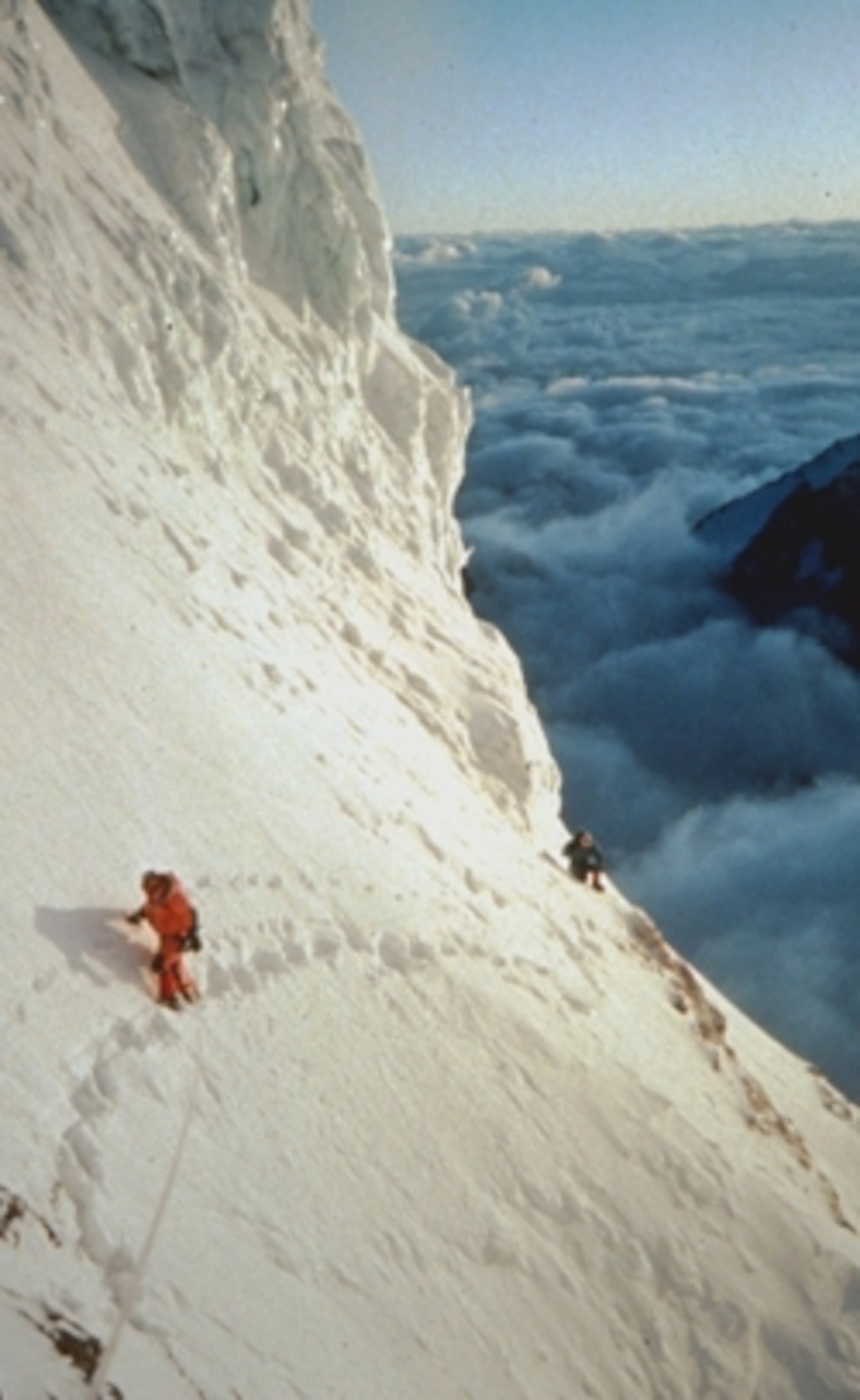
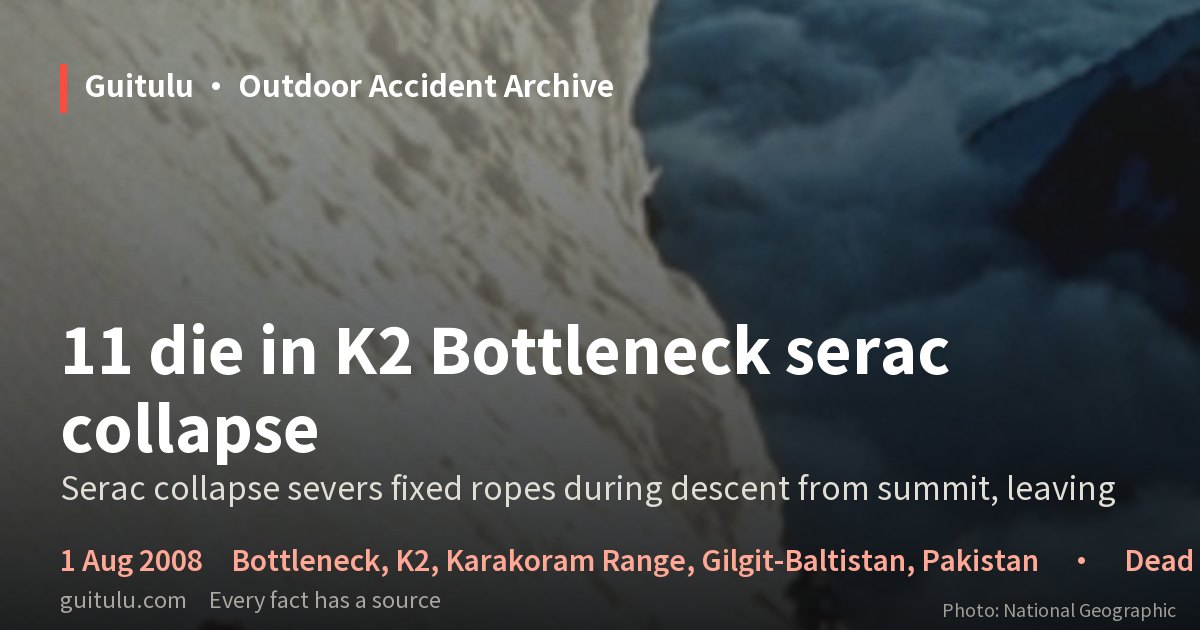
A mountaineer on a steep snow slope high on K2, with a sea of clouds below (image from the original report; date taken not specified)Photo source: National Geographic
The number at the end of a paragraph is how many facts it rests on; open it to see each fact and how well it is sourced:
Multiple sourcesSingle source. Conflicting accounts and speculation are kept out of the narrative.
ImgScene photos all from news coverage; copyright belongs to the original authors
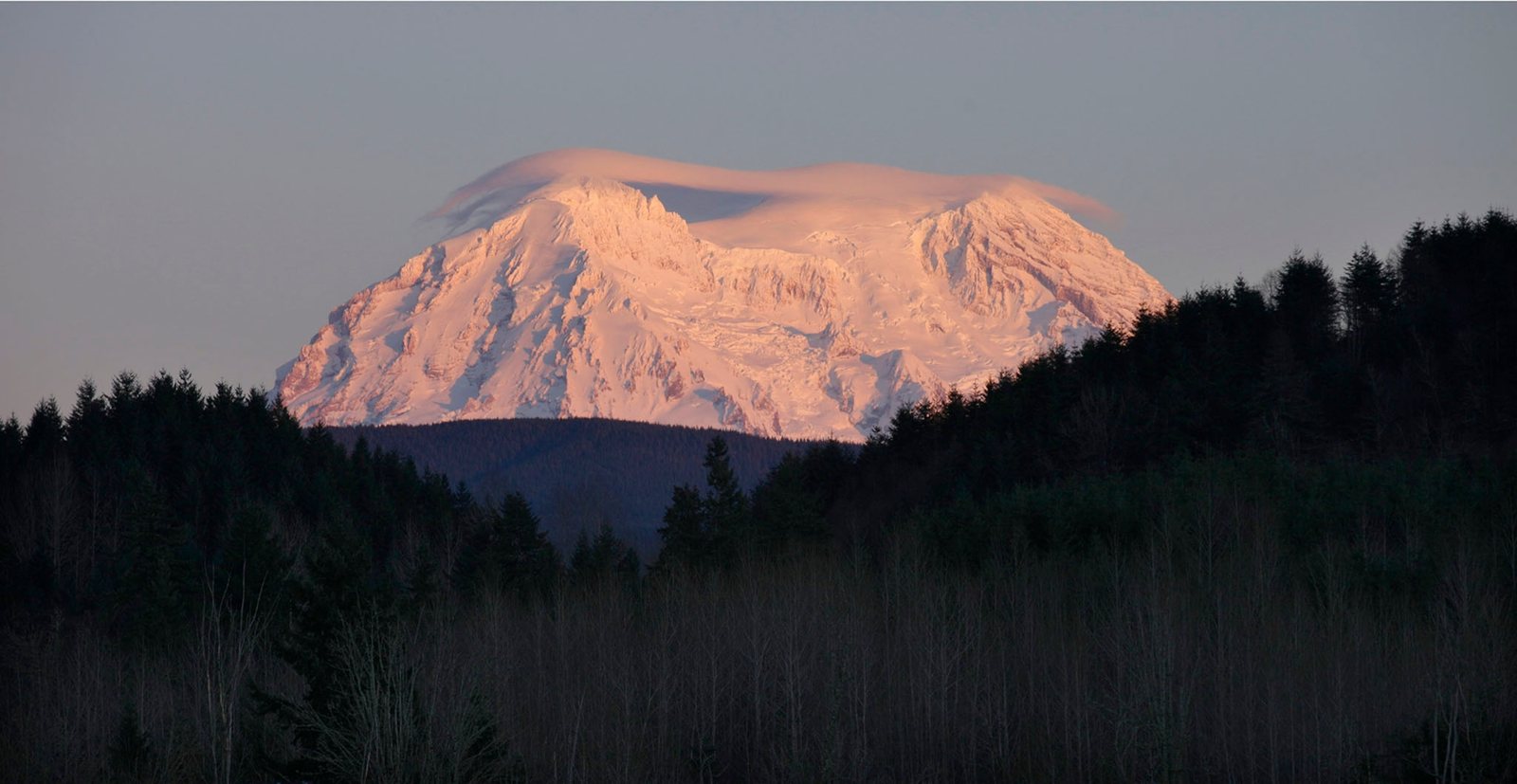
Tents at K2 Base Camp, with K2 behind themPhoto source: Advnture
Reported locations along the route (illustrative)Schematic
Scroll down and the map flies to where each part happened. The line is Schematic, Connects the places mentioned in the reports in order, showing only the approximate direction, not the actual track. Sources for place coordinates are in places.json.
01
Full route
Locations mentioned in reports are connected in sequence to show the approximate course of events (illustrative).
Norwegian climber Rolf Bae was swept away and killed in the first ice collapse. F20
At around 3:30 pm, Basque climber Alberto Zerain was the first to reach the summit and descended safely through the Bottleneck. F16
Pemba's teammates Confortola, McDonnell and van Rooijen did not descend in the dark, but bivouacked at high altitude overnight. F23
While Mandic's body was being moved, Pakistani high-altitude porter Jehan Baig slipped and fell to his death. F13
Serbian climber Dren Mandic fell to his death on the ascent and is believed to have been the first person to die that day. F12
Most of those who continued climbing did not reach the summit until around nightfall, some as late as around 8 pm, after which they had to descend through the Bottleneck in darkness. F17
As the first climbers descending traversed the Bottleneck, the huge serac above collapsed, and the ice collapse destroyed the fixed ropes in the Bottleneck. F19
Poor weather persisted during the 2008 climbing season. Several teams waited throughout July for good weather and decided to attempt the summit on 1 August, after the wind eased and a weather window opened. F05
Pemba Gyalje Sherpa of the Dutch team descended through the Bottleneck in the dark that night and returned to Camp IV. F26
On 2 August, after learning that Confortola had been found partway down the Bottleneck, Pemba climbed back up and found him unconscious. He used oxygen to revive him and brought him down. F33
Pemba and Dutch team member Cas van de Gevel went out to search and found van Rooijen. F36
Italian climber Confortola was the last survivor to come down the mountain. Both his feet were severely frostbitten, and he waited at Base Camp for helicopter evacuation. F39
Pakistan's Ministry of Tourism released a list of 11 people who died: three Koreans, two Nepalese, two Pakistanis, and one climber each from France, Ireland, Serbia and Norway. F40
Under each fact is a verbatim quote from the original. "Single source" means only one outlet mentioned it; "Accounts differ" means sources contradict each other and this site adopts neither side; "Speculation" is an inference by a reporter or a person involved, not a fact.
This was very likely the deadliest single incident in K2's history, exceeding the record of 7 people killed in a storm in 1995.
Quotes from the original 3
“The reported toll was the highest from a single incident on K-2 since at least 1995, when seven climbers perished after being caught in a fierce storm.”
Poor weather persisted during the 2008 climbing season. Several teams waited throughout July for good weather and decided to attempt the summit on 1 August, after the wind eased and a weather window opened.
Quotes from the original 4
“He said several expeditions waited through July for good weather to scale K-2 and decided to go for the summit when winds dropped on Friday.”
Accounts differ on the number of people who attempted the summit that day: a National Geographic news report said 22; Al Jazeera cited officials as saying more than 20; Advnture, drawing on No Way Down, said 24; and The Irish Times said about 25.
The reports used different counting criteria (whether to count only those who made a serious summit attempt).
Quotes from the original 4
“22 climbers pushed along the Southeast ridge to the summit of the mountain”
According to Advnture, The advance team responsible for laying fixed ropes in the Bottleneck and on the traverse set out with insufficient equipment, and an experienced leader did not accompany them because of illness.
Quotes from the original 1
“The Advance Team set off, short of equipment and without their experienced leader.”
According to Dutch team leader van Rooijen, the advance team placed the fixed ropes in the wrong position, and everyone had to readjust them, taking several hours; these delays left many people gathered in the Bottleneck before the ice collapse.
Several reports all relay van Rooijen's own account.
Quotes from the original 3
“But Van Rooijen said advance climbers laid ropes in some of the wrong places on the 28,250ft peak”
“Van Rooijen confirmed that poorly set lines that required replacement caused delays, contributing to the accumulation of people in the Bottleneck just prior to the avalanche.”
According to Advnture, The advance team used up the rope they were to fix in the gully. Those below found that the fixed ropes were much lower than expected, slowing the climb.
Quotes from the original 1
“Matters got worse when the Advance Team ran out of ropes to fix while still in the couloir.”
According to Alpinist, According to Confortola's recollection, delays caused by equipment problems held the team up for an hour and a half beneath the huge serac in the Bottleneck.
Quotes from the original 1
“held the expedition at a standstill for an hour and a half beneath a massive serac in the Bottleneck”
Most of those who continued climbing did not reach the summit until around nightfall, some as late as around 8 pm, after which they had to descend through the Bottleneck in darkness.
Quotes from the original 3
“Van Rooijen said those who went on reached the summit just before nightfall.”
As the first climbers descending traversed the Bottleneck, the huge serac above collapsed, and the ice collapse destroyed the fixed ropes in the Bottleneck.
Accounts differ on the number of people stranded above the Bottleneck overnight after the ice collapse: National Geographic's Adventurers of the Year feature and The Irish Times say 17; National Geographic's initial report says 9; Al Jazeera says about a dozen.
Information was confused in the immediate aftermath, and counts differed.
Quotes from the original 4
“17 climbers were trapped above 27,000 feet with little chance of escape”
According to Advnture, Rolf Bae's wife, Cecilie Skog, and Norwegian teammate Lars Nessa continued descending and fixed a new emergency rope in the Bottleneck.
Quotes from the original 1
“Skog and Nessa managed to continue their descent, fixing a new emergency rope in the Bottleneck”
Accounts differ on McDonnell's final hours: National Geographic says he walked back up while disoriented; Advnture quotes van Rooijen as saying he went back up to establish a more secure anchor to rescue people; The Irish Times says he spent several hours helping two Koreans and a Sherpa before dying during the descent.
There is no complete eyewitness account, and his family have said that many questions remain.
Quotes from the original 3
“McDonnell had wandered back uphill, apparently confused.”
On 2 August, after learning that Confortola had been found partway down the Bottleneck, Pemba climbed back up and found him unconscious. He used oxygen to revive him and brought him down.
Quotes from the original 2
“Somehow Pemba managed to revive him with oxygen and guide him to the base of the Bottleneck.”
According to National Geographic, Confortola told reporters that, during another collapse on the descent, Pemba grabbed him from behind and saved his life.
Quotes from the original 1
“But Pemba grabbed me from behind. He was holding my neck. He saved my life.”
According to National Geographic, The lost van Rooijen called his wife on a satellite phone, and the Dutch team used this to determine that he was on K2's south face, far from the known route.
Quotes from the original 1
“Using the call data, the Norit K2 team fixed his location on the mountain's South Face, far from any known routes.”
Accounts differ on when van Rooijen was found and where the three arrived that night: National Geographic says he was found in the evening and they reached Camp III after dark on 3 August; Advnture says he was found early in the morning and they returned to Base Camp before 10 p.m. that night.
Quotes from the original 2
“The three men staggered into Camp III well after dark, on August 3, exhausted but alive.”
The Pakistani military dispatched a helicopter to take Dutch climbers van Rooijen and van de Gevel to a military hospital in Skardu for treatment for frostbite.
Quotes from the original 3
“Last weekend Dutch climbers Wilco van Rooijen and Cas van de Gevel were flown to a military hospital in Skardu”
Italian climber Confortola was the last survivor to come down the mountain. Both his feet were severely frostbitten, and he waited at Base Camp for helicopter evacuation.
Quotes from the original 3
“Confortola was able to reach base camp and is currently awaiting helicopter rescue”
Pakistan's Ministry of Tourism released a list of 11 people who died: three Koreans, two Nepalese, two Pakistanis, and one climber each from France, Ireland, Serbia and Norway.
Quotes from the original 3
“The Pakistani ministry of tourism released a list of 11 climbers believed dead: three South Koreans, two Nepalis, two Pakistanis and mountaineers from France, Ireland, Serbia and Norway.”
According to The Irish Times, Pemba believed that “summit fever” caused the tragedy: judgment deteriorated at high altitude, and some people stayed above 7500 metres for too long; if everyone had retreated together after the first person died, the outcome would have been “very different”.
Quotes from the original 2
“A lack of clear thinking at altitude meant some of the mountaineers who had taken advantage of a weather window to make a successful ascent lingered too long above 7,500 metres, he says.”
The “Bottleneck” is a steep, narrow couloir at an altitude of about 8200 metres, about 400 metres below the summit, with a huge serac hanging above it.
Quotes from the original 3
“the Bottleneck, a steep, narrow couloir situated at around 8,200 meters, 400 meters below the summit”
 GuituluGlobal Outdoor Accident Archive