GuituluGlobal Outdoor Accident Archive 中文
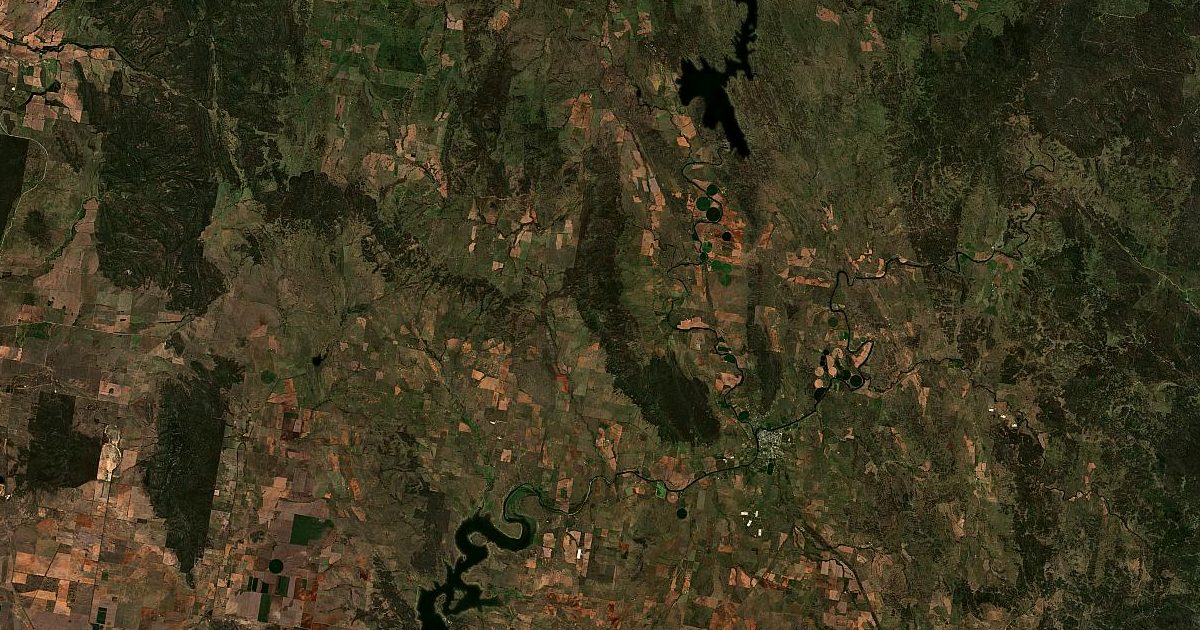
Satellite view of the area around Mount Borah, Manilla, New South Wales, Australia

Archive / Other

Manilla thunderstorm: Two paragliders caught in cumulonimbus cloud during training, one survives and one dies

Thunderstorm during pre-championship training carries German pilot to nearly 10,000 metres; she survives, while Chinese pilot dies

Body found the next day; survivor rescued the same day

Satellite imagery Sentinel-2 cloudless 2024 © EOX (CC BY-NC-SA 4.0)

Date
Summer
Place
Mount Borah, Manilla, New South Wales, AustraliaAustralia › New South Wales150.609°E -30.676°N
Activity
ParaglidingInvolves: Hypothermia · Altitude illness · Extreme weatherParagliding pilots on a training flight before the world championships
Casualties
Dead 1 Injured 1German pilot Ewa Wisnierska survived with frostbite; Chinese pilot He Zhongpin died
Material
47 facts · 11 sources6 accounts differ and are shown side by side

01What happened

On 14 February 2007, German paraglider Ewa Wisnierska was training near Manilla, New South Wales, in preparation for the upcoming 10th FAI World Paragliding Championship. The pre-competition weather briefing forecast scattered showers and thunderstorms, and reportedly about 200 pilots were in the air when the storm arrived. Around midday, she took off from Mount Borah and, like most of the pilots, flew north with the southerly wind.Facts it rests onF06Multiple sourcesAt the time of the incident, Wisnierska was training near Manilla, New South Wales, for the upcoming 10th FAI World Paragliding Championships.F07Multiple sourcesThe incident occurred on 14 February 2007 (Wednesday, Valentine's Day).F09Single sourceIn a pre-competition weather briefing for the pilots, organizer Godfrey Wenness forecast scattered showers and thunderstorms.F08Multiple sourcesWhen the storm struck, about 200 paragliding pilots were in the air on training flights.F11Single sourceAround midday that day, Wisnierska took off from the summit of Mount Borah and, like most of the pilots that day, flew north with the southerly wind.

She approached a cloud that did not look dangerous and tried to fly around its edge, but was caught in a rapidly strengthening updraft. She repeatedly spiralled down, but could not descend faster than the air was rising; reportedly, two thunderstorm cells merged and trapped her inside. In the cloud, she told the team leader by radio that she was encountering rain and hail and could do nothing. She then lost consciousness in the storm, and the paraglider continued flying without anyone controlling it, carrying her higher than Mount Everest, where the temperature was about minus 40 to 50 degrees Celsius.Facts it rests onF12Single sourceWisnierska approached a cloud that did not appear dangerous, intending to fly around its edge.F13Multiple sourcesShe tried to avoid the rapidly developing thunderstorm. After failing to do so, she repeatedly spiraled downward in an attempt to escape the powerful updraft, but could not descend faster than the air was rising.F14Single sourceAccording to organizer Wenness, who spoke to Reuters, two thunderstorm cells merged, trapping her between them.F15Multiple sourcesWhile in the cloud, she told the team leader by radio that she was in a cloud, that it was raining and hailing, and that she could do nothing; the Associated Press reported that this was at about 13,123 feet (about 4000 meters).F19Multiple sourcesShe lost consciousness in the storm, and the paraglider continued to fly without anyone controlling it.F21Multiple sourcesThe storm carried her to an altitude higher than Mount Everest.F24Multiple sourcesThe temperature at that altitude was about minus 40 to minus 50 degrees Celsius.

According to the GPS track cited by Women's Adventure, the paraglider levelled off at about 9946 metres before encountering a strong downdraft. She woke covered in ice, then spiralled down through the base of the cloud and landed safely in a farm pasture. The ground team found her using GPS and radio. She had severe frostbite on her face and ears and was discharged after about an hour of observation in hospital.Facts it rests onF26Single sourceA GPS track cited by Women's Adventure showed that the paraglider levelled off at 9946 metres and flew in large circles about 800 metres in diameter.F27Single sourceShe then encountered a strong downdraft and descended about 10,000 feet at a speed of 27 to 33 metres per second.F25Multiple sourcesA layer of ice formed all over her body, harness and equipment.F29Single sourceAfter waking, she began carefully spiralling downward from about 4000 metres until she emerged from the bottom of the cloud.F30Multiple sourcesShe landed safely in a fenced farm pasture.F32Multiple sourcesThe ground team tracked her through her GPS and radio equipment; after landing, she used her GPS to give her coordinates, and rescuers arrived shortly afterwards.F33Multiple sourcesShe suffered severe frostbite and blistering on her face and ears.F34Multiple sourcesShe was discharged after only about an hour of observation in hospital.

Chinese pilot He Zhongpin was caught in the same storm cell. He was a member of the Chinese paragliding team and had more than ten years of flying experience. His body was found the next day, about 75 kilometres from the launch point.Facts it rests onF35Multiple sourcesChinese competitor He Zhongpin was also caught in the same storm cell.F02Single sourceHe Zhongpin, who died, was a member of the Chinese paragliding team with more than ten years of flying experience. He was also preparing for the same event.F37Multiple sourcesHe Zhongpin's body was found the following day (Thursday, 15 February), about 75 kilometres (47 miles) from the launch point.

The number at the end of a paragraph is how many facts it rests on; open it to see each fact and how well it is sourced: Multiple sourcesSingle source. Conflicting accounts and speculation are kept out of the narrative.

Satellite imagery Sentinel-2 cloudless 2024 © EOX · Terrain AWS Terrain Tiles · Position is schematic, geocoded from place names · Place coordinates not individually verified

Route review

5 scenes to understand what happened

Scroll down and the map flies to where each part happened.

01

Incident area

The reports do not provide enough locations along the route, so the map shows only the approximate location and terrain of the incident area.

02

Training before the world championships

On 14 February 2007, pilots from various countries trained near Manilla. The weather briefing forecast scattered showers and thunderstorms.Facts it rests onF06Multiple sourcesAt the time of the incident, Wisnierska was training near Manilla, New South Wales, for the upcoming 10th FAI World Paragliding Championships.F07Multiple sourcesThe incident occurred on 14 February 2007 (Wednesday, Valentine's Day).F09Single sourceIn a pre-competition weather briefing for the pilots, organizer Godfrey Wenness forecast scattered showers and thunderstorms.

04

Caught in the thunderstorm

She tried to fly around the edge of a cloud but was caught in an updraft. After losing consciousness, she was carried higher than Mount Everest.Facts it rests onF12Single sourceWisnierska approached a cloud that did not appear dangerous, intending to fly around its edge.F13Multiple sourcesShe tried to avoid the rapidly developing thunderstorm. After failing to do so, she repeatedly spiraled downward in an attempt to escape the powerful updraft, but could not descend faster than the air was rising.F19Multiple sourcesShe lost consciousness in the storm, and the paraglider continued to fly without anyone controlling it.F21Multiple sourcesThe storm carried her to an altitude higher than Mount Everest.

02Timeline

  1. She landed safely in a fenced farm pasture. F30

  2. At the time of the incident, Wisnierska was training near Manilla, New South Wales, for the upcoming 10th FAI World Paragliding Championships. F06

  3. She then encountered a strong downdraft and descended about 10,000 feet at a speed of 27 to 33 metres per second. F27

  4. She was discharged after only about an hour of observation in hospital. F34

  5. While in the cloud, she told the team leader by radio that she was in a cloud, that it was raining and hailing, and that she could do nothing; the Associated Press reported that this was at about 13,123 feet (about 4000 meters). F15

  6. The storm carried her to an altitude higher than Mount Everest. F21

  7. Around midday that day, Wisnierska took off from the summit of Mount Borah and, like most of the pilots that day, flew north with the southerly wind. F11

  8. Wisnierska approached a cloud that did not appear dangerous, intending to fly around its edge. F12

  9. She lost consciousness in the storm, and the paraglider continued to fly without anyone controlling it. F19

  10. The ground team tracked her through her GPS and radio equipment; after landing, she used her GPS to give her coordinates, and rescuers arrived shortly afterwards. F32

  11. She tried to avoid the rapidly developing thunderstorm. After failing to do so, she repeatedly spiraled downward in an attempt to escape the powerful updraft, but could not descend faster than the air was rising. F13

  12. He Zhongpin's body was found the following day (Thursday, 15 February), about 75 kilometres (47 miles) from the launch point. F37

  13. After leaving hospital, she said she still hoped to compete in the world championships opening on 24 February. F39

03Lessons

Weather and retreat

When thunderstorms are forecast, treat clouds as off-limits

The day's weather briefing had already forecast scattered thunderstorms, and the only warning pilots received was to stay farther away from clouds. Even clouds that do not look dangerous can grow rapidly in developing thunderstorm conditions, and paragliders flying beneath or near developing clouds may be sucked into them.Facts it rests onF09Single sourceIn a pre-competition weather briefing for the pilots, organizer Godfrey Wenness forecast scattered showers and thunderstorms.F10Single sourceWisnierska recalled that they had only been told to be careful, and that generally there would be no problem if they kept their distance from the clouds.F12Single sourceWisnierska approached a cloud that did not appear dangerous, intending to fly around its edge.F45Single sourceA paraglider flying below or near a developing cloud may be sucked into it.

Weather and retreat

When an updraft feels wrong, leave as early as possible

After Wisnierska noticed the unusual updraft, she repeatedly spiralled down but still could not descend faster than the air was rising. For an unpowered paraglider, once it gets too close, there may be no way out; the decision to leave must be made before entering a strong updraft.Facts it rests onF13Multiple sourcesShe tried to avoid the rapidly developing thunderstorm. After failing to do so, she repeatedly spiraled downward in an attempt to escape the powerful updraft, but could not descend faster than the air was rising.F18Single sourceShe considered jettisoning the main canopy and opening the reserve parachute, but the reserve was not suitable for use at free-fall speed.

Teams and decisions

A competition mindset must not override judgment

Will Gadd, who was competing in the same event, believed that both pilots who were caught were highly capable, but may have let a competition mindset override their best judgment. In a competition, landing and giving up part of a score is far preferable to taking the risk of a thunderstorm.Facts it rests onF43Single sourceWill Gadd believed that both pilots who were caught in the storm were very capable, but that a competition mindset may have overridden their best judgement.

Communication and location

Carrying positioning and communications equipment saved time

The ground team tracked her by GPS and radio. She reported her coordinates after landing, and rescuers arrived quickly. The ability to receive medical care promptly after frostbite and low oxygen depended on this equipment.Facts it rests onF32Multiple sourcesThe ground team tracked her through her GPS and radio equipment; after landing, she used her GPS to give her coordinates, and rescuers arrived shortly afterwards.F15Multiple sourcesWhile in the cloud, she told the team leader by radio that she was in a cloud, that it was raining and hailing, and that she could do nothing; the Associated Press reported that this was at about 13,123 feet (about 4000 meters).

04Fact list 47 facts

Under each fact is a verbatim quote from the original. "Single source" means only one outlet mentioned it; "Accounts differ" means sources contradict each other and this site adopts neither side; "Speculation" is an inference by a reporter or a person involved, not a fact.

  1. F01Multiple sourcesBackground

    Ewa Wisnierska was a German paragliding pilot who won the women's World Cup in 2005. She was 35 at the time of the incident.

    Quotes from the original 3

    “Paragliding 2005 World Cup winner Ewa Wisnierska, 35,”

    AP · 2007-02-16

    “in 2005 winning the Female World Cup”

    Women's Adventure · 2008-03-07

    “The German woman, Ewa Wisnerska, 35,”

    NZ Herald · 2007-02-16
  2. F02Single sourceBackground

    According to The Star, He Zhongpin, who died, was a member of the Chinese paragliding team with more than ten years of flying experience. He was also preparing for the same event.

    Quotes from the original 1

    “He Zhongpin was a member of the Chinese paragliding team with more than 10 years experience and was preparing for the same competition.”

    The Star · 2007-02-20
  3. F03Single sourceParticipant's view

    According to ABC News, Doctors believed that losing consciousness may have saved her.

    Quotes from the original 1

    “Doctors said passing out may have saved Wisnierska.”

    ABC News · 2007-02-16
  4. F04Multiple sourcesParticipant's view

    Ken Harrison, a doctor involved in the rescue, said that her body's ability to withstand the ordeal could be described as a medical miracle.

    Quotes from the original 2

    “I also think that it is a kind of medical miracle that her body was able to cope with that.”

    ABC News · 2007-02-16

    “kind of a medical miracle that her body was able to cope”

    CBS News · 2007-02-16
  5. F05Accounts differFound at scene

    Accounts of He Zhongpin's cause of death differ: after the incident, organizers said he appeared to have died from lack of oxygen and extreme cold; preliminary autopsy results subsequently released by police showed that he had been struck by lightning; Women's Adventure also wrote that he was struck by lightning; an article by the Cloud Appreciation Society said he froze to death.

    The early account preceded the autopsy; the preliminary autopsy results pointed to a lightning strike.

    Quotes from the original 4

    “was killed by the same weather system, Wenness said, apparently from a lack of oxygen and extreme cold”

    AP · 2007-02-16

    “preliminary post-mortem examination results showed He Zhongpin, 42, had been struck by lightning”

    The Star · 2007-02-20

    “automatically turning itself off at the moment a bolt of lighting struck and killed him”

    Women's Adventure · 2008-03-07

    “was found frozen to death 75 kilometers from his launch location”

    Cloud Appreciation Society · 2007-04-26
  6. F06Multiple sourcesPlan

    At the time of the incident, Wisnierska was training near Manilla, New South Wales, for the upcoming 10th FAI World Paragliding Championships.

    Quotes from the original 3

    “near Manilla in New South Wales state while preparing for the 10th FAI World Paragliding Championships next week”

    AP · 2007-02-16

    “Wisnierska’s ordeal happend near Manilla, in Australia’s New South Wales, on 14 February 2007, while she was training for the upcoming Paragliding World Championships.”

    Cloud Appreciation Society · 2007-04-26

    “Ewa Wisnierska was sucked into a powerful thunderstorm while training for the world paragliding championships in Australia.”

    CBS News · 2007-02-16
  7. F07Multiple sourcesEvent

    The incident occurred on 14 February 2007 (Wednesday, Valentine's Day).

    A Reuters dispatch published by the NZ Herald said “Thursday”, unlike other sources.

    Quotes from the original 3

    “on 14 February 2007”

    Cloud Appreciation Society · 2007-04-26

    “On Valentine’s Day, Ewa was preparing for the World Championships in Manilla, Australia, competing in a warm-up event”

    Women's Adventure · 2008-03-07

    “was lifted 32,612 feet above sea level by a storm Wednesday near Manilla”

    AP · 2007-02-16
  8. F08Multiple sourcesEvent

    When the storm struck, about 200 paragliding pilots were in the air on training flights.

    Women's Adventure wrote that about 120 pilots were competing that day; the figure of 200 may have been counted on a different basis.

    Quotes from the original 2

    “which struck while around 200 people were in the air on a routine afternoon flight”

    NZ Herald · 2007-02-16

    “The pair were among 200 paragliders taking part in training flights”

    RTÉ · 2010-08-27
  9. F09Single sourcePlan

    According to Women's Adventure, In a pre-competition weather briefing for the pilots, organizer Godfrey Wenness forecast scattered showers and thunderstorms.

    Quotes from the original 1

    “briefed the pilots on the weather forecast, which was for isolated showers and thunderstorms”

    Women's Adventure · 2008-03-07
  10. F10Single sourcePlan

    According to Women's Adventure, Wisnierska recalled that they had only been told to be careful, and that generally there would be no problem if they kept their distance from the clouds.

    Quotes from the original 1

    “they just warned us to be careful. If you stay away from the clouds, generally it’s no problem.”

    Women's Adventure · 2008-03-07
  11. F11Single sourceMovement

    According to Women's Adventure, Around midday that day, Wisnierska took off from the summit of Mount Borah and, like most of the pilots that day, flew north with the southerly wind.

    Quotes from the original 2

    “At around noon, harnessed to her glider, Ewa jogged off the top of Mount Borah.”

    Women's Adventure · 2008-03-07

    “With the wind out of the south, she turned to the north to take advantage of the tailwind, as did most of the 120 or so pilots competing that day.”

    Women's Adventure · 2008-03-07
  12. F12Single sourceMovement

    According to Women's Adventure, Wisnierska approached a cloud that did not appear dangerous, intending to fly around its edge.

    Quotes from the original 1

    “It was maybe 400 or 500 meters high—not a dangerous-looking cloud—so I decided to fly around”

    Women's Adventure · 2008-03-07
  13. F13Multiple sourcesEvent

    She tried to avoid the rapidly developing thunderstorm. After failing to do so, she repeatedly spiraled downward in an attempt to escape the powerful updraft, but could not descend faster than the air was rising.

    Quotes from the original 3

    “She described Friday how she attempted to skirt the thunderstorm and when that failed, repeatedly attempted to spiral against its powerful lift.”

    AP · 2007-02-16

    “I tried to spiral down three times, but I couldn’t descend faster than the lift”

    Women's Adventure · 2008-03-07

    “Wisnerska had been trying to fly around the rapidly developing storm front”

    NZ Herald · 2007-02-16
  14. F14Single sourceEvent

    According to NZ Herald, According to organizer Wenness, who spoke to Reuters, two thunderstorm cells merged, trapping her between them.

    Quotes from the original 1

    “but became trapped when two storm cells merged, Wenness said”

    NZ Herald · 2007-02-16
  15. F15Multiple sourcesEvent

    While in the cloud, she told the team leader by radio that she was in a cloud, that it was raining and hailing, and that she could do nothing; the Associated Press reported that this was at about 13,123 feet (about 4000 meters).

    Quotes from the original 2

    “She said she radioed her team leader at 13,123 feet.”

    AP · 2007-02-16

    “I told him I was in trouble and that I was in a cloud and it was raining and hailing and I could not do anything.”

    Women's Adventure · 2008-03-07
  16. F16Multiple sourcesEvent

    In the cloud, she was soaked and shivering, her instruments froze, and thunder and lightning sounded around her.

    Quotes from the original 2

    “Then it got dark. I was already shaking, all wet, all instruments were frozen. And then I could hear the lightning around me”

    ABC News · 2007-02-16

    “I was shaking all the time. The last thing I remember it was dark, I could hear lightning all around me.”

    AVweb · 2007-02-18
  17. F17Multiple sourcesEvent

    She was struck by hail and had abrasions on her legs caused by the hail.

    Some reports said the hailstones were the size of oranges. Women's Adventure noted that this claim was unverified and that Wisnierska herself did not know.

    Quotes from the original 2

    “It started raining, then hailing.”

    Women's Adventure · 2008-03-07

    “some abrasions to her leg from the pelting hail”

    CBS News · 2007-02-16
  18. F18Single sourceEvent

    According to Women's Adventure, She considered jettisoning the main canopy and opening the reserve parachute, but the reserve was not suitable for use at free-fall speed.

    Quotes from the original 1

    “I considered releasing the paraglider and using my reserve chute. But the reserve chute is not rated for freefall speeds”

    Women's Adventure · 2008-03-07
  19. F19Multiple sourcesEvent

    She lost consciousness in the storm, and the paraglider continued to fly without anyone controlling it.

    Quotes from the original 3

    “She lost consciousness for more than 30 minutes while her paraglider flew on uncontrolled”

    AP · 2007-02-16

    “Wisnierska lost consciousness for about a half-hour while her glider flew uncontrolled”

    CBS News · 2007-02-16

    “Ewa was unconscious for 30 to 40 minutes.”

    Women's Adventure · 2008-03-07
  20. F20Accounts differEvent

    Accounts differ on how long she was unconscious: the AP said more than 30 minutes; Women's Adventure wrote 30 to 40 minutes; RTÉ wrote 40 minutes; and a Reuters report published by the NZ Herald said nearly an hour.

    Estimates of when she lost and regained consciousness differ among sources.

    Quotes from the original 4

    “She lost consciousness for more than 30 minutes”

    AP · 2007-02-16

    “Ewa was unconscious for 30 to 40 minutes.”

    Women's Adventure · 2008-03-07

    “Ewa spent 40 minutes unconscious while being carried to 9946 metres.”

    RTÉ · 2010-08-27

    “was rendered unconscious for almost an hour”

    NZ Herald · 2007-02-16
  21. F21Multiple sourcesEvent

    The storm carried her to an altitude higher than Mount Everest.

    Quotes from the original 3

    “she was lifted higher than Mount Everest by a thunderstorm”

    AP · 2007-02-16

    “carried to a height greater than Mount Everest in just minutes”

    NZ Herald · 2007-02-16

    “carried up to 30,000 feet -- higher than Mount Everest”

    The Star · 2007-02-20
  22. F22Accounts differEvent

    Accounts of the maximum altitude differ: the Associated Press reported an altitude of 32,612 feet (about 9940 meters); Women's Adventure and RTÉ gave 9946 meters; a Reuters article published by NZ Herald gave 9144 meters; AVweb gave 30,000 feet.

    Most early reports gave approximate figures; the figure of 9946 meters came from a subsequent analysis of the GPS track.

    Quotes from the original 5

    “was lifted 32,612 feet above sea level”

    AP · 2007-02-16

    “she was carried to an altitude of 9,946 meters [32,631 feet], higher than Mount Everest”

    Women's Adventure · 2008-03-07

    “Ewa spent 40 minutes unconscious while being carried to 9946 metres.”

    RTÉ · 2010-08-27

    “was carried to 9144m”

    NZ Herald · 2007-02-16

    “spit out at 30,000 feet”

    AVweb · 2007-02-18
  23. F23Accounts differEvent

    Accounts differ on how long the ascent took: AP quoted Wenness as saying it took about 15 minutes to rise from about 2500 feet to the highest point; a Reuters report and AVweb said about 10 minutes.

    Quotes from the original 3

    “Wenness said Wisnierska soared from 2,500 feet to her maximum height in about 15 minutes.”

    AP · 2007-02-16

    “in just 10 minutes”

    NZ Herald · 2007-02-16

    “shot to 30,000 feet in about 10 minutes”

    AVweb · 2007-02-18
  24. F24Multiple sourcesEvent

    The temperature at that altitude was about minus 40 to minus 50 degrees Celsius.

    Quotes from the original 3

    “It's minus 40 to minus 50degC at that altitude”

    NZ Herald · 2007-02-16

    “subjected to temperatures of -40 to -50 ˚C”

    Cloud Appreciation Society · 2007-04-26

    “had endured temperatures as low as -50 degrees Celsius”

    AVweb · 2007-02-18
  25. F25Multiple sourcesEvent

    A layer of ice formed all over her body, harness and equipment.

    Quotes from the original 3

    “She was encased in ice all over her body and her harness and equipment.”

    NZ Herald · 2007-02-16

    “survived the ordeal despite being encased in ice”

    The Star · 2007-02-20

    “her flight suit encrusted with ice”

    ABC News · 2007-02-16
  26. F26Single sourceFound at scene

    According to Women's Adventure, A GPS track cited by Women's Adventure showed that the paraglider levelled off at 9946 metres and flew in large circles about 800 metres in diameter.

    Quotes from the original 1

    “At an altitude of 9,946 meters [32,631 feet] and likely still in the cloud, the glider leveled off. It continued flying in large right-hand circles about 800 meters in diameter”

    Women's Adventure · 2008-03-07
  27. F27Single sourceEvent

    According to Women's Adventure, She then encountered a strong downdraft and descended about 10,000 feet at a speed of 27 to 33 metres per second.

    Quotes from the original 1

    “She then hit a massive downdraft, plunging about 10,000 feet at a rate of between 27 and 33 meters per second”

    Women's Adventure · 2008-03-07
  28. F28Accounts differEvent

    Accounts differ on her altitude when she regained consciousness: AP said about 1640 feet (ABC News said about 1500 feet); a Reuters report and Women's Adventure said about 6900 metres.

    Quotes from the original 4

    “She regained consciousness at about 1,640 feet”

    AP · 2007-02-16

    “She regained consciousness at an altitude of about 1,500 feet”

    ABC News · 2007-02-16

    “she came to again at a height of 6900m with ice all over her body”

    NZ Herald · 2007-02-16

    “she read that her altitude was 6,900 meters [22,637 feet]”

    Women's Adventure · 2008-03-07
  29. F29Single sourceMovement

    According to Women's Adventure, After waking, she began carefully spiralling downward from about 4000 metres until she emerged from the bottom of the cloud.

    Quotes from the original 1

    “From an altitude of about 4,000 meters [13,000 feet], she began to carefully spiral down in a descending turn until she broke out of the clouds.”

    Women's Adventure · 2008-03-07
  30. F30Multiple sourcesMovement

    She landed safely in a fenced farm pasture.

    Quotes from the original 2

    “The farm was just pastures surrounded by a fence, but it was the closest thing to civilization that she could find.”

    Women's Adventure · 2008-03-07

    “landed safely, suffering frost bite to her face”

    AP · 2007-02-16
  31. F31Single sourceMovement

    According to NBC News, Her landing site was about 40 miles from the launch site.

    Quotes from the original 1

    “Wisnerska, whose flight was tracked by her personal GPS and computer, landed 40 miles from her launch site.”

    NBC News · 2007-02-16
  32. F32Multiple sourcesAftermath

    The ground team tracked her through her GPS and radio equipment; after landing, she used her GPS to give her coordinates, and rescuers arrived shortly afterwards.

    Quotes from the original 2

    “Officials and Wisnierska's ground team used her global positioning and radio equipment to track her ordeal.”

    AP · 2007-02-16

    “With her GPS she gave them her coordinates, and in a short time her rescuers arrived.”

    Women's Adventure · 2008-03-07
  33. F33Multiple sourcesAftermath

    She suffered severe frostbite and blistering on her face and ears.

    Quotes from the original 3

    “She suffered severe frost bite and blistering to her face and ears”

    The Star · 2007-02-20

    “Wisnerska was hospitalised with severe frostbite to her face and blistering”

    NZ Herald · 2007-02-16

    “She survived the ordeal with just some frostbite to her face”

    CBS News · 2007-02-16
  34. F34Multiple sourcesAftermath

    She was discharged after only about an hour of observation in hospital.

    Quotes from the original 2

    “Wisnierska stayed only an hour in the hospital”

    ABC News · 2007-02-16

    “She spent only an hour in a hospital for observation”

    AP · 2007-02-16
  35. F35Multiple sourcesEvent

    Chinese competitor He Zhongpin was also caught in the same storm cell.

    Quotes from the original 4

    “had been struck by lightning after being sucked into the storm cell last Wednesday”

    The Star · 2007-02-20

    “He Zhongpin, a Chinese paraglider, was also sucked into the cloud”

    Cloud Appreciation Society · 2007-04-26

    “He got drawn into the storm before Ewa.”

    Women's Adventure · 2008-03-07

    “A Chinese paraglider sucked into the same storm cell, He Zhongpin”

    RTÉ · 2010-08-27
  36. F36Single sourceFound at scene

    According to Women's Adventure, According to Women's Adventure, a comparison of their GPS records showed that He Zhongpin was caught in the storm before Wisnierska, reached a maximum altitude of about 5800 metres and was then carried downward by a downdraft; at one point the two were less than 500 metres apart.

    Quotes from the original 2

    “After reaching a top altitude of 5,800 meters, He then started descending, caught in an apparent downdraft.”

    Women's Adventure · 2008-03-07

    “and less than 500 meters away from her, was He Zhongpin”

    Women's Adventure · 2008-03-07
  37. F37Multiple sourcesFound at scene

    He Zhongpin's body was found the following day (Thursday, 15 February), about 75 kilometres (47 miles) from the launch point.

    Quotes from the original 3

    “His body was found the next day 75 km from where he had taken off.”

    The Star · 2007-02-20

    “His body was found Thursday 47 miles from his launch site.”

    AP · 2007-02-16

    “His body was found 47 miles from where he took off.”

    CBS News · 2007-02-16
  38. F38Single sourceParticipant's view

    According to AP, Organiser Wenness likened her chances of survival to winning the lottery ten times in a row.

    Quotes from the original 1

    “It's like winning Lotto 10 times in a row”

    AP · 2007-02-16
  39. F39Multiple sourcesAftermath

    After leaving hospital, she said she still hoped to compete in the world championships opening on 24 February.

    Quotes from the original 2

    “said she hopes to compete in the biennial championships, which begin Feb. 24.”

    AP · 2007-02-16

    “still hoped to compete in the world championships which begin on Saturday”

    The Star · 2007-02-20
  40. F40Single sourcePost-incident analysis

    According to Women's Adventure, High-altitude physiology expert Kenneth Baillie told Women's Adventure that it is generally believed that a person suddenly taken above 7000 metres would die within 10 to 15 minutes.

    Quotes from the original 1

    “It’s generally accepted that if you are suddenly transported to an altitude above 7,000 meters, you will die within 10 or 15 minutes”

    Women's Adventure · 2008-03-07
  41. F41Accounts differBackground

    Accounts differ on He Zhongpin's age: AP and The Star gave it as 42; a Reuters report published by NZ Herald gave it as 40.

    Quotes from the original 3

    “A 42-year-old Chinese paraglider, He Zhongpin”

    AP · 2007-02-16

    “He Zhongpin, 42,”

    The Star · 2007-02-20

    “A 40-year-old member of the Chinese team died in the sudden storm”

    NZ Herald · 2007-02-16
  42. F42Single sourceAftermath

    According to Will Gadd, According to the blog of Canadian competitor Will Gadd, the Manilla cross-country competition was suspended for one day after the incident as a mark of respect for the accident.

    Quotes from the original 1

    “Today, the third day of the comp, is cancelled out of respect for the situation.”

    Will Gadd · 2007-02-15
  43. F43Single sourceParticipant's view

    According to Will Gadd, Will Gadd believed that both pilots who were caught in the storm were very capable, but that a competition mindset may have overridden their best judgement.

    Quotes from the original 1

    “Both pilots who got sucked up are very competent by all reports, but perhaps let the compettion psyche over-rule their best judgement.”

    Will Gadd · 2007-02-15
  44. F44Single sourceAftermath

    According to Will Gadd, According to Will Gadd's blog, some competitors protested over whether conditions were suitable for flying north on the first day.

    Quotes from the original 1

    “There’s a protest from the first day about the wild conditions not being suitable to the North”

    Will Gadd · 2007-02-15
  45. F45Single sourceBackground

    According to Women's Adventure, A paraglider flying below or near a developing cloud may be sucked into it.

    Quotes from the original 1

    “If flying under or near a building cloud, paragliders may find themselves pulled into the cloud”

    Women's Adventure · 2008-03-07
  46. F46Single sourceBackground

    According to NZ Herald, Sudden, strong thunderstorms are common in Australia in summer.

    Quotes from the original 1

    “Sudden severe thunderstorms are common during the Australian summer”

    NZ Herald · 2007-02-16
  47. F47Single sourceAftermath

    According to Women's Adventure, She later sewed the number 9946 onto the fabric of her paraglider.

    Quotes from the original 1

    “she had the number 9946 stitched into the fabric of her glider”

    Women's Adventure · 2008-03-07