The number at the end of a paragraph is how many facts it rests on; open it to see each fact and how well it is sourced:
Multiple sourcesSingle source. Conflicting accounts and speculation are kept out of the narrative.
Reported locations along the route (illustrative)Schematic
Scroll down and the map flies to where each part happened. The line is Schematic, Connects the locations mentioned in reports in sequence, showing only the approximate direction, not the actual track. Sources for the location coordinates are listed in places.json.
01
Full route
Locations mentioned in reports are connected in sequence to show the approximate course of events (schematic).
Under each fact is a verbatim quote from the original. "Single source" means only one outlet mentioned it; "Accounts differ" means sources contradict each other and this site adopts neither side; "Speculation" is an inference by a reporter or a person involved, not a fact.
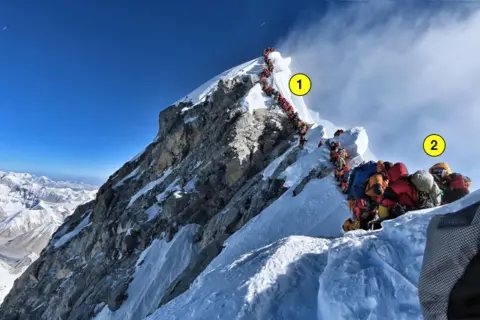
In 2013, Steck had a conflict with a group of Nepali guides on Everest, after which his Everest plans were put on hold for a time.
Quotes from the original 3
“Steck made global headlines in 2013 when he and two other western climbers traded blows with a group of furious Nepali guides over a climbing dispute on Mount Everest.”
Because of the impact of an earlier altercation with Sherpas, this climb of Everest was Ueli Steck's return to the world's highest peak after four years. (machine translation)
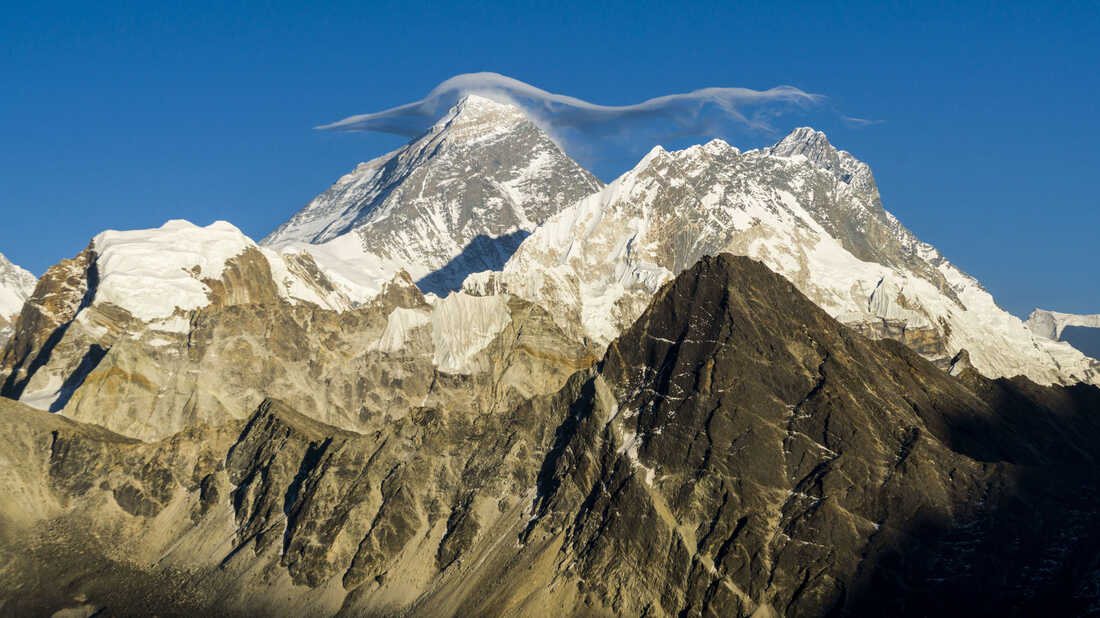
In spring 2017, Steck planned to summit Everest and Lhotse in a single continuous undertaking, taking the West Ridge route on Everest, which had not been repeated since its first ascent in 1963.
Quotes from the original 3
“a traverse of both Everest (8,850 meters) and Lhotse (8,516 meters) in a single push, while taking an ambitious route to the summit of Everest—the infamous West Ridge, unrepeated since its first ascent in 1963.”
According to The Himalayan Times, Tenji Sherpa returned to base camp on 28 April to meet Steck. After that, Steck went alone to a high camp and did not return.
Quotes from the original 2
“when he returned to the base camp and joined Steck on April 28 after taking rest for a few days in Lukla, Steck was happy.”
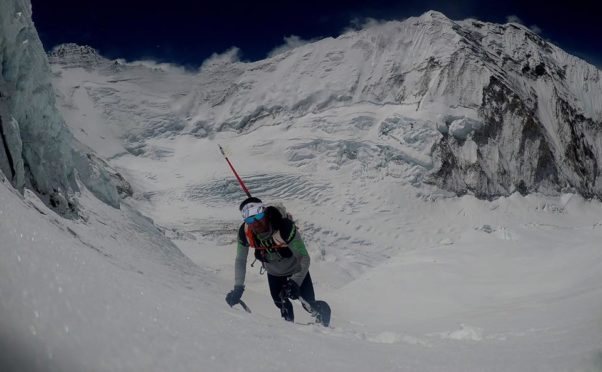
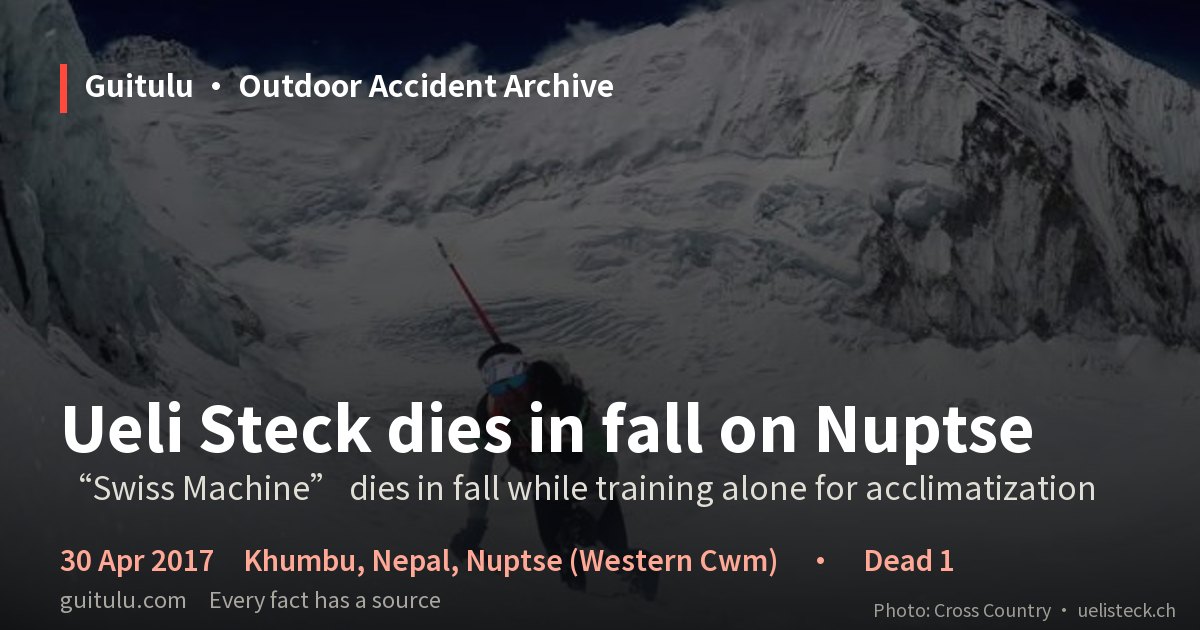
Accounts of the precise location differ: the head of the expedition company said it was at Nuptse Camp I; an official from Nepal's tourism department said it was near Camp II at an altitude of 6400 metres; The Kathmandu Post said it was on the Nuptse face between Camps I and II, at an altitude of 6600 metres; the British Mountaineering Council said he fell into the Western Cwm near Camp I while ascending Nuptse.
The camps and altitudes given as reference points differ between accounts.
Quotes from the original 4
“Ueli Steck was killed at Camp 1 of Mount Nuptse, Mingma Sherpa of Seven Summit Treks said.”
Accounts of the time differ: one report said other climbers last saw him at around 4:30 a.m.; The Kathmandu Post said he died at 7:30 a.m. and base camp was notified at 10 a.m.; Yicai said he set out alone only after learning at Camp II at 9:30 a.m. that his partner could not accompany him.
Quotes from the original 4
“having been seen for the last time around 04:30 by other mountaineers on Nuptse”
Steck, who was waiting at Camp II for his local Sherpa guide, still insisted on setting out alone after learning at 9:30 that the guide could not accompany him because of frostbite (machine translation)
The head of the Nepal Mountaineering Association speculated that he may have slipped and lost his footing, and also mentioned the possibility of falling rocks.
The possibility that he slipped was reported by several media outlets; only Nepali Times mentioned falling rocks.
According to The National, Mingma Sherpa, head of the expedition company, said conditions in the mountains were unpredictable and that even the most experienced climbers faced challenges.
Quotes from the original 1
“Things can be so unpredictable in the mountains and it can be challenging even for the most seasoned climbers.”
According to BMC, The plan was for Steck to follow the normal route to Camp II, then turn onto the Hornbein route to summit Everest, descend via the South Col and continue on to climb Lhotse.
Quotes from the original 1
“Later this month Ueli planned to climb Everest via the normal route to Camp 2, then branch off left. Taking the rarely-climbed Hornbein route to the summit and then descending via the normal route to South Col would result in a neat traverse.”
Elizabeth Hawley of the Himalayan Database speculated that something may have fallen and knocked him off the mountain, and said the outside world may never know.
Quotes from the original 1
“It’s possible that something fell and knocked him off the mountain: we’ll probably never know,”
According to The Kathmandu Post, The president of the Nepal Mountaineering Association said the association had long advised the government to restrict foreigners from climbing alone.
Quotes from the original 1
“We have been advising the government for long to discourage solo climbs by foreigners”
According to Gripped, In 2018, Tenji Sherpa attempted to complete Steck's unfinished Everest–Lhotse traverse without supplemental oxygen in his memory.
Quotes from the original 1
“Tenjing (Tenji) Sherpa, who was meant to be Steck’s partner last year is currently attempting the traverse without supplemental oxygen.”
 GuituluGlobal Outdoor Accident Archive