Winter mountaineeringInvolves: Hypothermia · Extreme weather3 people (Kelly James, Brian Hall, Jerry Cooke)
Casualties
Dead 1 Missing 2 James was found in a snow cave below the summit; he died of hypothermia. Hall and Cooke remained unaccounted for; the search and rescue effort became a search for remains, and they were later declared dead
Material
35 facts · 8 sources2 accounts differ and are shown side by side
The number at the end of a paragraph is how many facts it rests on; open it to see each fact and how well it is sourced:
Multiple sourcesSingle source. Conflicting accounts and speculation are kept out of the narrative.
The trip was originally planned to last two days. F12
On 10 December, James contacted his family by mobile phone, saying he was sheltering in a snow cave and his two companions had gone down the mountain to seek help. F14
The three were reported missing on 11 December. F17
The last clue was a brief signal returned by James's mobile phone on 12 December (Tuesday). F18
A Nevada Air National Guard C-130 aircraft equipped with heat-sensing equipment had to return after 15 minutes of flight because of turbulence. F20
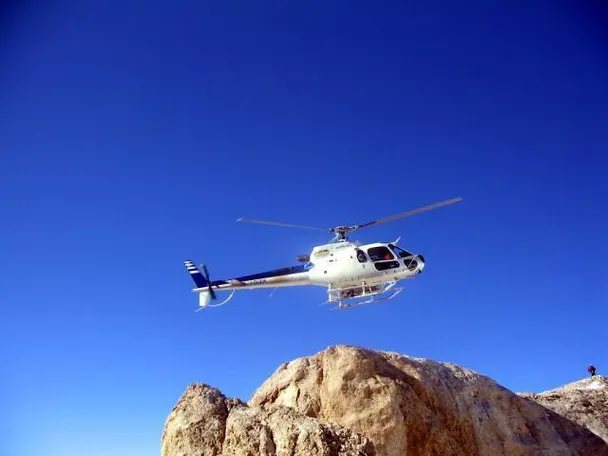
On 16 December (Saturday), approximately 80 climbers and helicopters were scheduled to take part in the search. F21
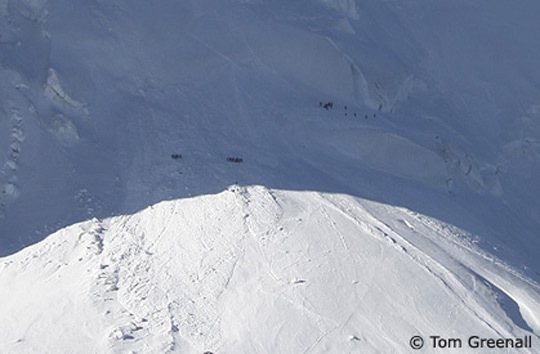
On 17 December, search and rescue personnel found a sleeping bag, an ice axe and ropes in a snow cave approximately 300 feet below the summit, and found a body in a second snow cave nearby. F22
On 20 December (Wednesday), the sheriff announced an end to the rescue operation, and the search and rescue effort was renamed a “recovery” operation. F30
The autopsy showed that James died of hypothermia and had been dead for several days when he was found. F29
Under each fact is a verbatim quote from the original. "Single source" means only one outlet mentioned it; "Accounts differ" means sources contradict each other and this site adopts neither side; "Speculation" is an inference by a reporter or a person involved, not a fact.
The three missing climbers were Kelly James, 48, of Dallas; Brian Hall, 37, of Dallas; and Jerry “Nikko” Cooke, 36, of New York.
Quotes from the original 2
“There has been no communication from Kelly James, 48, of Dallas, 37-year-old Brian Hall of Dallas, or 36-year-old Jerry "Nikko" Cooke of New York City”
According to The Bulletin, James had reportedly previously climbed Mount McKinley, the Andes and some peaks in Europe; none of the three had climbed Mount Hood.
Quotes from the original 2
“Reportedly, none of the three climbers had climbed the mountain before.”
Speculation: The sheriff said the two may have been blown off a steep cliff by winds exceeding 100 miles per hour; another Associated Press report said authorities speculated that the two may have fallen or been blown off a cliff, been buried by an avalanche, or died of hypothermia.
Both reports were from the Associated Press.
Quotes from the original 2
“Two climbers still missing on Mount Hood may have been swept to their deaths over a treacherous cliff by howling winds of more than 100 mph”
According to The Bulletin, Local guide Keane said that in winter, before the ice is covered by accumulated snow, it is a suitable time for those who want to climb ice; he also said the three had left themselves a somewhat narrow safety margin.
Quotes from the original 2
“Later in the year, the ice gets covered with snow.”
According to The Bulletin, Locator transmitters are available for rent on Mount Hood: people in distress must first activate the device and then call 911 on a mobile phone to initiate a search and rescue operation.
Quotes from the original 1
“A climber in need of rescue must activate the device, which will then emit a tracking signal, and then call 911 on a cell phone to initiate the search.”
Speculation: The sheriff said the three may have first reached the summit, then descended via the easier south side and tried but failed to find the rock and ice terrain known as the “Pearly Gates”.
Quotes from the original 2
“it appears the three climbers succeeded in reaching the summit from the difficult north side and started to go down the easier south side”
On 10 December, James contacted his family by mobile phone, saying he was sheltering in a snow cave and his two companions had gone down the mountain to seek help.
Quotes from the original 3
“He told them he was sheltering in a snow cave while his companions started back down the mountain, apparently to get help for him.”
“On Dec. 10, however, James called his family via cell phone to say that the party was in trouble and that his two companions had gone downhill for help.”
Speculation: A guide believed James may have been unable to get a mobile phone signal after speaking with his family, which was why he did not call for rescue directly.
Quotes from the original 1
“Keane says that James may not have been able to get a signal after talking with his family.”
According to Picayune Item, Rescue teams encountered strong winds, low visibility and an avalanche threat at high elevations; the wind was strong enough to knock people over.
Quotes from the original 1
“At higher elevations, the teams have faced wind so strong it knocked them off their feet, plus poor visibility in blowing snow and a threat of avalanches.”
According to Picayune Item, A Nevada Air National Guard C-130 aircraft equipped with heat-sensing equipment had to return after 15 minutes of flight because of turbulence.
Quotes from the original 1
“A Nevada Air National Guard C-130 equipped with heat-sensing devices flew over the mountain but had to turn back after 15 minutes because of turbulence”
On 17 December, search and rescue personnel found a sleeping bag, an ice axe and ropes in a snow cave approximately 300 feet below the summit, and found a body in a second snow cave nearby.
Quotes from the original 3
“The body was found in a second snow cave near another snow cave where rescuers found a sleeping bag, ice axes and rope, officials said.”
According to NBC News, According to reports, footprints near the snow cave appeared to lead toward the summit, but had been erased by the wind higher up.
Quotes from the original 1
“The footprints appeared to head up the mountain toward the summit, but were blown out by the wind at higher points, Tiffany said.”
According to The Vindicator, According to reports, search and rescue personnel found climbing equipment on the mountain, including two pieces of webbing and two aluminum anchors driven into the snow.
Quotes from the original 1
“climbing equipment found on the mountain -- including two slings and two aluminum anchors driven into the snow”
According to The Vindicator, According to reports, the place where the two men disappeared is commonly known as “the gullies”, has a slope of approximately 60 degrees and a drop of approximately 2500 feet below it; 13 deaths had been recorded in the same area over the previous 40 years.
Quotes from the original 2
“with a 60-degree slope and a treacherous 2,500-foot drop-off”
Accounts differ as to why James remained in the snow cave: authorities initially speculated that he may have dislocated his shoulder; CNN reported that the autopsy found no disabling injury that would have caused him to separate from his companions.
The autopsy details appear only in this CNN report.
Quotes from the original 2
“Authorities suspect James suffered a dislocated shoulder, perhaps in a fall.”
According to Picayune Item, Sheriff Wampler considered a fast winter climb shortsighted, saying that climbers should allow at least three days, rather than one, for a climb at this time of year.
Quotes from the original 2
“A minimum climb this time of year is three days, not just one day, three days”
 GuituluGlobal Outdoor Accident Archive