GuituluGlobal Outdoor Accident Archive 中文
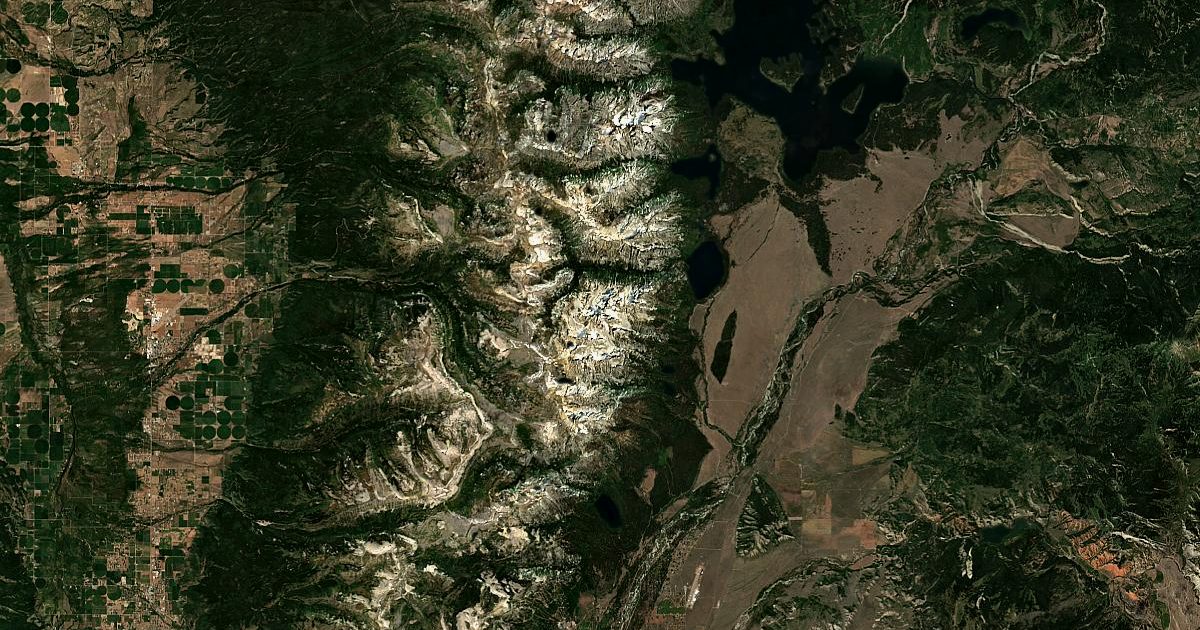
Satellite view of the area around United States, Wyoming, Grand Teton National Park, Exum Ridge on Grand Teton

Archive / Mountaineering

Lightning strike on Grand Teton's Exum Ridge

A party of 13 climbers was struck by lightning on Grand Teton, leaving one dead and several injured; rangers completed a short-haul rescue before nightfall

All injured climbers were evacuated from the mountain; a review of the accident appears in the American Alpine Club's 2004 edition of Accidents in North American Mountaineering

Satellite imagery Sentinel-2 cloudless 2024 © EOX (CC BY-NC-SA 4.0)

Date
Summer
Place
United States, Wyoming, Grand Teton National Park, Exum Ridge on Grand TetonUnited States › Wyoming · Rocky Mountains-110.802°E 43.741°N
Activity
MountaineeringInvolves: Hypothermia · Falls and slips · Extreme weather13 people (in four groups)
Casualties
Dead 1 Injured 5The park report and the Associated Press said 5 people were injured; the American Alpine Club accident report said 7 people were injured, 5 of them seriously
Material
44 facts · 6 sources3 accounts differ and are shown side by side

01What happened

On 26 July 2003, a party of 13 climbers ascended Grand Teton via the Upper Exum Ridge. Most were colleagues and family members. They were divided into four groups, each with at least one experienced climber, but many in the party had no climbing experience. According to reports, they set out at about 8 a.m., later than guided parties, and were delayed for about three hours before reaching the Friction Pitch because of the number of people ahead.Facts it rests onF03Single sourceMost of the 13-person climbing party were colleagues and family members, and they had been planning the climb for a year.F05Multiple sourcesThe 13 climbers climbed in four groups, each with at least one experienced climber.F35Multiple sourcesMany in the group had no climbing experience or were climbing a mountain for the first time.F06Multiple sourcesThey were climbing the Upper Exum Ridge, one of the most popular routes on Grand Teton and a moderate alpine climb.F07Single sourceThe party set out at about 8 a.m., later than parties with professional guides.F08Single sourceThere were many climbers ahead of them, and they were delayed for about three hours before reaching the Friction Pitch.

Rain began in the afternoon. The climbers felt only scattered drops and did not notice a major thunderstorm; they used radios to announce a retreat. Just then, lightning struck Exum Ridge at an altitude of about 13000 feet, killing Erica Summers. According to the report, this was the first lightning strike from the thunderstorm cell, and almost no thunder could be heard as it approached.Facts it rests onF10Multiple sourcesRain began in the afternoon; according to a park spokesperson, the party felt only scattered raindrops and did not notice a major thunderstorm; party member Rob Thomas used a radio to tell everyone to retreat.F11Single sourceTwo groups of climbers were on the Upper Exum Ridge at an altitude of about 13000 feet, about 150 feet apart. The leading group was climbing the 5.5-rated Friction Pitch.F12Multiple sourcesOn the afternoon of 26 July, lightning struck Exum Ridge, killing Erica Summers, a climber from Idaho.F15Multiple sourcesAccording to reports, the fatal strike was the first lightning produced by that thunderstorm cell, and no thunder could be heard as the storm approached; witnesses saw it produce only one other lightning strike, which hit a nearby peak.

The lightning strike travelled down the ridge: Rod Lieberer, who was climbing the Friction Pitch, was burned and fell, coming to rest suspended on the rope. Three people at the bottom of the pitch were knocked off a ledge and fell about 70 feet, stopping only when their rope caught around a rock horn. At 15:46, a member of the party called 911 on a mobile phone and reported that CPR was in progress, one person was suspended, several were injured, and three were unaccounted for.Facts it rests onF16Multiple sourcesThe deceased's husband, Clinton Summers, was sitting beside her, belaying Rod Liberal as he climbed; the lightning traveled down the ridge, and Liberal was severely burned and fell from the pitch, hanging on the rope.F17Multiple sourcesThree climbers at the bottom of the Friction Pitch were knocked off a ledge by the lightning strike and fell about 70 feet; their fall was stopped only when the rope wrapped around a rock projection and became wedged in a crack.F18Multiple sourcesThe first 911 call, made by mobile phone at 15:46, reported that CPR was being performed, one person was hanging unresponsive on a rope, multiple people were injured, and at least three people were unaccounted for.

Grand Teton National Park deployed two helicopters and nearly all personnel from the Jenny Lake district. The first airlift was aborted because of clouds, and rangers instead began climbing on foot from the Lower Saddle. After the weather improved, a helicopter short-hauled rangers to the top of the Friction Pitch, with the first ranger arriving at 18:09. The injured were short-hauled one by one to the Lower Saddle and then transported down the mountain.Facts it rests onF23Multiple sourcesThe rescue involved two fully crewed interagency contract helicopters, one air ambulance, three ground ambulances, and nearly all personnel from the Jenny Lake district; another report said that about 50 rangers ultimately took part.F22Single sourceDuring the first attempt to hoist a ranger to the Friction Pitch, clouds quickly formed below, and the helicopter aborted the mission and returned to the Lower Saddle at 17:21. The rangers then began climbing up on foot.F24Multiple sourcesA contract helicopter transported 11 rangers to the Lower Saddle, then carried them by short-haul to the top of the Friction Pitch; other rangers climbed on foot from the Lower Saddle to the scene.F26Single sourceAt 18:09, ranger Leo Larson was the first to reach the top of the Friction Pitch.F29Single sourceA helicopter carried the injured one by one by short-haul to the Lower Saddle, where they transferred to another helicopter for the flight to the valley.

Lieberer had been suspended on the rope for more than four hours. Rangers placed him in a litter midway up the pitch and airlifted him out by helicopter at 20:57; he was the last injured person evacuated from the mountain. The park said it was one of the most complex rescues in its history and its third fatal accident that year.Facts it rests onF30Multiple sourcesLiberatore was placed in a litter midway up the pitch and raised to a rock ledge about 60 feet above; by 19:56, he had been suspended for more than four hours.F32Single sourceLiberatore's litter was attached to the helicopter's hoist line and lifted away at 20:57.F31Single sourceLiberatore was the last injured person evacuated from the mountain. He was short-hauled to Lupine Meadows at dusk, then flown by medical helicopter to a regional trauma center.F25Single sourceThe park said this was one of the most complex rescues in its history.F02Multiple sourcesThis was the third fatal accident in Grand Teton National Park that year and the eleventh major search and rescue operation that year.

The number at the end of a paragraph is how many facts it rests on; open it to see each fact and how well it is sourced: Multiple sourcesSingle source. Conflicting accounts and speculation are kept out of the narrative.

  • Reported locations along the route (illustrative)Schematic

Satellite imagery Sentinel-2 cloudless 2024 © EOX · Terrain AWS Terrain Tiles · Orange line is schematic · Place coordinates not individually verified

Route review

6 scenes to understand what happened

Scroll down and the map flies to where each part happened. The line is Schematic, Connects the locations mentioned in reports in order, showing only the approximate direction, not the actual track. Sources for the locations' coordinates are in places.json.

01

Full route

The locations mentioned in reports are connected in sequence to show the approximate course of events (illustrative).

03

Silent lightning

Scattered rain fell in the afternoon. According to the report, the thunderstorm's first lightning strike hit the ridge, killing Erica Summers and knocking several people off.Facts it rests onF10Multiple sourcesRain began in the afternoon; according to a park spokesperson, the party felt only scattered raindrops and did not notice a major thunderstorm; party member Rob Thomas used a radio to tell everyone to retreat.F15Multiple sourcesAccording to reports, the fatal strike was the first lightning produced by that thunderstorm cell, and no thunder could be heard as the storm approached; witnesses saw it produce only one other lightning strike, which hit a nearby peak.F12Multiple sourcesOn the afternoon of 26 July, lightning struck Exum Ridge, killing Erica Summers, a climber from Idaho.F17Multiple sourcesThree climbers at the bottom of the Friction Pitch were knocked off a ledge by the lightning strike and fell about 70 feet; their fall was stopped only when the rope wrapped around a rock projection and became wedged in a crack.

06

The last person

Liberal, who had been hanging for more than four hours, was placed in a litter, hoisted out at 20:57 and taken to Lupine Meadows.Facts it rests onF30Multiple sourcesLiberatore was placed in a litter midway up the pitch and raised to a rock ledge about 60 feet above; by 19:56, he had been suspended for more than four hours.F32Single sourceLiberatore's litter was attached to the helicopter's hoist line and lifted away at 20:57.F31Single sourceLiberatore was the last injured person evacuated from the mountain. He was short-hauled to Lupine Meadows at dusk, then flown by medical helicopter to a regional trauma center.

02Timeline

  1. The American Alpine Club report recorded the lightning strike at 15:35. F13

  2. The party set out at about 8 a.m., later than parties with professional guides. F07

  3. Liberatore was placed in a litter midway up the pitch and raised to a rock ledge about 60 feet above; by 19:56, he had been suspended for more than four hours. F30

  4. The American Alpine Club report says the group reached the bottom of the Wall Street ledge at about 11 a.m. F09

  5. Liberatore's litter was attached to the helicopter's hoist line and lifted away at 20:57. F32

  6. During the first attempt to hoist a ranger to the Friction Pitch, clouds quickly formed below, and the helicopter aborted the mission and returned to the Lower Saddle at 17:21. The rangers then began climbing up on foot. F22

  7. At 16:31, helicopter pilot Lawrence Perry took off with two rangers to survey the scene. F21

  8. At 18:09, ranger Leo Larson was the first to reach the top of the Friction Pitch. F26

  9. The first 911 call, made by mobile phone at 15:46, reported that CPR was being performed, one person was hanging unresponsive on a rope, multiple people were injured, and at least three people were unaccounted for. F18

  10. On the afternoon of 26 July, lightning struck Exum Ridge, killing Erica Summers, a climber from Idaho. F12

  11. On 24–25 July 2004, a year after the incident, the climbers returned to Grand Teton and quietly placed a memorial stone, except for Liberatore, who was still recovering from his injuries. F33

03Lessons

Weather and retreat

Account for afternoon thunderstorms by the hour

There had been afternoon thunderstorms on each of the two days before the accident. The report said the forecast and recent weather should have indicated the risk on the afternoon of the 26th. Teton rangers generally recommend leaving the summit by noon or 1 p.m.; departure and turnaround times should be planned backward from that deadline.Facts it rests onF04Single sourceOn each of the two days before the incident, thunderstorms formed in the afternoon and moved across the Teton Range.F39Single sourceThe American Alpine Club report concluded that the weather forecast and recent weather should have alerted the group that thunderstorms were very likely on the afternoon of the 26th.F36Single sourceSummer thunderstorms in the Teton Range most often occur in the afternoon, and park rangers generally advise climbers to leave the summit before noon or 1 p.m.

Teams and decisions

Large parties move more slowly on popular routes

The party of 13 included many inexperienced climbers and was delayed for about three hours while waiting in line on the most popular route. The report noted that such a party would find it hard to climb quickly and that some would inevitably approach the summit very late; large parties should start earlier or choose a less ambitious objective.Facts it rests onF08Single sourceThere were many climbers ahead of them, and they were delayed for about three hours before reaching the Friction Pitch.F35Multiple sourcesMany in the group had no climbing experience or were climbing a mountain for the first time.F40Single sourceThe American Alpine Club report noted that a group of 13 would have difficulty climbing quickly and that, even without encountering other groups, some would inevitably have approached the summit very late in the afternoon.F06Multiple sourcesThey were climbing the Upper Exum Ridge, one of the most popular routes on Grand Teton and a moderate alpine climb.

Weather and retreat

Thunderstorms may come without warning

According to the report, the fatal strike was the thunderstorm's first lightning strike, and no thunder could be heard as it approached. Many climbers later said the clouds “didn't look that bad”. Climbers cannot wait until they hear thunder to retreat; they should already be descending when the dangerous period arrives.Facts it rests onF15Multiple sourcesAccording to reports, the fatal strike was the first lightning produced by that thunderstorm cell, and no thunder could be heard as the storm approached; witnesses saw it produce only one other lightning strike, which hit a nearby peak.F38Single sourceMany group members later said that the thundercloud “didn't look that bad”, or that “we've been in much worse weather”.F41Single sourceThe report concluded that, given the group's position, the time and their technical skill level, they might not have been able to reach safety in time even if thunder had warned them of the storm 20–40 minutes in advance.

Rescue and self-rescue

Equalize anchors; helmets and mobile phones save lives

Everyone in the party wore a helmet, and a mobile phone call to 911 initiated the rescue. But the anchor at the top of the Friction Pitch was not equalized, and after the lightning strike the weight of two people came onto one cam. On an exposed ridge, protection systems should also be built for the worst case.Facts it rests onF20Single sourceThe entire party wore helmets, and their mobile phones could connect, allowing them to call for rescue.F42Single sourceThe report noted that the protection anchor at the top of the Friction Pitch was not equalized, and that after the lightning strike, Liberatore's full weight and most of Clinton's weight were on a single No. 0.75 cam.

04Fact list 44 facts

Under each fact is a verbatim quote from the original. "Single source" means only one outlet mentioned it; "Accounts differ" means sources contradict each other and this site adopts neither side; "Speculation" is an inference by a reporter or a person involved, not a fact.

  1. F01Single sourceAftermath

    According to Spokesman-Review, Liberal later experienced pneumonia, pancreatitis and kidney problems requiring dialysis.

    Quotes from the original 1

    “He survived pneumonia, pancreatitis and kidney problems that required dialysis.”

    Spokesman-Review · 2004-08-08
  2. F02Multiple sourcesAftermath

    This was the third fatal accident in Grand Teton National Park that year and the eleventh major search and rescue operation that year.

    Quotes from the original 2

    “This marks the eleventh major search and rescue in the park this year and the third fatality.”

    NPS · 2003-08-11

    “Summers' death was the third in the park this year.”

    AP · 2003-07-28
  3. F03Single sourceBackground

    According to Spokesman-Review, Most of the 13-person climbing party were colleagues and family members, and they had been planning the climb for a year.

    Quotes from the original 1

    “The 13 climbers, mostly co-workers and family members, had planned this trip for a year.”

    Spokesman-Review · 2004-07-25
  4. F04Single sourceBackground

    According to AAC, On each of the two days before the incident, thunderstorms formed in the afternoon and moved across the Teton Range.

    Quotes from the original 1

    “During the two days prior to this incident, afternoon thunderstorms developed and moved over the Tetons.”

    AAC ·
  5. F05Multiple sourcesPlan

    The 13 climbers climbed in four groups, each with at least one experienced climber.

    Quotes from the original 3

    “Erica Summers, 25, her 27-year-old husband Clinton and four others were among 13 climbers who had divided themselves into four groups for the climb.”

    AP · 2003-07-28

    “Each group had at least one experienced climber.”

    AP · 2003-07-28

    “They were in four teams, spread across several hundred feet of mountain”

    Spokesman-Review · 2004-07-25
  6. F06Multiple sourcesPlan

    They were climbing the Upper Exum Ridge, one of the most popular routes on Grand Teton and a moderate alpine climb.

    Quotes from the original 2

    “The Exum Ridge is undoubtedly the most popular route on the Grand Teton”

    AAC ·

    “The group had taken one of the most popular routes on the Grand, along the Upper Exum Ridge, an alpine climb considered moderately difficult.”

    Spokesman-Review · 2004-07-25
  7. F07Single sourceMovement

    According to Spokesman-Review, The party set out at about 8 a.m., later than parties with professional guides.

    Quotes from the original 1

    “The climbers in trouble had started out around 8 a.m., later than those who use professional guides.”

    Spokesman-Review · 2004-07-25
  8. F08Single sourceMovement

    According to Spokesman-Review, There were many climbers ahead of them, and they were delayed for about three hours before reaching the Friction Pitch.

    Quotes from the original 1

    “they were delayed about three hours in getting to Friction Pitch because so many others were ahead of them.”

    Spokesman-Review · 2004-07-25
  9. F09Single sourceMovement

    According to AAC, The American Alpine Club report says the group reached the bottom of the Wall Street ledge at about 11 a.m.

    Quotes from the original 1

    “Getting to the base of Wall Street around 1100 with 13 climbers”

    AAC ·
  10. F10Multiple sourcesEvent

    Rain began in the afternoon; according to a park spokesperson, the party felt only scattered raindrops and did not notice a major thunderstorm; party member Rob Thomas used a radio to tell everyone to retreat.

    Quotes from the original 3

    “The sunny morning had given way to afternoon rain.”

    Spokesman-Review · 2004-07-25

    “They all felt rain sprinkles and they didn't sense a big storm,”

    AP · 2003-07-28

    “But with a storm possibly moving in, Rob had radioed that it was time to retreat.”

    Spokesman-Review · 2004-07-25
  11. F11Single sourceEvent

    According to NPS, Two groups of climbers were on the Upper Exum Ridge at an altitude of about 13000 feet, about 150 feet apart. The leading group was climbing the 5.5-rated Friction Pitch.

    Quotes from the original 2

    “two groups of climbers, separated by 150 feet, were ascending the upper Exum Ridge around the 13,000 foot elevation”

    NPS · 2003-08-11

    “The lead group was climbing the Grand's Friction Pitch, a 5.5 climb”

    NPS · 2003-08-11
  12. F12Multiple sourcesEvent

    On the afternoon of 26 July, lightning struck Exum Ridge, killing Erica Summers, a climber from Idaho.

    Quotes from the original 3

    “On July 26 at 1535, lightning struck and fatally injured Erica Summers (27) while climbing the Exum Ridge of the Grand Teton.”

    AAC ·

    “lightning struck and killed E.S., 25, of Idaho Falls, Idaho,”

    NPS · 2003-08-11

    “Lightning struck and killed an Idaho woman and injured five others as the group was climbing the 13,770-foot Grand Teton, a park spokeswoman said.”

    AP · 2003-07-28
  13. F13Single sourceEvent

    According to AAC, The American Alpine Club report recorded the lightning strike at 15:35.

    Quotes from the original 1

    “On July 26 at 1535, lightning struck”

    AAC ·
  14. F14Accounts differEvent

    Accounts of the number injured differ: the park's morning report and the Associated Press said another 5 people were injured; the American Alpine Club report said the lightning strike injured 7 people, 5 of them seriously.

    The difference may be due to different counting criteria (whether those with minor injuries were included)

    Quotes from the original 3

    “and injured five others.”

    NPS · 2003-08-11

    “injured five others as the group was climbing”

    AP · 2003-07-28

    “This single lightning strike traveled down the Exum Ridge injuring seven climbers, five seriously.”

    AAC ·
  15. F15Multiple sourcesFound at scene

    According to reports, the fatal strike was the first lightning produced by that thunderstorm cell, and no thunder could be heard as the storm approached; witnesses saw it produce only one other lightning strike, which hit a nearby peak.

    Quotes from the original 3

    “The fatal strike was reportedly the first lightning produced from the storm cell, with no audible thunder as the cell approached.”

    AAC ·

    “Witnesses reported only one other lightning strike produced from the storm cell, hitting a nearby peak.”

    AAC ·

    “In fact, they only saw two major lightning strikes and one was the one they were struck by.”

    AP · 2003-07-28
  16. F16Multiple sourcesEvent

    The deceased's husband, Clinton Summers, was sitting beside her, belaying Rod Liberal as he climbed; the lightning traveled down the ridge, and Liberal was severely burned and fell from the pitch, hanging on the rope.

    Quotes from the original 2

    “C.S., E.S.'s husband, was sitting next to her and belaying R.L., 27, when the single lightning strike traveled down the ridge, severely burning R.L. who fell off the pitch.”

    NPS · 2003-08-11

    “He was about halfway up when lightning struck. It blew him off the rock and swung him around the ridge leaving him dangling by his rope, about 13,000 feet up.”

    Spokesman-Review · 2004-07-25
  17. F17Multiple sourcesEvent

    Three climbers at the bottom of the Friction Pitch were knocked off a ledge by the lightning strike and fell about 70 feet; their fall was stopped only when the rope wrapped around a rock projection and became wedged in a crack.

    Quotes from the original 2

    “The impact blew all three of them off the ledge; they fell 70 feet and were stopped only when their rope wrapped around rock horns and caught in cracks.”

    NPS · 2003-08-11

    “Amazingly, that had stopped their fall.”

    Spokesman-Review · 2004-07-25
  18. F18Multiple sourcesEvent

    The first 911 call, made by mobile phone at 15:46, reported that CPR was being performed, one person was hanging unresponsive on a rope, multiple people were injured, and at least three people were unaccounted for.

    Quotes from the original 2

    “The initial 911 cell phone call at 1546 reported that CPR was in progress, one climber was hanging unresponsive from a rope, multiple people were injured and at least three climbers were unaccounted for.”

    AAC ·

    “At 3:46 p.m., the dispatcher connected Torres to the 911 call.”

    Spokesman-Review · 2004-07-25
  19. F19Single sourceEvent

    According to Spokesman-Review, The deceased's companions performed CPR on her, but there was no response.

    Quotes from the original 1

    “Clinton sensed his wife was already gone, but he and Rob attempted CPR. There was no response.”

    Spokesman-Review · 2004-07-25
  20. F20Single sourceFound at scene

    According to AAC, The entire party wore helmets, and their mobile phones could connect, allowing them to call for rescue.

    Quotes from the original 1

    “Fortunately all members of the group wore helmets and their cell phone worked to initiate a rescue response.”

    AAC ·
  21. F21Single sourceEvent

    According to Spokesman-Review, At 16:31, helicopter pilot Lawrence Perry took off with two rangers to survey the scene.

    Quotes from the original 1

    “At 4:31 p.m., helicopter pilot Laurence Perry took off for a reconnaissance mission with two rangers”

    Spokesman-Review · 2004-07-25
  22. F22Single sourceEvent

    According to Spokesman-Review, During the first attempt to hoist a ranger to the Friction Pitch, clouds quickly formed below, and the helicopter aborted the mission and returned to the Lower Saddle at 17:21. The rangers then began climbing up on foot.

    Quotes from the original 2

    “Clouds were forming fast below.”

    Spokesman-Review · 2004-08-01

    “The helicopter settled back on the Lower Saddle. It was 5:21 p.m. Jackson knew the weather might not clear. It was time to get rangers up by foot.”

    Spokesman-Review · 2004-08-01
  23. F23Multiple sourcesEvent

    The rescue involved two fully crewed interagency contract helicopters, one air ambulance, three ground ambulances, and nearly all personnel from the Jenny Lake district; another report said that about 50 rangers ultimately took part.

    Quotes from the original 2

    “The response to this incident included two Type-3 interagency contract helicopters with two full helitack crews, one air ambulance, three ground ambulances, and almost all members of the Jenny Lake Sub-District staff.”

    AAC ·

    “Eventually, about 50 rangers would participate in the rescue, along with two helicopters.”

    Spokesman-Review · 2004-08-01
  24. F24Multiple sourcesEvent

    A contract helicopter transported 11 rangers to the Lower Saddle, then carried them by short-haul to the top of the Friction Pitch; other rangers climbed on foot from the Lower Saddle to the scene.

    Quotes from the original 2

    “A contract helicopter flew 11 rangers to the Lower Saddle and inserted them at the top of Friction Pitch via short-haul.”

    NPS · 2003-08-11

    “Rangers flown into the Lower Saddle climbed or were short-hauled to two accident scenes.”

    AAC ·
  25. F25Single sourcePost-incident analysis

    According to NPS, The park said this was one of the most complex rescues in its history.

    Quotes from the original 1

    “Rangers launched one of the most complex rescues in the history of the park.”

    NPS · 2003-08-11
  26. F26Single sourceEvent

    According to Spokesman-Review, At 18:09, ranger Leo Larson was the first to reach the top of the Friction Pitch.

    Quotes from the original 1

    “At 6:09 p.m., Larson became the first ranger atop Friction Pitch.”

    Spokesman-Review · 2004-08-01
  27. F27Accounts differEvent

    Accounts differ on how many people descended on their own: the Associated Press said another 4 descended on their own; a serialized report said 6 of the 13 ultimately descended on their own.

    The counting methods may differ

    Quotes from the original 2

    “Four others in the group were able to climb down from the mountain by themselves.”

    AP · 2003-07-28

    “Six of the group of 13 eventually did.”

    Spokesman-Review · 2004-08-01
  28. F28Single sourceEvent

    According to NPS, By evening, the injured had begun to develop hypothermia because of the low temperatures on the mountain.

    Quotes from the original 1

    “By evening, the patients began suffering from hypothermia from the cold mountain temperatures.”

    NPS · 2003-08-11
  29. F29Single sourceEvent

    According to NPS, A helicopter carried the injured one by one by short-haul to the Lower Saddle, where they transferred to another helicopter for the flight to the valley.

    Quotes from the original 1

    “One by one, the helicopter short-hauled them to the Lower Saddle, where they were loaded into another helicopter and flown to the valley floor.”

    NPS · 2003-08-11
  30. F30Multiple sourcesEvent

    Liberatore was placed in a litter midway up the pitch and raised to a rock ledge about 60 feet above; by 19:56, he had been suspended for more than four hours.

    Quotes from the original 2

    “R.L. was packaged into a litter mid-face on Friction Pitch and raised to a ledge 60 feet above.”

    NPS · 2003-08-11

    “It was 7:56 p.m. Rod had been hanging for more than four hours.”

    Spokesman-Review · 2004-08-08
  31. F31Single sourceEvent

    According to NPS, Liberatore was the last injured person evacuated from the mountain. He was short-hauled to Lupine Meadows at dusk, then flown by medical helicopter to a regional trauma center.

    Quotes from the original 1

    “In fading light, R.L., the last patient to be removed from the mountain, was short-hauled from the Exum Ridge to Lupine Meadows, then flown to a regional trauma center via medevac helicopter.”

    NPS · 2003-08-11
  32. F32Single sourceEvent

    According to Spokesman-Review, Liberatore's litter was attached to the helicopter's hoist line and lifted away at 20:57.

    Quotes from the original 1

    “It was 8:57 p.m.”

    Spokesman-Review · 2004-08-08
  33. F33Single sourceAftermath

    According to Spokesman-Review, On 24–25 July 2004, a year after the incident, the climbers returned to Grand Teton and quietly placed a memorial stone, except for Liberatore, who was still recovering from his injuries.

    Quotes from the original 1

    “Last month, on the weekend of July 24-25, a year after the tragedy, all of the climbers except the still-injured Liberal, made a climbing expedition to the Grand and discretely placed the memorial”

    Spokesman-Review · 2004-08-08
  34. F34Single sourceBackground

    According to Spokesman-Review, Most of the group were colleagues in their twenties and thirties who worked in computer technology at a health products company in Idaho.

    Quotes from the original 1

    “Many were colleagues in their 20s and 30s, working in computer technology at an Idaho health products company.”

    Spokesman-Review · 2004-07-25
  35. F35Multiple sourcesBackground

    Many in the group had no climbing experience or were climbing a mountain for the first time.

    Quotes from the original 2

    “Getting to the base of Wall Street around 1100 with 13 climbers, many with no climbing experience”

    AAC ·

    “with some first-timers in the group”

    Spokesman-Review · 2004-07-25
  36. F36Single sourceBackground

    According to Spokesman-Review, Summer thunderstorms in the Teton Range most often occur in the afternoon, and park rangers generally advise climbers to leave the summit before noon or 1 p.m.

    Quotes from the original 2

    “Mid-afternoon, when the lightning struck, is when summer thunderstorms are most common in the Tetons.”

    Spokesman-Review · 2004-07-25

    “Park rangers generally advise climbers to be off the summit by noon or 1 p.m.”

    Spokesman-Review · 2004-07-25
  37. F37Accounts differBackground

    Accounts differ on the age of the person who died: the American Alpine Club report gave 27; the park's morning report and the Associated Press gave 25.

    The sources give different ages for an unknown reason

    Quotes from the original 3

    “fatally injured Erica Summers (27)”

    AAC ·

    “killed E.S., 25, of Idaho Falls, Idaho”

    NPS · 2003-08-11

    “Erica Summers, 25, her 27-year-old husband Clinton”

    AP · 2003-07-28
  38. F38Single sourceParticipant's view

    According to AAC, Many group members later said that the thundercloud “didn't look that bad”, or that “we've been in much worse weather”.

    Quotes from the original 1

    “What many said was, “It didn’t look that bad,” or “We’ve been in way-worse weather.””

    AAC ·
  39. F39Single sourcePost-incident analysis

    According to AAC, The American Alpine Club report concluded that the weather forecast and recent weather should have alerted the group that thunderstorms were very likely on the afternoon of the 26th.

    Quotes from the original 1

    “Forecasts and recent weather observations should have indicated to this group that thunderstorms were likely to develop on the afternoon of the 26th.”

    AAC ·
  40. F40Single sourcePost-incident analysis

    According to AAC, The American Alpine Club report noted that a group of 13 would have difficulty climbing quickly and that, even without encountering other groups, some would inevitably have approached the summit very late in the afternoon.

    Quotes from the original 2

    “It is very difficult for a group of 13 people to climb quickly.”

    AAC ·

    “would surely have put at least some members of the group near the summit very late in the afternoon, even if other climbing parties had not been encountered.”

    AAC ·
  41. F41Single sourcePost-incident analysis

    According to AAC, The report concluded that, given the group's position, the time and their technical skill level, they might not have been able to reach safety in time even if thunder had warned them of the storm 20–40 minutes in advance.

    Quotes from the original 1

    “it is doubtful that had the storm cell approached with thunder 20-40 minutes before hitting the Grand Teton, the group would have been able to move off the mountain fast enough to get to a safer location.”

    AAC ·
  42. F42Single sourcePost-incident analysis

    According to AAC, The report noted that the protection anchor at the top of the Friction Pitch was not equalized, and that after the lightning strike, Liberatore's full weight and most of Clinton's weight were on a single No. 0.75 cam.

    Quotes from the original 2

    “The anchor C. Summers was utilizing at the top of the Friction Pitch was not equalized.”

    AAC ·

    “All of Rodrigo Liberal’s (27) weight and much of Clinton Summers’ (27) weight relied on a single .75 Camalot after the strike.”

    AAC ·
  43. F43Single sourcePost-incident analysis

    According to AAC, The report concluded that more people would certainly have died if the weather had not improved and rescue resources had not arrived so promptly.

    Quotes from the original 1

    “Had weather conditions not improved and rescue resources not been so readily available, more life certainly would have been lost.”

    AAC ·
  44. F44Single sourceParticipant's view

    According to AAC, Senior ranger Tom Kimbrough believed that, in terms of the number of people rescued and the coordination of helicopters, this may have been the most remarkable rescue in American mountaineering history.

    Quotes from the original 1

    ““This might be the most spectacular rescue in the history of American mountaineering in terms of numbers of people being extricated and the way the helicopters worked and how fast the boys did it. ””

    AAC ·