GuituluGlobal Outdoor Accident Archive 中文
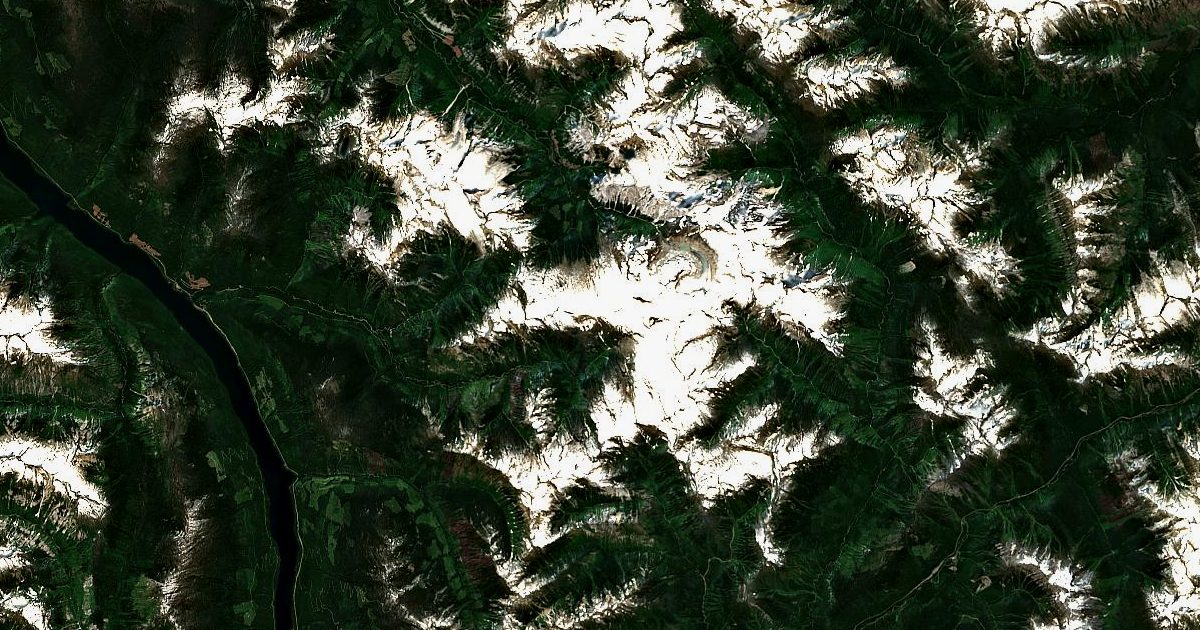
Satellite view of the area around Durrand Glacier, Mount Tumbledown, La Traviata snow gully, northern Selkirk Mountains, British Columbia, Canada

Archive / Mountaineering

Durrand Glacier avalanche

Guides led two groups up a steep snow gully in succession; 13 were caught and 7 died

The British Columbia coroner released a report in November 2003, ruling the deaths accidental

Satellite imagery Sentinel-2 cloudless 2024 © EOX (CC BY-NC-SA 4.0)

Date
Winter
Place
Durrand Glacier, Mount Tumbledown, La Traviata snow gully, northern Selkirk Mountains, British Columbia, CanadaCanada › British Columbia · Selkirk Mountains-117.993°E 51.290°N
Activity
SkiingInvolves: AvalancheTwo guided ski and snowboard mountaineering groups from Selkirk Mountain Experience (accounts of the total number differ)
Casualties
Dead 7 13 people were caught in the avalanche and 7 died (4 Canadians and 3 Americans)
Material
47 facts · 15 sources5 accounts differ and are shown side by side

01What happened

Durrand Glacier is in the northern Selkirk Mountains northeast of Revelstoke, British Columbia, Canada. Guests of Selkirk Mountain Experience (SME) flew by helicopter to a lodge beside the glacier, accessible only by helicopter, to begin a week-long ski trip. Snowboarding pioneer Craig Kelly, who was training as a backcountry guide, was also in the party; he reportedly arrived at the lodge on 18 January.Facts it rests onF40Multiple sourcesDurrand Glacier is about 34 miles northeast of Revelstoke and about 700 kilometres from Vancouver.F41Multiple sourcesThe group was organised by Selkirk Mountain Experience (SME) and travelled by helicopter to the company's chalet near the glacier, which could only be reached and left by helicopter.F44Multiple sourcesKelly was training to become a backcountry guide at the time and hoped to become one of Canada's first split-board guides.F07Single sourceKelly arrived at the chalet by helicopter on 18 January 2003.

The local avalanche danger rating that day was “considerable”. At 8 a.m. on 20 January, lead guide Beglinger and trainee guide Wiley each set out with a group. Both groups went to the La Traviata west snow gully on Mount Tumbledown that day, climbing in succession in a zigzag pattern, with members of each group about 5 feet apart. Wiley was reportedly afraid of the snow conditions that morning but did not voice his concerns.Facts it rests onF10Multiple sourcesThe Canadian Avalanche Association rated the local avalanche danger that day as “considerable”, in the middle of the danger scale.F11Single sourceAt 8 a.m. on 20 January, two groups of skiers set out, one led by Beglinger and the other by apprentice guide Ken Wylie; the groups normally went to different locations, but that day both went to the La Traviata west snow gully.F12Multiple sourcesThe two groups climbed the snow slope in a zigzag, one after the other, with Beglinger's group in front and Wylie's group following; members of each group were asked to stay about 5 feet apart.F39Multiple sourcesThe incident occurred on Mount Tumbledown in the Durrand Glacier area of the northern Selkirk Mountains in British Columbia. The avalanche occurred on a slope known as the La Traviata west snow gully.F28Single sourceWylie said years later that he had been afraid of the snow conditions that morning but had not had the courage to tell Beglinger of his concerns and had followed the lead guide anyway.

When several people in the first group reached a convex feature at the top of the slope, the snowpack settled over a large area, triggering an avalanche that swept up 13 people below. Survivor Seibert recalled hearing a loud cracking sound and being swept down the slope by the snow seconds later. Seven people died, including four Canadians and three Americans, aged between 25 and 50.Facts it rests onF15Multiple sourcesWhen several members of the first group reached a convex feature at the top of the slope, they felt a large area of the snowpack settle, immediately triggering a large avalanche that caught 13 people below.F17Multiple sourcesThe avalanche caught 13 people, 7 of whom died.F20Single sourceSurvivor Seibert said he was third in the second group when he felt the snow settle and heard a loud cracking sound. Seconds later, he was swept down the slope by the snow; when he came to a stop, only his head and left hand were exposed.F18Multiple sourcesThe dead were 4 Canadians and 3 Americans, aged between 25 and 50.

Beglinger and 7 guests who were above the fracture line immediately began a rescue, and a rescue helicopter reportedly arrived within 35 minutes. According to the coroner, all those who died were asphyxiated. Initial reports were confused: one report initially said 8 Americans had died, but police later corrected the number to 7.Facts it rests onF23Single sourceBeglinger and the 7 guests above the fracture line immediately began rescue efforts at the scene, with Beglinger directing the rescue and calling for additional help.F25Single sourceSurvivors dug one another out and found those who had died; rescuers arrived by helicopter within 35 minutes.F04Single sourceAccording to coroner Chuck Purse, all 7 died of asphyxiation and none had external injuries.F29Single sourceInformation was confused in the immediate aftermath. Initial reports said 8 American skiers had been killed; police later corrected the death toll to 7.

In November 2003, the British Columbia coroner's report ruled the incident an accident and did not find SME negligent. The report noted an unstable layer deep in the snowpack, that several operators had reported widespread avalanche activity before the incident, and that SME did not subscribe to InfoEx, the industry's information-sharing platform. The coroner recommended that all commercial operators be required to join InfoEx. Two weeks later, another avalanche at Rogers Pass claimed the lives of 7 students.Facts it rests onF33Multiple sourcesThe report by British Columbia coroner Chuck Purse was released in November 2003. It ruled the deaths accidental and did not find SME negligent.F05Single sourceThe coroner's report noted an unstable layer deep in the snowpack and said that several commercial operators had reported widespread avalanche activity from 2 to 19 January.F06Multiple sourcesThe avalanche activity reported by several operators was published on InfoEx, an industry information-sharing platform; SME did not subscribe to InfoEx at the time and could see only the general backcountry avalanche forecasts issued by the Canadian Avalanche Association.F36Multiple sourcesThe coroner recommended that all commercial operators whose clients' safety could be affected by avalanches be required to join InfoEx, and that ski touring operators form an industry association.F32Multiple sourcesAbout two weeks later, on 1 February, another avalanche occurred at Connaught Creek in Rogers Pass, killing 7 tenth-grade students; the two avalanches killed 14 people in total.

The number at the end of a paragraph is how many facts it rests on; open it to see each fact and how well it is sourced: Multiple sourcesSingle source. Conflicting accounts and speculation are kept out of the narrative.

  • Reported locations along the route (illustrative)Schematic

Satellite imagery Sentinel-2 cloudless 2024 © EOX · Terrain AWS Terrain Tiles · Orange line is schematic · Place coordinates not individually verified

Route review

5 scenes to understand what happened

Scroll down and the map flies to where each part happened. The line is Schematic, The locations mentioned in reports are connected in sequence, showing only the approximate direction, not the actual route. Sources for the location coordinates are in places.json.

01

Full route

Locations mentioned in reports are connected in sequence to show the approximate route (schematic).

03

Two groups ascend the same gully

The two groups set out at 8 a.m. on 20 January. Both went to the La Traviata west snow gully that day and climbed in succession in a zigzag pattern.Facts it rests onF11Single sourceAt 8 a.m. on 20 January, two groups of skiers set out, one led by Beglinger and the other by apprentice guide Ken Wylie; the groups normally went to different locations, but that day both went to the La Traviata west snow gully.F12Multiple sourcesThe two groups climbed the snow slope in a zigzag, one after the other, with Beglinger's group in front and Wylie's group following; members of each group were asked to stay about 5 feet apart.

04

Fracture at the top of the slope

The snowpack settled when several people in the first group reached a raised feature at the top of the slope. The avalanche caught 13 people below, and 7 died.Facts it rests onF15Multiple sourcesWhen several members of the first group reached a convex feature at the top of the slope, they felt a large area of the snowpack settle, immediately triggering a large avalanche that caught 13 people below.F17Multiple sourcesThe avalanche caught 13 people, 7 of whom died.

02Timeline

  1. Kelly arrived at the chalet by helicopter on 18 January 2003. F07

  2. The avalanche caught 13 people, 7 of whom died. F17

  3. The two groups climbed the snow slope in a zigzag, one after the other, with Beglinger's group in front and Wylie's group following; members of each group were asked to stay about 5 feet apart. F12

  4. When several members of the first group reached a convex feature at the top of the slope, they felt a large area of the snowpack settle, immediately triggering a large avalanche that caught 13 people below. F15

  5. Beglinger and the 7 guests above the fracture line immediately began rescue efforts at the scene, with Beglinger directing the rescue and calling for additional help. F23

  6. Survivors dug one another out and found those who had died; rescuers arrived by helicopter within 35 minutes. F25

  7. At 8 a.m. on 20 January, two groups of skiers set out, one led by Beglinger and the other by apprentice guide Ken Wylie; the groups normally went to different locations, but that day both went to the La Traviata west snow gully. F11

  8. Information was confused in the immediate aftermath. Initial reports said 8 American skiers had been killed; police later corrected the death toll to 7. F29

  9. On 21 January, thick fog prevented investigators from reaching the scene and survivors from leaving the chalet. F30

  10. About two weeks later, on 1 February, another avalanche occurred at Connaught Creek in Rogers Pass, killing 7 tenth-grade students; the two avalanches killed 14 people in total. F32

  11. The report by British Columbia coroner Chuck Purse was released in November 2003. It ruled the deaths accidental and did not find SME negligent. F33

  12. The coroner recommended that all commercial operators whose clients' safety could be affected by avalanches be required to join InfoEx, and that ski touring operators form an industry association. F36

03Lessons

Avalanche and high altitude

Minimise the number of people on a slope

In this incident, two groups travelled in succession on the same steep snow gully, and the avalanche caught 13 people at once. Reportedly, the industry had no rule at the time on how many people could be on a slope simultaneously. In avalanche terrain, exposing only one or a few people at a time is the most direct way to reduce casualties.Facts it rests onF12Multiple sourcesThe two groups climbed the snow slope in a zigzag, one after the other, with Beglinger's group in front and Wylie's group following; members of each group were asked to stay about 5 feet apart.F17Multiple sourcesThe avalanche caught 13 people, 7 of whom died.F35Single sourceThe coroner noted that guides must meet the Association of Canadian Mountain Guides' certification requirements, but the ski touring industry itself was unregulated, with no rules on acceptable risk, how many people could be on a slope at once, or how many people could be in a group.

Avalanche and high altitude

Take “considerable” danger seriously

The avalanche danger rating that day was “considerable”, in the middle of the scale, which does not sound particularly high. Survivors later said there were no obvious signs of danger in the snowpack, but a deep weak layer leaves no signs on the surface.Facts it rests onF10Multiple sourcesThe Canadian Avalanche Association rated the local avalanche danger that day as “considerable”, in the middle of the danger scale.F31Multiple sourcesThe survivor Seibert believed the snowpack showed no avalanche danger higher than “low” that day and no warning signs, calling the incident a “natural accident”.F05Single sourceThe coroner's report noted an unstable layer deep in the snowpack and said that several commercial operators had reported widespread avalanche activity from 2 to 19 January.

Avalanche and high altitude

Consult another source of information

In the more than half a month before the incident, several operators had reported widespread avalanche activity on InfoEx; SME could see only the general public forecast. Before setting out, gather as much available information on snow conditions as possible, including observations from nearby groups.Facts it rests onF05Single sourceThe coroner's report noted an unstable layer deep in the snowpack and said that several commercial operators had reported widespread avalanche activity from 2 to 19 January.F06Multiple sourcesThe avalanche activity reported by several operators was published on InfoEx, an industry information-sharing platform; SME did not subscribe to InfoEx at the time and could see only the general backcountry avalanche forecasts issued by the Canadian Avalanche Association.

Teams and decisions

Speak up about concerns

The trainee guide accompanying the party was reportedly afraid of the snow conditions that morning but did not speak to the lead guide. Any group member's unease is worth stopping to discuss; following an authority does not necessarily mean being safe.Facts it rests onF28Single sourceWylie said years later that he had been afraid of the snow conditions that morning but had not had the courage to tell Beglinger of his concerns and had followed the lead guide anyway.

04Fact list 47 facts

Under each fact is a verbatim quote from the original. "Single source" means only one outlet mentioned it; "Accounts differ" means sources contradict each other and this site adopts neither side; "Speculation" is an inference by a reporter or a person involved, not a fact.

  1. F01Single sourceBackground

    According to Revelstoke Review, SME was founded in 1985 by Swiss-born mountain guide Ruedi Beglinger, who also built the Durrand Glacier Chalet in 1985.

    Several quotations come from different reports by the same news outlet and are counted as one source

    Quotes from the original 2

    “who’d built the Durrand Glacier Chalet in 1985 and established it as one of the world’s leading backcountry skiing lodges”

    Revelstoke Review ·

    “He started ski touring from his home in Glarus, Switzerland, when he was six, became a fully certified mountain guide at the age of 22 and opened SME in 1985”

    Revelstoke Review ·
  2. F02Single sourceAftermath

    According to Whistler Question, The winter of 2002–2003 was the deadliest winter for avalanches on record in British Columbia, with 24 people killed in avalanches.

    Quotes from the original 1

    “last winter was the deadliest on record for B.C., with 24 people dying in avalanches”

    Whistler Question · 2003-11-14
  3. F03Single sourceBackground

    According to Revelstoke Review, Wylie was an apprentice guide at the time and was in his third week working for SME.

    Quotes from the original 1

    “Wylie was an apprentice ski guide in 2003, in his third week of work at Selkirk Mountain Experience.”

    Revelstoke Review ·
  4. F04Single sourceFound at scene

    According to AP, According to coroner Chuck Purse, all 7 died of asphyxiation and none had external injuries.

    Quotes from the original 1

    “All the deaths were caused by asphyxiation, said Chuck Purse, the British Columbia coroner. He said none of the victims suffered traumatic injuries.”

    AP · 2003-01-22
  5. F05Single sourceFound at scene

    According to Revelstoke Review, The coroner's report noted an unstable layer deep in the snowpack and said that several commercial operators had reported widespread avalanche activity from 2 to 19 January.

    Quotes from the original 1

    “pointed out that there was an instability deep in the snowpack and that a number of commercial operators had reported widespread avalanche activity between Jan. 2 and Jan. 19, 2003.”

    Revelstoke Review ·
  6. F06Multiple sourcesFound at scene

    The avalanche activity reported by several operators was published on InfoEx, an industry information-sharing platform; SME did not subscribe to InfoEx at the time and could see only the general backcountry avalanche forecasts issued by the Canadian Avalanche Association.

    Quotes from the original 2

    “Selkirk Mountain Experience did not subscribe to Infoex, and only had access to the general backcountry avalanche report issued by the CAA”

    Whistler Question · 2003-11-14

    “These were reported on the InfoEx, an online service used by avalanche professionals to share information, that Selkirk Mountain Experience did not subscribe to at the time.”

    Revelstoke Review ·
  7. F07Single sourceMovement

    According to The Tyee, Kelly arrived at the chalet by helicopter on 18 January 2003.

    Quotes from the original 1

    “When Craig landed there on Jan. 18, 2003, a skier he had flown in with said simply, “Welcome to paradise.””

    The Tyee · 2024-04-24
  8. F08Multiple sourcesPlan

    According to survivor John Seibert, the week-long trip placed an emphasis on safety, beginning with a lecture on the use of avalanche beacons on Saturday, and every member carried a beacon.

    Quotes from the original 2

    “starting with a seminar Saturday on using the avalanche beacon each member carried”

    AP · 2003-01-21

    “All of the backcountry skiers were wearing special homing beacons that allowed rescue workers to find them.”

    VOA · 2003-01-22
  9. F09Multiple sourcesEvent

    On 20 January 2003, an avalanche near Durrand Glacier killed 7 people.

    Quotes from the original 4

    “on Jan. 20, 2003, by an avalanche in the Selkirk Mountains of British Columbia”

    The Tyee · 2024-04-24

    “The Revelstoke Coroner investigating the deaths of seven backcountry travellers on the Durrand Glacier last January”

    Whistler Question · 2003-11-14

    “The avalanche occurred midday Monday on the Durrand Glacier, near the town, Revelstoke, about 700 kilometers east of Vancouver.”

    VOA · 2003-01-21

    “a Jan. 20 slide on the Durrand Glacier that hit a party of highly experienced backcountry skiers, it claimed seven lives”

    Maclean's · 2003-02-17
  10. F10Multiple sourcesBackground

    The Canadian Avalanche Association rated the local avalanche danger that day as “considerable”, in the middle of the danger scale.

    Quotes from the original 3

    “conditions on the glacier were rated as "considerable" at the time of the accident, which is in the middle of the Association's danger scale”

    VOA · 2003-01-21

    “on a day when Canadian avalanche forecasters noted "considerable" danger in the Selkirks around Revelstoke”

    The Seattle Times · 2003-01-26

    “only had access to the general backcountry avalanche report issued by the CAA that gave the avalanche rating as ‘Considerable’”

    Whistler Question · 2003-11-14
  11. F11Single sourceMovement

    According to Revelstoke Review, At 8 a.m. on 20 January, two groups of skiers set out, one led by Beglinger and the other by apprentice guide Ken Wylie; the groups normally went to different locations, but that day both went to the La Traviata west snow gully.

    Quotes from the original 2

    “with a morning guides’ meeting, breakfast and two groups of skiers heading out at 8 a.m.”

    Revelstoke Review ·

    “Normally they would both go to different location, but on this day, they both found themselves heading towards La Traviata West Couloir.”

    Revelstoke Review ·
  12. F12Multiple sourcesMovement

    The two groups climbed the snow slope in a zigzag, one after the other, with Beglinger's group in front and Wylie's group following; members of each group were asked to stay about 5 feet apart.

    Quotes from the original 2

    “In switch back fashion two groups of 10 and 11 each followed one after the other. The individuals within each group were told to space themselves approximately five feet apart.”

    ISSW 2004 · 2004

    “Beglinger’s group made its way up the steep couloir first and Wylie’s followed not too far behind.”

    Revelstoke Review ·
  13. F13Accounts differBackground

    Accounts differ on the party's size and grouping: the ISSW paper says the two groups numbered 10 and 11 respectively; The Seattle Times says there were 21 in total, with 14 in the upper group and 7 in the lower group; AP says there were 13 in the upper group and 11 in the group hit by the avalanche, and that police later revised the total to 24.

    Early reports after the accident were confused

    Quotes from the original 4

    “two groups of 10 and 11 each followed one after the other”

    ISSW 2004 · 2004

    “About 10 a.m., a slide swept some of the 14 in the upper group, and all seven of the lower group”

    The Seattle Times · 2003-01-22

    “a group of 13 higher up and the group of 11 hit by the avalanche”

    AP · 2003-01-22

    “He modified the total number of skiers to 24 at Tuesday's news conference.”

    AP · 2003-01-22
  14. F14Accounts differEvent

    Accounts differ on the time of the avalanche: The Seattle Times says about 10 a.m.; survivor Seibert says about 11 a.m.; VOA says it occurred around noon.

    Quotes from the original 3

    “About 10 a.m., a slide swept some of the 14 in the upper group”

    The Seattle Times · 2003-01-22

    “At about 11 am, I was third in line in the second group”

    VOA · 2003-01-22

    “The avalanche occurred midday Monday”

    VOA · 2003-01-21
  15. F15Multiple sourcesEvent

    When several members of the first group reached a convex feature at the top of the slope, they felt a large area of the snowpack settle, immediately triggering a large avalanche that caught 13 people below.

    Quotes from the original 2

    “As several members of the lead group reached a convex roll at the top of the slope, a large avalanche released catching thirteen people below.”

    ISSW 2004 · 2004

    “Beglinger and seven guests crested the top of the slope when they felt a large settlement.”

    Revelstoke Review ·
  16. F16Single sourceEvent

    According to Revelstoke Review, Three avalanches were triggered: a size 3 avalanche southeast of the party, a smaller one between the two, and finally the fatal avalanche that swept down the snow gully.

    Quotes from the original 1

    “A series of three avalanches were triggered – one class three avalanche to the southeast of the group, a second smaller one in between that slide and La Traviata, and, finally, the fatal slide that cascaded down the couloir.”

    Revelstoke Review ·
  17. F17Multiple sourcesEvent

    The avalanche caught 13 people, 7 of whom died.

    Quotes from the original 3

    “The fatal slide trapped 13 people out of a group of 21 and killed four Canadians and three Americans.”

    Whistler Question · 2003-11-14

    “13 people were caught in an avalanche while ascending the La Traviata West Couloir, Seibert among them. Seven people died.”

    Revelstoke Review ·

    “a large avalanche released catching thirteen people below. Seven were killed.”

    ISSW 2004 · 2004
  18. F18Multiple sourcesEvent

    The dead were 4 Canadians and 3 Americans, aged between 25 and 50.

    Quotes from the original 2

    “killed four Canadians and three Americans”

    Whistler Question · 2003-11-14

    “They range from 25-50 years of age.”

    VOA · 2003-01-22
  19. F19Multiple sourcesEvent

    The avalanche was about 100 feet wide and swept about 300 feet down the slope.

    Quotes from the original 3

    “a 100-foot-wide wall of rock-hard snow”

    AP · 2003-01-21

    “when a 100-foot wall of snow crushed them”

    The Seattle Times · 2003-01-22

    “the avalanche that thundered 300 feet down the mountainside Monday”

    AP · 2003-01-22
  20. F20Single sourceEvent

    According to VOA, Survivor Seibert said he was third in the second group when he felt the snow settle and heard a loud cracking sound. Seconds later, he was swept down the slope by the snow; when he came to a stop, only his head and left hand were exposed.

    Quotes from the original 1

    “I felt the snow settle and heard a loud crack. A few seconds later the moving snow swept me off my skies and I started down the slope. I came to rest with my head and left hand exposed.”

    VOA · 2003-01-22
  21. F21Single sourceEvent

    According to VOA, Seibert waved his ski pole to attract attention and was dug out 20 minutes later.

    Quotes from the original 1

    “Mr. Seibert says that he managed to wave a ski pole to attract attention of rescuers. It took 20 minutes to dig him out.”

    VOA · 2003-01-22
  22. F22Single sourceEvent

    According to Revelstoke Review, Apprentice guide Wylie was buried by the avalanche near the bottom of the snow gully for nearly 30 minutes and was largely uninjured when dug out.

    Several quotations come from different reports by the same media outlet and are counted as one source

    Quotes from the original 2

    “Ken Wylie was near the bottom of the La Traviata West Couloir when the avalanche swept over him, leaving him buried for close to 30 minutes before he was dug out, amazingly unharmed.”

    Revelstoke Review ·

    “He remembers getting dug out of the snow 30 minutes later, mostly unharmed”

    Revelstoke Review ·
  23. F23Single sourceEvent

    According to Revelstoke Review, Beglinger and the 7 guests above the fracture line immediately began rescue efforts at the scene, with Beglinger directing the rescue and calling for additional help.

    Quotes from the original 1

    “Beglinger and his seven guests that were above the fracture line went into rescue mode – Beglinger directing the rescue on the site and calling for extra help.”

    Revelstoke Review ·
  24. F24Accounts differEvent

    Accounts differ on the number rescued: AP said three skiers who escaped the avalanche rescued 1 person; Revelstoke Review said 6 people were rescued at the scene.

    Quotes from the original 2

    “Three skiers who escaped the avalanche that thundered 300 feet down the mountainside Monday rescued one person”

    AP · 2003-01-22

    “They were able to rescue six people.”

    Revelstoke Review ·
  25. F25Single sourceEvent

    According to AP, Survivors dug one another out and found those who had died; rescuers arrived by helicopter within 35 minutes.

    Quotes from the original 1

    “Survivors helped each other dig out and located the dead, with rescuers arriving by helicopter within 35 minutes.”

    AP · 2003-01-21
  26. F26Accounts differFound at scene

    Accounts differ on how deeply those who died were buried: AP said up to 15 feet; The Seattle Times said up to 5 feet.

    Quotes from the original 2

    “The seven who died were buried deeper, up to 15 feet down, and suffocated.”

    AP · 2003-01-21

    “The seven who died suffocated under up to 5 feet of snow.”

    The Seattle Times · 2003-01-22
  27. F27Single sourceFound at scene

    According to AP, Clair Israelson, head of the Canadian Avalanche Association, said only one other avalanche was recorded in the Selkirk Mountains that day, an unusually low number; when asked whether it had been triggered by skiers, he said he did not know.

    Quotes from the original 1

    “Israelson noted that only one other avalanche was recorded Monday in the Selkirk Range, which he called an unusually low number. Asked if the skiers triggered the avalanche, he said: "We don't know that."”

    AP · 2003-01-22
  28. F28Single sourceParticipant's view

    According to Revelstoke Review, Wylie said years later that he had been afraid of the snow conditions that morning but had not had the courage to tell Beglinger of his concerns and had followed the lead guide anyway.

    Quotes from the original 2

    “The morning of the avalanche, he said he was feeling nervous about the conditions, but didn’t have the courage to express his concerns to Beglinger.”

    Revelstoke Review ·

    “Every bone in my body was telling me not to go where we were going that day and yet I rationalized the situation intellectually and followed the lead guide.”

    Revelstoke Review ·
  29. F29Single sourceAftermath

    According to AP, Information was confused in the immediate aftermath. Initial reports said 8 American skiers had been killed; police later corrected the death toll to 7.

    Quotes from the original 1

    “Initial reports said eight skiers died, all of them American, out of a group of 11. Later, Brown said seven people died”

    AP · 2003-01-22
  30. F30Single sourceAftermath

    According to AP, On 21 January, thick fog prevented investigators from reaching the scene and survivors from leaving the chalet.

    Quotes from the original 1

    “Heavy fog Tuesday prevented investigators from reaching the remote site and also barred survivors from leaving the mountain chalet”

    AP · 2003-01-22
  31. F31Multiple sourcesParticipant's view

    The survivor Seibert believed the snowpack showed no avalanche danger higher than “low” that day and no warning signs, calling the incident a “natural accident”.

    Quotes from the original 2

    “I saw nothing in the snow pack to indicate to me anymore than a minimal avalanche danger”

    VOA · 2003-01-22

    “"There was nothing in my mind that was a warning sign we should not be on that slope on that day," he said, calling the tragedy "a fluke of nature."”

    AP · 2003-01-21
  32. F32Multiple sourcesAftermath

    About two weeks later, on 1 February, another avalanche occurred at Connaught Creek in Rogers Pass, killing 7 tenth-grade students; the two avalanches killed 14 people in total.

    Quotes from the original 2

    “seven Grade 10 students were killed two weeks later while ski touring in Glacier National Park”

    Whistler Question · 2003-11-14

    “had been the first of a duo of avalanches in this range that left 14 people dead”

    The Tyee · 2024-04-24
  33. F33Multiple sourcesAftermath

    The report by British Columbia coroner Chuck Purse was released in November 2003. It ruled the deaths accidental and did not find SME negligent.

    Quotes from the original 2

    “The incident was officially ruled an accident and the report did not suggest that Selkirk Mountain Experience, the company guiding the fatal backcountry trip, was in any way negligent.”

    Whistler Question · 2003-11-14

    “The coroners report into the La Traviata avalanche, prepared by Chuck Purseand released in November 2003”

    Revelstoke Review ·
  34. F34SpeculationSpeculation

    The coroner's report suggested that the avalanche may have been triggered when the first group of skiers reached the top of the gully and stepped on a thinner part of the snowpack, triggering a deep persistent weak layer.

    Quotes from the original 1

    “The coroner’s report said the avalanche was likely triggered when the first skiers reached the top of the couloir and hit a shallow spot in the snowpack that triggered the avalanche on a deep, persistent layer.”

    Revelstoke Review ·
  35. F35Single sourceFound at scene

    According to Whistler Question, The coroner noted that guides must meet the Association of Canadian Mountain Guides' certification requirements, but the ski touring industry itself was unregulated, with no rules on acceptable risk, how many people could be on a slope at once, or how many people could be in a group.

    Quotes from the original 1

    “There are no guidelines to specify what constitutes an acceptable risk, how many people should be on a slope at one time, or how many people should be in each ski party.”

    Whistler Question · 2003-11-14
  36. F36Multiple sourcesAftermath

    The coroner recommended that all commercial operators whose clients' safety could be affected by avalanches be required to join InfoEx, and that ski touring operators form an industry association.

    Quotes from the original 2

    “that all commercial operations, where client safety could be affected by avalanches, be required to participate in Infoex.”

    Whistler Question · 2003-11-14

    “The coroner’s report recommended all commercial backcountry skiing operations be required to subscribe to the InfoEx”

    Revelstoke Review ·
  37. F37Multiple sourcesAftermath

    Ten years later, Beglinger declined to discuss that day.

    Quotes from the original 2

    “Beglinger wasn’t interested in talking about that day, but he did want to talk about SME.”

    Revelstoke Review ·

    “had zero interest in talking to me if my questions were about the avalanche”

    The Tyee · 2024-04-24
  38. F38Single sourceParticipant's view

    According to Revelstoke Review, Seibert said that since then he had noticed more communication between guides and guests, who would discuss routes and the snowpack together.

    Quotes from the original 1

    “there is more communication between guides and clients. They discuss route decisions and the snowpack.”

    Revelstoke Review ·
  39. F39Multiple sourcesBackground

    The incident occurred on Mount Tumbledown in the Durrand Glacier area of the northern Selkirk Mountains in British Columbia. The avalanche occurred on a slope known as the La Traviata west snow gully.

    Quotes from the original 2

    “avalanche slope on Tumbledown Mountain in the Durrand Glacier area in the Northern Selkirks of British Columbia”

    ISSW 2004 · 2004

    “Seibert was at SME on Jan. 20, 2003, when 13 people were caught in an avalanche while ascending the La Traviata West Couloir”

    Revelstoke Review ·
  40. F40Multiple sourcesBackground

    Durrand Glacier is about 34 miles northeast of Revelstoke and about 700 kilometres from Vancouver.

    Quotes from the original 2

    “on the Durrand Glacier, 34 miles northeast of Revelstoke”

    The Seattle Times · 2003-01-22

    “on the Durrand Glacier, near the town, Revelstoke, about 700 kilometers east of Vancouver”

    VOA · 2003-01-21
  41. F41Multiple sourcesBackground

    The group was organised by Selkirk Mountain Experience (SME) and travelled by helicopter to the company's chalet near the glacier, which could only be reached and left by helicopter.

    Quotes from the original 3

    “chartered a helicopter from "The Selkirk Mountain Experience" in Revelstoke to fly into the company's remote chalet, near the glacier.”

    VOA · 2003-01-21

    “the skiing party was flown by helicopter to the company's chalet near the glacier, 6,360 feet above sea level”

    AP · 2003-01-22

    “the weeklong backcountry ski trip to a mountain chalet accessible only by helicopter was dedicated to safety”

    AP · 2003-01-21
  42. F42Multiple sourcesBackground

    One of those killed was 36-year-old snowboarding pioneer Craig Kelly, a four-time world champion and three-time US Open champion who lived in Nelson, British Columbia.

    Quotes from the original 3

    “The four-time world champion and three-time U.S. Open victor was one of the burgeoning sport's early pioneers.”

    CBC · 2003-01-22

    “The four-time world champion and three-time U.S. Open champion snowboarder was killed in an avalanche along with six others”

    The Seattle Times · 2003-01-22

    “Kelly, a company sponsored snowboarder, who lived in Nelson, was one of the dead.”

    AP · 2003-01-22
  43. F43Accounts differBackground

    Accounts differ on the number of Kelly's world championship titles: most reports say he was a four-time world champion; VOA said he had won seven world snowboarding titles.

    The counts may use different criteria

    Quotes from the original 2

    “Former pro snowboarder Craig Kelly, a four-time world champion”

    ESPN · 2003-01-21

    “who won seven world snowboarding championship titles”

    VOA · 2003-01-22
  44. F44Multiple sourcesBackground

    Kelly was training to become a backcountry guide at the time and hoped to become one of Canada's first split-board guides.

    Quotes from the original 2

    “He was hoping to be one of Canada's first split-board backcountry guides.”

    The Seattle Times · 2003-01-22

    “where Kelly would take his final turns while training to become a certified ski guide”

    The Tyee · 2024-04-24
  45. F45Single sourceBackground

    According to ISSW 2004, The La Traviata snow slope is about 310 metres long.

    Quotes from the original 1

    “climbed a 310 meter long”

    ISSW 2004 · 2004
  46. F46Single sourcePost-incident analysis

    According to Revelstoke Review, An analysis by Frank Baumann, commissioned by the family of one of those killed, strongly criticised Beglinger, saying he had not properly assessed the snowpack, had made poor route decisions and had allowed too many people onto the slope at once.

    Quotes from the original 1

    “An analysis of the avalanche commissioned by family members of one of the deceased and written by Frank Baumann was very critical of Beglinger”

    Revelstoke Review ·
  47. F47Single sourceParticipant's view

    According to WildSnow, The founder of WildSnow believed that the deaths of 7 people in the same backcountry avalanche represented a serious departure from the safety practice of limiting the number of people exposed to avalanche danger at one time.

    Quotes from the original 1

    “having seven people all die in the same backcountry avalanche was mind numbing in how far it went from accepted avalanche safety protocol”

    WildSnow ·