GuituluGlobal Outdoor Accident Archive 中文
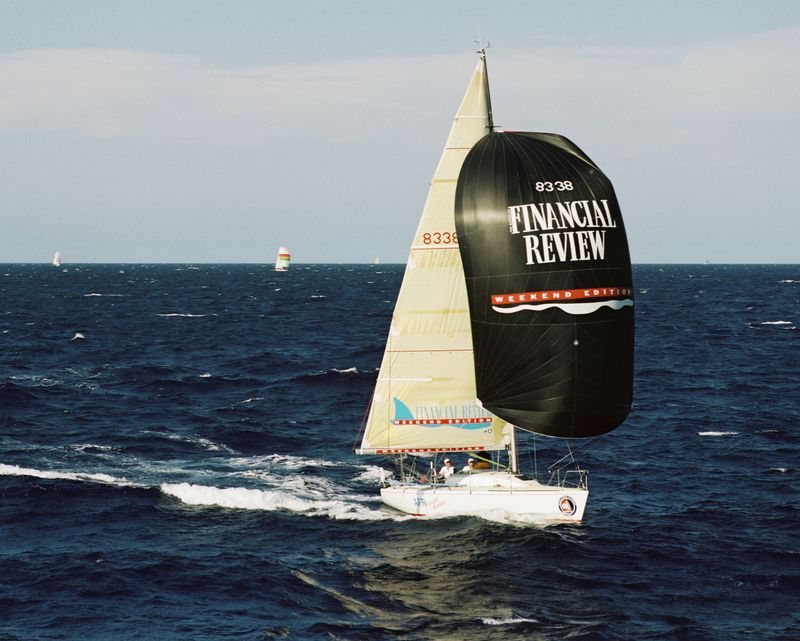
AFR Midnight Rambler, a yacht competing in the 1998 Sydney–Hobart yacht race and the overall winner that year, sailing in wind and waves

Archive / Fieldwork

1998 Sydney–Hobart yacht race storm

Bass Strait storm sweeps through fleet of 115 yachts, leaving six dead and five yachts sunk

The New South Wales coroner released the inquest findings in December 2000

Photo: Rolex Sydney Hobart · Richard Bennett / CYCA Archives

Date
Summer (December)
Place
Australia, eastern Bass Strait, waters south of Gabo IslandAustralia › Victoria · Bass Strait149.910°E -37.559°N
Activity
SailingInvolves: Drowning and diving · Extreme weather · Sudden illness and exhaustion115 competing yachts
Casualties
Dead 6 Six people died: 2 aboard Business Post Naiad, 3 aboard Winston Churchill and 1 aboard Sword of Orion; five yachts sank
Material
51 facts · 14 sources3 accounts differ and are shown side by side

01What happened

On 26 December 1998, the 54th Sydney–Hobart yacht race departed from Sydney Harbour, with 115 yachts bound for Hobart, approximately 630 nautical miles away. The weather was good at the start, but a gale had already been forecast when the race began, and the forecast was subsequently upgraded to a storm warning.Facts it rests onF10Multiple sourcesThe 1998 Sydney–Hobart yacht race covered approximately 630 nautical miles, with 115 yachts competing.F11Multiple sourcesThe race started from Sydney Harbour on 26 December 1998, with good weather conditions at the start.F12Multiple sourcesA gale had already been forecast when the race started, and the forecast was subsequently upgraded to a storm warning.

AFR Midnight Rambler, a yacht competing in the 1998 Sydney–Hobart yacht race and the overall winner that year, sailing in wind and wavesPhoto source: Rolex Sydney Hobart · Richard Bennett / CYCA Archives

On 27 December, a low-pressure system deepened rapidly in Bass Strait, with its central pressure falling to close to 980 hectopascals. It passed south of Gabo Island at noon. Competing yachts reported winds of up to approximately 80 knots, and several were rolled by huge waves. The largest maxi yachts sailed fast and reportedly escaped the worst of the weather.Facts it rests onF13Multiple sourcesOn 27 December, a low-pressure system intensified rapidly in Bass Strait, with its centre in the eastern part of the strait.F14Single sourceThe central pressure of the low rapidly fell to near 980 hectopascals. It passed south of Gabo Island at midday on 27 December without weakening.F16Multiple sourcesCompeting yachts reported wind speeds of up to approximately 80 knots.F18Single sourceSeveral of the largest supermaxi yachts sailed fast enough to avoid the worst weather.

Aerial view of Merimbula Airport, one of the bases for helicopters and search aircraft during the 1998 search and rescue operationPhoto source: Region · Bega Valley Shire Council

That night, Sword of Orion rolled, and British Olympian Glyn Charles fell overboard after his safety harness broke. He was never found. Business Post Naiad was dismasted and rolled; skipper Bruce Guy and crew member Phillip Skeggs died. Winston Churchill took on water and was abandoned. Three crew members were swept from a life raft by a wave after spending the night on it.Facts it rests onF21Multiple sourcesAt about 7:30 pm on 27 December, Sword of Orion rolled, and Glyn Charles fell overboard and went missing.F22Multiple sourcesCharles's safety harness broke when he fell overboard.F24Single sourceBusiness Post Naiad was dismasted and rolled after being struck by a wave of approximately 9 metres.F25Multiple sourcesBusiness Post Naiad skipper Bruce Guy and crew member Phillip Skeggs died in the storm.F27Single sourceWinston Churchill sent a distress signal, reporting that the hull was taking on water and the crew were preparing to board life rafts.F30Single sourceAfter spending the night on a life raft, three crew members of Winston Churchill were swept out of it by a wave and were not rescued.F31Multiple sourcesThe three people who died from Winston Churchill were John Dean, James Lawler and Michael Bannister.

The yacht Rambler sailing in large waves during the 1998 Sydney–Hobart yacht race stormPhoto source: Yachting World · Richard Bennett

The storm left 6 people dead, 7 yachts abandoned and 5 sunk; only 44 of the 115 competing yachts finished the race. What followed was Australia's largest peacetime maritime search and rescue operation, while many yachts that withdrew sailed to Eden Harbour for shelter.Facts it rests onF02Multiple sourcesThe storm killed a total of 6 crew members.F03Multiple sources7 yachts were abandoned, of which 5 sank.F07Multiple sourcesOf the 115 competing yachts, only 44 finished and 71 withdrew.F05Multiple sourcesThe search and rescue operation was the largest maritime search and rescue operation in Australia's peacetime history.F08Multiple sourcesMany yachts that withdrew sailed to Eden Harbour on the south coast of New South Wales for shelter.

In 1999, a review committee of the race organiser, the Cruising Yacht Club of Australia (CYCA), concluded that the accident could not be attributed to a single cause. The New South Wales coroner conducted an inquest in Eden and released the findings in December 2000, criticising the race management team and the Bureau of Meteorology and making 14 recommendations.Facts it rests onF33Single sourceThe CYCA review committee concluded that no single cause could be identified for the successive incidents involving the fleet on 27 and 28 December.F40Multiple sourcesNew South Wales coroner John Abernethy presided over the inquest at Eden Court and criticised the Cruising Yacht Club of Australia (CYCA) and the Bureau of Meteorology.F41Multiple sourcesThe coroner concluded that the race management team's organisational structure made it of little use to the fleet in a crisis.F42Multiple sourcesThe coroner criticised the Bureau of Meteorology for making no further effort, after its initial attempt to notify the race organisers, to inform them of the substantially upgraded forecast and the severity of the storm.F43Single sourceThe coroner released a 340-page finding in December 2000, making 14 recommendations.

The number at the end of a paragraph is how many facts it rests on; open it to see each fact and how well it is sourced: Multiple sourcesSingle source. Conflicting accounts and speculation are kept out of the narrative.

  • Reported locations along the route (illustrative)Schematic

Satellite imagery Sentinel-2 cloudless 2024 © EOX · Terrain AWS Terrain Tiles · Orange line is schematic · Place coordinates not individually verified

Route review

6 scenes to understand what happened

Scroll down and the map flies to where each part happened. The line is Schematic, The locations mentioned in reports are connected in sequence to show only the approximate direction, not the actual track. Sources for the location coordinates are in places.json.

01

Full route

Locations mentioned in reports are connected in sequence to show the approximate course (illustrative).

03

Low-pressure system deepens

On 27 December, a low-pressure system deepened rapidly in Bass Strait and reportedly passed south of Gabo Island at noon. Yachts reported winds of up to approximately 80 knots.Facts it rests onF13Multiple sourcesOn 27 December, a low-pressure system intensified rapidly in Bass Strait, with its centre in the eastern part of the strait.F14Single sourceThe central pressure of the low rapidly fell to near 980 hectopascals. It passed south of Gabo Island at midday on 27 December without weakening.F16Multiple sourcesCompeting yachts reported wind speeds of up to approximately 80 knots.

04

Fatalities on three yachts

Sword of Orion rolled and Charles fell overboard; Naiad was dismasted and rolled; Winston Churchill was abandoned, and three people were swept from a life raft by a wave.Facts it rests onF21Multiple sourcesAt about 7:30 pm on 27 December, Sword of Orion rolled, and Glyn Charles fell overboard and went missing.F24Single sourceBusiness Post Naiad was dismasted and rolled after being struck by a wave of approximately 9 metres.F25Multiple sourcesBusiness Post Naiad skipper Bruce Guy and crew member Phillip Skeggs died in the storm.F30Single sourceAfter spending the night on a life raft, three crew members of Winston Churchill were swept out of it by a wave and were not rescued.F31Multiple sourcesThe three people who died from Winston Churchill were John Dean, James Lawler and Michael Bannister.

02Timeline

  1. Of the 115 competing yachts, only 44 finished and 71 withdrew. F07

  2. A gale had already been forecast when the race started, and the forecast was subsequently upgraded to a storm warning. F12

  3. The race started from Sydney Harbour on 26 December 1998, with good weather conditions at the start. F11

  4. The central pressure of the low rapidly fell to near 980 hectopascals. It passed south of Gabo Island at midday on 27 December without weakening. F14

  5. At about 7:30 pm on 27 December, Sword of Orion rolled, and Glyn Charles fell overboard and went missing. F21

  6. On 27 December, a low-pressure system intensified rapidly in Bass Strait, with its centre in the eastern part of the strait. F13

  7. Business Post Naiad was dismasted and rolled after being struck by a wave of approximately 9 metres. F24

  8. Winston Churchill sent a distress signal, reporting that the hull was taking on water and the crew were preparing to board life rafts. F27

  9. After spending the night on a life raft, three crew members of Winston Churchill were swept out of it by a wave and were not rescued. F30

  10. The search for Charles was stopped at nightfall, about 24 hours after he fell overboard. F29

  11. From 1999, the race introduced new requirements: as each yacht passed Green Cape, its skipper had to assess whether the yacht and crew could continue racing; crew members had to be at least 18 years old; and a 406 MHz emergency position-indicating radio beacon had to be carried. F32

  12. The CYCA review committee concluded that no single cause could be identified for the successive incidents involving the fleet on 27 and 28 December. F33

  13. After the coroner's report was released, former race director Phil Thompson withdrew and took no further part in managing the 2000 race. F44

  14. The coroner released a 340-page finding in December 2000, making 14 recommendations. F43

03Lessons

Weather and retreat

Understand the margin in forecasts

The review found that the Bureau of Meteorology assumed users would allow for winds and waves above the forecast, while the fleet thought actual conditions would be similar to or slightly stronger than forecast. Before going to sea, understand what the forecast figures mean and prepare for the worst.Facts it rests onF35Single sourceThe review report noted that the Bureau of Meteorology assumed actual wind speeds could exceed forecasts by up to 40% and wave heights by up to 86%, while the fleet believed actual winds and waves would be comparable to or slightly stronger than forecast.F12Multiple sourcesA gale had already been forecast when the race started, and the forecast was subsequently upgraded to a storm warning.

Teams and decisions

Withdraw early and choose a safe route

Yachts that retired during the storm still had to cross strong winds and huge waves to reach shelter. The race subsequently required skippers to assess whether they could continue as their yachts passed Green Cape, placing the decision to withdraw before entry into dangerous waters.Facts it rests onF20Single sourceAccording to The Proving Ground, Sword of Orion announced its withdrawal from the race by radio at 16:44.F21Multiple sourcesAt about 7:30 pm on 27 December, Sword of Orion rolled, and Glyn Charles fell overboard and went missing.F32Single sourceFrom 1999, the race introduced new requirements: as each yacht passed Green Cape, its skipper had to assess whether the yacht and crew could continue racing; crew members had to be at least 18 years old; and a 406 MHz emergency position-indicating radio beacon had to be carried.

Communication and location

Make sure search and rescue can find you

At the height of the storm, many emergency position-indicating beacons were activated at the same time, making them difficult for search and rescue aircraft to distinguish. The race subsequently switched to 406 MHz beacons, and the coroner recommended that all crew members wear personal locator beacons on deck.Facts it rests onF38Single sourceAt the height of the storm, a large number of emergency position-indicating radio beacons were activated simultaneously, making it difficult for search and rescue aircraft to distinguish and identify them.F45Single sourceThe coroner recommended that all competing crew members wear personal emergency position-indicating radio beacons while on deck, and that all competing yachts carry 406 MHz rather than 121.5 MHz beacons.F32Single sourceFrom 1999, the race introduced new requirements: as each yacht passed Green Cape, its skipper had to assess whether the yacht and crew could continue racing; crew members had to be at least 18 years old; and a 406 MHz emergency position-indicating radio beacon had to be carried.

Rescue and self-rescue

Experience does not mean knowing how to use equipment

The review noted that many crew members had extensive offshore racing experience but were unfamiliar with safety equipment and search and rescue techniques. Equipment must be practised with repeatedly in calm conditions so that it can be used in an emergency.Facts it rests onF37Single sourceThe review report concluded that, although many crew members had extensive offshore racing experience, they had insufficient knowledge of the use of safety equipment and search and rescue techniques.

04Fact list 51 facts

Under each fact is a verbatim quote from the original. "Single source" means only one outlet mentioned it; "Accounts differ" means sources contradict each other and this site adopts neither side; "Speculation" is an inference by a reporter or a person involved, not a fact.

  1. F01Single sourceFound at scene

    According to The Irish Times, The three crew members from Winston Churchill were wearing life jackets and other safety equipment at the time.

    Quotes from the original 1

    “The three from the Winston Churchill were wearing life jackets and other safety gear.”

    The Irish Times · 1998-12-29
  2. F02Multiple sourcesEvent

    The storm killed a total of 6 crew members.

    Quotes from the original 3

    “resulting in the drowning of six sailors (from New South Wales, Tasmania and Britain)”

    AIDR ·

    “six crew members perished at sea in the worst tragedy in the long history of the Sydney Hobart”

    Rolex Sydney Hobart ·

    “six yachtsmen died tragically at sea”

    Yachts and Yachting · 1999-06-03
  3. F03Multiple sourcesEvent

    7 yachts were abandoned, of which 5 sank.

    AIDR states that 7 yachts were abandoned and lost.

    Quotes from the original 3

    “Seven yachts were abandoned, five subsequently sank”

    Yachts and Yachting · 1999-06-03

    “Seven boats were abandoned and five sank during the storm”

    Rolex Sydney Hobart ·

    “Five boats were sunk in the massive seas, seven were abandoned.”

    Region · 2018-12
  4. F04Accounts differEvent

    Accounts differ on the number rescued: the CYCA review report, as cited by others, Weatherzone and others say 55 people were rescued; a retrospective on the race's official website and Soundings say 56 were rescued.

    Different counting criteria

    Quotes from the original 4

    “55 crew members were rescued by helicopters and surface vessels”

    Yachts and Yachting · 1999-06-03

    “another 55 were saved”

    Weatherzone · 2023-12

    “56 crew members were rescued by helicopters and surface vessels from nine stricken yachts or their liferafts”

    Rolex Sydney Hobart ·

    “56 were rescued”

    Soundings · 2012-03
  5. F05Multiple sourcesEvent

    The search and rescue operation was the largest maritime search and rescue operation in Australia's peacetime history.

    Quotes from the original 3

    “the largest search and rescue operation in Australia's peacetime maritime history”

    Weatherzone · 2023-12

    “the largest peacetime search and rescue mission ever mounted in Australia”

    Region · 2018-12

    “the biggest ever maritime rescue conducted in Australian waters”

    Yachting Monthly · 2008-12
  6. F06Accounts differEvent

    Accounts differ on the number of aircraft involved in the search and rescue: the CYCA commodore said at the tenth anniversary ceremony that there were 25 aircraft, 6 vessels and about 1000 personnel; AIDR says 30 civilian and military aircraft took part.

    Different counting criteria

    Quotes from the original 2

    “25 aircraft, six vessels and approximately 1000 search personnel”

    Yachting Monthly · 2008-12

    “Thirty civil and military aircraft took part in the rescue operation”

    AIDR ·
  7. F07Multiple sourcesAftermath

    Of the 115 competing yachts, only 44 finished and 71 withdrew.

    Quotes from the original 3

    “with only 44 finishing and 71 retiring”

    Weatherzone · 2023-12

    “Of the 115 boats which started, 71 retired, 44 finishing”

    Rolex Sydney Hobart ·

    “Only 44 of 115 yachts finished the race”

    AIDR ·
  8. F08Multiple sourcesMovement

    Many yachts that withdrew sailed to Eden Harbour on the south coast of New South Wales for shelter.

    Quotes from the original 2

    “many retired from the event, seeking refuge at Eden on the southern New South Wales coast”

    AIDR ·

    “with dozens arriving at the New South Wales port of Eden”

    BBC ·
  9. F09Single sourcePost-incident analysis

    According to BBC, After the incident, some questioned why the organisers had not postponed the start after a forecast of severe weather in Bass Strait was issued.

    Quotes from the original 1

    “The deaths have prompted questions about why organizers did not delay the start of the race following forecasts of bad weather in the Bass Strait.”

    BBC ·
  10. F10Multiple sourcesBackground

    The 1998 Sydney–Hobart yacht race covered approximately 630 nautical miles, with 115 yachts competing.

    Quotes from the original 3

    “devastated the fleet of 115 competing in the 630-nautical mile race”

    The Irish Times · 1998-12-29

    “630 nautical mile (1167km) race from Sydney Harbour to Hobart on Tasmania”

    BBC ·

    “the 630 nautical mile race battered the 115 boat fleet in Bass Strait”

    Yachts and Yachting · 1999-06-03
  11. F11Multiple sourcesMovement

    The race started from Sydney Harbour on 26 December 1998, with good weather conditions at the start.

    Quotes from the original 4

    “On Dec. 26, 1998, 115 sailboats set out on the annual race from Sydney to Hobart.”

    Soundings · 2012-03

    “The race began on December 26, 1998 with a favourable current running south at 4 knots”

    Rolex Sydney Hobart ·

    “The race started in perfect conditions with sunny skies and north to northeasterly breezes”

    Weatherzone · 2023-12

    “One hundred and fifteen starters set off in favourable conditions”

    Region · 2018-12
  12. F12Multiple sourcesBackground

    A gale had already been forecast when the race started, and the forecast was subsequently upgraded to a storm warning.

    Quotes from the original 2

    “although a gale warning was issued at a pre-race meeting and that warning was upgraded to a storm warning four hours later”

    Scuttlebutt · 2000-12

    “and a storm warning has been issued for winds of that strength”

    Weatherzone · 2023-12
  13. F13Multiple sourcesEvent

    On 27 December, a low-pressure system intensified rapidly in Bass Strait, with its centre in the eastern part of the strait.

    Quotes from the original 2

    “a new small-scale low begun to form and intensify over Bass Strait to the south of Wilsons Promontory”

    Rolex Sydney Hobart ·

    “showing the intense low centred over eastern Bass Strait”

    Weatherzone · 2023-12
  14. F14Single sourceEvent

    According to Rolex Sydney Hobart, The central pressure of the low rapidly fell to near 980 hectopascals. It passed south of Gabo Island at midday on 27 December without weakening.

    Quotes from the original 2

    “The central pressures in the rapidly intensifying low dropped rapidly to near 980 hPa.”

    Rolex Sydney Hobart ·

    “At midday, the low passed to the south of Gabo Island, maintaining its intensity.”

    Rolex Sydney Hobart ·
  15. F15Multiple sourcesBackground

    Cold air moving south brought unseasonal summer snowfall to the Australian Alps.

    Quotes from the original 2

    “producing unseasonable snow falls on the Australian Alps”

    Rolex Sydney Hobart ·

    “The cold air from the storm would deliver an unusually heavy summer snowfall to the Australian Alps.”

    Weatherzone · 2023-12
  16. F16Multiple sourcesEvent

    Competing yachts reported wind speeds of up to approximately 80 knots.

    Quotes from the original 2

    “At least 12 competing yachts reported west and south-westerly winds of up to 80 knots”

    Rolex Sydney Hobart ·

    “mountainous waves whipped up by winds of up to 80 knots created havoc during the Sydney-Hobart yacht race”

    The Irish Times · 1998-12-29
  17. F17Accounts differEvent

    Accounts of wave heights differ: a retrospective on the race's official website says waves were 15 metres and often exceeded 20 metres; The Irish Times reported at the time that waves were 6 metres high; the BBC reported that sailors had reported waves 12 metres high.

    Estimates from different sources use different criteria and refer to different times

    Quotes from the original 3

    “seas of 15 metres, frequently to 20 metres and more”

    Rolex Sydney Hobart ·

    “130 k.p.h. winds whipping waves six metres high”

    The Irish Times · 1998-12-29

    “waves of 12m high reported by sailors”

    BBC ·
  18. F18Single sourceEvent

    According to Weatherzone, Several of the largest supermaxi yachts sailed fast enough to avoid the worst weather.

    Quotes from the original 1

    “the largest maxi yachts would sail so fast that they avoided the worst of the weather”

    Weatherzone · 2023-12
  19. F19Single sourceParticipant's view

    According to Weatherzone, Sword of Orion helmsman Steve Kulmar recalled that gusts occasionally reached 85 knots.

    Quotes from the original 1

    “gusting as far ocasionally as 85 knots”

    Weatherzone · 2023-12
  20. F20Single sourceMovement

    According to Yachting World, According to The Proving Ground, Sword of Orion announced its withdrawal from the race by radio at 16:44.

    Quotes from the original 1

    “At 1644 Kooky announced Sword’s retirement over the radio”

    Yachting World ·
  21. F21Multiple sourcesEvent

    At about 7:30 pm on 27 December, Sword of Orion rolled, and Glyn Charles fell overboard and went missing.

    Quotes from the original 2

    “was lost overboard when the Sword of Orion rolled at about 7.30 p.m. (8.30 a.m. Irish time) on Sunday”

    The Irish Times · 1998-12-29

    “He was swept overboard after his yacht Sword of Orion lost its mast and capsized”

    BBC ·
  22. F22Multiple sourcesEvent

    Charles's safety harness broke when he fell overboard.

    Quotes from the original 2

    “after a towering wave swept Glyn Charles from the wheel and snapped his harness”

    YBW ·

    “after his safety harness snapped”

    BBC ·
  23. F23Single sourceEvent

    According to The Irish Times, Another crew member broke a leg when Sword of Orion rolled.

    Quotes from the original 1

    “lost a man overboard and another crewman broke his leg when the yacht rolled over halfway across the Bass Strait.”

    The Irish Times · 1998-12-29
  24. F24Single sourceEvent

    According to The Irish Times, Business Post Naiad was dismasted and rolled after being struck by a wave of approximately 9 metres.

    Quotes from the original 1

    “which lost its mast and rolled on Sunday after a nine-metre wave smashed into it.”

    The Irish Times · 1998-12-29
  25. F25Multiple sourcesEvent

    Business Post Naiad skipper Bruce Guy and crew member Phillip Skeggs died in the storm.

    Quotes from the original 3

    “Bruce Guy, skipper of the ill-fated Tasmanian yacht Business Post Naiad, and crew member, Phillip Skeggs”

    Yachting Monthly · 2008-12

    “Bruce Guy and Phil Skeggs (Business Post Naiad)”

    Rolex Sydney Hobart ·

    “Phillip Charles Skeggs (Business Post Naiad, drowned)”

    Weatherzone · 2023-12
  26. F26Single sourceFound at scene

    According to Weatherzone, Bruce Guy died of a heart attack.

    Quotes from the original 1

    “Bruce Raymond Guy (Business Post Naiad, heart attack)”

    Weatherzone · 2023-12
  27. F27Single sourceEvent

    According to The Irish Times, Winston Churchill sent a distress signal, reporting that the hull was taking on water and the crew were preparing to board life rafts.

    Quotes from the original 1

    “The Winston Churchill first sent out a mayday call at about 6 p.m. (7 a.m. Irish time) yesterday, saying it was taking in water and that the crew was preparing to board a life-raft.”

    The Irish Times · 1998-12-29
  28. F28Single sourceEvent

    According to Region, According to the recollection of the person in charge of Merimbula Airport, the Australian Maritime Safety Authority called on people with light twin-engine aircraft to join the search. By the end of the day, 45 light twin-engine aircraft were parked at the airport.

    Quotes from the original 2

    “The Australian Maritime Safety Authority put out a call to anyone with a light twin-engine aircraft to join the search”

    Region · 2018-12

    “by the end of the day, we had 45 light twin aircraft here on the ground.”

    Region · 2018-12
  29. F29Single sourceAftermath

    According to BBC, The search for Charles was stopped at nightfall, about 24 hours after he fell overboard.

    Quotes from the original 1

    “The search for Mr Charles’ body was called off as darkness fell 24 hours after he was lost.”

    BBC ·
  30. F30Single sourceEvent

    According to The Irish Times, After spending the night on a life raft, three crew members of Winston Churchill were swept out of it by a wave and were not rescued.

    Quotes from the original 1

    “unable to save three crewmates who were tossed out their raft by the waves after riding out the night in mountainous seas”

    The Irish Times · 1998-12-29
  31. F31Multiple sourcesEvent

    The three people who died from Winston Churchill were John Dean, James Lawler and Michael Bannister.

    Quotes from the original 2

    “John Dean, James Lawler and Michael Bannister (WInston Churchill, all drowned)”

    Weatherzone · 2023-12

    “Jim Lawler, Mike Bannister and John Dean (Winston Churchill)”

    Rolex Sydney Hobart ·
  32. F32Single sourceAftermath

    According to Yachts and Yachting, From 1999, the race introduced new requirements: as each yacht passed Green Cape, its skipper had to assess whether the yacht and crew could continue racing; crew members had to be at least 18 years old; and a 406 MHz emergency position-indicating radio beacon had to be carried.

    Quotes from the original 3

    “A compulsory situation assessment and report by the skipper of each yacht when abeam of Green Cape”

    Yachts and Yachting · 1999-06-03

    “with no crew to be under the age of 18”

    Yachts and Yachting · 1999-06-03

    “all yachts must have the more precise 406 MHz EPIRBs as compulsory equipment for the 1999 Sydney to Hobart”

    Yachts and Yachting · 1999-06-03
  33. F33Single sourcePost-incident analysis

    According to Yachts and Yachting, The CYCA review committee concluded that no single cause could be identified for the successive incidents involving the fleet on 27 and 28 December.

    Quotes from the original 1

    “No one cause can be identified as being responsible for the 1998 Sydney Hobart Yacht race fleet becoming involved in multiple incidents on 27 and 28 December 1998.”

    Yachts and Yachting · 1999-06-03
  34. F34Single sourcePost-incident analysis

    According to Yachts and Yachting, According to the review report, damaged yachts reported that the “abnormal waves” that caused the damage were 20% to 100% larger than the waves at the time and came from a different direction from the prevailing waves.

    Quotes from the original 1

    “These waves were always a minimum of 20% and up to 100% bigger than the prevailing seas and always came from a direction other than the prevailing wave pattern.”

    Yachts and Yachting · 1999-06-03
  35. F35Single sourcePost-incident analysis

    According to Yachts and Yachting, The review report noted that the Bureau of Meteorology assumed actual wind speeds could exceed forecasts by up to 40% and wave heights by up to 86%, while the fleet believed actual winds and waves would be comparable to or slightly stronger than forecast.

    Quotes from the original 2

    “The Bureau assumed that its forecast winds would be interpreted as being up to 40% more than stated and seas up to 86% bigger.”

    Yachts and Yachting · 1999-06-03

    “The fleet reported expecting winds and seas to be "as forecast" or a bit stronger/bigger.”

    Yachts and Yachting · 1999-06-03
  36. F36Single sourcePost-incident analysis

    According to Yachts and Yachting, The race committee had the authority to stop the race but did not exercise it, believing that the decision to continue should be made by each yacht's skipper.

    Quotes from the original 1

    “The Committee did not exercise this power. It was the Committee's view that Rule 4 ("Decision to Race") should remain in each skipper's hands”

    Yachts and Yachting · 1999-06-03
  37. F37Single sourcePost-incident analysis

    According to Yachts and Yachting, The review report concluded that, although many crew members had extensive offshore racing experience, they had insufficient knowledge of the use of safety equipment and search and rescue techniques.

    Quotes from the original 1

    “many crews, despite having high levels of ocean racing experience, were poorly informed on aspects of safety equipment use and search and rescue techniques.”

    Yachts and Yachting · 1999-06-03
  38. F38Single sourcePost-incident analysis

    According to Yachts and Yachting, At the height of the storm, a large number of emergency position-indicating radio beacons were activated simultaneously, making it difficult for search and rescue aircraft to distinguish and identify them.

    Quotes from the original 1

    “searching aircraft had had difficulty in separating and identifying the many EPIRBs which had been activated at the height of the storm.”

    Yachts and Yachting · 1999-06-03
  39. F39Single sourceFound at scene

    According to Yachts and Yachting, The review report noted that Business Post Naiad did not meet the race eligibility requirements and that CYCA had referred the matter to the New South Wales coroner.

    Quotes from the original 1

    “One yacht (Business Post Naiad) did not meet eligibility requirements. The CYCA has referred this matter to the NSW State Coroner.”

    Yachts and Yachting · 1999-06-03
  40. F40Multiple sourcesAftermath

    New South Wales coroner John Abernethy presided over the inquest at Eden Court and criticised the Cruising Yacht Club of Australia (CYCA) and the Bureau of Meteorology.

    Quotes from the original 2

    “A coronial inquest followed at Eden Courthouse. NSW Coroner John Abernethy was critical of both the Cruising Yacht Club of Australia and the Bureau of Meteorology.”

    Region · 2018-12

    “delivered a scathing attack against the Cruising Yacht Club of Australia's Race Management Team and the Bureau of Meteorology”

    Scuttlebutt · 2000-12
  41. F41Multiple sourcesFound at scene

    The coroner concluded that the race management team's organisational structure made it of little use to the fleet in a crisis.

    Quotes from the original 2

    “the Race Management Team was organised in such a fashion that at the time of crisis it was to all intents and purposes, valueless to the Race Fleet”

    Region · 2018-12

    “He added that the team was organized in such a fashion that at times of crisis it was, to all intents”

    Scuttlebutt · 2000-12
  42. F42Multiple sourcesFound at scene

    The coroner criticised the Bureau of Meteorology for making no further effort, after its initial attempt to notify the race organisers, to inform them of the substantially upgraded forecast and the severity of the storm.

    Quotes from the original 2

    “The BOM came under fire for not following up initial attempts to alert the CYCA to the severity of the storm”

    Scuttlebutt · 2000-12

    “He also criticised the Bureau for making insufficient efforts to inform race officials of a dramatically upgraded weather forecast”

    Region · 2018-12
  43. F43Single sourceAftermath

    According to Scuttlebutt, The coroner released a 340-page finding in December 2000, making 14 recommendations.

    Quotes from the original 1

    “Handing down his findings via a 340-page report in Sydney this week, the coroner also made 14 recommendations”

    Scuttlebutt · 2000-12
  44. F44Single sourceAftermath

    According to World Sailing, After the coroner's report was released, former race director Phil Thompson withdrew and took no further part in managing the 2000 race.

    Quotes from the original 1

    “Phil Thompson, the previous Race Director, has stood aside and will play no role in the management of the 56th Race”

    World Sailing ·
  45. F45Single sourceAftermath

    According to The Daily Sail, The coroner recommended that all competing crew members wear personal emergency position-indicating radio beacons while on deck, and that all competing yachts carry 406 MHz rather than 121.5 MHz beacons.

    Quotes from the original 2

    “THAT ALL CREW MEMBERS OF COMPETING YACHTS WEAR A PERSONAL EPIRB (EMERGENCY POSITION INDICATING RADIO BEACON) WHEN ON DECK IN ALL WEATHER CONDITIONS.”

    The Daily Sail · 2000-12-12

    “THAT ALL COMPETING YACHTS CARRY ON BOARD A 406 MHz EPIRB AND NOT A 121.5MHz EPIRB.”

    The Daily Sail · 2000-12-12
  46. F46Multiple sourcesBackground

    Glyn Charles was a British sailor who competed in the 1996 Olympic Games.

    Quotes from the original 2

    “Charles was a British sailor who had competed at the 1996 Olympics.”

    Weatherzone · 2023-12

    “The British Olympic sailor, Mr Glyn Charles”

    The Irish Times · 1998-12-29
  47. F47Single sourceBackground

    According to The Irish Times, Winston Churchill was the oldest yacht competing in the race that year.

    Quotes from the original 1

    “built in Tanzania in 1942 and the oldest boat in the race”

    The Irish Times · 1998-12-29
  48. F48Single sourceAftermath

    According to AIDR, Total losses, including damaged and sunk yachts and rescue costs, were estimated at 30 million (written as $30 million in the original, with no currency specified).

    Quotes from the original 1

    “The total cost, including damaged and sunken boats, plus the rescue bill, was estimated at $30 million.”

    AIDR ·
  49. F49Multiple sourcesPost-incident analysis

    This was the most serious yacht racing accident since the 1979 Fastnet Race.

    Quotes from the original 2

    “making it the worst modern sail-racing disaster since the 1979 Fastnet Race”

    Soundings · 2012-03

    “was the worst tragedy to hit the yachting world since Fastnet in 1979”

    BBC ·
  50. F50Single sourceParticipant's view

    According to Weatherzone, Meteorologist Mark Hardy considered this a storm that occurs only once every five to ten years.

    Quotes from the original 1

    “This was a storm that you'd only see once every five or ten years.”

    Weatherzone · 2023-12
  51. F51Single sourceAftermath

    According to YBW, After Sword of Orion got into distress, Margaret Rintoul II passed nearby and reported its position but did not stop; after the race, the protest committee found that its decision not to turn back and provide direct assistance was appropriate.

    Quotes from the original 2

    “the Margaret Rintoul II passed close to the stricken yacht and reported its position but did not stop”

    YBW ·

    “the decision not to turn back and render direct assistance was appropriate”

    YBW ·