The number at the end of a paragraph is how many facts it rests on; open it to see each fact and how well it is sourced:
Multiple sourcesSingle source. Conflicting accounts and speculation are kept out of the narrative.
ImgScene photos all from news coverage; copyright belongs to the original authors
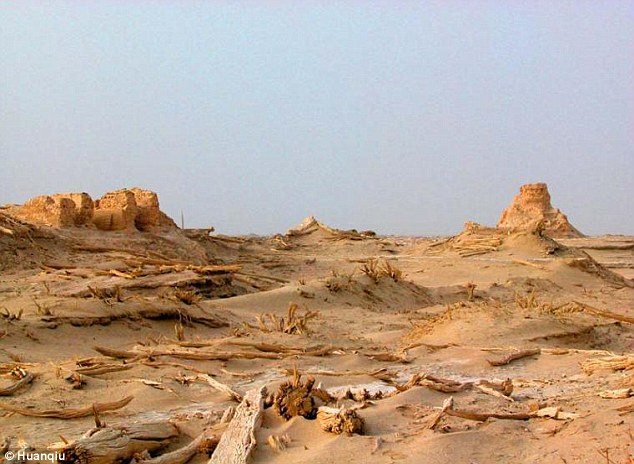
The dried-up Lop Nur lake basin in a satellite imagePhoto source: Our China StoryVehicles travelling through the Lop Nur desert and yardang landformsPhoto source: Our China StoryA note reportedly left by Peng Jiamu before he went out to look for waterPhoto source: Our China Story
Reported places along the way (schematic)Schematic
Scroll down and the map flies to where each part happened. The line is Schematic, The places mentioned in reports are connected in order to show only the approximate direction, not the actual route.
01
Full route
The places mentioned in reports are connected in sequence to show the approximate route (schematic).
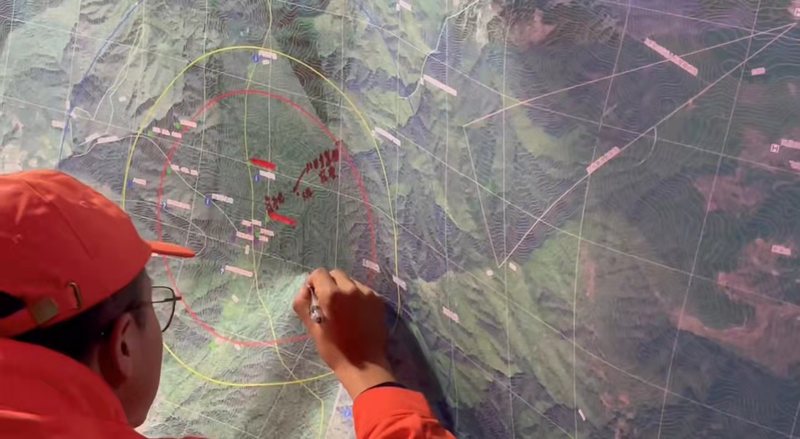
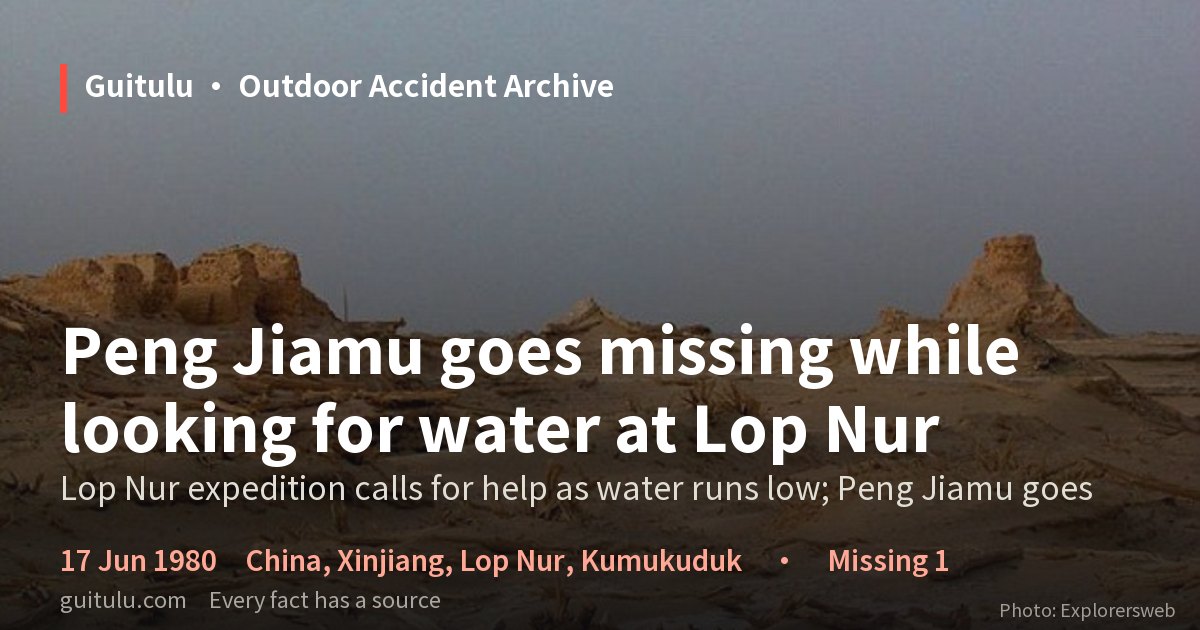
Between June and November 1980, the authorities organized 4 large-scale searches in succession, with military participation, but did not find Peng Jiamu. F09
On 3 May 1980, Peng Jiamu led the expedition from Urumqi to Lop Nur. F13
Peng Jiamu's diary records that the first attempt to traverse the lake bed, beginning on 9 May, could not continue because salt crystals cut and damaged the tyres; the team then returned along the same route and advanced again after replenishing fuel and water. F14
On 30 May, the expedition entered the Lop Nur lake area again and ultimately traversed the dried lake bed from north to south. F15
On 11 June, the expedition set out eastward from Miran. F25
When the expedition reached Kumukuduk on 16 June, it had very little water and petrol left. F28
The water well marked on the map could not be found at the location. F29
At 10:10 p.m. on 16 June, the expedition sent a telegram requesting assistance to the military garrison. The telegram was drafted by Peng Jiamu. F30
Driver Wang Wanxuan found a note beside a map in the vehicle Peng Jiamu usually rode in. It read “I am going east to look for a water well” and was signed and dated the 17th at 10:30. F34
At about 11:30 a.m. on 17 June, the expedition received a reply from the military: an aircraft would arrive at Kumukuduk on 18 June, and the team was told to stay where it was and await further instructions. F32
On the afternoon of the 17th, team members drove east to search. They found and followed a line of footprints believed to be Peng Jiamu's, but did not find him. F39
At midday on 18 June, a helicopter found the expedition's camp and brought drinking water. F42
At 2 a.m. on 18 June, the expedition sent a telegram reporting that Peng Jiamu had gone out and not returned and that his whereabouts were unknown. F41
Afterward, mummified bodies or remains thought to be Peng Jiamu's were found at Lop Nur on several occasions (including one in April 2006), but none could be confirmed as his. F48
Under each fact is a verbatim quote from the original. "Single source" means only one outlet mentioned it; "Accounts differ" means sources contradict each other and this site adopts neither side; "Speculation" is an inference by a reporter or a person involved, not a fact.
Whether to study abroad or go to the border regions for expeditions, 31-year-old Peng Jiamu faced an important life choice. After repeated consideration, he chose the latter. (machine translation)
In 1956, the Chinese Academy of Sciences called on scientists to conduct resource surveys in the border regions. On hearing the news, Peng Jiamu immediately gave up the opportunity to study in the Soviet Union (machine translation)
At the time of his disappearance, Peng Jiamu was vice president of the Xinjiang Branch of the Chinese Academy of Sciences.
Quotes from the original 2
“几天以后,彭加木正式调任中国科学院新疆分院副院长”
A few days later, Peng Jiamu was formally transferred to the post of vice president of the Xinjiang Branch of the Chinese Academy of Sciences (machine translation)
According to Beijing Daily, Peng Jiamu was the expedition leader and Xia Xuncheng the deputy leader; the expedition was planned in three stages, with the first, in May and June 1980, mainly a route survey.
Quotes from the original 2
“决定由彭加木担任队长,夏训诚担任副队长。”
It was decided that Peng Jiamu would serve as leader and Xia Xuncheng as deputy leader. (machine translation)
The first expedition in 1980 was mainly a route survey, scheduled for May and June 1980, with the latter two expeditions to be carried out the following year. (machine translation)
According to Beijing Daily, Deputy team leader Xia Xuncheng did not take part in the first expedition because he received short-notice instructions to travel to the United States for a study visit.
Quotes from the original 1
“因为在出发前突然接到去美国考察的通知,夏训诚遗憾地错过了参加第一次路线考察的机会。”
Because he suddenly received instructions to travel to the United States for a study visit before departure, Xia Xuncheng regrettably missed the opportunity to take part in the first route survey. (machine translation)
Between June and November 1980, the authorities organized 4 large-scale searches in succession, with military participation, but did not find Peng Jiamu.
Quotes from the original 3
“根据夏训诚的回忆,当年较大规模的寻找,一共有四次。”
According to Xia Xuncheng's recollection, there were four relatively large-scale searches in total that year. (machine translation)
Accounts differ in how they count the scale of the searches: Beijing Daily says the third search, from 7 July to 2 August, deployed 117 people, 48 vehicles and 29 aircraft sorties, searching more than 4000 square kilometres; Our China Story says the 4 search and rescue operations deployed a total of 29 aircraft sorties and more than 60 vehicles, searching more than 4000 square kilometres.
The third search was from 7 July to 2 August, with 117 people, 48 vehicles and 29 aircraft sorties; the area searched reached more than 4000 square kilometres. (machine translation)
A total of 29 aircraft sorties were flown and more than 60 vehicles deployed, covering a search area of more than 4,000 square kilometres (machine translation)
Police dogs were used in the search, but had difficulty working on the ground in the high temperatures.
Both reports draw on Xia Xuncheng's recollections and cannot be regarded as fully independent sources.
Quotes from the original 2
“可惜因为当地天气太热,警犬也丧失了嗅觉,并没有找到彭加木的踪迹。”
Unfortunately, because the local weather was too hot, the police dogs also lost their sense of smell and found no trace of Peng Jiamu. (machine translation)
Reports differ on the number of expedition members: Democracy and Legal Times says Peng Jiamu led a 10-person expedition; Beijing Daily says 10 people were selected to form the expedition; Our China Story says there were 11 people in total, including Peng Jiamu.
It is unclear whether the 10 people mentioned by Beijing Daily included Peng Jiamu; Our China Story is an overview report and does not specify the source of its information.
Quotes from the original 3
“彭加木率领一支10人考察队”
Peng Jiamu led a 10-person expedition (machine translation)
The other 10 team members included experts in chemistry, hydrogeology, animals and plants, as well as logistics and communications personnel, making 11 people in total (machine translation)
On 3 May, Peng Jiamu led a 10-person expedition, with one large truck and two off-road vehicles, from Urumqi to the Lop Nur area in southern Xinjiang for field research. (machine translation)
According to Beijing Daily, Peng Jiamu's diary records that the first attempt to traverse the lake bed, beginning on 9 May, could not continue because salt crystals cut and damaged the tyres; the team then returned along the same route and advanced again after replenishing fuel and water.
Quotes from the original 2
“汽车车胎由于锋利的盐晶块切割,损耗过大,无法继续前进。”
The vehicle tyres had been damaged too severely by sharp salt crystals cutting them, making it impossible to continue. (machine translation)
Accounts differ on the date the expedition reached Miran: Democracy and Legal Times says it arrived in Miran on 7 June; Beijing Daily says it reached Miran Farm on 5 June.
Quotes from the original 2
“6月7日,考察队到了南疆的一个小城镇——米兰。”
On 7 June, the expedition reached Miran, a small town in southern Xinjiang. (machine translation)
According to Beijing Daily, The eastward plan was to travel north along eastern Lop Nur, cross the Shule River and continue to Dunhuang.
The Beijing Daily article gives the river's name as “Shuliu River”.
Quotes from the original 1
“他计划在余下一个月的时间里,沿罗布泊东部北上,穿过疏流河直至敦煌,完成对罗布泊地区的全面考察”
He planned to spend the remaining month travelling north along eastern Lop Nur, crossing the Shuliu River and continuing to Dunhuang, completing a comprehensive survey of the Lop Nur region (machine translation)
According to Beijing Daily, Before departure, Peng Jiamu proposed taking one more barrel of petrol and one less barrel of water, because the map showed a well at Kumukuduk where they could replenish their water.
Peng Jiamu proposed that they could take one more barrel of petrol and one less barrel of water. The reason was that, judging from the map, there was a well at a place called Kumukuduk, where they could replenish their water supply. (machine translation)
Accounts differ on the extent of the delay during the eastward journey: Democracy and Legal Times said the time taken was almost twice as long; Beijing Daily said a journey originally expected to take two days took a full 6 days.
Quotes from the original 3
“这是因为东进路上的时间差不多延长了一倍,原先所带的水当然不够用了。”
This was because the time spent on the eastward journey was almost twice as long, and the water originally taken was of course not enough. (machine translation)
Everyone agreed that they could not use up any more of the already limited petrol and should wait until they had contacted the military before deciding what to do. (machine translation)
Accounts differ on where Peng Jiamu wanted to look for water: Democracy and Legal Times said he proposed going east from Kumukuduk to Yangtakuduk and then to Kizil Tagh; Beijing Daily said he wanted to go to “Bayi Spring”, about 30 kilometres northeast of Kumukuduk, where the Silk Road film crew had replenished its water.
Quotes from the original 2
“他提议开车往东去找水井,从库木库都克到羊塔库都克再到克孜勒塔格。”
He proposed driving east to look for wells, from Kumukuduk to Yangtakuduk and then to Kizil Tagh. (machine translation)
The only breakthrough in the search was the discovery of a coconut cream candy wrapper among some rocks, with traces beside it showing that someone had sat there. (machine translation)
After the footprints had been followed for some distance, they disappeared.
The two reports differ in their accounts of the details of following the footprints; the Beijing Daily article also cited a work by Ye Yonglie, so it cannot be determined whether the relevant accounts are independent.
Quotes from the original 2
“土质渐渐变硬,脚印也就消失了。”
The ground gradually became harder, and the footprints disappeared. (machine translation)
Accounts differ on the distance travelled on the first day eastward: Democracy and Legal Times says the team covered only 46 kilometres; Beijing Daily says it covered only 58 kilometres in more than ten hours.
Quotes from the original 2
“头一天只前进了46公里!”
On the first day, they advanced only 46 kilometres! (machine translation)
Accounts differ on when the expedition reached Kumukuduk: Democracy and Legal Times says it camped at Kumukuduk on the south bank of the Shule River at 4 p.m. on 16 June; Beijing Daily says it arrived at about 6 p.m. on 16 June.
Quotes from the original 2
“下午4时,考察队在疏勒河南岸的库木库都克扎营。”
At 4 p.m., the expedition camped at Kumukuduk on the south bank of the Shule River. (machine translation)
Peng Jiamu believed that delivering water by helicopter would cost too much and advocated that the expedition do its best to find water itself.
The Beijing Daily article cited a work by Ye Yonglie; it is unclear whether the source of this detail is independent. Our China Story also says that Peng Jiamu was initially unwilling to ask the military for help, but Democracy and Legal Times says he agreed to request assistance.
Quotes from the original 3
“我们尽量自己去找水,这样可以节省国家费用。”
We will do our best to find water ourselves, so as to save the country money. (machine translation)
At about 11:30 a.m. on 17 June, the expedition received a reply from the military: an aircraft would arrive at Kumukuduk on 18 June, and the team was told to stay where it was and await further instructions.
Quotes from the original 3
“11时30分,开始收到驻军的复电。”
At 11:30 a.m., they began receiving the garrison's reply by telegram. (machine translation)
At 11:30 the next morning, the expedition received a telegram from the military: “The aircraft will arrive at Kumukuduk on the 18th to deliver water. Do not move; stay where you are and await further instructions.” (machine translation)
The following morning, the military replied that it would send a helicopter to deliver water and asked everyone to wait where they were. (machine translation)
Team member Wang Wenxian wanted to tell Peng Jiamu the good news. He took the telegram and walked out of the tent, but saw no sign of Peng Jiamu. (machine translation)
Driver Wang Wanxuan found a note beside a map in the vehicle Peng Jiamu usually rode in. It read “I am going east to look for a water well” and was signed and dated the 17th at 10:30.
The Beijing Daily report cited a work by Ye Yonglie; the Democracy and Legal Times report was written by Ye Yonglie. The relevant details in the two reports may have a common source.
Quotes from the original 4
“他在越野车的驾驶室里,发现彭加木的那本地图册中夹着一张纸条,纸条有一半露在外边。”
In the cab of the off-road vehicle, he found a note tucked into Peng Jiamu's atlas, with half of it sticking out. (machine translation)
According to Democracy and Legal Times, That day, the ground surface temperature was 64 degrees Celsius, the air temperature was 52 degrees Celsius, and the temperature inside the tent was 44 degrees Celsius.
Quotes from the original 1
“当时地表温度为64摄氏度,气温为52摄氏度,帐篷内温度为44摄氏度。”
At the time, the ground surface temperature was 64 degrees Celsius, the air temperature was 52 degrees Celsius, and the temperature inside the tent was 44 degrees Celsius. (machine translation)
According to Beijing Daily, According to weather records from the time, force 8 to 10 winds blew locally from the night of 16 June to the morning of 17 June.
According to weather records from the time, from the night of 16 June to the morning of 17 June, a force 8–10 gale blew locally, with yellow sand rolling and the sky darkened. (machine translation)
On the afternoon of the 17th, team members drove east to search. They found and followed a line of footprints believed to be Peng Jiamu's, but did not find him.
Quotes from the original 2
“越野车开了一公里多,考察队员发现一行脚印,认定是彭加木的脚印。”
After the off-road vehicle had travelled more than one kilometre, the expedition members found a line of footprints and concluded that they were Peng Jiamu's. (machine translation)
They followed the footprints left in the sand by Peng Jiamu's size 42 suede boots for nearly 8 kilometres, but saw no sign of him. (machine translation)
That night, team members lit a fire at the camp, fired signal flares at regular intervals, and drove an off-road vehicle onto high ground and turned on its headlights, hoping Peng Jiamu would follow the lights back.
Quotes from the original 3
“每隔一小时打三发信号弹”
Fired three signal flares every hour (machine translation)
Everyone lit a campfire at the camp, drove the jeep to the highest point and turned on its headlights facing east, and fired a signal flare into the air once every hour. (machine translation)
At 12:05 p.m. on the 18th, the Zhi-5 helicopter “4641” spotted the camp of the scientific expedition of the Xinjiang Branch of the Chinese Academy of Sciences east of Lop Nur. (machine translation)
At midday on the 18th, a helicopter carrying 500 kilograms of water found the expedition's camp, and the team members were rescued. (machine translation)
Accounts differ on the amount of water delivered by helicopter: Democracy and Legal Times says it carried 250 kilograms of water; Beijing Daily says 500 kilograms.
Quotes from the original 2
“直升机装载250公斤的水。”
The helicopter carried 250 kilograms of water. (machine translation)
According to Beijing Daily, According to Xia Xuncheng's recollection, during the second search from 20 to 26 June, the air force deployed 9 helicopters and 3 An-2 aircraft to search at low altitude within 50 kilometers east and west of the incident site.
Quotes from the original 1
“空军出动9架直升机、三架“安-2”型飞机,在出事地点东西50公里范围内进行地毯式低空搜寻。”
The air force deployed 9 helicopters and three An-2 aircraft to conduct a thorough low-altitude search within 50 kilometers east and west of the incident site. (machine translation)
After Peng Jiamu went missing, accounts circulated claiming that he had defected or been abducted by foreigners; in October 1980, Hong Kong's Zhong Bao claimed that someone had seen him in Washington.
The specific details of the report in Hong Kong's Zhong Bao come from Beijing Daily; Our China Story serves only as corroborating evidence.
Quotes from the original 4
“新华社记者的调查虽然揭穿了所谓“周光磊”编造的谎言”
Although the Xinhua reporter's investigation exposed the lies fabricated by the so-called “Zhou Guanglei” (machine translation)
Accounts differ on when Peng Jiamu was awarded the title of revolutionary martyr: Baiyun Fabu says it was awarded by the Shanghai Municipal People's Government in October 1981; Our China Story says he was posthumously recognized in 1982.
Quotes from the original 2
“1981年10月,上海市人民政府授予彭加木“革命烈士”称号。”
In October 1981, the Shanghai Municipal People's Government awarded Peng Jiamu the title of “revolutionary martyr”. (machine translation)
Afterward, mummified bodies or remains thought to be Peng Jiamu's were found at Lop Nur on several occasions (including one in April 2006), but none could be confirmed as his.
Quotes from the original 3
“董治保研究员在罗布泊发现一具干尸,被怀疑是26年前失踪的著名科学家彭加木”
Researcher Dong Zhibao found a mummified body at Lop Nur, which was suspected to be that of Peng Jiamu, the famous scientist who went missing 26 years earlier (machine translation)
People have repeatedly found “mummified bodies” in the Lop Desert suspected to be Peng Jiamu's, but to date, none has been confirmed to be Peng Jiamu himself. (machine translation)
According to Beijing Daily, Xia Xuncheng later said that the expedition had been scheduled for May and June to avoid the seasons of windblown sand and extreme heat, but that Lop Nur actually had no such “window”, or only a very short one.
Quotes from the original 2
““第一次考察之所以定在这个月份,是因为这时正是沙漠荒原风沙季节和酷热季节的‘空档’。””
“The reason the first expedition was scheduled for this month was that it was the ‘gap’ between the windblown-sand season and the extreme-heat season in the desert wilderness.” (machine translation)
Under the arrangements approved by the State Council for handling the aftermath, a permanent memorial marker was established at Kumukuduk; a monument now stands there.
Quotes from the original 2
“在彭加木失踪的库木库都克建立一个永久性的标志”
Establish a permanent marker at Kumukuduk, where Peng Jiamu went missing (machine translation)
Conjecture: Xia Xuncheng believed the most likely scenarios were that Peng Jiamu got lost after going out alone and was buried by shifting sand, or that he was buried by loose earth that collapsed while he was resting in the shade of a yardang mound; Explorersweb conjectured that his remains may be buried deep beneath Lop Nur's shifting sand.
Quotes from the original 3
“其一,彭加木只身外出后迷路,被流沙掩埋。”
First, Peng Jiamu got lost after going out alone and was buried by shifting sand. (machine translation)
 GuituluGlobal Outdoor Accident Archive