In June 1996, hiking explorer Yu Chunshun set out alone for the center of Lop Nur and never emerged
Body found; the autopsy concluded that a lack of water in a high-temperature environment caused acute dehydration and systemic failure, resulting in death
The number at the end of a paragraph is how many facts it rests on; open it to see each fact and how well it is sourced:
Multiple sourcesSingle source. Conflicting accounts and speculation are kept out of the narrative.
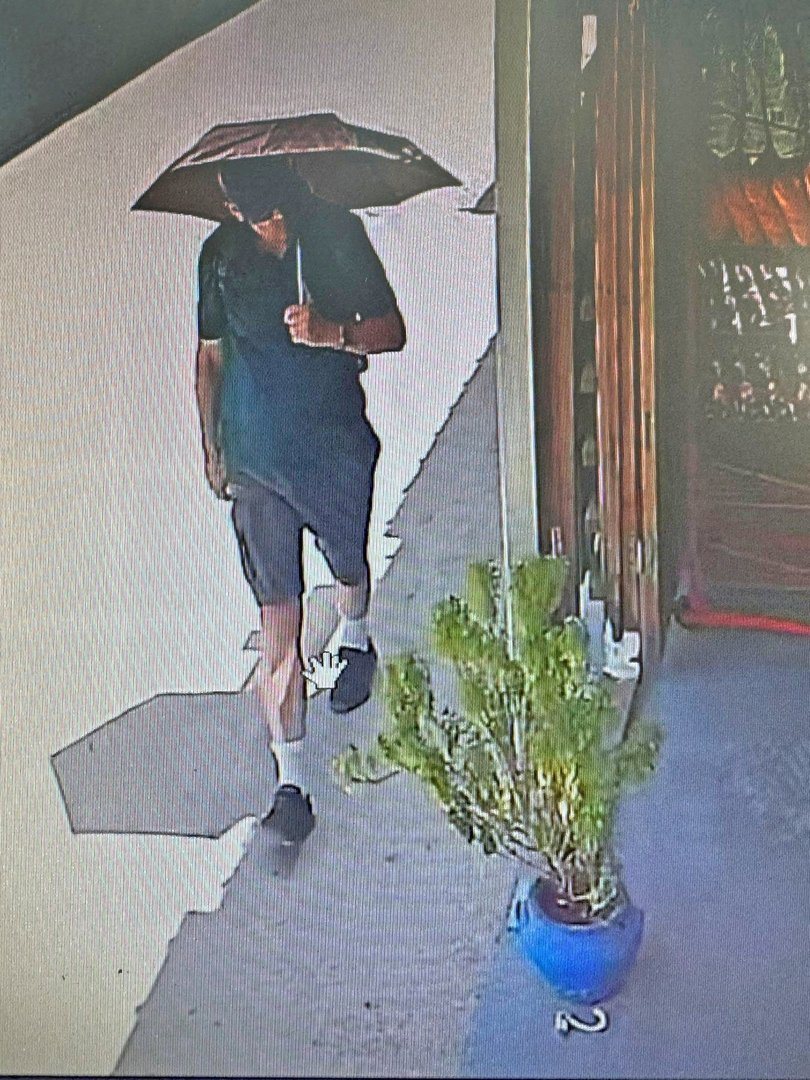
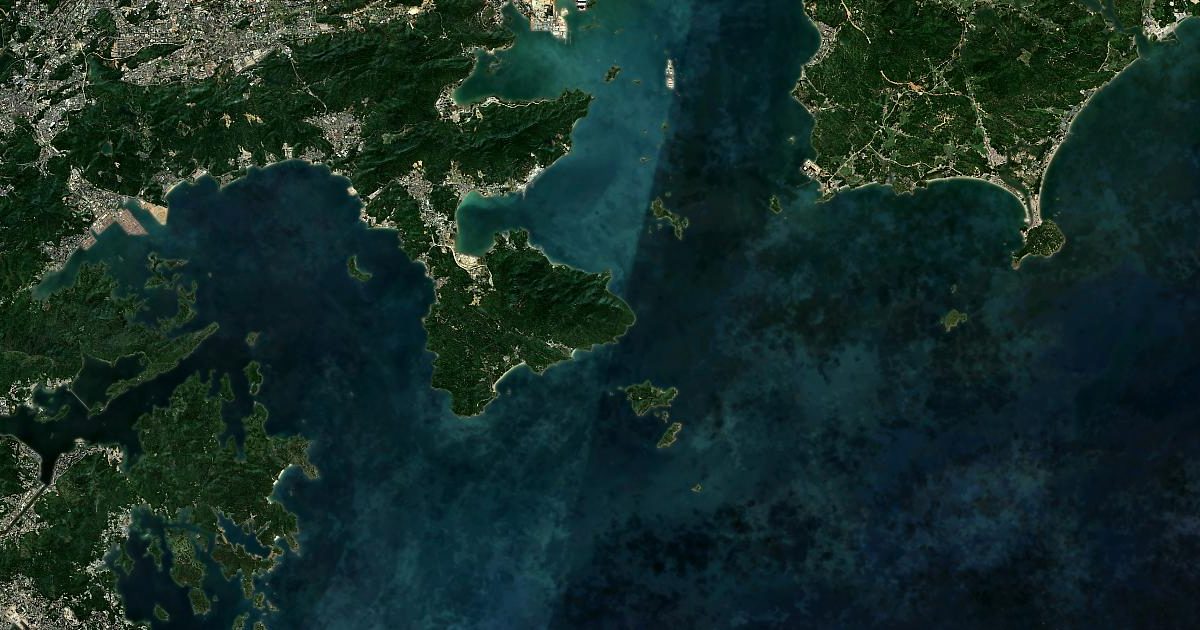
ImgScene photos all from news coverage; copyright belongs to the original authors
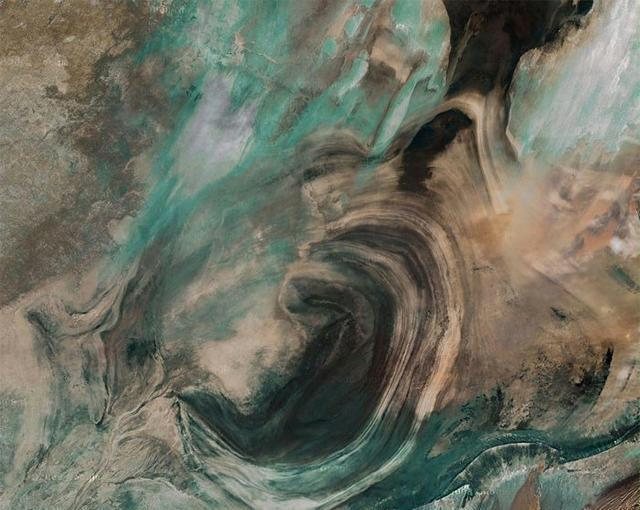
Flat, barren saline desert in the Lop Nur areaPhoto source: Sina Kandian (2021)Map of the terrain of Lop Nur and its surroundingsPhoto source: Sina Kandian (2022)
Reported locations passed through (schematic)Schematic
Scroll down and the map flies to where each part happened. The line is Schematic, Connects the reported locations passed through in sequence; shows only the approximate direction, not the actual route.
01
Full route
The locations mentioned in reports are connected in sequence to show the approximate route (schematic).
On 1 July 1988, Yu Chunshun began a journey of travel and exploration on foot across China alone. F03
On the afternoon of 6 June 1996, Yu Chunshun, the television crew and others, 9 people in all, set off in two vehicles for Lop Nur. F22
On 8 June, the group passed through Tuyin and entered the dry lake basin of Lop Nur, establishing Camp 3 on its western shore. F23
On 9 June, the group visited the ancient city of Loulan. F24
At 9:00 on 11 June 1996, Yu Chunshun declined to have vehicles or people accompany him and left Tuyin alone, walking south towards the centre of the Lop Nur lake basin. F25
On the afternoon of 11 June, the filming crew grew concerned and followed his route in desert vehicles until they caught up with him. He then continued alone. F28
On the evening of 12 June, a sandstorm began in the Lop Nur area and continued into 13 June. F32
On 12 June, the others went to Qianjin Bridge, preparing to meet Yu Chunshun on the 13th. F31
From 13 to 14 June, the team sent people to look for Yu Chunshun in the direction of the ancient city of Loulan and elsewhere, but they did not find him. F34
Multiple reports give the date of Yu Chunshun's death as 13 June 1996. F36
On 15 June, the team reported to the authorities in Korla that contact with Yu Chunshun had been lost and requested military and helicopter support for the search and rescue. F37
On 17 June, a helicopter was deployed to search for Yu Chunshun. F38
Under each fact is a verbatim quote from the original. "Single source" means only one outlet mentioned it; "Accounts differ" means sources contradict each other and this site adopts neither side; "Speculation" is an inference by a reporter or a person involved, not a fact.
On the morning of 1 July 1988, Yu Chunshun said goodbye to his father and sisters, who had come to see him off, and shouldered a pack weighing more than 20 kilograms (machine translation)
Yu Chunshun originally planned to enter Lop Nur in September 1996, but changed the crossing to June after agreeing to work with a television station on a documentary.
Both sources are lower-credibility self-media articles that do not identify their sources.
Quotes from the original 2
“余纯顺原本打算在1996年9月份进入罗布泊,如此可以避开6月的高温和沙暴天气”
Yu Chunshun originally planned to enter Lop Nur in September 1996, so as to avoid the high temperatures and sandstorms of June (machine translation)
After learning that Yu Chunshun intended to cross Lop Nur, a Shanghai television station hurriedly invited him to work with it on a documentary (machine translation)
The team's route ran from west to southeast: from Korla, via Huyangou, Yingpan, Laokaiping, Qianjin Bridge, Longcheng Yardang and Tuyin, to the center of Lop Nur.
The route ran from west to southeast. That is, departing from Korla, it passed through Huyangou, Yingpan, Laokaiping, Qianjin Bridge, the Longcheng Yardang formations and Tuyin before entering the center of Lop Nur. (machine translation)
From the starting point of Korla, via Huyangou, Yingpan, Laokaiping, Qianjin Bridge, Longcheng Yardang and Tuyin, to the center of Lop Nur. (machine translation)
The film crew had buried supplies of mineral water and food in advance at points along Yu Chunshun's hiking route.
Some sources are of low reliability
Quotes from the original 2
“通向土限路上,每七公里埋六瓶矿泉水,每35公里埋下一箱食品一箱矿泉水。”
On the road to Tuxian, six bottles of mineral water were buried every seven kilometers, and one box of food and one box of mineral water were buried every 35 kilometers. (machine translation)
Relevant staff had already set up supply points along Yu Chunshun's hiking route in advance, with things such as mineral water and food (machine translation)
The postmortem examination report concluded that Yu Chunshun died of systemic failure caused by acute dehydration resulting from a lack of water in a high-temperature environment.
All the articles cite the Postmortem Examination Report on Yu Chunshun.
Quotes from the original 3
“余纯顺的死因,系在高温环境下缺水而引起急性脱水,全身衰竭而死亡。”
The cause of Yu Chunshun's death was acute dehydration resulting from a lack of water in a high-temperature environment, leading to systemic failure and death. (machine translation)
The cause of Yu Chunshun's death was acute dehydration resulting from a lack of water in a high-temperature environment, leading to systemic failure and death. (machine translation)
The place where Yu Chunshun died was in the northwest of Lop Nur, about 160 kilometres from the place in the southeast of Lop Nur where Peng Jiamu went missing in 1980.
The wording in the three sources is similar and may come from the same material.
The place where he died was in the northwest of Lop Nur. In 1980, the renowned scientist Peng Jiamu went missing in the southeast of Lop Nur; the two places are about 160 kilometres apart. (machine translation)
According to NetEase Hao (2022), The television crew later said that a sandstorm had caused Yu Chunshun to misjudge his direction, and that he should have been able to find the buried supply point by walking 3 kilometres west.
This source is a self-media article of relatively low credibility.
Afterwards, the television crew spoke out, saying that a sandstorm had caused Yu Chunshun to misjudge his direction. He should have been able to find the previously buried supply point by walking 3 kilometres west (machine translation)
Speculation: Several articles consider Yu Chunshun's death to be related to getting lost and the high temperatures in June; he may have missed a supply point near the centre of the lake.
Quotes from the original 3
“余纯顺遇难的原因有两个,迷路和6月罗布泊的高温”
There were two reasons for Yu Chunshun's death: getting lost and the high temperatures at Lop Nur in June (machine translation)
The television crew, accompanying personnel, drivers of the two vehicles and Yu Chunshun, a party of 9, began driving towards the depths of the desert. (machine translation)
On 8 June, the group passed through Tuyin and entered the dry lake basin of Lop Nur, establishing Camp 3 on its western shore.
Quotes from the original 2
“6月8日是下午,余顺纯一行经过土垠,踏上了罗布泊干涸不毛的湖盆。在罗布泊西岸,扎下了第三号营地”
On the afternoon of 8 June, Yu Shunchun and his party passed through Tuyin and set foot on the dry, barren lake basin of Lop Nur. On the western shore of Lop Nur, they established Camp 3 (machine translation)
At 9:00 on 11 June 1996, Yu Chunshun declined to have vehicles or people accompany him and left Tuyin alone, walking south towards the centre of the Lop Nur lake basin.
Quotes from the original 3
“6月11日9时,拒绝车辆、人员随行的余纯顺大步流星离开土垠向南边罗布泊走去。”
At 9:00 on 11 June, Yu Chunshun, who had declined to have vehicles or people accompany him, strode away from Tuyin towards Lop Nur to the south. (machine translation)
It was 9:00 on 11 June 1996. Yu Chunshun decided to cross the core area on foot alone, declining to have vehicles or people accompany him. (machine translation)
On the afternoon of 11 June, the filming crew grew concerned and followed his route in desert vehicles until they caught up with him. He then continued alone.
Quotes from the original 2
“下午4点30分,大伙有些放心不下,坐着两辆沙漠车沿余纯步行的路线追去。一个小时后,追上了余纯顺”
At 4:30 p.m., everyone was somewhat concerned and set off in two desert vehicles along the route Yu Chun had taken on foot. An hour later, they caught up with Yu Chunshun (machine translation)
Yu was sweating heavily, and sweat had soaked his backpack, but he declined Director Song's suggestion that he get in the vehicle (machine translation)
Accounts differ about Yu Chunshun's condition when the crew caught up with him on the afternoon of 11 June: some reports say he was fine; others say he was sweating heavily and his sweat had soaked his backpack; another says he was already showing symptoms of dehydration.
The reports describe this meeting differently.
Quotes from the original 3
“追上了余纯顺,他一切正常”
They caught up with Yu Chunshun; he was fine (machine translation)
According to Sina Kandian (2022), According to reports, when the filming crew caught up with him, he had walked 33 kilometres and was only 3 kilometres from the supply point at the T-junction.
Quotes from the original 1
“此时余纯顺走了33公里,时速4.125公里,距丁子路补给点只有3公里。”
At this point Yu Chunshun had walked 33 kilometres, at a speed of 4.125 kilometres per hour, and was only 3 kilometres from the supply point at the T-junction. (machine translation)
But no one had expected a sandstorm to sweep in that evening, with visibility of less than five metres, and continue until the evening of the 13th (machine translation)
From 13 to 14 June, the team sent people to look for Yu Chunshun in the direction of the ancient city of Loulan and elsewhere, but they did not find him.
Quotes from the original 2
“派人朝楼兰古城方向搜索了10多公里,未发现余纯顺踪影。”
People were sent to search more than 10 kilometres in the direction of the ancient city of Loulan, but found no trace of Yu Chunshun. (machine translation)
According to Sina Kandian (2021), According to reports, during the search, 4 water caches along the section he had walked were checked: the first had not been touched, only one bottle of water had been taken from the second, two bottles had been taken from the third, and the fourth had not been touched.
Water and food had been buried at 4 locations in total. He had not touched the first location, had taken only one bottle of water from the second, had taken 2 bottles of water from the third, and had not touched the fourth. (machine translation)
On 15 June, the team reported to the authorities in Korla that contact with Yu Chunshun had been lost and requested military and helicopter support for the search and rescue.
Sina Kandian (2021) states that the report and request for additional support were made to the Bayingolin tourism bureau on the afternoon of the 14th.
Quotes from the original 3
“15日,向库尔勒方面报告了同余纯顺失联,请求部队或直升飞机寻找”
On the 15th, the loss of contact with Yu Chunshun was reported to the authorities in Korla, and troops or a helicopter were requested to search for him (machine translation)
On 15 June, base camp sent an urgent call for help to the prefectural government by radio, requesting troops and a helicopter as reinforcements (machine translation)
By the 15th, the person in charge of logistics support requested an emergency search and rescue from the local authorities in Korla! (machine translation)
On 17 June, the relevant departments sent a helicopter directly to join the film crew's vehicle convoy, expanding the search area. (machine translation)
Accounts differ on the date Yu Chunshun's body was found: one report states that a helicopter found it 11 kilometres west of Huxindao on 17 June; multiple reports state that it was found at around 10:20 on the morning of 18 June.
The dates of discovery given in the accounts differ by one day.
Quotes from the original 3
“6月17日,直升飞机在湖心岛以西11公里处发现余纯顺遗体。”
On 17 June, a helicopter found Yu Chunshun's body 11 kilometres west of Huxindao. (machine translation)
Yu Chunshun hiked the entire lengths of the Sichuan–Tibet, Qinghai–Tibet, Xinjiang–Tibet, Yunnan–Tibet and China–Nepal highways.
Quotes from the original 3
“走完了川藏、青藏、新藏、滇藏和中尼五条世界屋脊天险路的全程”
Travelled the entire lengths of the Sichuan–Tibet, Qinghai–Tibet, Xinjiang–Tibet, Yunnan–Tibet and China–Nepal routes, five perilous roads on the roof of the world (machine translation)
Completed the first solo hike in human history along the entire lengths of the Sichuan–Tibet, Qinghai–Tibet, Xinjiang–Tibet, Yunnan–Tibet and China–Nepal highways (machine translation)
Completed the first solo hike in human history along the entire lengths of the Sichuan–Tibet, Qinghai–Tibet, Xinjiang–Tibet, Yunnan–Tibet and China–Nepal highways (machine translation)
June is the hottest time of year at Lop Nur, with maximum air temperatures reaching around 70 degrees Celsius and frequent strong winds and sandstorms.
Both sources are self-published articles of low reliability.
Quotes from the original 2
“6月的罗布泊正是一年最炎热的时候,最高气温可达70多摄氏度,而且大风沙暴天气多”
June is the hottest time of year at Lop Nur, with maximum air temperatures reaching over 70 degrees Celsius, and frequent strong winds and sandstorms (machine translation)
Because June is the hottest time of year at Lop Nur, with maximum air temperatures reaching 70 degrees Celsius, compounded by strong winds and sandstorms (machine translation)
 GuituluGlobal Outdoor Accident Archive