GuituluGlobal Outdoor Accident Archive 中文
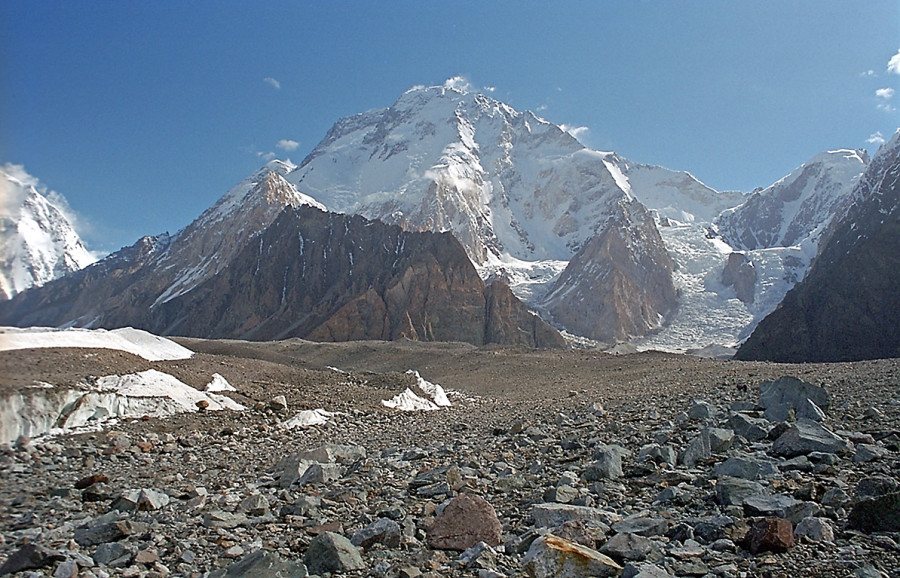
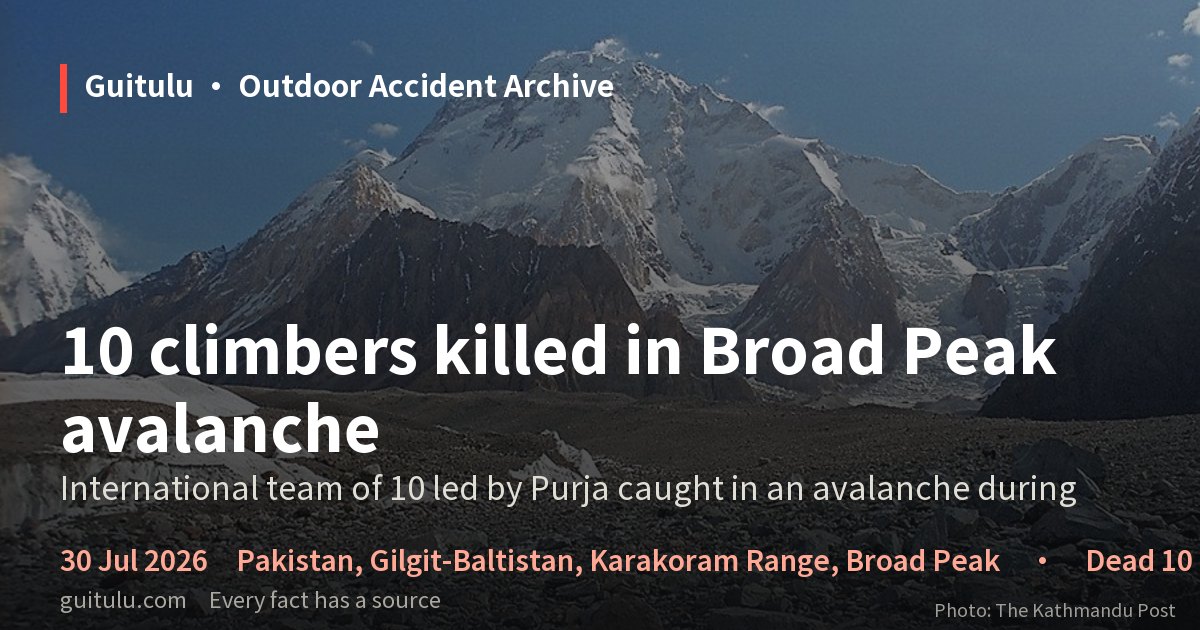
Panorama of Broad Peak

Archive / Mountaineering

10 climbers killed in Broad Peak avalanche

International team of 10 led by Purja caught in an avalanche during summit attempt; none survived

Last missing person found on 21 August; one body could not be brought down because of dangerous terrain

Photo: The Kathmandu Post

Date
Summer
Place
Pakistan, Gilgit-Baltistan, Karakoram Range, Broad PeakPakistan › Gilgit-Baltistan · Karakoram76.566°E 35.814°N
Activity
MountaineeringInvolves: AvalancheInternational climbing team of 10 (6 Nepalis and 1 person each from the United States, Oman, China and Pakistan)
Casualties
Dead 10 All 10 team members died; 9 bodies were recovered. The body of Nepali guide Nawang Thindu Sherpa was left on the mountain because the terrain was extremely dangerous
Material
47 facts · 13 sources4 accounts differ and are shown side by side

01What happened

Broad Peak is in the Karakoram Range on the China-Pakistan border. At 8047 metres, it is the world's twelfth-highest peak. The traditional route is on the Pakistani side, and the summit season runs from June to early September each year. It is considered slightly less technically difficult than neighbouring K2, but is known for sudden changes in weather.Facts it rests onF15Multiple sourcesBroad Peak lies on the border between China and Pakistan in the Karakoram Range, at an elevation of 8047 metres, and is the world's twelfth-highest peak.F16Single sourceThe traditional climbing route on Broad Peak is in Pakistan, and June to early September is the season suitable for summit attempts each year.F17Single sourceBroad Peak is considered slightly less technically difficult than neighbouring K2, but is known for sudden changes in weather.

Panorama of Broad PeakPhoto source: The Kathmandu Post

In the summer of 2026, renowned mountaineer Nirmal Purja led a 10-member international team up the mountain. Six team members were Nepali, and there was one climber each from the United States, Oman, China and Pakistan. In 2019, Purja had climbed all 14 8000-metre peaks in about six months.Facts it rests onF19Multiple sourcesThe international climbing team of 10 was led by the well-known mountaineer Nirmal Purja, nicknamed Nims.F20Multiple sourcesThe team included 6 Nepali men, 1 American woman, 1 Omani woman, 1 Chinese person and 1 Pakistani person.F01Multiple sourcesIn 2019, Purja summited all 14 peaks above 8000 metres in about 6 months, setting the fastest record at the time.

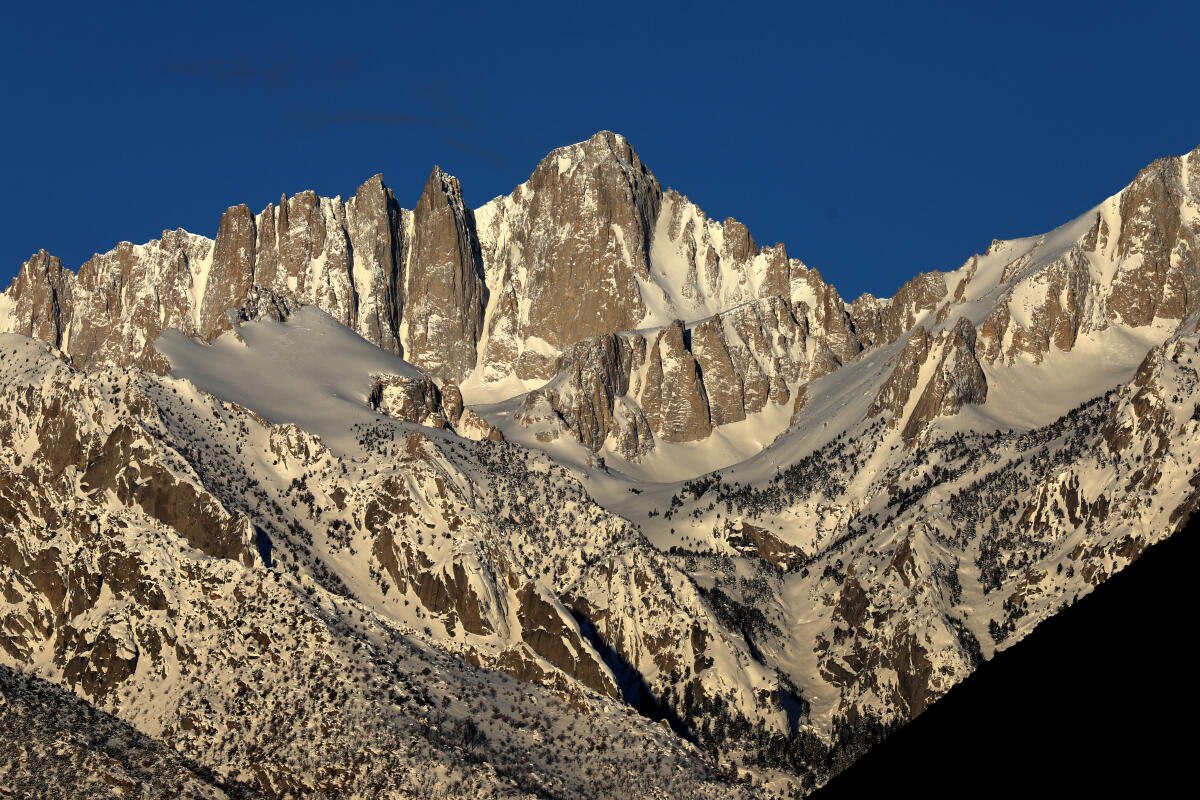
Snow-covered slopes in the Karakoram RangePhoto source: The Express Tribune · Anadolu Agency

Heavy snow began on the mountain around 22 July. Most teams left because of the heavy snow and rising avalanche risk, leaving only four commercial teams to attempt the summit together; there has been no public explanation of why they stayed. Purja had added Broad Peak to his plans at short notice. After summiting it, he would have had just one peak left to become the first person to climb all 14 8000-metre peaks twice without supplemental oxygen.Facts it rests onF29Multiple sourcesHeavy snow began around 22 July; after that, most teams left because of the heavy snow and rising avalanche risk, leaving only 4 commercial teams to attempt the summit together.F31Single sourceIt remains unclear why these teams decided to stay and attempt the summit.F32Multiple sourcesBroad Peak was a late addition to Purja's plans: after summiting it, he would have had only one peak left to become the first person to summit all 14 8000-metre peaks twice without supplemental oxygen.

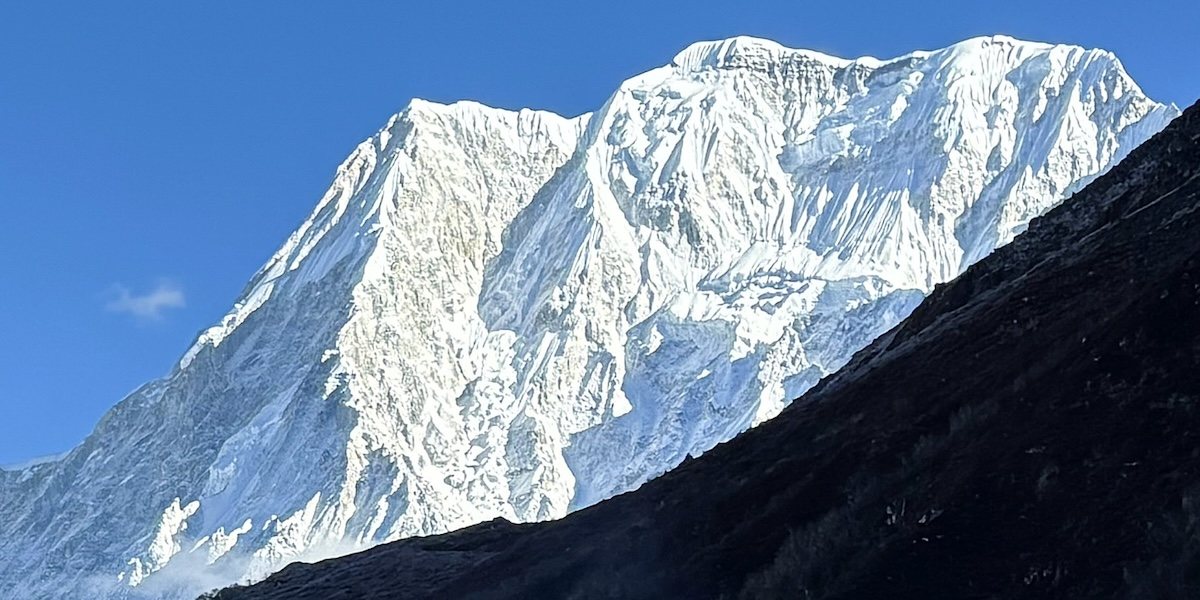
Broad PeakPhoto source: Xinhua News Agency · 8000ers website

At around 9 to 9:30 a.m. on 30 July, the team was caught in an avalanche at approximately 6600 metres, between Camps 2 and 3 on the standard route. The climbers were swept off the route and down the western gully, where the vertical drop exceeded 1500 metres in some places. According to an ExplorersWeb analysis, the avalanche may have originated from a snow-covered ridge above and to the right of Camp 3.Facts it rests onF23Multiple sourcesThe climbers' trackers showed that they stopped ascending between around 9 and 9:30 a.m. on 30 July, then fell several hundred metres.F25Multiple sourcesWhen the avalanche occurred, the 10 climbers were between Camp 2 and Camp 3 on the normal route, at an elevation of about 6600 metres.F35Multiple sourcesThe avalanche swept the climbers off the normal route and down a gully on the west side, where the vertical drop exceeded 1500 metres in some places.F34Single sourceAccording to an ExplorersWeb analysis of video filmed from K2, the avalanche may have originated on a snow-covered ridge above and to the right of Camp 3, and may have been triggered by the collapse of a cornice or serac, rather than being a slab avalanche.

According to ExplorersWeb, it was about 10 hours before base camp realised an accident had occurred: the climbers did not respond by radio, and people thought the guides had switched their radios off to save power; there was no mobile phone or internet signal there, and Starlink was not permitted. On 1 August, Purja's expedition company announced that all 10 team members had died. The Chinese embassy in Pakistan confirmed the same day that a Chinese climber had lost contact and initiated consular protection.Facts it rests onF37Single sourceAfter the avalanche, Base Camp did not realise anything had happened until about 10 to 13 hours later; the Alpine Club of Pakistan did not learn of it until 10 p.m.F38Single sourceReasons for the delay: no one on the mountain answered calls from Base Camp. At first, no one was concerned; people thought the guides had turned off their radios to save power. There was no mobile phone or internet signal below the 8,000-meter peaks of the Baltoro Glacier, and Starlink was not permitted. Some staff saw the avalanche but thought it was an ordinary occurrence.F09Multiple sourcesOn 1 August, Purja's expedition company Elite Exped confirmed that he and the other 9 team members had all died.F10Multiple sourcesThe Chinese Embassy in Pakistan confirmed on 1 August that a Chinese climber had lost contact and activated its emergency consular protection mechanism.

On 21 August, the last missing person was found, three weeks after the avalanche. The body of another Nepalese guide had also been found, but remained on the mountain because the terrain at its location was extremely dangerous. The accident has been described as one of the deadliest mountaineering accidents in decades.Facts it rests onF14Multiple sourcesOn 21 August, the last missing person, American climber Mallory Geis, was found, three weeks after the avalanche.F44Single sourceThe search and rescue team found the body of Nepali guide Nawang Thindu Sherpa, but because the terrain where it was located was extremely dangerous, the body remains on the mountain. The other 9 people have been recovered.F22Multiple sourcesThe avalanche has been described as one of the deadliest mountaineering accidents in Pakistan, and even in decades.

The number at the end of a paragraph is how many facts it rests on; open it to see each fact and how well it is sourced: Multiple sourcesSingle source. Conflicting accounts and speculation are kept out of the narrative.

  • Reported waypoints (illustrative)Schematic

Satellite imagery Sentinel-2 cloudless 2024 © EOX · Terrain AWS Terrain Tiles · Orange line is schematic · Place coordinates not individually verified

Route review

5 scenes to understand what happened

Scroll down and the map flies to where each part happened. The line is Schematic, Lines connect the reported waypoints in sequence and indicate only the approximate direction, not the actual route.

01

Full route

The approximate course of events is marked in sequence using the locations mentioned in reports.

03

Helicopter search and rescue

Two Pakistan Army Aviation helicopters carrying rescuers headed to the scene; reportedly, bad weather made it difficult for the helicopters to fly.Facts it rests onF05Single sourceTwo Pakistan Army Aviation helicopters carrying rescuers and specialist equipment went to the scene, and the search and rescue operation was led by Pakistani mountaineer Sirbaz Khan.F06Single sourceSearch and rescue on 31 July was affected by bad weather, making it difficult for helicopters to fly.

05

Search continues

On 21 August, the last missing person was found; another body remains on the mountain because of extremely dangerous terrain.Facts it rests onF14Multiple sourcesOn 21 August, the last missing person, American climber Mallory Geis, was found, three weeks after the avalanche.F44Single sourceThe search and rescue team found the body of Nepali guide Nawang Thindu Sherpa, but because the terrain where it was located was extremely dangerous, the body remains on the mountain. The other 9 people have been recovered.

02Timeline

  1. Heavy snow began around 22 July; after that, most teams left because of the heavy snow and rising avalanche risk, leaving only 4 commercial teams to attempt the summit together. F29

  2. According to Imagine Nepal, the team reached Camp 2 on 29 July (Wednesday) and planned to ascend to Camp 3 on 30 July, rest briefly and attempt the summit on 31 July. F26

  3. Purja's tracker showed that at 5:33 on 30 July he was near Camp 2 (about 6166 metres), at 7:03 the team reached about 6430 metres, and before 9:00 it reached about 6660 metres; about 30 minutes later, his position was more than 600 metres lower than before. F27

  4. The climbers' trackers showed that they stopped ascending between around 9 and 9:30 a.m. on 30 July, then fell several hundred metres. F23

  5. After the avalanche, Base Camp did not realise anything had happened until about 10 to 13 hours later; the Alpine Club of Pakistan did not learn of it until 10 p.m. F37

  6. On 1 August, Purja's expedition company Elite Exped confirmed that he and the other 9 team members had all died. F09

  7. The Chinese Embassy in Pakistan confirmed on 1 August that a Chinese climber had lost contact and activated its emergency consular protection mechanism. F10

  8. Most teams on nearby K2 abandoned their summit attempts and descended to support the search and rescue on Broad Peak. F42

  9. At midday on the third day after the incident, as search and rescue personnel were probing the avalanche debris, another avalanche came down. They ran to the rocks and managed to avoid it. F43

  10. On 21 August, the last missing person, American climber Mallory Geis, was found, three weeks after the avalanche. F14

  11. The search and rescue team found the body of Nepali guide Nawang Thindu Sherpa, but because the terrain where it was located was extremely dangerous, the body remains on the mountain. The other 9 people have been recovered. F44

03Lessons

Weather and retreat

After heavy snow, wait for it to stabilise

After the heavy snow around 22 July, most teams chose to leave. According to an interview by National Geographic, one climber who left said that after heavy snow, people should stay put and wait for several days of good weather without snowfall, allowing the fresh snow either to bond firmly or slide down.Facts it rests onF29Multiple sourcesHeavy snow began around 22 July; after that, most teams left because of the heavy snow and rising avalanche risk, leaving only 4 commercial teams to attempt the summit together.F30Single sourceKlein explained why he did not make another attempt: after heavy snow, climbers need to stay put and wait for several days of good weather without snowfall, allowing the new snow either to bond firmly to the mountain or slide down.

Avalanche and high altitude

Report that you are safe immediately after an avalanche

According to ExplorersWeb, it was about 10 hours after the avalanche before anyone raised the alarm: there was no protocol for reporting by radio that people were safe after a major avalanche, and the teams did not share information with one another. A rapid search and rescue effort could not have saved anyone this time, but it might save lives next time.Facts it rests onF37Single sourceAfter the avalanche, Base Camp did not realise anything had happened until about 10 to 13 hours later; the Alpine Club of Pakistan did not learn of it until 10 p.m.F38Single sourceReasons for the delay: no one on the mountain answered calls from Base Camp. At first, no one was concerned; people thought the guides had turned off their radios to save power. There was no mobile phone or internet signal below the 8,000-meter peaks of the Baltoro Glacier, and Starlink was not permitted. Some staff saw the avalanche but thought it was an ordinary occurrence.F40Single sourceExplorersWeb noted that there was no protocol requiring climbers to radio Base Camp to confirm their safety after a major avalanche. Commercial teams were also unwilling to share information, and no one knew that all 4 teams had been out of contact for 10 hours.F41Single sourceExplorersWeb said that even a rapid search and rescue response could not have saved anyone in this case, but it might save lives in future accidents.

Avalanche and high altitude

Experience and fame cannot stop an avalanche

The team was led by a top mountaineer who had climbed all 14 8000-metre peaks, yet the entire team died in a single avalanche. Avalanches, falling ice and rocks, and sudden weather changes are routine risks in northern Pakistan.Facts it rests onF01Multiple sourcesIn 2019, Purja summited all 14 peaks above 8000 metres in about 6 months, setting the fastest record at the time.F09Multiple sourcesOn 1 August, Purja's expedition company Elite Exped confirmed that he and the other 9 team members had all died.F18Multiple sourcesMountaineering accidents occur frequently in northern Pakistan, where avalanches, falling ice and rock, high altitude and sudden changes in weather are all common risks.

04Fact list 47 facts

Under each fact is a verbatim quote from the original. "Single source" means only one outlet mentioned it; "Accounts differ" means sources contradict each other and this site adopts neither side; "Speculation" is an inference by a reporter or a person involved, not a fact.

  1. F01Multiple sourcesBackground

    In 2019, Purja summited all 14 peaks above 8000 metres in about 6 months, setting the fastest record at the time.

    The Associated Press said the record was broken in 2023

    Quotes from the original 2

    “He climbed the world's 14 highest peaks in a record 189 days in 2019”

    Associated Press · 2026-08-02

    “他在2019年成为最快登顶全球全部14座海拔8000米以上高峰的登山家,仅用6个月零6天”

    In 2019, he became the fastest climber to summit all 14 of the world's peaks above 8000 metres, taking just 6 months and 6 days (machine translation)

    Xinhua News Agency · 2026-08-02
  2. F02Multiple sourcesEvent

    On 30 July (Thursday), the climbing team was caught in an avalanche while ascending towards the summit of Broad Peak.

    Accounts differ on the exact time; see conflicting facts. Rewritten on 10 November 2026 to remove “around noon”

    Quotes from the original 4

    “The avalanche struck the group around midday on Thursday as they made their way towards the summit of the world's 12th-highest peak.”

    The Express Tribune · 2026-07-31

    “around midday on Thursday”

    The Kathmandu Post · 2026-07-31

    “7月30日,10名国际登山者当天在攀登海拔8047米布洛阿特峰时遭遇雪崩失踪。”

    On 30 July, 10 international climbers went missing after being caught in an avalanche that day while climbing the 8047-metre Broad Peak. (machine translation)

    Xinhua News Agency · 2026-08-02

    “巴基斯坦布洛阿特峰当地时间7月30日发生雪崩,造成10名登山者失联。”

    An avalanche occurred on Broad Peak in Pakistan on 30 July local time, causing 10 climbers to lose contact. (machine translation)

    China News Service · 2026-08-01
  3. F03Accounts differEvent

    Accounts differ on the date of the avalanche: most sources give 30 July; Australian Associated Press gives 31 July.

    Quotes from the original 2

    “hit the expedition led by renowned Nepalese mountaineer, Nirmal Purja, on July 30.”

    dpa · 2026-08-21

    “the remains of the climbers killed in the July 31 avalanche were being transferred to a military hospital”

    AAP · 2026-08-06
  4. F04Single sourceFound at scene

    According to The Express Tribune, The Alpine Club of Pakistan said the locations of 4 climbers could be seen on GPS trackers.

    Quotes from the original 1

    “four of the climbers' locations were showing up on GPS trackers”

    The Express Tribune · 2026-07-31
  5. F05Single sourceEvent

    According to The Express Tribune, Two Pakistan Army Aviation helicopters carrying rescuers and specialist equipment went to the scene, and the search and rescue operation was led by Pakistani mountaineer Sirbaz Khan.

    Quotes from the original 2

    “two Pakistan Army Aviation helicopters carrying rescue personnel and specialised equipment had been dispatched to the site”

    The Express Tribune · 2026-07-31

    “The ongoing search and rescue mission to locate the missing climbers is being led by renowned Pakistani mountaineer Sirbaz Khan.”

    The Express Tribune · 2026-07-31
  6. F06Single sourceEvent

    According to Associated Press, Search and rescue on 31 July was affected by bad weather, making it difficult for helicopters to fly.

    Quotes from the original 1

    “in harsh weather that hampered flights by search and rescue helicopters”

    Associated Press · 2026-08-02
  7. F07Accounts differEvent

    Accounts differ on the number of bodies initially found: the Associated Press said 4 were found on 31 July and 3 brought down; The Kathmandu Post and The Express Tribune said 4 had been recovered; China News Service said the remains of 3 people had been found by 31 July; Australian Associated Press said 3 bodies were brought down the mountain on 1 August.

    Quotes from the original 4

    “Rescuers found four bodies and recovered three of them Friday”

    Associated Press · 2026-08-02

    “Four bodies have been recovered by ground rescue teams following an avalanche”

    The Kathmandu Post · 2026-07-31

    “截至7月31日,其中3名登山者的遗骸已被找到。”

    By 31 July, the remains of 3 of the climbers had been found. (machine translation)

    China News Service · 2026-08-01

    “Three bodies were brought off the mountain on August 1.”

    AAP · 2026-08-06
  8. F08Single sourceEvent

    According to China News Service, A US State Department spokesperson confirmed on 31 July that an American had died in the avalanche.

    Quotes from the original 1

    “美国国务院发言人同日证实,一名美国人因布洛阿特峰雪崩死亡。”

    A US State Department spokesperson confirmed on the same day that an American had died in the Broad Peak avalanche. (machine translation)

    China News Service · 2026-08-01
  9. F09Multiple sourcesEvent

    On 1 August, Purja's expedition company Elite Exped confirmed that he and the other 9 team members had all died.

    Xinhua reported only that Purja's death had been confirmed

    Quotes from the original 2

    “Nirmal Purja and nine other climbers swept away by an avalanche in Pakistan are confirmed to have died, and search teams were trying to recover their bodies, Purja's expedition company said Saturday.”

    Associated Press · 2026-08-02

    “8月1日,普尔贾联合创办的登山探险公司“Elite Exped”确认了其遇难消息。”

    On 1 August, “Elite Exped”, the mountaineering expedition company co-founded by Purja, confirmed the news of his death. (machine translation)

    Xinhua News Agency · 2026-08-02
  10. F10Multiple sourcesEvent

    The Chinese Embassy in Pakistan confirmed on 1 August that a Chinese climber had lost contact and activated its emergency consular protection mechanism.

    The Associated Press attributed this to Xinhua

    Quotes from the original 2

    “另据中国驻巴基斯坦大使馆8月1日证实,一名中国籍登山者在布洛阿特峰附近遭遇雪崩后失联。事件发生后,使馆已启动领事保护应急机制”

    Separately, the Chinese Embassy in Pakistan confirmed on 1 August that a Chinese climber had lost contact after being caught in an avalanche near Broad Peak. After the incident, the embassy activated its emergency consular protection mechanism (machine translation)

    Xinhua News Agency · 2026-08-02

    “China's embassy in Pakistan said a Chinese mountaineer also was among the missing after the avalanche”

    Associated Press · 2026-08-02
  11. F11Single sourceParticipant's view

    According to Associated Press, Irfan Arshad Khan, president of the Alpine Club of Pakistan, said the incident was a reminder of the immense risks people face when entering the high-altitude regions of the Himalayas and Karakoram.

    Quotes from the original 1

    “The mountains inspire us with their beauty, but they also remind us of the immense risks faced by those who venture into the high Himalaya and Karakoram”

    Associated Press · 2026-08-02
  12. F12Single sourceEvent

    According to Xinhua News Agency, In the early hours of 2 August, a team of 10 Pakistani and Nepali climbers left base camp to continue the search.

    Quotes from the original 1

    “2日凌晨,一支由10名巴基斯坦和尼泊尔专业登山人士组成的队伍离开布洛阿特峰大本营,继续搜索失联人员下落。”

    In the early hours of the 2nd, a team of 10 Pakistani and Nepali professional mountaineers left Broad Peak Base Camp to continue searching for the missing people. (machine translation)

    Xinhua News Agency · 2026-08-02
  13. F13Accounts differEvent

    On 6 August, a Pakistani military helicopter brought 5 bodies down from Broad Peak, including Purja's; the number of bodies recovered rose to 8, with 2 people still not found.

    Australian Associated Press said the number of bodies recovered rose to 8 on 6 August; ExplorersWeb said 7 were brought down in the days after the incident and Sakhi's body was not found until 13 August

    Quotes from the original 4

    “Pakistani military helicopters have airlifted the bodies of five climbers from the snow-covered slopes of Broad Peak”

    AAP · 2026-08-06

    “Thursday's airlift raised the number of recovered bodies to eight, including renowned British-Nepali climber Nirmal Purja.”

    AAP · 2026-08-06

    “Two climbers remain missing and the search is ongoing”

    AAP · 2026-08-06

    “Over the following days, seven bodies were brought down, including Nirmal Purja’s.”

    ExplorersWeb · 2026-08-13
  14. F14Multiple sourcesEvent

    On 21 August, the last missing person, American climber Mallory Geis, was found, three weeks after the avalanche.

    dpa wrote “the last body”, but another victim's body remained on the mountain and was not brought down; see subsequent facts

    Quotes from the original 3

    “The last body from an expedition that killed 10 climbers on Pakistan’s Broad Peak was recovered on Friday, three weeks after they were swept away by an avalanche”

    dpa · 2026-08-21

    “The body of a female US climber was brought down to base camp.”

    dpa · 2026-08-21

    “She was the last missing victim to be located.”

    ExplorersWeb · 2026-08-22
  15. F15Multiple sourcesBackground

    Broad Peak lies on the border between China and Pakistan in the Karakoram Range, at an elevation of 8047 metres, and is the world's twelfth-highest peak.

    Quotes from the original 3

    “布洛阿特峰位于喀喇昆仑山脉中国和巴基斯坦的边界上,海拔8047米,是全球14座海拔超过8000米的高峰之一。”

    Broad Peak lies on the border between China and Pakistan in the Karakoram Range, at an elevation of 8047 metres, and is one of the world's 14 peaks over 8000 metres high. (machine translation)

    Xinhua News Agency · 2026-08-02

    “布洛阿特峰地处世界第二高山脉喀喇昆仑山脉,海拔超过8000米,为世界第十二高峰。”

    Broad Peak lies in the Karakoram Range, the world's second-highest mountain range, at an elevation of over 8000 metres, and is the world's twelfth-highest peak. (machine translation)

    China News Service · 2026-08-01

    “towards the summit of the world's 12th-highest peak”

    The Express Tribune · 2026-07-31
  16. F16Single sourceBackground

    According to Xinhua News Agency, The traditional climbing route on Broad Peak is in Pakistan, and June to early September is the season suitable for summit attempts each year.

    Quotes from the original 1

    “其传统攀登路线位于巴基斯坦境内,每年6月至9月上旬是其适合冲顶的登山季。”

    Its traditional climbing route is in Pakistan, and June to early September each year is the climbing season suitable for summit attempts. (machine translation)

    Xinhua News Agency · 2026-08-02
  17. F17Single sourceBackground

    According to The Express Tribune, Broad Peak is considered slightly less technically difficult than neighbouring K2, but is known for sudden changes in weather.

    Quotes from the original 1

    “Broad Peak, part of the Karakoram range, is regarded as somewhat less technically demanding than neighbouring K2 but is notorious for sudden, harsh weather shifts.”

    The Express Tribune · 2026-07-31
  18. F18Multiple sourcesBackground

    Mountaineering accidents occur frequently in northern Pakistan, where avalanches, falling ice and rock, high altitude and sudden changes in weather are all common risks.

    Quotes from the original 2

    “Accidents are common on climbing expeditions in northern Pakistan because of avalanches, falling ice and rock, high altitude and rapidly changing weather.”

    Associated Press · 2026-08-02

    “Mountaineering accidents are common in northern Pakistan, where climbers face hazards including avalanches, falling ice and rock, extreme altitude and rapidly changing weather.”

    AAP · 2026-08-06
  19. F19Multiple sourcesBackground

    The international climbing team of 10 was led by the well-known mountaineer Nirmal Purja, nicknamed Nims.

    Quotes from the original 3

    “The 10-member expedition was swept away by an avalanche Thursday on Pakistan's Broad Peak.”

    Associated Press · 2026-08-02

    “hit the expedition led by renowned Nepalese mountaineer, Nirmal Purja, on July 30.”

    dpa · 2026-08-21

    “The expedition was led by Purja, the Nepal-born former British Army soldier widely known as Nims Dai.”

    Associated Press · 2026-08-02
  20. F20Multiple sourcesBackground

    The team included 6 Nepali men, 1 American woman, 1 Omani woman, 1 Chinese person and 1 Pakistani person.

    Quotes from the original 3

    “Six men from Nepal, one US woman, a female Omani mountaineer, a Chinese national and a Pakistani, were part of the expedition.”

    dpa · 2026-08-21

    “the missing climbers include six Nepalese mountaineers”

    The Express Tribune · 2026-07-31

    “失联的10名登山者分别来自美国、巴基斯坦、阿曼、尼泊尔和中国。”

    The 10 climbers who lost contact were from the United States, Pakistan, Oman, Nepal and China. (machine translation)

    China News Service · 2026-08-01
  21. F21Multiple sourcesBackground

    English-language reports named the Chinese climber on the team as Wang Zhong.

    Chinese-language reports did not give a name.

    Quotes from the original 2

    “Chinese climber Wang Zhong”

    The Kathmandu Post · 2026-07-31

    “Wang Zhong from China”

    The Express Tribune · 2026-07-31
  22. F22Multiple sourcesPost-incident analysis

    The avalanche has been described as one of the deadliest mountaineering accidents in Pakistan, and even in decades.

    Quotes from the original 2

    “in one of the deadliest mountaineering accidents in decades.”

    dpa · 2026-08-21

    “what the Alpine Club described as one of Pakistan's deadliest mountaineering disasters.”

    AAP · 2026-08-06
  23. F23Multiple sourcesEvent

    The climbers' trackers showed that they stopped ascending between around 9 and 9:30 a.m. on 30 July, then fell several hundred metres.

    Quotes from the original 3

    “they all show that the climbers stopped their ascent around 9:30 am Pakistan time and then fell several hundred meters”

    ExplorersWeb · 2026-07-30

    “A huge avalanche struck 10 climbers in four teams at around 9:30 am Pakistan time on July 30”

    ExplorersWeb · 2026-08-10

    “Purja and Al-Harthy’s next pings both came just before 9 a.m. local time, at around 6,660 meters”

    National Geographic · 2026-07-31
  24. F24Accounts differEvent

    Accounts differ on the time of the avalanche: the Alpine Club of Pakistan initially reported it as “around noon”; tracker records and reports by ExplorersWeb and National Geographic put it between 9 and 9:30 a.m.

    Quotes from the original 3

    “around midday today”

    ExplorersWeb · 2026-07-30

    “The avalanche struck the group around midday on Thursday”

    The Express Tribune · 2026-07-31

    “At around 9 a.m. local time on Thursday, July 30”

    National Geographic · 2026-07-31
  25. F25Multiple sourcesEvent

    When the avalanche occurred, the 10 climbers were between Camp 2 and Camp 3 on the normal route, at an elevation of about 6600 metres.

    Quotes from the original 3

    “as they climbed between Camp 2 and Camp 3 on the normal route of Broad Peak”

    ExplorersWeb · 2026-08-10

    “The snow swept away the climbers at around 6,600m”

    ExplorersWeb · 2026-08-10

    “at around 6,660 meters”

    National Geographic · 2026-07-31
  26. F26Single sourcePlan

    According to ExplorersWeb, According to Imagine Nepal, the team reached Camp 2 on 29 July (Wednesday) and planned to ascend to Camp 3 on 30 July, rest briefly and attempt the summit on 31 July.

    Quotes from the original 2

    “the climbers on Broad Peak had reached Camp 2 on Wednesday”

    ExplorersWeb · 2026-07-30

    “The plan was to go to Camp 3 on Thursday, then, after a short break, continue to the summit on Friday.”

    ExplorersWeb · 2026-07-30
  27. F27Single sourceMovement

    According to National Geographic, Purja's tracker showed that at 5:33 on 30 July he was near Camp 2 (about 6166 metres), at 7:03 the team reached about 6430 metres, and before 9:00 it reached about 6660 metres; about 30 minutes later, his position was more than 600 metres lower than before.

    Quotes from the original 3

    “The first pings put him at 6,166 meters—20,231 feet, right about at Camp 2—at 5:33 a.m. Pakistan time on Thursday July 30.”

    National Geographic · 2026-07-31

    “By 7:03 a.m. the Elite Expedition team had reached 6,430 meters.”

    National Geographic · 2026-07-31

    “the pings from Purja's device placed him more than 2,000 feet below his position just 30 minutes earlier”

    National Geographic · 2026-07-31
  28. F28Single sourceBackground

    According to National Geographic, In mid-July, Hungarian climber David Klein, who was climbing Broad Peak, said conditions on the mountain were relatively good and that the “avalanche risk was low”.

    Quotes from the original 1

    “In mid-July, Klein told ExplorersWeb that conditions on the mountain were relatively good and that “avalanche danger is low.””

    National Geographic · 2026-07-31
  29. F29Multiple sourcesBackground

    Heavy snow began around 22 July; after that, most teams left because of the heavy snow and rising avalanche risk, leaving only 4 commercial teams to attempt the summit together.

    Quotes from the original 3

    “dissuaded by heavy snowfall that began around July 22”

    National Geographic · 2026-07-31

    “Most of the teams at base camp had already gone home.”

    National Geographic · 2026-07-31

    “Four commercial teams had stayed on for a shared summit push after earlier climbers had left due to heavy snow and rising avalanche danger.”

    ExplorersWeb · 2026-08-13
  30. F30Single sourceParticipant's view

    According to National Geographic, Klein explained why he did not make another attempt: after heavy snow, climbers need to stay put and wait for several days of good weather without snowfall, allowing the new snow either to bond firmly to the mountain or slide down.

    Quotes from the original 2

    “After lots of snowfall you don’t only want good weather”

    National Geographic · 2026-07-31

    “You want a few days of good weather in which there is no snowfall, but you are not moving because the snow has to do one of two things. It has to stick to the mountain or it has to slide down.”

    National Geographic · 2026-07-31
  31. F31Single sourcePost-incident analysis

    According to National Geographic, It remains unclear why these teams decided to stay and attempt the summit.

    Quotes from the original 1

    “Why they decided to stay is still opaque, but the consequences were deadly.”

    National Geographic · 2026-07-31
  32. F32Multiple sourcesPlan

    Broad Peak was a late addition to Purja's plans: after summiting it, he would have had only one peak left to become the first person to summit all 14 8000-metre peaks twice without supplemental oxygen.

    Quotes from the original 4

    “a recent post on social media suggested that Broad Peak was a last-minute decision to break a record”

    ExplorersWeb · 2026-07-30

    “Purja said Broad Peak was a late addition to the expedition”

    National Geographic · 2026-07-31

    “would have left him one mountain shy of becoming the first person to climb all 14 of the 8,000-meter peaks twice without oxygen”

    National Geographic · 2026-07-31

    “But just before setting off for Pakistan, I ran the numbers on my 8,000m summits.”

    ExplorersWeb · 2026-07-30
  33. F33Single sourceEvent

    According to ExplorersWeb, The 10 people swept away at once by the avalanche belonged to 4 teams on the mountain.

    Quotes from the original 2

    “A huge avalanche struck 10 climbers in four teams”

    ExplorersWeb · 2026-08-10

    “There were four teams on the mountain”

    ExplorersWeb · 2026-07-30
  34. F34Single sourcePost-incident analysis

    According to ExplorersWeb, According to an ExplorersWeb analysis of video filmed from K2, the avalanche may have originated on a snow-covered ridge above and to the right of Camp 3, and may have been triggered by the collapse of a cornice or serac, rather than being a slab avalanche.

    Quotes from the original 2

    “it seems the avalanche came from a snowy rib located up and to the right of Camp 3”

    ExplorersWeb · 2026-08-10

    “the Broad Peak slide might have been triggered by a cornice or serac falling from that rib”

    ExplorersWeb · 2026-08-10
  35. F35Multiple sourcesEvent

    The avalanche swept the climbers off the normal route and down a gully on the west side, where the vertical drop exceeded 1500 metres in some places.

    Quotes from the original 3

    “It was massive and violent enough to sweep the climbers off the normal route”

    ExplorersWeb · 2026-08-10

    “in places, more than 1,500 vertical meters — down a west-facing gully”

    ExplorersWeb · 2026-08-13

    “an avalanche swept ten climbers down the mountain’s main west-facing gulley, up to a vertical mile”

    National Geographic · 2026-07-31
  36. F36Single sourcePost-incident analysis

    According to ExplorersWeb, ExplorersWeb said the avalanche was so large and powerful that the 10 people on the route could not have avoided it; if anything could have been avoided, it was the delay of about 10 hours in raising the alarm afterward.

    Quotes from the original 2

    “the avalanche was both lethal and so big that the 10 climbers in its path could not avoid it”

    ExplorersWeb · 2026-08-10

    “If anything could have been avoided here, it was the 10-hour delay”

    ExplorersWeb · 2026-08-10
  37. F37Single sourceEvent

    According to ExplorersWeb, After the avalanche, Base Camp did not realise anything had happened until about 10 to 13 hours later; the Alpine Club of Pakistan did not learn of it until 10 p.m.

    Quotes from the original 3

    “no alarm went out until almost 13 hours later”

    ExplorersWeb · 2026-07-30

    ““We only found out at 10 pm,” Naila Kiani of the Alpine Club of Pakistan told ExplorersWeb.”

    ExplorersWeb · 2026-07-30

    “didn’t learn of a potential incident until 10 hours after it occurred”

    ExplorersWeb · 2026-08-10
  38. F38Single sourcePost-incident analysis

    According to ExplorersWeb, Reasons for the delay: no one on the mountain answered calls from Base Camp. At first, no one was concerned; people thought the guides had turned off their radios to save power. There was no mobile phone or internet signal below the 8,000-meter peaks of the Baltoro Glacier, and Starlink was not permitted. Some staff saw the avalanche but thought it was an ordinary occurrence.

    Quotes from the original 4

    “although none of the Broad Peak climbers answered radio calls from their Base Camp, no one was worried at first”

    ExplorersWeb · 2026-08-10

    “everyone figured the guides had turned their radios off to save power”

    ExplorersWeb · 2026-08-10

    “There is no cell phone or internet connection at the Baltoro 8,000’ers, and Starlink is not permitted.”

    ExplorersWeb · 2026-08-10

    “Some staff members apparently saw the slide, but they thought it was a normal thing”

    ExplorersWeb · 2026-08-10
  39. F39Single sourceEvent

    According to ExplorersWeb, Not until evening did people wonder why no one was responding. They asked colleagues in Kathmandu to check the trackers and raised the alarm only after seeing a sudden drop in altitude.

    Quotes from the original 3

    “It was only in the evening that they started to wonder why no one had called in.”

    ExplorersWeb · 2026-08-10

    “They asked someone from 7ST in Kathmandu (!) to check the climbers’ trackers.”

    ExplorersWeb · 2026-08-10

    “Then they saw the sudden loss of altitude on some of them and raised the alarm.”

    ExplorersWeb · 2026-08-10
  40. F40Single sourcePost-incident analysis

    According to ExplorersWeb, ExplorersWeb noted that there was no protocol requiring climbers to radio Base Camp to confirm their safety after a major avalanche. Commercial teams were also unwilling to share information, and no one knew that all 4 teams had been out of contact for 10 hours.

    Quotes from the original 2

    “It is surprising that there is no protocol for climbers to check with Base Camp over the radio to confirm they are okay after a big avalanche in their area.”

    ExplorersWeb · 2026-08-10

    “they couldn’t know that no one in any of the four teams had checked in for 10 hours”

    ExplorersWeb · 2026-08-10
  41. F41Single sourcePost-incident analysis

    According to ExplorersWeb, ExplorersWeb said that even a rapid search and rescue response could not have saved anyone in this case, but it might save lives in future accidents.

    Quotes from the original 1

    “In this case, a swift search would not have saved anyone, but it might do so in future disasters.”

    ExplorersWeb · 2026-08-10
  42. F42Single sourceAftermath

    According to ExplorersWeb, Most teams on nearby K2 abandoned their summit attempts and descended to support the search and rescue on Broad Peak.

    Quotes from the original 1

    “most K2 teams have aborted their summit pushes in order to help on neighboring Broad Peak”

    ExplorersWeb · 2026-07-31
  43. F43Single sourceAftermath

    According to ExplorersWeb, At midday on the third day after the incident, as search and rescue personnel were probing the avalanche debris, another avalanche came down. They ran to the rocks and managed to avoid it.

    Quotes from the original 2

    “On the third day after the incident, we were probing the debris at noon”

    ExplorersWeb · 2026-08-10

    “The avalanche then came down right in front of us”

    ExplorersWeb · 2026-08-10
  44. F44Single sourceAftermath

    According to ExplorersWeb, The search and rescue team found the body of Nepali guide Nawang Thindu Sherpa, but because the terrain where it was located was extremely dangerous, the body remains on the mountain. The other 9 people have been recovered.

    Quotes from the original 2

    “Search teams have located Nepali Nawang Thindu Sherpa’s body but have left it on the mountain because of the extreme danger of the terrain where it is located.”

    ExplorersWeb · 2026-08-22

    “Eight other climbers’ remains have already been recovered.”

    ExplorersWeb · 2026-08-22
  45. F45Single sourceMovement

    According to National Geographic, On 25 July, David Klein and his companion packed their belongings and left Broad Peak.

    Quotes from the original 1

    “On July 25, Klein and Overton packed up and walked out as well.”

    National Geographic · 2026-07-31
  46. F46Single sourcePost-incident analysis

    According to ExplorersWeb, ExplorersWeb said the delay in raising the alarm cost an entire day, while a timely response might have allowed a helicopter to reach the scene before dark.

    Quotes from the original 1

    “Thus, the entire day, when a prompt response might have allowed helicopters to reach the site before dark, was lost.”

    ExplorersWeb · 2026-07-30
  47. F47Single sourceAftermath

    According to ExplorersWeb, By the time rescuers reached the scene on 31 July, it had been established that there were no survivors.

    Quotes from the original 2

    “when we arrived at the scene the next day [July 31], we realized that there’s nothing left to be hopeful about”

    ExplorersWeb · 2026-08-10

    “by the time teams reached the site the next day, it was clear there were no survivors”

    ExplorersWeb · 2026-08-13