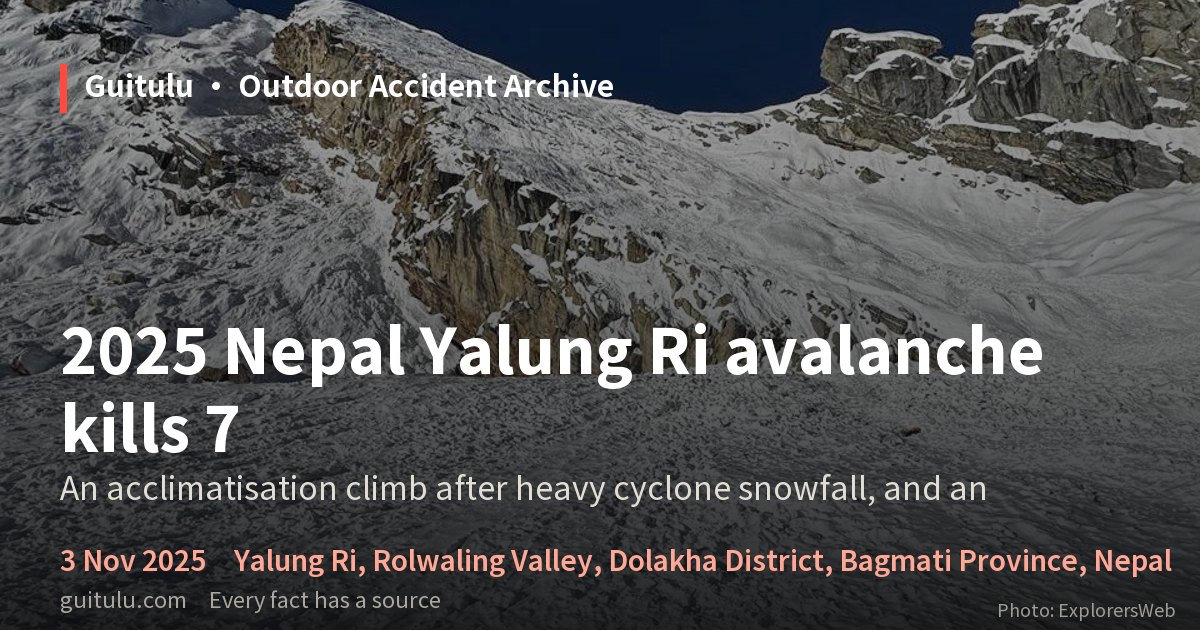
Yalung Ri, Rolwaling Valley, Dolakha District, Bagmati Province, NepalNepal › Bagmati Province · Himalaya86.412°E 27.854°N
Activity
MountaineeringInvolves: Avalanche15-person mountaineering team (5 foreign climbers and 10 Nepali high-altitude support staff)
Casualties
Dead 7 Injured 87 people died (5 foreign climbers and 2 Nepali guides); early reports put the number injured at 4, while later reports put it at 8. The remains of 2 people were recovered at the time; the remains of the other 5 were recovered in August 2026.
Material
29 facts · 8 sources4 accounts differ and are shown side by side
The number at the end of a paragraph is how many facts it rests on; open it to see each fact and how well it is sourced:
Multiple sourcesSingle source. Conflicting accounts and speculation are kept out of the narrative.
Reported locations passed through (illustrative)Schematic
Scroll down and the map flies to where each part happened. The line is Schematic, Connects the locations mentioned in reports in sequence, showing only the approximate direction, not the actual track. Sources for location coordinates are given in places.json.
01
Full route
Places mentioned in reports are connected in sequence to show the approximate route (schematic).
In the week before the accident, Tropical Cyclone Montha brought heavy rain and snow to many parts of Nepal, affecting numerous trekking routes and leaving tourists stranded. F01
According to police, the team spent the night in Na village and set out for Yalung Ri Base Camp only after the weather briefly improved on Sunday, but the snow remained unstable. F07
Heavy snow and cloud prevented helicopters from flying that day, and reaching the site on foot was also extremely difficult. A helicopter did not reach the area until evening. F13
The avalanche occurred early Monday morning. The ground rescue team did not set out until around 3 pm and walked through the night to reach the site. F14
When the avalanche occurred on 3 November, a 15-person team was climbing Yalung Ri, including 5 foreign climbers and 10 Nepali high-altitude support staff. F08
On 4 November, the weather cleared and a helicopter carrying rescue personnel landed at the site. F16
Eight people who were injured or rescued in the avalanche were taken to Kathmandu for treatment. F17
On 5 November, rescuers dug the bodies of an Italian climber and a French climber out of deep snow and took them to Kathmandu Teaching Hospital. F19
On 8 November, the search was called off because the snow had frozen so hard that ice axes could not break through it. Rescuers said they might try again in June or July the following year, after the snow softened. F22
In August 2026, local people found and reported bodies at the foot of the mountain. After the snow melted in summer, searchers recovered the bodies of the remaining 5 people who had died; it took 7 helicopter attempts to bring the bodies down the mountain. F23
Under each fact is a verbatim quote from the original. "Single source" means only one outlet mentioned it; "Accounts differ" means sources contradict each other and this site adopts neither side; "Speculation" is an inference by a reporter or a person involved, not a fact.
In the week before the accident, Tropical Cyclone Montha brought heavy rain and snow to many parts of Nepal, affecting numerous trekking routes and leaving tourists stranded.
Quotes from the original 3
“Last week, Cyclone Montha triggered heavy rain and snowfall across Nepal, leaving trekkers and tourists stranded on popular Himalayan trekking routes.”
“Many trekking routes in Nepal have been hit by unseasonal rains or deep snow due to the impact of cyclone Montha, leading the authorities to issue alerts to trekkers and climbers.”
Last week, Tropical Cyclone “Montha” caused blizzards and heavy rain in many parts of Nepal, leaving large numbers of tourists stranded. (machine translation)
The team had originally intended to climb Dolma Kang (6334 metres), planning to first climb Yalung Ri as an acclimatisation climb.
Quotes from the original 2
“the group had originally come to climb Dolma Kang (6,334 metres). Before attempting that peak, they had planned to climb Yalung Ri as part of their acclimatisation schedule.”
Before the accident, snow had fallen for several consecutive days and the weather had been severe in the Rolwaling Valley. Villagers from Na descended to Beding because of the continuing snowfall.
Al Jazeera cited The Kathmandu Post; the statement that villagers descended to Beding appears only in The Kathmandu Post.
Quotes from the original 2
“The Rolwaling Valley had experienced continuous snow and poor weather conditions for several days before the tragedy. The local people of Na had descended to Beding following continuous snowfall.”
Accounts of the nationalities of those killed differ: Dolakha police initially said there were 3 French, 1 Canadian and 1 Italian; the list released by the Nepal Tourism Board gave 2 Italians, 1 French, 1 Canadian and 1 German.
Quotes from the original 2
“Mahato said that three French climbers, one Canadian, one Italian and two Nepalis were killed in the incident.”
“The missing includes two Italians — Paolo Cocco and Marcus Kirchler — French national Manfredi Christian Andre, Canadian Marco Di Marcello, and German Jakob Schreiber.”
According to ExplorersWeb, Because the Rolwaling Valley is a restricted area and rescue flights require multiple levels of permission, the air rescue after the accident was delayed, prompting controversy.
Quotes from the original 2
“A two-day delay in aerial assistance after the accident due to administrative hurdles made the case particularly controversial.”
““The emergency response was immediately snared in red tape because the Rolwaling Valley is designated a restricted zone, requiring multiple layers of permission for rescue flights,” The Tourism Times reported at the time.”
In the same week, two other Italian climbers died while climbing Panbari in western Nepal.
Quotes from the original 2
“Italy's Foreign Ministry on Tuesday said Nepalese authorities confirmed the deaths of Alessandro Caputo and Stefano Farronato. They were climbing Panbari Peak when contact was lost Friday.”
According to The Kathmandu Post, According to police, the team spent the night in Na village and set out for Yalung Ri Base Camp only after the weather briefly improved on Sunday, but the snow remained unstable.
Quotes from the original 2
“The climbers had spent the night at Na village before heading to the Yalung Ri base camp on Sunday, following a brief improvement in the weather.”
When the avalanche occurred on 3 November, a 15-person team was climbing Yalung Ri, including 5 foreign climbers and 10 Nepali high-altitude support staff.
All three cite Dolakha police.
Quotes from the original 3
“the avalanche hit the expedition of 15, including five foreign climbers and 10 Nepali high altitude workers, at around 8:30 am while they were ascending Yalung Ri (5,630 metres)”
Accounts differ on the time of the avalanche: The Kathmandu Post reported approximately 8:30 am, while the Global Times, citing the BBC, reported approximately 9 am.
Quotes from the original 2
“at around 8:30 am while they were ascending Yalung Ri”
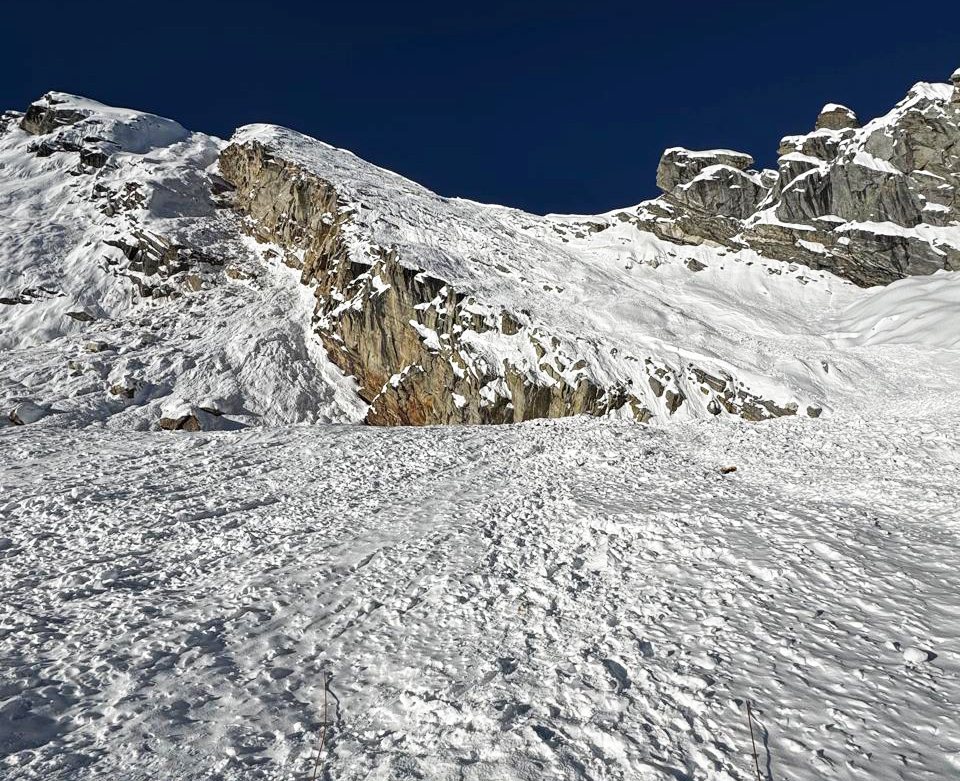
Accounts differ on where the avalanche occurred: The Kathmandu Post and the Associated Press reported that it struck Yalung Ri Base Camp (the Associated Press put the base camp at an altitude of 4900 metres); Everest Chronicle reported that the climbers encountered the avalanche while climbing a steep ice slope near the summit, and that search and rescue was conducted above an altitude of 5400 metres.
Quotes from the original 2
“The avalanche pounded the base camp at Mount Yalung Ri, located at 4,900 meters (16,000 feet), on Monday morning.”
“The avalanche struck on the morning of November 3 as the climbers were ascending a steep ice slope near the summit of Yalung Ri in the Dolakha Rolwaling region.”
Police said the avalanche buried everyone on the slope; police received the information late, and bad weather also slowed the rescue.
Quotes from the original 3
““The avalanche buried everyone on the slope,” said Deputy Superintendent of Police Gyan Kumar Mahato. “We got the information late, and the difficult weather delayed immediate response.””
“The avalanche buried everyone on the slope. We received the information late, and the bad weather also forced the rescue operation to be delayed.” (machine translation)
An injured climber said they repeatedly called for help and received no response for several hours; they were told a helicopter would take 4 hours to arrive, by which time several of their companions had died.
Al Jazeera cited the same interview from The Kathmandu Post.
Quotes from the original 2
““We shouted and cried for help, but no one could reach us,” he said. “We were told that a helicopter would come after four hours, but by then several of our friends were gone.””
““We shouted and cried for help, but no one could reach us,” the unnamed climber said. “We were told that a helicopter would come after four hours, but by then, several of our friends were gone.””
Heavy snow and cloud prevented helicopters from flying that day, and reaching the site on foot was also extremely difficult. A helicopter did not reach the area until evening.
Quotes from the original 2
“due to heavy snowfall and clouds, helicopters couldn’t be flown, and reaching the site on foot was extremely difficult.”
According to Everest Chronicle, The avalanche occurred early Monday morning. The ground rescue team did not set out until around 3 pm and walked through the night to reach the site.
Quotes from the original 1
“The avalanche occurred early on Monday morning, but the ground rescue team was deployed around 3 p.m. The rescuers walked through the night to reach the site”
Eight people who were injured or rescued in the avalanche were taken to Kathmandu for treatment.
Quotes from the original 3
“eight other climbers who were injured in the avalanche were flown to the capital, Kathmandu, for treatment. Among them were three French and five Nepali nationals.”
Reports differ on the number injured: early reporting by The Kathmandu Post and ExplorersWeb said 4 people were injured; the Associated Press and Reuters said 8 people were injured and taken to Kathmandu.
Quotes from the original 3
“Four other Nepalis sustained injuries in the tragedy.”
According to Everest Chronicle, On 6 November, high-altitude rescue experts from Switzerland, Italy and Nepal joined the search with advanced equipment.
Quotes from the original 1
“They were joined on November 6 by senior high-altitude rescue experts Bruno Joseph Jelk from Switzerland, Michele Cucchi from Italy, and Nepali IFMGA guide Chhiring Pande Bhote, all equipped with advanced search and rescue tools.”
According to Everest Chronicle, The search team dug in at least 50 locations, some as deep as 5 metres, and also searched from a helicopter using a RECCO detector for more than 4 hours, but did not find the remaining victims.
Quotes from the original 2
“Rescuers dug at least 50 locations, some as deep as five meters where RECCO signals were detected, but their efforts were in vain.”
According to Everest Chronicle, On 8 November, the search was called off because the snow had frozen so hard that ice axes could not break through it. Rescuers said they might try again in June or July the following year, after the snow softened.
Quotes from the original 2
““The snow has hardened so much that we couldn’t even chip the surface with a pickaxe. So, we decided to call off the search from today,” Pasang told Everest Chronicle.”
According to ExplorersWeb, In August 2026, local people found and reported bodies at the foot of the mountain. After the snow melted in summer, searchers recovered the bodies of the remaining 5 people who had died; it took 7 helicopter attempts to bring the bodies down the mountain.
Quotes from the original 2
“Locals spotted the bodies near the base of the mountain in Rolwaling last week and called authorities. Despite the monsoon, warm summer temperatures had melted the snow under which they had been buried.”
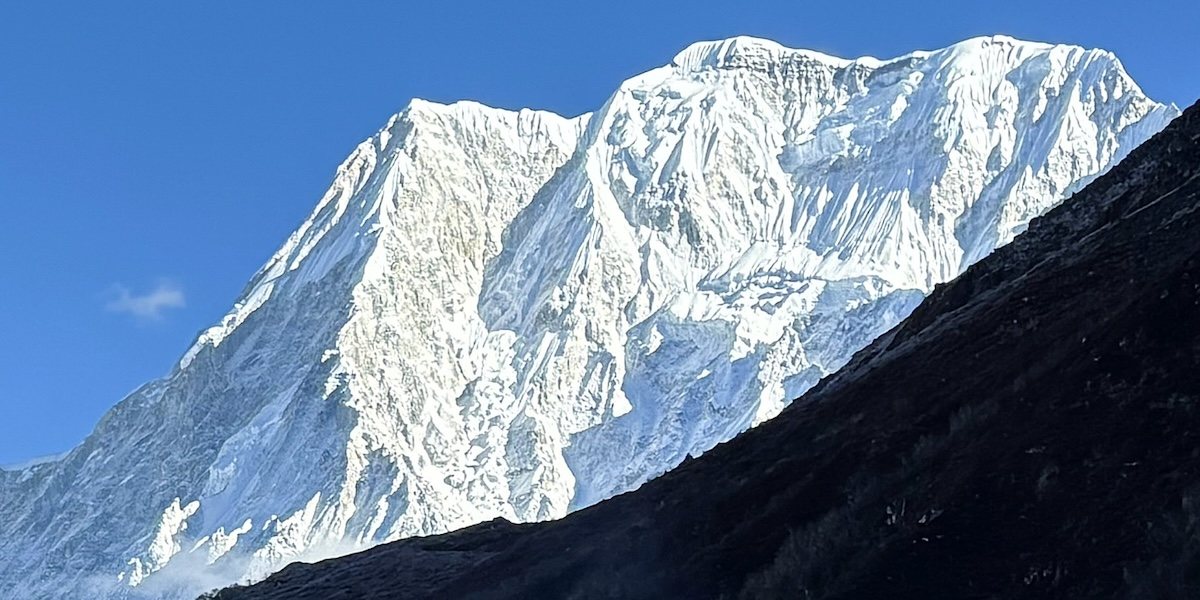
According to Everest Chronicle, The Rolwaling Valley is one of Nepal's most remote mountain areas and one of those most frequently affected by avalanches. It lies between Gauri Shankar and Melungtse.
Quotes from the original 1
“The Rolwaling Valley, one of Nepal’s most remote and avalanche-prone mountain regions, lies between Gaurishankar and Melungtse peaks and is home to several Sherpa communities.”
According to ExplorersWeb, Yalung Ri is not technically difficult, but the standard snow route passes beneath an ice pinnacle that could collapse, and slab avalanches may occur on the steep snow and ice slopes higher up.
Quotes from the original 1
“Yalung Ri is a straightforward peak, but the normal snowy route passes under a potentially dangerous serac. In addition, slab avalanches are possible, as the upper part of the climb goes up steep ramps of snow and ice.”
Conjecture: Both a Nepal Tourism Department official and ExplorersWeb believe that heavy, unstable snow accumulated over several days of snowfall may have caused the avalanche, but officials have reached no final conclusion.
Quotes from the original 2
““我们怀疑是厚重积雪导致了这场灾难,但目前尚未得出最终结论。””
“We suspect that heavy snow caused this disaster, but no final conclusion has yet been reached.” (machine translation)
 GuituluGlobal Outdoor Accident Archive