A porter on the K2 Bottleneck: The death of Muhammad Hassan
A porter on his first ascent to 8,000 metres hung upside down from a fixed rope as summit climbers passed by
The Gilgit-Baltistan government inquiry committee submitted its report in September 2023; Pakistani climbers brought his body down the mountain in 2024
The number at the end of a paragraph is how many facts it rests on; open it to see each fact and how well it is sourced:
Multiple sourcesSingle source. Conflicting accounts and speculation are kept out of the narrative.
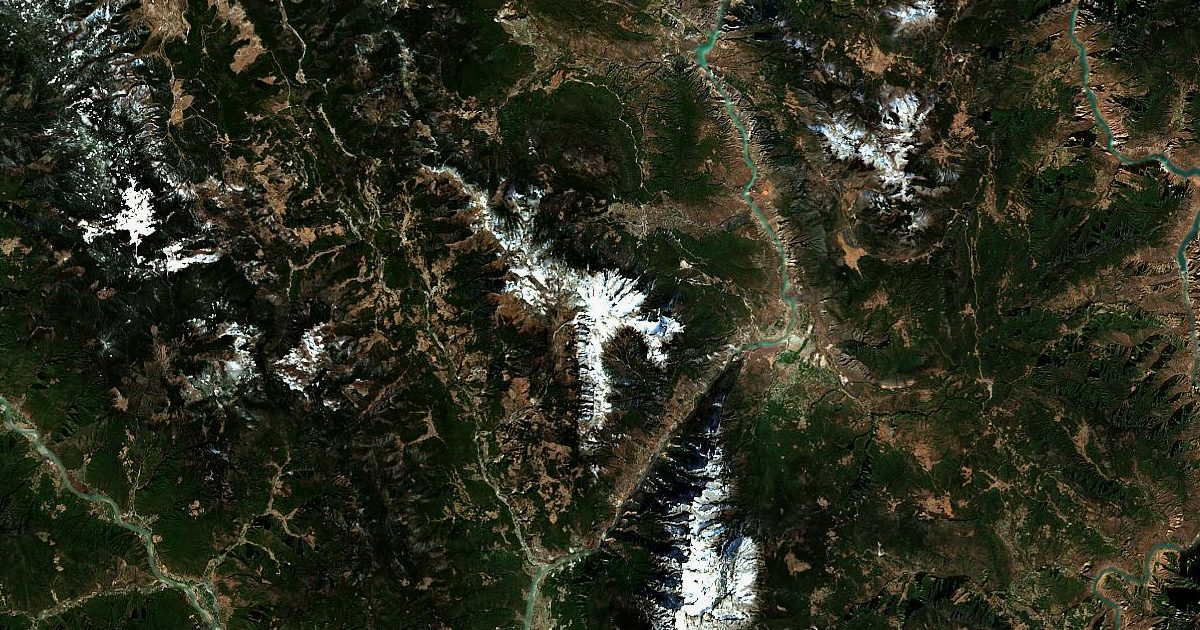
Reported locations along the route (schematic)Schematic
Scroll down and the map flies to where each part happened. The line is Schematic, Locations mentioned in reports are connected in sequence, showing only the approximate direction, not the actual track. Sources for the location coordinates are listed in places.json.
01
The full route
Locations mentioned in reports are connected in sequence to show the approximate course of events (illustrative).
Nearly 200 climbers took part in this summit push, setting out from Camp 3 in succession between the evening of 26 July and the early hours of 27 July. F08
Harila and Tenjen heard that the rope-fixing team ahead was in trouble and went on up, while Tasso stayed behind to look after Hassan. F19
In the early morning of 27 July 2023, Hassan died at an altitude of about 8200 meters in the K2 Bottleneck area. F25
According to the investigation report, Hassan slipped five to seven meters off the narrow track in the snow on the traverse above the Bottleneck and was left hanging upside down on the fixed rope. F14
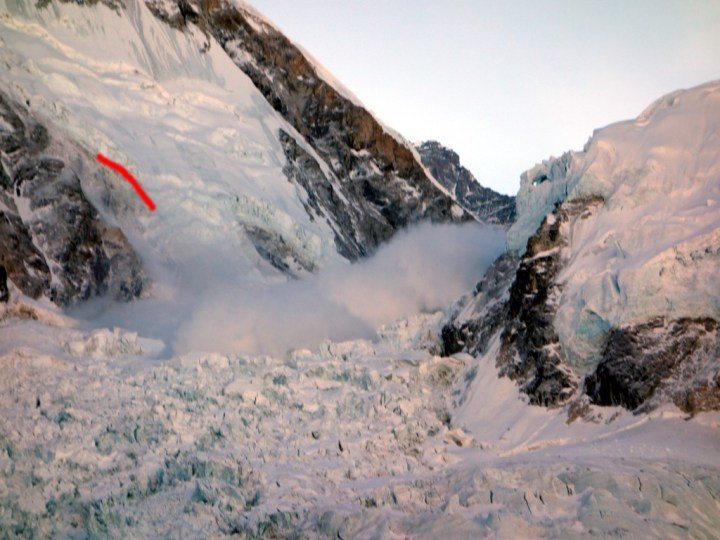
An avalanche occurred in the Bottleneck area on the night of the summit push. F09
Tasso found that his oxygen was running low and left Hassan to continue upward in search of a Sherpa carrying spare oxygen. F22
Harila and her guide Tenjen summited K2 that day, becoming the fastest people to climb all 14 8000-meter peaks. F26
According to the investigation report, Hassan hung upside down on the rope for more than an hour. F17
After Norwegian climber Harila's team (Harila, guide Tenjen Sherpa, and photographer Tasso) arrived, Tasso and others managed to pull Hassan back onto the track. F18
On 7 August, the Gilgit-Baltistan local government formed a five-person committee to investigate Hassan's death. F33
The investigation report concluded that Hassan's death was accidental. F34
The authorities banned Lela Peak Expedition from organizing mountaineering expeditions in Gilgit-Baltistan for two years on the grounds that it had failed to provide the porter with suitable equipment, employed an inexperienced porter to go up the mountain, and failed to insure him. F36
In 2024, at the request of Hassan's family, Naila Kiani organized Pakistani climbers to bring Hassan's body down from above the Bottleneck during a K2 cleanup expedition. F41
Under each fact is a verbatim quote from the original. "Single source" means only one outlet mentioned it; "Accounts differ" means sources contradict each other and this site adopts neither side; "Speculation" is an inference by a reporter or a person involved, not a fact.
According to ExplorersWeb, According to photographer Soriano, after the porters carried supplies to Camp 3, expedition leader Abramov ordered all the Pakistani porters to return from Camp 3 to base camp and not join the summit push. Hassan was the only one who did not comply.
Quotes from the original 1
“ordered all Pakistani porters to return to Base Camp from Camp 3, without attempting the summit,” Soriano said. “All did so, except Hassan.”
Nearly 200 climbers took part in this summit push, setting out from Camp 3 in succession between the evening of 26 July and the early hours of 27 July.
Quotes from the original 2
“Yesterday’s summit push involved nearly 200 climbers. They left Camp 3 at different times, stretched out between 6 pm and midnight.”
Early accounts of the cause of the incident differed: an ExplorersWeb dispatch on the day of the incident said Hassan was killed by the collapse of a serac at the Bottleneck; the head of his employer, Lela Peak, said he lost his footing and fell above the Bottleneck.
Quotes from the original 2
“died when a piece of serac fell at the Bottleneck (8,200m) early today”
According to the investigation report, Hassan slipped five to seven meters off the narrow track in the snow on the traverse above the Bottleneck and was left hanging upside down on the fixed rope.
Quotes from the original 2
“he suddenly slipped five to seven meters and hung upside down in the rope”
According to the investigation report, two Sherpas walking ahead of him tried unsuccessfully to pull him back onto the track, then continued to fix the route.
Quotes from the original 2
“Two of the six Sherpas who were in front of him tried to pull him up. When they failed, they continued their rope-fixing work.”
After Norwegian climber Harila's team (Harila, guide Tenjen Sherpa, and photographer Tasso) arrived, Tasso and others managed to pull Hassan back onto the track.
Quotes from the original 3
“Tarso’s report said he and Tenjen, along with Mr. Hassen’s companion, Hassam Shighri, rigged a 3:1 pulley system”
“Harila and Tenjen Sherpa had been further ahead by then, Tarso said, because they had received information that the rope-fixing team was also in trouble.”
Accounts differ on how long Hassan survived after his fall: the head of his employer, Lela Peak, said the day after the incident that he died shortly after being pulled back up; Geo Super reported that he died several hours after the fall.
Quotes from the original 2
““However, he expired after a few moments,” he added.”
Accounts of the weather that evening differ: the investigation report said the rescue was delayed by darkness and bad weather; ExplorersWeb said that, according to witness statements and photographs, there was no snowstorm that evening.
Quotes from the original 2
“Other facts mentioned are delayed rescue efforts, because of darkness and ‘ferocious’ weather conditions.”
Steindl and Furtenbach said drone footage they reviewed afterward showed dozens of climbers passing the injured Hassan and continuing toward the summit.
Includes a low-credibility source
Quotes from the original 2
“The footage showed dozens of climbers passing a gravely injured Hassan instead of coming to his rescue, Steindl told The Associated Press on Saturday.”
Harila denied leaving Hassan to die, saying her team had done everything it could, but that it was impossible to carry him down the mountain given the snow conditions and narrow section of the route.
Quotes from the original 3
“in the snowy condition we had up there that day, it wouldn’t be possible to carry him down”
According to Pamir Times, The causes of death listed in the investigation report included weather, limited communication with base camp, insufficient experience and preparation, and insufficient and unsuitable clothing.
Quotes from the original 1
“weather conditions, limited ability to communicate with the base camp, lack of experience and preparedness, as well as insufficient and inappropriate clothing caused the death”
The authorities banned Lela Peak Expedition from organizing mountaineering expeditions in Gilgit-Baltistan for two years on the grounds that it had failed to provide the porter with suitable equipment, employed an inexperienced porter to go up the mountain, and failed to insure him.
Quotes from the original 2
“The ban is for not providing a porter with adequate equipment, hiring an inexperienced porter to go up the mountain, and not insuring him.”
According to Abenteuer Berg, The investigation report recommended that, in future, high-altitude porters should have climbed at least one 6000-meter peak and one 7000-meter peak and received technical mountaineering training before working on 8000-meter peaks.
Quotes from the original 1
“it suggests that High Altitude Porters should only be allowed to work on eight-thousanders in the future if they have already climbed at least one six-thousander and one seven-thousander”
According to ExplorersWeb, Nepali guide Mingma G believed the problem lay not with Pakistani porters themselves but with their working conditions; with suitable equipment, training and allowances, they would be among the best climbers and guides.
Quotes from the original 1
“If porters get proper equipment, training, and a daily allowance, they’ll become some of the best climbers and guides in the future.”
According to ExplorersWeb, In 2024, at the request of Hassan's family, Naila Kiani organized Pakistani climbers to bring Hassan's body down from above the Bottleneck during a K2 cleanup expedition.
Quotes from the original 2
“Pakistani climbers have retrieved the body of Muhammad Hassan from above the Bottleneck on K2.”
Accounts differ as to whether Hassan had previously worked as a high-altitude porter: the investigation report said he had previously worked only as a low-altitude porter on K2 and Spantik, and Furtenbach also said he had been a base camp porter and had been selected as a high-altitude porter for the first time; the liaison officer in charge, however, stated in the report that he had previously worked as a high-altitude porter several times.
Quotes from the original 3
“Before that, Muhammad had only worked as a “Low Altitude Porter” on K2 (8,611 meters) and Spantik (7,027 meters)”
 GuituluGlobal Outdoor Accident Archive