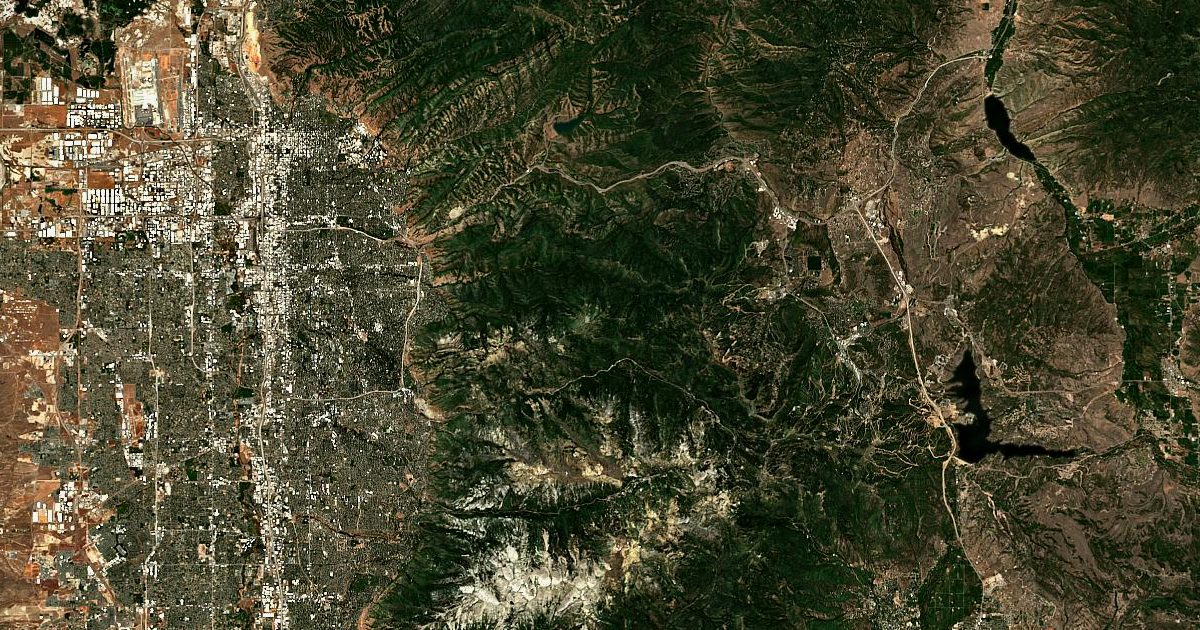
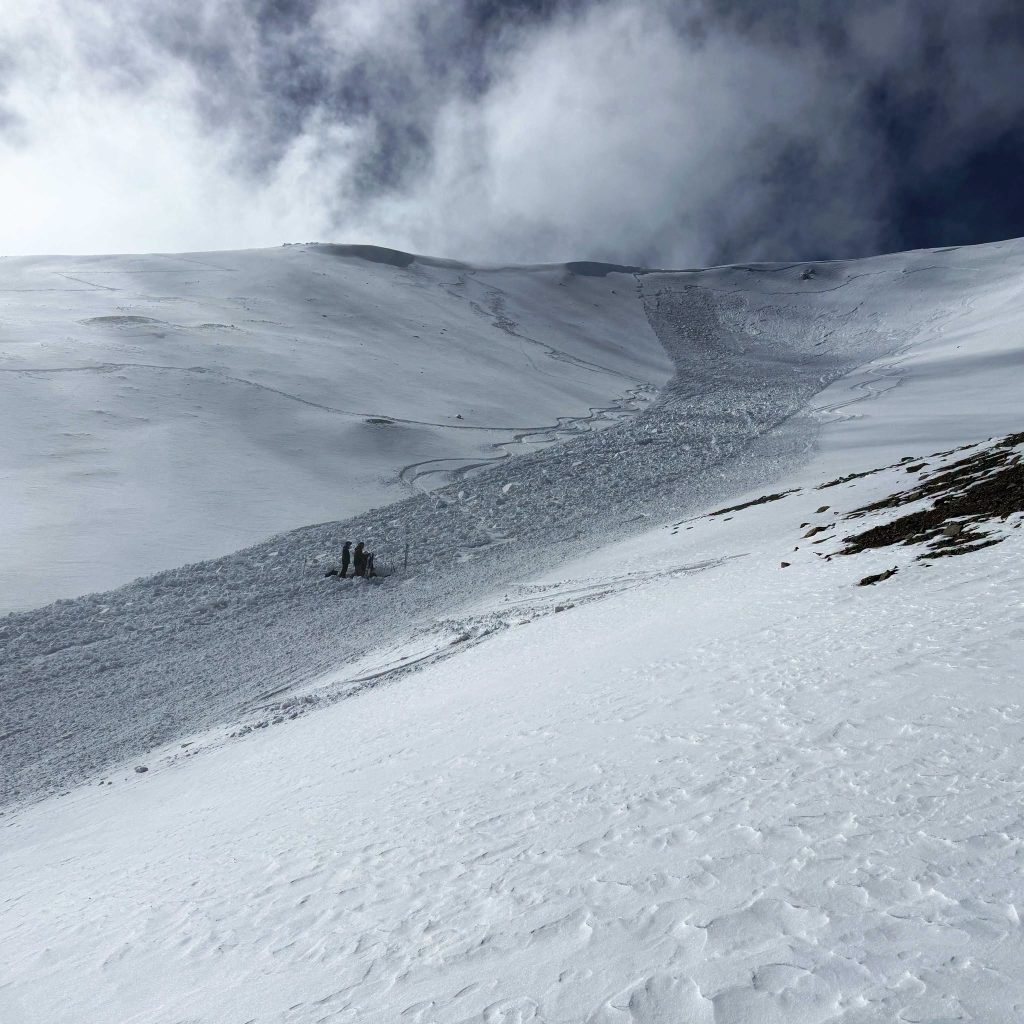
United States, Utah, east of Salt Lake City, Mill Creek Canyon, Wilson Peak, Wilson GladeUnited States › Utah · Wasatch Range-111.672°E 40.674°N
Activity
SkiingInvolves: AvalancheTwo backcountry ski groups who did not know each other, 8 people in total (a group of 5 entered from Big Cottonwood Canyon, and a group of 3 ascended from Mill Creek Canyon)
Casualties
Dead 4 4 people died and 4 survived; reports said one survivor was treated for hypothermia and none of the survivors had life-threatening injuries
Material
45 facts · 8 sources3 accounts differ and are shown side by side
The number at the end of a paragraph is how many facts it rests on; open it to see each fact and how well it is sourced:
Multiple sourcesSingle source. Conflicting accounts and speculation are kept out of the narrative.
Reported locations along the way (schematic)Schematic
Scroll down and the map flies to where each part happened. The line is Schematic, Connects the reported locations in sequence, showing only the approximate direction, not the actual track. Sources for the location coordinates are in places.json.
01
Full route
The locations mentioned in reports are connected in sequence to show the approximate course of events (illustrative).
The five members of Group A (Chris, Sarah, Louis, Thomas and Steve) entered from the Big Cottonwood Canyon side. F10
A few hours before the avalanche, the Utah Avalanche Center tweeted a warning that the danger was high and that large natural avalanches had occurred overnight. F09
On the day of the incident, the Utah Avalanche Center rated the avalanche danger as “High” on north- through east-facing slopes above 9500 feet. F08
After the final run, the four members of Group A began climbing back up, intending to return the way they had come to the Big Cottonwood Canyon side and end their trip. F22
Because snow conditions were unstable, the search for those who died was suspended that day, then resumed and was completed the following day (7 February). F42
Under each fact is a verbatim quote from the original. "Single source" means only one outlet mentioned it; "Accounts differ" means sources contradict each other and this site adopts neither side; "Speculation" is an inference by a reporter or a person involved, not a fact.
A little over a month earlier, in late December 2020, a skier had triggered a smaller avalanche in Wilson Glade.
Quotes from the original 2
“A smaller slide even closer to the site of Saturday's tragic event was triggered in late December, also in Wilson Glade, just a short distance downslope.”
Analysis of the crown face showed that the avalanche fractured along a layer of very weak faceted snow at the bottom of the crown face.
Quotes from the original 2
“Analysis of the crown profile revealed the slide was caused by a four-inch-thick weak layer of faceted snow formed during periods of cold, dry weather.”
The accident report found that Chris and Steve's companion rescue was swift and effective, saving two lives when six people had been completely buried.
Quotes from the original 2
“Their rescue efforts were top-notch, and they knew how to perform companion rescue quickly and efficiently. They did the absolute best anyone could do with six full burials.”
On 6 February 2021, two groups of 8 people in total were skiing in the Wilson Glade area of Mill Creek Canyon.
Quotes from the original 3
“two different groups (eight people total) went to ski the Wilson Glades, a north-facing, 500-foot run just below the 9,950-foot summit of Wilson Peak”
A few hours before the avalanche, the Utah Avalanche Center tweeted a warning that the danger was high and that large natural avalanches had occurred overnight.
Quotes from the original 2
“Three hours before the avalanche, the center tweeted: “High Danger. Large natural avalanches overnight. Dangerous avalanche conditions. Keep it low angle.””
According to KSL, Group A started at the Butler Fork Trailhead in Big Cottonwood Canyon.
Quotes from the original 1
“One group of five individuals began its trek at Butler Fork trailhead in Big Cottonwood Canyon with a plan to reach Wilson Glades in Millcreek Canyon.”
On the way up, Group A saw a very large natural avalanche in the Wilson Chutes area and informed the Utah Avalanche Center via Instagram.
Quotes from the original 2
“Group A noticed a very large natural avalanche in the Wilson Chutes on the east side of the peak. They posted a photo of this avalanche on Instagram and tagged the Utah Avalanche Center at 8:33 a.m.”
According to AAC, After reaching the top of the slope, Group A discussed how to ski Wilson Glade (avoiding the steeper sections and descending one at a time), but did not discuss whether they should ski it.
Quotes from the original 1
“At the top, they discussed how to ski Wilson Glades but never discussed if they should ski it or not. They discussed avoiding the steeper sections and going one at a time”
According to KSL, According to the accident report, both groups knew that the avalanche risk was elevated that day; Group A knew that Wilson Glade was avalanche terrain but considered it a relatively safe choice on a day when the danger rating was “High”.
Quotes from the original 2
“The report stated both groups were aware of elevated avalanche risks.”
According to AAC, Group B knew that the danger rating was “High” that day and that an avalanche could occur in Wilson Glade; their overall plan for the day was to avoid avalanche terrain.
Quotes from the original 1
“Group B was aware that the avalanche danger was rated High and that Wilson Glades could avalanche. Their general plan for the day was to avoid avalanche terrain”
Accounts differ on how many runs Group A made that day: the American Alpine Club's review says they made three runs in total; KSL's account of the report says Group A successfully skied down 10 times.
The two accounts give different numbers of runs, and the original report could not be obtained for verification.
Quotes from the original 2
“Group A skied the Wilson Glades a total of three times.”
“One of the members said he was tired and waited somewhere above the group while the other four members completed one more successful lap down the slope.”
After the final run, the four members of Group A began climbing back up, intending to return the way they had come to the Big Cottonwood Canyon side and end their trip.
Quotes from the original 2
“they began ascending with the intent to finish the day by skiing back to the trailhead in Big Cottonwood Canyon”
According to AAC, At the steepest point of the ascent route, Group A gathered beside a large tree and prepared to traverse the final section of the slope one at a time, with Chris going first.
Quotes from the original 1
“At the steepest part of their track, they regrouped at a large tree to cross the final slope one at a time. Chris went first.”
According to KSL, When the avalanche was triggered, the slope where Group B's members were located was only 25 degrees, but the avalanche came down from above and reached them.
Quotes from the original 1
“The area members of Group B were standing at when it was triggered was 25 degrees, but the avalanche from above came through to their location.”
Accounts differ on how many people were buried and how they got out: NPR reported that day that all eight were buried and four dug themselves out; the Utah Avalanche Center report cited by the American Alpine Club said six were completely buried and that the two who survived were dug out by Chris and Steve.
Early reports differed from the later accident report.
Quotes from the original 2
“All eight skiers were buried. Four were able to dig themselves out; the other four died under the snow.”
Accounts differ on the avalanche's altitude: The Salt Lake Tribune, citing the Utah Avalanche Center report, said it fractured at 9600 feet; Backcountry Magazine and NPR said the incident occurred at about 9800 feet.
The figure of about 9800 feet came from the preliminary reporting stage.
Quotes from the original 3
“The cascading snow was a 3.5-foot-deep “hard slab” that broke free at an elevation of 9,600 feet”
It is thought that all those buried, apart from Chris, still had at least one ski attached to a foot, which may have caused them to be buried deeper; because they were ascending, the front of their bindings may have been in walk or locked mode, making the skis less likely to detach.
Quotes from the original 2
“All the skiers except Chis had one or both skis still attached to their feet when they were buried, which may have contributed to deeper burials.”
The four people who died were Sarah Mogamiam (29, Sandy), Luis Holian (26), Stephanie Hopkins (26), and Thomas Louis Steinbrecher (23); the latter three were from Salt Lake City.
Quotes from the original 3
“Among the deceased were Sarah Moughamian (29) of Sandy, Utah, and Louis Holian (26), Stephanie Hopkins (26) and Thomas Louis Steinbrecher (23) of Salt Lake City, Utah.”
Because snow conditions were unstable, the search for those who died was suspended that day, then resumed and was completed the following day (7 February).
Quotes from the original 3
“Because of unstable snow conditions, the efforts to recover the four deceased skiers were paused Saturday and resumed early Sunday.”
Wilson Glade is immediately adjacent to Alexander Basin, near Wilson Peak and Gobblers Knob; Wilson Peak lies between Mill Creek Canyon and Big Cottonwood Canyon.
Quotes from the original 3
“Wilson Glade is adjacent to Alexander Basin, a precipitous bowl below Mill Creek’s divide with Big Cottonwood Canyon, under the shadows of Wilson Peak and Gobblers Knob.”
Wilson Glade has a relatively gentle slope and is often considered safer than the surrounding terrain, but human-triggered avalanches and close calls have occurred there repeatedly.
Quotes from the original 2
“The Wilson Glades have seen many close calls. It is perceived as relatively safe compared with nearby areas, because it is less steep.”
 GuituluGlobal Outdoor Accident Archive