GuituluGlobal Outdoor Accident Archive 中文
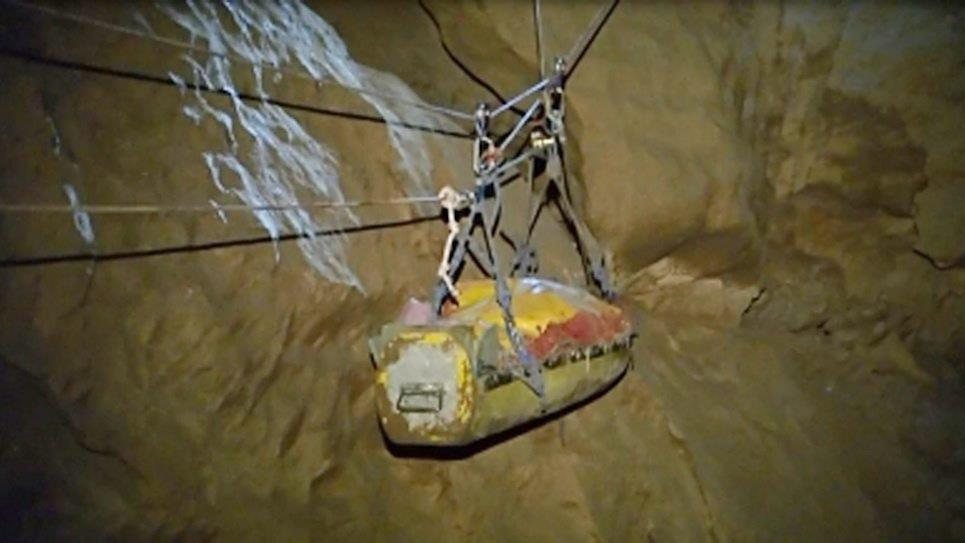
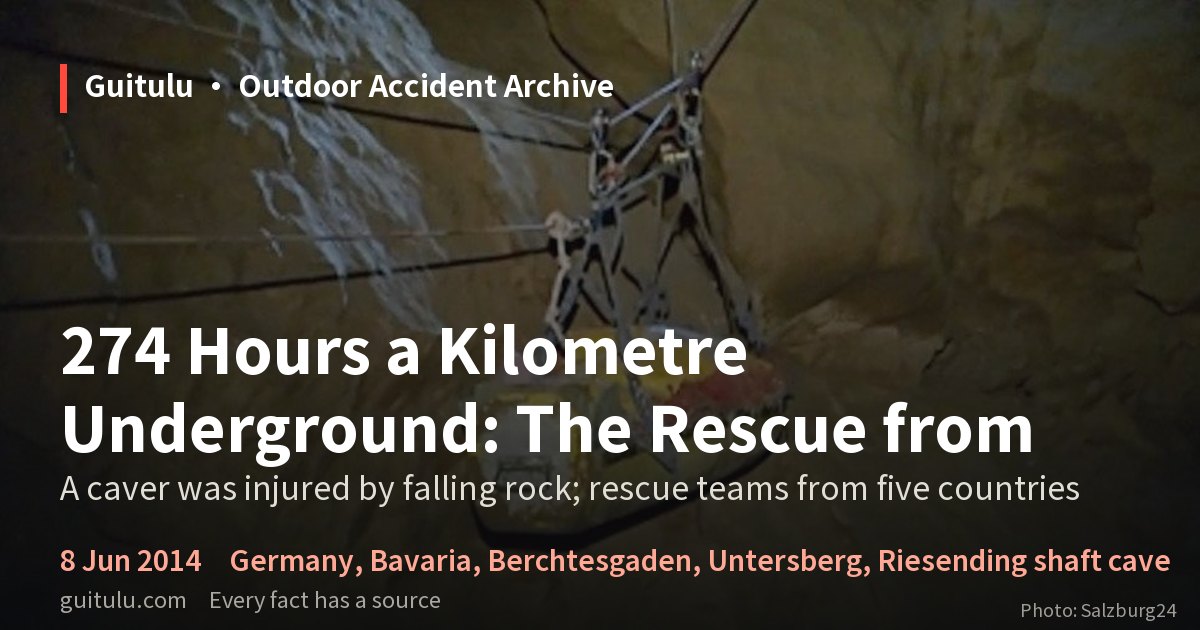
A stretcher being transported along a steel cable inside the cave

Archive / Diving and caving

274 Hours a Kilometre Underground: The Rescue from Germany’s Deepest Cave

A caver was injured by falling rock; rescue teams from five countries took 11 days to carry him out from a kilometre underground

The injured man was carried out of the cave on 19 June 2014 and recovered after hospital treatment

Photo: Salzburg24

Date
Summer
Place
Germany, Bavaria, Berchtesgaden, Untersberg, Riesending shaft caveGermany › Bavaria · Alps12.985°E 47.697°N
Activity
CavingInvolves: Rockfall and collapseThree-person cave expedition team
Casualties
Injured 1One person injured by falling rock (traumatic brain injury); recovered after rescue
Material
46 facts · 12 sources2 accounts differ and are shown side by side

01What happened

The Riesending shaft cave is on Untersberg near Berchtesgaden, Germany. It is Germany’s deepest and longest cave; reports in 2014 put its depth at about 1150 metres and the length of its passages at over 19 kilometres. Johann Westhauser, 52, was one of the researchers who discovered the cave. He and two companions entered it as a three-person team to explore and survey it.Facts it rests onF29Multiple sourcesRiesending shaft cave is located on Untersberg near Berchtesgaden and is Germany's deepest and longest cave.F01Multiple sourcesAccording to reports from 2014, the cave was about 1150 metres deep (Reuters gave the depth as 1148 metres), with more than 19 kilometres of passages in total.F32Multiple sourcesJohann Westhauser was one of the researchers who discovered the cave and had continued to explore its passages since 2002.F04Multiple sourcesThe 52-year-old Westhauser entered the cave with two companions as a three-person team to conduct exploration and survey work; according to the timeline from the Austrian Press Agency and dpa, they entered the cave on 7 June.

A stretcher being transported along a steel cable inside the cavePhoto source: Salzburg24

On 8 June, Westhauser was struck by falling rock nearly 1000 metres underground, injuring his head and chest and sustaining a traumatic brain injury. The ascent route passed through steep shafts and narrow passages, and he could not climb out on his own. One companion spent more than ten hours climbing back to the surface to raise the alarm, while the other stayed with him.Facts it rests onF05Multiple sourcesOn 8 June, Westhauser was struck by falling rocks nearly 1000 metres underground, injuring his head and chest.F06Multiple sourcesWesthauser suffered a traumatic brain injury from falling rocks.F07Single sourceThe ascent route passed through steep shafts and narrow passages, and his injuries left him unable to climb back to the surface on his own.F08Multiple sourcesHis two companions were uninjured: one spent more than 10 hours climbing out of the cave to alert the mountain rescue team, while the other stayed with the injured man.

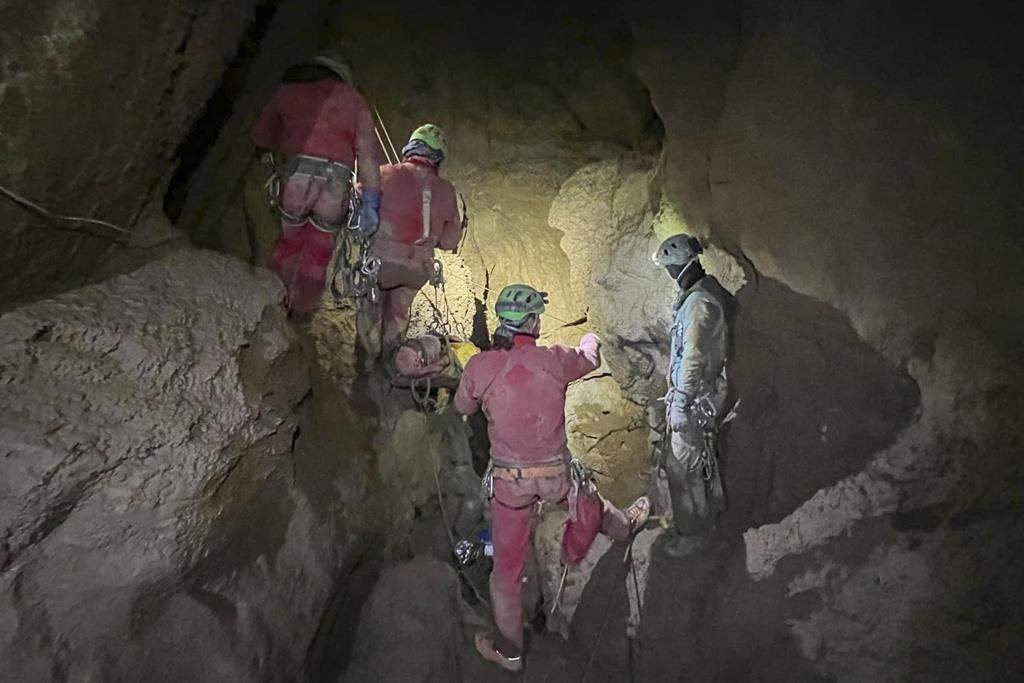
Rescuers working in a narrow rock fissure inside the cavePhoto source: Salzburg24

On 9 June, four rescuers reached the injured man for the first time; Swiss shaft rescue specialists and doctors subsequently entered the cave. On 12 June, a second doctor arrived, and the doctors determined that the injured man could be moved. Neither radios nor mobile phones worked inside the cave, so the Italian rescue team installed a Cave-Link system that communicated through the rock.Facts it rests onF09Single sourceOn 9 June, four mountain rescuers reached the camp where the injured man was located for the first time.F10Single sourceOn 10 June, four Swiss team members specialising in shaft rescue reached the injured man; on the same day, an Austrian doctor and three rescuers set off into the cave.F11Multiple sourcesOn 12 June, a second doctor arrived, and the doctors determined that the injured man could be transported.F36Single sourceNeither radios nor mobile phones could be used inside the cave. Early in the rescue, the Italian cave rescue team installed a Cave-Link system that used the rock to conduct communications; a backup system was later added, and a cave telephone line was laid.

Rescuers descending on ropes in a shaft inside the cavePhoto source: Salzburg24

From 13 June, rescuers carried him upward in a stretcher in stages, passing through the winding “Long Straight” about 900 metres underground and lifting him through shafts, with teams taking over from one another between camps. According to reports, they advanced only 150 metres over one entire day; on the final section, the stretcher carrying him was suspended and lifted vertically 180 metres on ropes.Facts it rests onF12Multiple sourcesLate in the afternoon of Friday, 13 June, five days after the accident, the rescue team began carrying the injured man upward on a stretcher.F14Multiple sourcesOn 15 June, the rescue team passed through the “Long Straight”, which extended almost horizontally for several hundred metres at a depth of about 900 metres, and reached Camp 4.F40Single sourceOn the cave map, the “long straight passage” appears to be a long horizontal passage, but in fact it twists and turns.F16Multiple sourcesOn 16 June, the rescue team ascended about 200 metres through a shaft to reach Camp 3, about 700 metres underground.F17Single sourceOn the morning of 17 June, the rescue team reached Camp 2, about 500 metres underground, with the injured man. About 15 people accompanied him, while dozens more set up the route ahead.F18Single sourceOn the morning of 18 June, the rescue team reached Camp 1.F19Single sourceKrammer said that on one entire day the rescue team advanced only 150 metres.F20Multiple sourcesThe final section was a shaft near the cave entrance: the rescue team used ropes to lift the suspended stretcher carrying the injured man vertically for 180 metres. The stretcher weighed about 100 kilograms.

A rescue helicopter landing on a meadow in the valley where the cave entrance is locatedPhoto source: Salzburg24

At 11:44 a.m. on 19 June, Westhauser was carried out of the cave, about 274 hours after the accident, and was then taken to hospital by helicopter. A total of 728 people from Germany, Austria, Switzerland, Italy and Croatia took part in the rescue, including 202 who worked inside the cave. According to a local tourism website, he has since made a full recovery.Facts it rests onF21Multiple sourcesAt 11:44 a.m. on 19 June, Westhauser was carried out of the cave, approximately 274 hours after the accident.F23Multiple sourcesAfter he emerged from the cave, a helicopter waiting at the entrance took him to hospital; he was later transferred to a hospital in Murnau, Upper Bavaria.F24Multiple sourcesA total of 728 people from five countries—Germany, Austria, Switzerland, Italy and Croatia—participated in the rescue. Of these, 202 worked inside the cave, including 175 from abroad.F46Single sourceAccording to the local official tourism website, Westhauser was rescued on the 12th day after the accident and has since made a full recovery.

The number at the end of a paragraph is how many facts it rests on; open it to see each fact and how well it is sourced: Multiple sourcesSingle source. Conflicting accounts and speculation are kept out of the narrative.

ImgScene photos all from news coverage; copyright belongs to the original authors

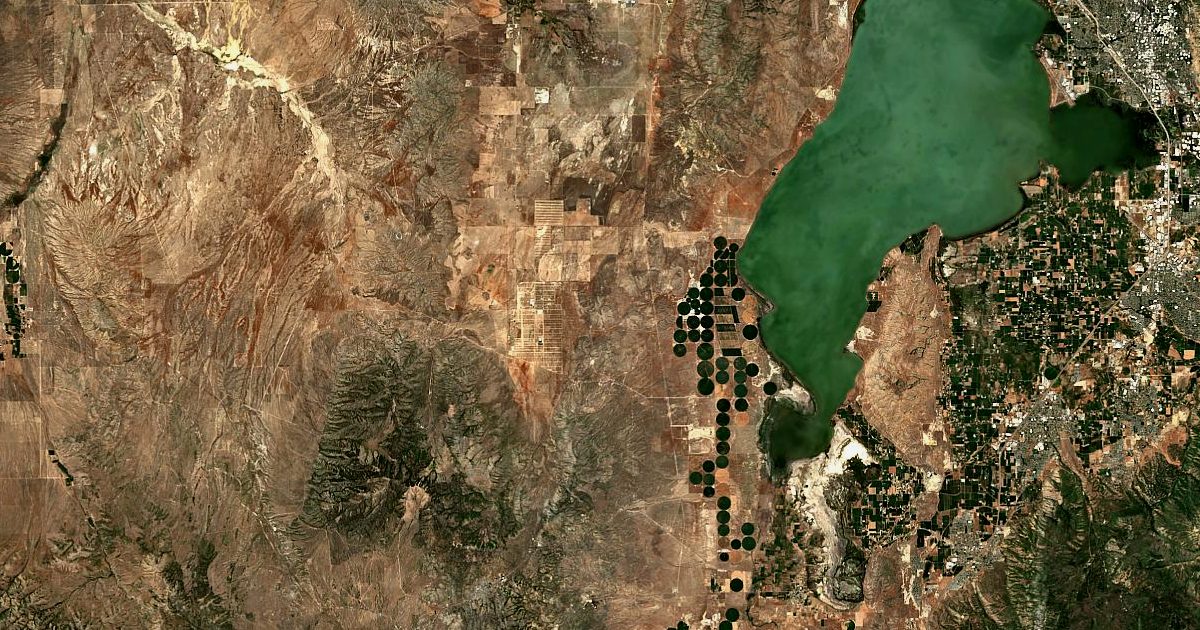
  • Reported locations along the route (illustrative)Schematic

Satellite imagery Sentinel-2 cloudless 2024 © EOX · Terrain AWS Terrain Tiles · Orange line is schematic · Place coordinates not individually verified

Route review

7 scenes to understand what happened

Scroll down and the map flies to where each part happened. The line is Schematic, Connects the locations mentioned in reports in sequence, showing only the approximate direction, not the actual route. Sources for the location coordinates are listed in places.json.

01

Full route

Locations mentioned in reports are connected in sequence to show the approximate route (schematic).

02

Germany’s deepest cave

The cave entrance is on the slope of Untersberg at an altitude of about 1800 metres. The cave is about 1150 metres deep and is Germany’s deepest and longest cave.Facts it rests onF29Multiple sourcesRiesending shaft cave is located on Untersberg near Berchtesgaden and is Germany's deepest and longest cave.F30Multiple sourcesThe cave entrance is on a mountainside at an altitude of approximately 1800 metres (the local tourism website gives 1840 metres).F01Multiple sourcesAccording to reports from 2014, the cave was about 1150 metres deep (Reuters gave the depth as 1148 metres), with more than 19 kilometres of passages in total.

03

Falling rock a kilometre underground

The three-person team entered the cave on 7 June. The following day, Westhauser was injured by falling rock nearly 1000 metres underground, and one companion climbed for more than ten hours to get out and raise the alarm.Facts it rests onF04Multiple sourcesThe 52-year-old Westhauser entered the cave with two companions as a three-person team to conduct exploration and survey work; according to the timeline from the Austrian Press Agency and dpa, they entered the cave on 7 June.F05Multiple sourcesOn 8 June, Westhauser was struck by falling rocks nearly 1000 metres underground, injuring his head and chest.F08Multiple sourcesHis two companions were uninjured: one spent more than 10 hours climbing out of the cave to alert the mountain rescue team, while the other stayed with the injured man.

04

Doctors enter the cave

Rescuers first reached the injured man on 9 June, and on 12 June the doctors determined that he could be moved. There was no signal inside the cave; according to reports, they communicated using Cave-Link.Facts it rests onF09Single sourceOn 9 June, four mountain rescuers reached the camp where the injured man was located for the first time.F11Multiple sourcesOn 12 June, a second doctor arrived, and the doctors determined that the injured man could be transported.F36Single sourceNeither radios nor mobile phones could be used inside the cave. Early in the rescue, the Italian cave rescue team installed a Cave-Link system that used the rock to conduct communications; a backup system was later added, and a cave telephone line was laid.

05

Ascent by stretcher

From 13 June, the stretcher was brought up in stages, passing through the Long Straight and shafts to reach Camps 4, 3, 2 and 1 in turn.Facts it rests onF12Multiple sourcesLate in the afternoon of Friday, 13 June, five days after the accident, the rescue team began carrying the injured man upward on a stretcher.F14Multiple sourcesOn 15 June, the rescue team passed through the “Long Straight”, which extended almost horizontally for several hundred metres at a depth of about 900 metres, and reached Camp 4.F16Multiple sourcesOn 16 June, the rescue team ascended about 200 metres through a shaft to reach Camp 3, about 700 metres underground.F17Single sourceOn the morning of 17 June, the rescue team reached Camp 2, about 500 metres underground, with the injured man. About 15 people accompanied him, while dozens more set up the route ahead.F18Single sourceOn the morning of 18 June, the rescue team reached Camp 1.

06

Back in daylight

At 11:44 on 19 June, the stretcher was brought out of the cave, about 274 hours after the accident. A total of 728 people from five countries took part in the rescue.Facts it rests onF21Multiple sourcesAt 11:44 a.m. on 19 June, Westhauser was carried out of the cave, approximately 274 hours after the accident.F24Multiple sourcesA total of 728 people from five countries—Germany, Austria, Switzerland, Italy and Croatia—participated in the rescue. Of these, 202 worked inside the cave, including 175 from abroad.

02Timeline

  1. The 52-year-old Westhauser entered the cave with two companions as a three-person team to conduct exploration and survey work; according to the timeline from the Austrian Press Agency and dpa, they entered the cave on 7 June. F04

  2. His two companions were uninjured: one spent more than 10 hours climbing out of the cave to alert the mountain rescue team, while the other stayed with the injured man. F08

  3. On 8 June, Westhauser was struck by falling rocks nearly 1000 metres underground, injuring his head and chest. F05

  4. On 9 June, four mountain rescuers reached the camp where the injured man was located for the first time. F09

  5. On 10 June, four Swiss team members specialising in shaft rescue reached the injured man; on the same day, an Austrian doctor and three rescuers set off into the cave. F10

  6. On 12 June, a second doctor arrived, and the doctors determined that the injured man could be transported. F11

  7. Late in the afternoon of Friday, 13 June, five days after the accident, the rescue team began carrying the injured man upward on a stretcher. F12

  8. At around 4:00 on 14 June, the rescue team completed the first stage, reaching Camp 5, the first rest point. F13

  9. On 15 June, the rescue team passed through the “Long Straight”, which extended almost horizontally for several hundred metres at a depth of about 900 metres, and reached Camp 4. F14

  10. On 16 June, the rescue team ascended about 200 metres through a shaft to reach Camp 3, about 700 metres underground. F16

  11. On the morning of 17 June, the rescue team reached Camp 2, about 500 metres underground, with the injured man. About 15 people accompanied him, while dozens more set up the route ahead. F17

  12. On the morning of 18 June, the rescue team reached Camp 1. F18

  13. At 11:44 a.m. on 19 June, Westhauser was carried out of the cave, approximately 274 hours after the accident. F21

  14. Bavarian Interior Minister Joachim Herrmann proposed closing the cave entrance and allowing only professionals to enter. F27

03Lessons

Rescue and self-rescue

Injuries in deep caves are a matter of days

Even a healthy, experienced caver would need about 12 hours to climb from the accident site to the cave entrance. The injured man could only be brought up in stages by stretcher and ropes; this rescue took about 274 hours. Before exploring a deep cave, it is important to understand that a rescue may take days if someone is injured.Facts it rests onF35Multiple sourcesA healthy, physically fit and experienced caver would normally need about 12 hours to climb from the accident site to the cave entrance.F07Single sourceThe ascent route passed through steep shafts and narrow passages, and his injuries left him unable to climb back to the surface on his own.F21Multiple sourcesAt 11:44 a.m. on 19 June, Westhauser was carried out of the cave, approximately 274 hours after the accident.

Communication and location

No signal underground

Neither radios nor mobile phones worked inside the cave, so a companion had to climb out to raise the alarm, a one-way journey of more than ten hours. Travelling as a group of three made it possible for one person to raise the alarm while another stayed with the injured man.Facts it rests onF36Single sourceNeither radios nor mobile phones could be used inside the cave. Early in the rescue, the Italian cave rescue team installed a Cave-Link system that used the rock to conduct communications; a backup system was later added, and a cave telephone line was laid.F08Multiple sourcesHis two companions were uninjured: one spent more than 10 hours climbing out of the cave to alert the mountain rescue team, while the other stayed with the injured man.

Water, streams and caves

Transport is slower when the injured person cannot exert himself

The traumatic brain injury meant the injured man could not exert himself, as this risked increasing intracranial pressure. He depended on a stretcher, counterweighted hauling and care from several doctors throughout.Facts it rests onF34Single sourceKramer, a doctor accompanying the team, said that because of the traumatic brain injury, the injured man could not exert himself without risking an increase in intracranial pressure.F41Single sourceOn vertical rock faces, rescuers mainly used a counterweight hauling method: other cave climbers descended along the rock face as counterweights, pulling the stretcher up.F43Single sourceKramer said that a total of seven doctors cared for the injured man over the course of the rescue.

Closed areas and rules

Extremely difficult caves should be left to professionals

Afterward, Bavaria’s interior minister proposed closing the cave entrance and allowing only professionals to enter; a local tourism website indicates that the cave is currently closed.Facts it rests onF27Multiple sourcesBavarian Interior Minister Joachim Herrmann proposed closing the cave entrance and allowing only professionals to enter.F45Single sourceThe local official tourism website shows that the cave is currently closed.

04Fact list 46 facts

Under each fact is a verbatim quote from the original. "Single source" means only one outlet mentioned it; "Accounts differ" means sources contradict each other and this site adopts neither side; "Speculation" is an inference by a reporter or a person involved, not a fact.

  1. F01Multiple sourcesBackground

    According to reports from 2014, the cave was about 1150 metres deep (Reuters gave the depth as 1148 metres), with more than 19 kilometres of passages in total.

    Quotes from the original 2

    “it is 1,148m deep and has tunnels, shafts and caves extending over 19.2km.”

    Al Jazeera · 2014-06-20

    “It is more than 19 kilometres long and up to 1,150 metres deep.”

    The Herald · 2014-06-19
  2. F02Multiple sourcesEvent

    About 2000 metres of rescue rope were laid in the cave during the rescue. According to the rescue leader, about 2000 metres of telephone line were also used.

    Quotes from the original 2

    “almost 2,000 metres of ropes and 2,000 metres of telephone wire had been used.”

    ITV · 2014-06-16

    “Mittlerweile wurden über 2000 Meter Rettungsseil in der Höhle verlegt.”

    Salzburg24 · 2014-06-14
  3. F03Single sourceEvent

    According to Salzburg24, Jakob Krammer, an anaesthetist from Salzburg, accompanied the injured man for 48 hours on the journey from Camp 3 to Camp 1.

    Quotes from the original 1

    “Der Salzburger Anästhesist Jacob Krammer (40) hat den verletzten Höhlenforscher im Untersberg 48 Stunden lang auf dem Weg von Biwak drei zu Biwak eins begleitet und medizinisch betreut.”

    Salzburg24 · 2014-06-19
  4. F04Multiple sourcesPlan

    The 52-year-old Westhauser entered the cave with two companions as a three-person team to conduct exploration and survey work; according to the timeline from the Austrian Press Agency and dpa, they entered the cave on 7 June.

    Quotes from the original 2

    “7. Juni: Ein dreiköpfiges Team von Forschern, darunter der 52-jährige Westhauser, steigt in die fast 1.100 Meter tiefe Riesending-Schachthöhle in den Berchtesgadener Alpen.”

    Tiroler Tageszeitung · 2014-06-19

    “had gone into the Riesending cave system in the Alps with two companions to carry out research and measurements.”

    CSMonitor · 2014-06-19
  5. F05Multiple sourcesEvent

    On 8 June, Westhauser was struck by falling rocks nearly 1000 metres underground, injuring his head and chest.

    Quotes from the original 3

    “He was hit in the head during a June 8 rock fall while nearly 1,000 meters (3,280 feet) underground.”

    CSMonitor · 2014-06-19

    “suffered head and chest injuries in the rock fall on June 8.”

    The Herald · 2014-06-19

    “8. Juni: Gegen 1.30 Uhr kommt es zu einem Steinschlag, bei dem Westhauser an Kopf und Oberkörper verletzt wird.”

    Tiroler Tageszeitung · 2014-06-19
  6. F06Multiple sourcesEvent

    Westhauser suffered a traumatic brain injury from falling rocks.

    Quotes from the original 2

    “Er erleidet ein Schädel-Hirn-Trauma.”

    Tiroler Tageszeitung · 2014-06-19

    “who suffered skull and brain trauma among other injuries”

    The Local · 2014-06-20
  7. F07Single sourceEvent

    According to Al Jazeera, The ascent route passed through steep shafts and narrow passages, and his injuries left him unable to climb back to the surface on his own.

    Quotes from the original 1

    “was unable to climb back to the surface on his own as the ascent involved steep shafts and narrow tunnels.”

    Al Jazeera · 2014-06-20
  8. F08Multiple sourcesEvent

    His two companions were uninjured: one spent more than 10 hours climbing out of the cave to alert the mountain rescue team, while the other stayed with the injured man.

    Reports put the climb out by the person who raised the alarm at between more than 10 hours and 12 hours.

    Quotes from the original 3

    “one of them climbed for 12 hours out of the caves to alert mountain rescue teams to the situation, while the other stayed with 52-year-old Mr Westhauser.”

    ITV · 2014-06-16

    “One of his companions made the more than 10-hour trip back to the surface to raise the alarm while the other stayed behind.”

    The Herald · 2014-06-19

    “Ein Kollege beginnt einen zwölfstündigen Aufstieg, um Hilfe zu holen.”

    Tiroler Tageszeitung · 2014-06-19
  9. F09Single sourceEvent

    According to Tiroler Tageszeitung, On 9 June, four mountain rescuers reached the camp where the injured man was located for the first time.

    Quotes from the original 1

    “9. Juni: Vier Bergretter erreichen erstmals das Lager des Verletzten.”

    Tiroler Tageszeitung · 2014-06-19
  10. F10Single sourceEvent

    According to Tiroler Tageszeitung, On 10 June, four Swiss team members specialising in shaft rescue reached the injured man; on the same day, an Austrian doctor and three rescuers set off into the cave.

    Quotes from the original 1

    “10. Juni: Vier Schweizer, die auf die Rettung aus Schächten spezialisiert sind, erreichen Westhauser. Ein österreichischer Arzt macht sich mit drei Bergrettern auf den Weg in die Tiefe.”

    Tiroler Tageszeitung · 2014-06-19
  11. F11Multiple sourcesEvent

    On 12 June, a second doctor arrived, and the doctors determined that the injured man could be transported.

    Quotes from the original 2

    “12. Juni: Der zweite Arzt trifft ein. Die Mediziner entscheiden: der Patient kann transportiert werden.”

    Tiroler Tageszeitung · 2014-06-19

    “before deciding he was well enough to be lifted out.”

    ITV · 2014-06-16
  12. F12Multiple sourcesEvent

    Late in the afternoon of Friday, 13 June, five days after the accident, the rescue team began carrying the injured man upward on a stretcher.

    Quotes from the original 3

    “13. Juni: Nach fünf Tagen beginnt am späten Nachmittag der Transport des Verletzten auf einer Trage.”

    Tiroler Tageszeitung · 2014-06-19

    “After lengthy preparations, rescue teams five days later began the arduous task of hauling him up”

    CSMonitor · 2014-06-19

    “Der Transport ans Tageslicht aus rund 1.000 Metern Tiefe hatte am Freitag begonnen.”

    Salzburg24 · 2014-06-14
  13. F13Single sourceMovement

    According to Tiroler Tageszeitung, At around 4:00 on 14 June, the rescue team completed the first stage, reaching Camp 5, the first rest point.

    Quotes from the original 1

    “14. Juni: Das Rettungsteam schafft die erste Etappe und erreicht gegen 4.00 Uhr Biwak 5, den ersten Rastplatz.”

    Tiroler Tageszeitung · 2014-06-19
  14. F14Multiple sourcesMovement

    On 15 June, the rescue team passed through the “Long Straight”, which extended almost horizontally for several hundred metres at a depth of about 900 metres, and reached Camp 4.

    Quotes from the original 2

    “die etwa 900 Meter unter der Oberfläche Hunderte Meter fast waagerecht durch den Berg führt. Der Trupp erreicht Biwak 4.”

    Tiroler Tageszeitung · 2014-06-19

    “Bis Biwak 4 hatten die Helfer zunächst die "lange Gerade" überwinden müssen.”

    Salzburg24 · 2014-06-14
  15. F15Single sourceEvent

    According to ITV, On Sunday, 15 June, an Italian team took over the rescue operation, which was being conducted in stages.

    Quotes from the original 1

    “The rescue has taken place in stages with an Italian team taking over the operation on Sunday.”

    ITV · 2014-06-16
  16. F16Multiple sourcesMovement

    On 16 June, the rescue team ascended about 200 metres through a shaft to reach Camp 3, about 700 metres underground.

    Quotes from the original 2

    “16. Juni: Das Team erreicht das dritte Lager in rund 700 Metern Tiefe.”

    Tiroler Tageszeitung · 2014-06-19

    “Dann ging es über senkrechte Schächte rund 200 Höhenmeter nach oben zu Biwak 3.”

    Salzburg24 · 2014-06-14
  17. F17Single sourceMovement

    According to Tiroler Tageszeitung, On the morning of 17 June, the rescue team reached Camp 2, about 500 metres underground, with the injured man. About 15 people accompanied him, while dozens more set up the route ahead.

    Quotes from the original 1

    “Die Einsatzkräfte erreichen mit Westhauser am Morgen Biwak 2 in rund 500 Metern Tiefe. Etwa 15 Mann sind mit dem Verletzten unterwegs, Dutzende andere bauen den Weg aus.”

    Tiroler Tageszeitung · 2014-06-19
  18. F18Single sourceMovement

    According to Tiroler Tageszeitung, On the morning of 18 June, the rescue team reached Camp 1.

    Quotes from the original 1

    “18. Juni: Am Morgen kommt der Trupp am Biwak 1 an.”

    Tiroler Tageszeitung · 2014-06-19
  19. F19Single sourceEvent

    According to Salzburg24, Krammer said that on one entire day the rescue team advanced only 150 metres.

    Quotes from the original 1

    “Gestern haben wir in einem ganzen Tag nur ein Wegstrecke von 150 Meter geschafft.”

    Salzburg24 · 2014-06-19
  20. F20Multiple sourcesEvent

    The final section was a shaft near the cave entrance: the rescue team used ropes to lift the suspended stretcher carrying the injured man vertically for 180 metres. The stretcher weighed about 100 kilograms.

    Quotes from the original 3

    “die etwa 100 Kilogramm schwere Trage mit dem Schwerverletzten über 180 Meter an Seilen frei schwebend senkrecht nach oben ziehen mussten.”

    Salzburg24 · 2014-06-19

    “The rescue operation involved rest periods in five bivouac stops, followed by a major final hoist up a 180-metre vertical shaft near the entrance to the cave”

    The Herald · 2014-06-19

    “Rescuers brought the 52-year-old the final 180 meters (590 feet) to the surface Thursday”

    CSMonitor · 2014-06-19
  21. F21Multiple sourcesEvent

    At 11:44 a.m. on 19 June, Westhauser was carried out of the cave, approximately 274 hours after the accident.

    Quotes from the original 3

    “After 11 days 10 hours 14 minutes, a total of 274 hours Johann Westhauser was today successfully rescued”

    ECRA · 2014-06-19

    “He left the cave at 11.44am (0944 GMT)”

    Al Jazeera · 2014-06-20

    “19. Juni: Die erlösende Nachricht: Westhauser und seine Retter haben um 11.44 Uhr den Höhlenausgang erreicht - gut 274 Stunden nach dem Unfall.”

    Tiroler Tageszeitung · 2014-06-19
  22. F22Accounts differEvent

    Precise accounts of the time he was trapped differ: the European Cave Rescue Association gives 11 days, 10 hours and 14 minutes; NPR, citing The New York Times, gives 11 days, 10 hours and 40 minutes.

    The figures of “11 days” and “12 days” in media headlines also result from different ways of counting the starting time.

    Quotes from the original 2

    “After 11 days 10 hours 14 minutes, a total of 274 hours”

    ECRA · 2014-06-19

    “Westhauser was underground for 11 days, 10 hours and 40 minutes when he appeared at the opening of the cave system”

    NPR · 2014-06-19
  23. F23Multiple sourcesAftermath

    After he emerged from the cave, a helicopter waiting at the entrance took him to hospital; he was later transferred to a hospital in Murnau, Upper Bavaria.

    Quotes from the original 2

    “Injured cave explorer Johann Westhauser has been moved to a clinic in Murnau in Upper Bavaria”

    The Local · 2014-06-20

    “after the team reached the mouth of the cave, where a helicopter was waiting.”

    The Herald · 2014-06-19
  24. F24Multiple sourcesEvent

    A total of 728 people from five countries—Germany, Austria, Switzerland, Italy and Croatia—participated in the rescue. Of these, 202 worked inside the cave, including 175 from abroad.

    Quotes from the original 3

    “In all, 728 people from Germany, Austria, Switzerland, Italy and Croatia participated in the operation”

    CSMonitor · 2014-06-19

    “202 Retter seien allein in der Höhle im Einsatz gewesen.”

    Salzburg24 · 2014-06-19

    “A total of 202 cave rescuers were in operation in the cave, 175 of them from abroad”

    ECRA · 2014-06-19
  25. F25Single sourceParticipant's view

    According to The Herald, Clemens Reindl, the rescue's overall commander, said it was one of the most difficult rescue operations in the mountain rescue team's history.

    Quotes from the original 1

    “It was one of the most difficult rescue operations in the history of the mountain rescue service”

    The Herald · 2014-06-19
  26. F26Single sourceParticipant's view

    According to ECRA, Darko Bakšić, president of the European Cave Rescue Association, said that in future it was important to alert cave rescue teams earlier.

    Quotes from the original 1

    “In the future, it is important that they are alarmed earlier.”

    ECRA · 2014-06-19
  27. F27Multiple sourcesAftermath

    Bavarian Interior Minister Joachim Herrmann proposed closing the cave entrance and allowing only professionals to enter.

    Quotes from the original 2

    “Interior Minister Joachim Herrmann advocated shutting the cave entrance to ensure it was accessed only by experts.”

    CSMonitor · 2014-06-19

    “Bavaria's interior minister Joachim Herrmann proposed that the entrance to the cave be closed to the public”

    The Local · 2014-06-20
  28. F28Single sourceAftermath

    According to Stuttgarter Zeitung, At the end of the rescue, the Bavarian mountain rescue team had not yet announced the cost. Reports said the incident should be considered an emergency arising through no fault of the person involved, and that the costs of such rescues are generally covered by social insurance institutions.

    Quotes from the original 2

    “die Bayerische Bergwacht nennt bislang keine Summe.”

    Stuttgarter Zeitung · 2014-06-20

    “Im Fall Westhauser dürfte es sich aber wohl um eine Rettung aus einer unverschuldeten Notlage handeln.”

    Stuttgarter Zeitung · 2014-06-20
  29. F29Multiple sourcesBackground

    Riesending shaft cave is located on Untersberg near Berchtesgaden and is Germany's deepest and longest cave.

    Quotes from the original 2

    “Die Riesending Schachthöhle im Untersberg ist damit nicht nur die tiefste Höhle Deutschlands, sondern auch die längste.”

    Berchtesgaden.de ·

    “Riesending cave complex, Germany's longest and deepest.”

    The Herald · 2014-06-19
  30. F30Multiple sourcesBackground

    The cave entrance is on a mountainside at an altitude of approximately 1800 metres (the local tourism website gives 1840 metres).

    Quotes from the original 2

    “The cave entrance is on a mountainside, 1,800 meters (5,900 feet) above sea level.”

    CSMonitor · 2014-06-19

    “nach dem Einstieg auf 1.840 Metern Höhe”

    Berchtesgaden.de ·
  31. F31Accounts differBackground

    Accounts differ on when the cave was discovered: the local tourism website says it was discovered by eight young cave enthusiasts in the summer of 2002; The Local says it was discovered in 1995 and not fully mapped until 2002; Agence France-Presse says it was discovered in the mid-1990s and that exploration and mapping did not begin until 2002.

    The sources use different starting points for the year of discovery and may conflate the initial discovery with large-scale exploration.

    Quotes from the original 3

    “Erst im Sommer 2002 stößt eine Gruppe von acht jungen Höhlenforschern in einem vergessenen Felstrichter auf ein Gangsystem von gewaltigem Ausmaß”

    Berchtesgaden.de ·

    “apparently what mountaineers exclaimed when they discovered it in 1995. The cave system is more than 19 kilometres long and up to 1,150 metres deep and was not mapped until 2002.”

    The Local · 2014-06-20

    “was only discovered in the mid-1990s and was not explored and mapped until 2002.”

    The Herald · 2014-06-19
  32. F32Multiple sourcesBackground

    Johann Westhauser was one of the researchers who discovered the cave and had continued to explore its passages since 2002.

    Quotes from the original 2

    “The man was one of the researchers who discovered the Riesending or “massive thing” cave system.”

    Al Jazeera · 2014-06-20

    “Seit 2002 erforscht der aus Karlsruhe stammende Westhauser die unterirdischen Gänge, die er teils selbst entdeckt hat.”

    Tiroler Tageszeitung · 2014-06-19
  33. F33Multiple sourcesBackground

    Westhauser worked at the Institute of Applied Physics at the Karlsruhe Institute of Technology (KIT).

    Quotes from the original 2

    “Westhauser arbeitet als Techniker am Institut für Angewandte Physik des KIT.”

    Salzburg24 · 2014-06-19

    “Westhauser's employer, the Technology Institute of Karlsruhe, where he works in the applied physics department”

    The Local · 2014-06-20
  34. F34Single sourcePost-incident analysis

    According to Salzburg24, Kramer, a doctor accompanying the team, said that because of the traumatic brain injury, the injured man could not exert himself without risking an increase in intracranial pressure.

    Quotes from the original 1

    “Doch körperlich durfte sich der Verletzte wegen seines Schädel-Hirn-Traumas nicht anstrengen, es hätte die Gefahr einer Steigerung des Hirndrucks bestanden.”

    Salzburg24 · 2014-06-19
  35. F35Multiple sourcesBackground

    A healthy, physically fit and experienced caver would normally need about 12 hours to climb from the accident site to the cave entrance.

    Quotes from the original 3

    “It normally takes 12 hours to climb from the site of the accident to the surface.”

    Al Jazeera · 2014-06-20

    “A fit expert could climb from the accident site to the entrance in about 12 hours”

    CSMonitor · 2014-06-19

    “Ein gesunder, sportlicher Mann braucht für den Aufstieg knapp zwölf Stunden.”

    Salzburg24 · 2014-06-14
  36. F36Single sourceEvent

    According to Salzburg24, Neither radios nor mobile phones could be used inside the cave. Early in the rescue, the Italian cave rescue team installed a Cave-Link system that used the rock to conduct communications; a backup system was later added, and a cave telephone line was laid.

    Several quotations come from different reports by the same media outlet and are counted as one source

    Quotes from the original 2

    “weil Funk und Mobiltelefone in der Höhle nicht funktionieren. Schon in den ersten Tagen bauten italienische Höhlenretter ein sogenanntes Cave-Link-System auf.”

    Salzburg24 · 2014-06-19

    “wobei mittlerweile ein zweites Cave-Link-System als Redundanz vorgehalten wird und das Kabel des Höhlentelefons weiter in Richtung Patient verlegt wird”

    Salzburg24 · 2014-06-14
  37. F37Single sourceEvent

    According to NPR, According to The New York Times, the surface of the mountain where the cave entrance was located initially prevented helicopters from landing, so supplies had to be lowered by cable until a landing pad was cleared.

    Quotes from the original 1

    “initially made it impossible for a helicopter to land. Supplies and equipment had to be lowered by cable until a landing pad could be cleared.”

    NPR · 2014-06-19
  38. F38Single sourceEvent

    According to ITV, A German army helicopter brought in a large container filled with rescue equipment.

    Quotes from the original 1

    “A German army helicopter then delivered a massive container full of equipment to be used in the operation.”

    ITV · 2014-06-16
  39. F39Multiple sourcesEvent

    The rescue team carried the injured man on a fibreglass stretcher through maze-like tunnels and chambers, underground lakes and icy waterfalls, narrow passages and canyons.

    Quotes from the original 2

    “Rescuers placed Westhauser on a fibreglass stretcher and negotiated a treacherous and labyrinth-like network of tunnels and chambers, underground lakes and ice-cold waterfalls.”

    The Herald · 2014-06-19

    “Die Retter bringen Westhauser auf einer Trage durch enge Gänge, Canyons und über unterirdische Bachläufe.”

    Salzburg24 · 2014-06-14
  40. F40Single sourceFound at scene

    According to Salzburg24, On the cave map, the “long straight passage” appears to be a long horizontal passage, but in fact it twists and turns.

    Quotes from the original 1

    “Was auf Plänen und Skizzen der Höhle aussieht wie ein langer horizontaler Gang, ist den Beschreibungen zufolge in Wirklichkeit verwinkelt.”

    Salzburg24 · 2014-06-14
  41. F41Single sourceEvent

    According to Salzburg24, On vertical rock faces, rescuers mainly used a counterweight hauling method: other cave climbers descended along the rock face as counterweights, pulling the stretcher up.

    Quotes from the original 1

    “Vor allem arbeiten die Helfer mit einem Pendelzug, bei dem sich andere Höhlenkletterer als Gegengewicht die Wand hinunterlassen.”

    Salzburg24 · 2014-06-14
  42. F42Single sourceEvent

    According to Salzburg24, Some passages and ledges were so narrow that teams travelling up and down could not pass one another, so the command centre had to conduct precise “traffic management” of personnel inside the cave.

    Quotes from the original 1

    “Stollen und Felsvorsprünge sind nach Angaben der Bergwacht teils so schmal, dass auf- und absteigende Teams unmöglich aneinander vorbei passen.”

    Salzburg24 · 2014-06-19
  43. F43Single sourceEvent

    According to Salzburg24, Kramer said that a total of seven doctors cared for the injured man over the course of the rescue.

    Quotes from the original 1

    “Insgesamt sieben Ärzte hätten den Höhlenforscher betreut.”

    Salzburg24 · 2014-06-19
  44. F44Multiple sourcesPost-incident analysis

    The Bavarian mountain rescue team said that at the start of the rescue it had serious doubts about whether the injured man could be brought out.

    Quotes from the original 2

    “Zunächst hätten große Zweifel bestanden, ob es gelingen könne, den Verletzten zu bergen, hieß es.”

    Salzburg24 · 2014-06-19

    “adding that officials initially doubted whether a rescue was possible.”

    CSMonitor · 2014-06-19
  45. F45Single sourceAftermath

    According to Berchtesgaden.de, The local official tourism website shows that the cave is currently closed.

    Quotes from the original 1

    “Jetzt geschlossen”

    Berchtesgaden.de ·
  46. F46Single sourceAftermath

    According to Berchtesgaden.de, According to the local official tourism website, Westhauser was rescued on the 12th day after the accident and has since made a full recovery.

    Quotes from the original 1

    “Als schönster Lohn konnte Johann Westhauser am 12. Tag nach seinem Unfall aus der Höhle gerettet werden und ist seitdem vollständig genesen.”

    Berchtesgaden.de ·