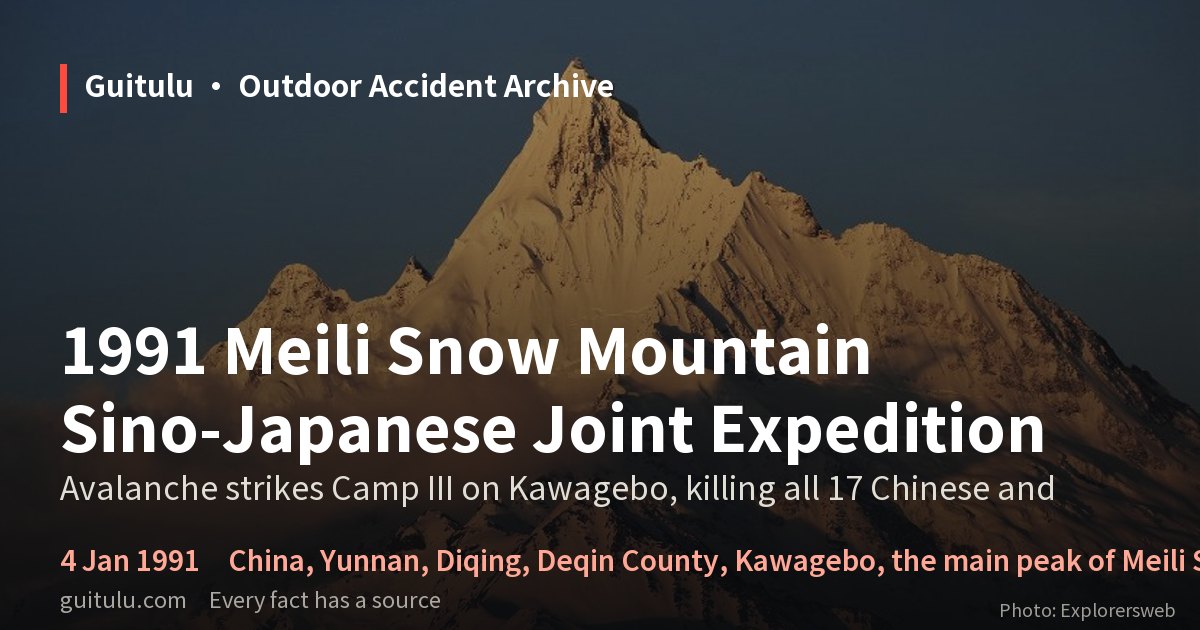
Avalanche strikes Camp III on Kawagebo, killing all 17 Chinese and Japanese team members
Search and rescue was abandoned in January 1991 because of the weather; remains began to emerge from the glacier in 1998; local legislation banned climbing Kawagebo in 2001.
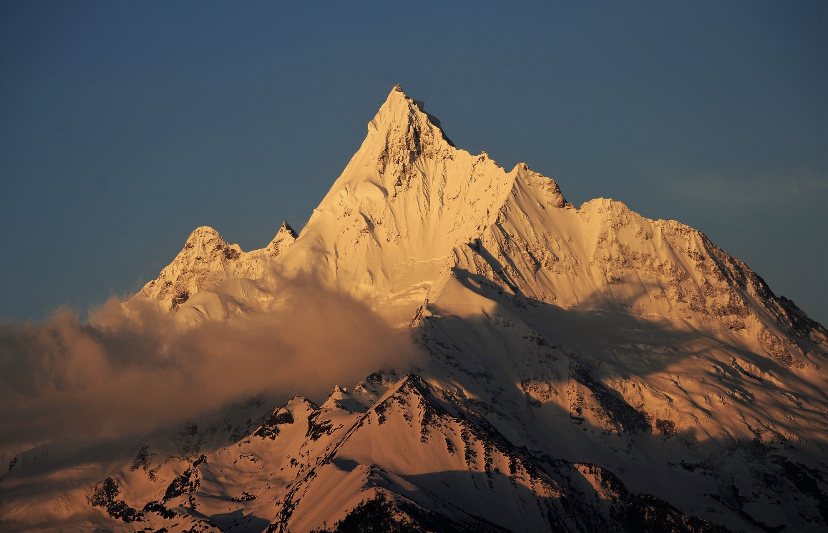
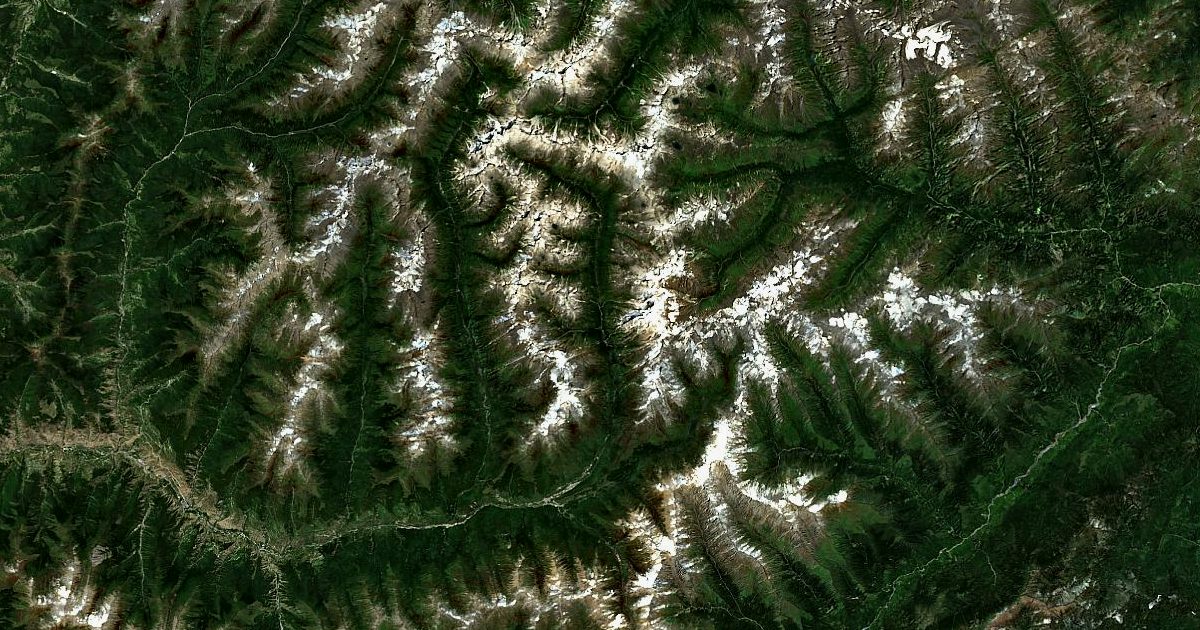
China, Yunnan, Diqing, Deqin County, Kawagebo, the main peak of Meili Snow Mountain, Camp III on Mingyong GlacierChina › Yunnan · Hengduan Mountains98.684°E 28.439°N
Activity
MountaineeringInvolves: AvalancheChina-Japan Friendship Meili Snow Mountain Joint Academic Mountaineering Expedition (11 Japanese and 6 Chinese members killed)
Casualties
Dead 17 All 17 people were killed; the remains of 16 were subsequently found on Mingyong Glacier over time. The remains of the team doctor, Hisanobu Shimizu, have never been found.
Material
48 facts · 9 sources8 accounts differ and are shown side by side
The number at the end of a paragraph is how many facts it rests on; open it to see each fact and how well it is sourced:
Multiple sourcesSingle source. Conflicting accounts and speculation are kept out of the narrative.
ImgScene photos all from news coverage; copyright belongs to the original authors
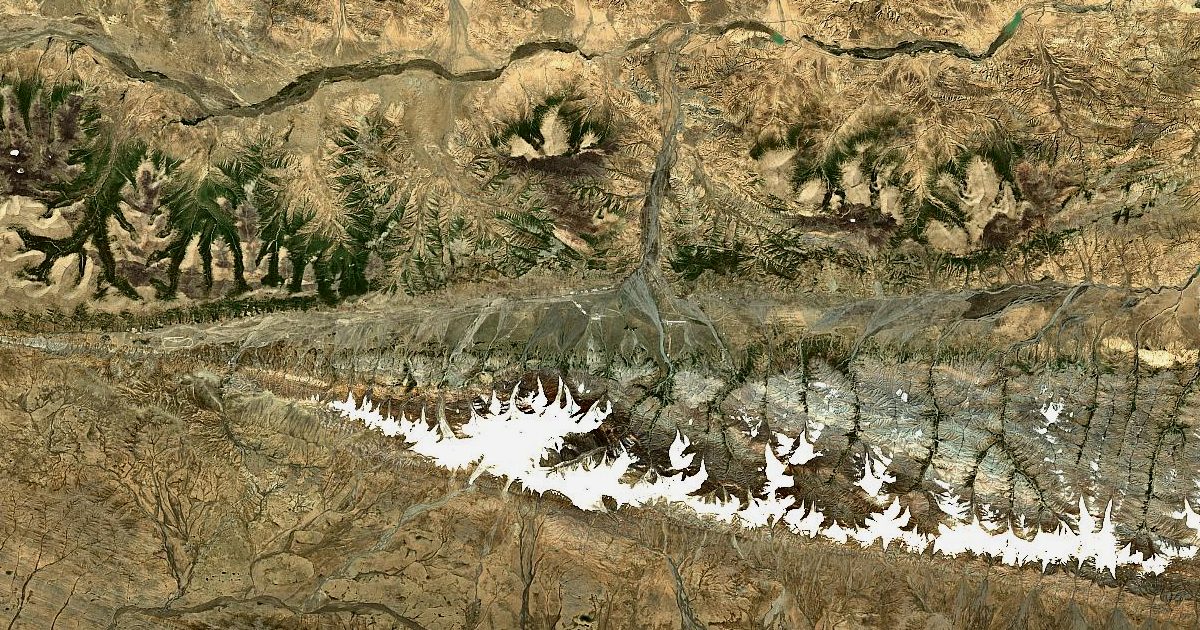
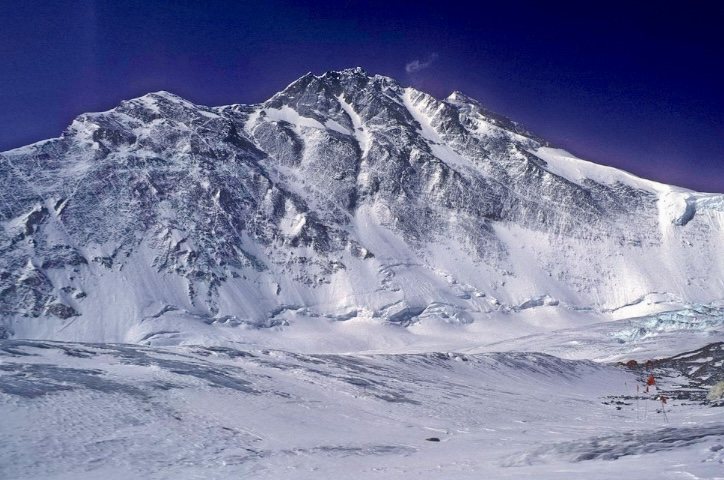
Location of Camp III marked on an imagePhoto source: ExplorerswebPeople searching among crevasses on Mingyong GlacierPhoto source: The PaperMingyong Glacier icefallPhoto source: The PaperValleys and villages below Meili Snow MountainPhoto source: The PaperTents below Mingyong GlacierPhoto source: The Beijing News
Reported locations along the route (schematic)Schematic
Scroll down and the map flies to where each part happened. The line is Schematic, Connects the locations mentioned in reports in sequence, showing only the approximate direction, not the actual track.
01
Full route
Places mentioned in reports are connected in sequence to show the approximate course of events (illustrative).
In November 1990, the Sino-Japanese joint mountaineering expedition arrived in Deqin County, Diqing Prefecture, Yunnan, to prepare to climb Kawagebo. F03
On 14 December, the expedition established base camp at an altitude of 3800 meters, then set up three camps in the direction of the northeast ridge. F05
On 28 December, the expedition made a summit attempt, reaching a maximum altitude of 6470 meters. F06
During the last communication on the evening of 3 January, Camp III reported heavy snowfall, poor visibility and snow 1.2 meters deep, with snow being cleared every two or three hours; there was static on the radio at the time. F17
On 4 January, base camp could no longer contact the team members at Camp III, and contact with the expedition was lost. F21
On 25 January, the Chinese and Japanese rescue teams decided to stop operations because of persistently severe weather. F22
In 1993, a memorial to the 17 people killed in the disaster was erected on Mount Hiei in Kyoto. F25
In October 1996, the Kyoto University Academic Alpine Club assembled another team to climb Meili Snow Mountain, but it too failed to reach the summit because of severe blizzard conditions. F26
In July 1998, villagers from Mingyong Village found the bodies and belongings of expedition members on Mingyong Glacier while tending livestock; they had been carried down by the glacier. F28
From 1999, Kobayashi Hisanori lived in Mingyong Village, staying at the home of village head Tashi, and went onto the glacier with Tashi many times to search for remains and personal effects. F31
In 2001, the local people's congress passed legislation prohibiting climbing Kawagebo Peak. The mountain remains unclimbed. F32
By 2019, Kobayashi Hisanori had identified the remains of 16 members; only the remains of the expedition doctor, Shimizu Hisanobu, had not been found. F33
In autumn 2023, Kobayashi Hisanori returned to Mingyong Village to search after an absence of three years. Very few personal effects were found, and he subsequently decided to end the search. F34
Under each fact is a verbatim quote from the original. "Single source" means only one outlet mentioned it; "Accounts differ" means sources contradict each other and this site adopts neither side; "Speculation" is an inference by a reporter or a person involved, not a fact.
Accounts differ on what a Japanese team did at Meili Snow Mountain in 1987: Himalayan Journal says a Japanese mountaineering team made the first attempt to climb Kawagebo that year; Explorersweb says the Japanese came that year to study plants, animals and weather, and did not climb.
Quotes from the original 2
“in 1987 Joetsu Alpine Club of Japan made an initial attempt to climb Kawagubo.”
Accounts differ on whether local villagers knew about the expedition before it set out and whether they tried to stop it: China Newsweek says Kobayashi Hisanori heard that local Tibetans had blocked bridges and roads and refused to help carry the expedition's baggage; Explorersweb says no one in the village knew that the team's true purpose was to climb Kawagebo.
Quotes from the original 2
“1991年中日联合登山队启程前,当地藏民曾封桥堵路,拒绝帮登山队搬行李”
Before the Sino-Japanese joint mountaineering expedition set out in 1991, local Tibetans had blocked bridges and roads and refused to help carry the expedition's baggage (machine translation)
According to The Beijing News, In November 1990, the Sino-Japanese joint mountaineering expedition arrived in Deqin County, Diqing Prefecture, Yunnan, to prepare to climb Kawagebo.
In November 1990, the Sino-Japanese joint mountaineering expedition arrived in Deqin County, Diqing Autonomous Prefecture, Yunnan, to climb Kawagebo, the main peak of Meili Snow Mountain, at an altitude of 6740 meters. (machine translation)
According to Explorersweb, According to reports, Chinese and Japanese team members disagreed over the location of Camp III: the Japanese side was concerned about avalanches and wanted to place the camp as close to the ridge as possible, while the Chinese side wanted it farther from the edge. They ultimately compromised on a location between the platform and the start of the ridge.
Quotes from the original 2
“Worried about avalanches, the Japanese climbers wanted to set Camp 3 as close to the ridge as possible.”
According to AAC, On 14 December, the expedition established base camp at an altitude of 3800 meters, then set up three camps in the direction of the northeast ridge.
Quotes from the original 1
“On December 14, they set up Base Camp at 3800 meters and soon had three camps established on the northeast ridge of the mountain.”
The highest altitude reached by the Sino-Japanese joint mountaineering expedition during that climb of Kawagebo Peak on Meili Snow Mountain in 1991 was 6470 meters (machine translation)
Accounts differ on how far the highest point reached during the summit attempt was from the summit: China Newsweek says the vertical distance was only 270 meters; Explorersweb says the team reached a point 240 meters below the summit.
Quotes from the original 2
“距顶峰垂直距离仅270米”
Only 270 meters in vertical distance from the summit (machine translation)
In early January 1991, the expedition gathered at Camp III to wait for an opportunity to attempt the summit, while snow fell continuously. According to the American Alpine Club report, only one sick Chinese team member was absent from the camp.
Quotes from the original 2
“the whole expedition, except for one ill Chinese climber, was there in the first days of January, waiting for better weather”
The Sino-Japanese joint mountaineering expedition gathered in the heart of Meili Snow Mountain, making final preparations for an attempt to conquer this unclimbed peak. The snow continued to fall. (machine translation)
Accounts differ on the arrangements after the summit attempt was thwarted: the American Alpine Club report says the entire team waited for good weather at Camp III in early January; Explorersweb says the team withdrew to Camp IV, decided to establish a fifth camp, and planned to attempt the summit on 3 January.
Quotes from the original 2
“was more comfortable than Base Camp and so the whole expedition, except for one ill Chinese climber, was there in the first days of January, waiting for better weather”
Accounts give different dates for the avalanche: The Beijing News gives the early hours of 4 January 1991; CGTN and a book by Kobayashi Hisanori excerpted by The Beijing News give 3 January.
Quotes from the original 3
“1991年1月4日凌晨,日方11名队员,中方6名队员,共17人在3号营地遭特大雪崩罹难。”
In the early hours of 4 January 1991, 11 Japanese team members and 6 Chinese team members, 17 people in all, died in a massive avalanche at Camp 3. (machine translation)
Both the Chinese Mountaineering Association and the Kyoto University Academic Alpine Club sent rescue teams, but deep snow made access very difficult, and the search and rescue effort found nothing in the bad weather.
Quotes from the original 3
“The Chinese Mountaineering Association and the Academic Alpine Club of Kyoto both sent rescue parties, but deep snow made the approach difficult.”
Accounts differ on when the Chinese rescue team arrived: the American Alpine Club report says the Chinese team reached base camp on 9 January; Explorersweb says the Chinese team arrived on 8 January to take part in the search.
Quotes from the original 2
“The Chinese got to Base Camp on January 9 and the Japanese on the 20th.”
According to AAC, The Chinese rescue team reached Camp II, but dangerous conditions prevented them from proceeding to Camp III; the Japanese rescue team reached an altitude of 4200 meters.
Quotes from the original 1
“However, the dangerous conditions prevented their getting to Camp III. The Japanese rescue party reached 4200 meters.”
Kyoto University Academic Alpine Club member Naonori Kobayashi did not take part in the climb because he had returned to his hometown.
Quotes from the original 2
“当时因要回老家,小林尚礼没有参加此次梅里雪山登顶,因而躲过一劫。”
At the time, Naonori Kobayashi did not take part in this attempt to summit Meili Snow Mountain because he had to return to his hometown, and thus escaped the disaster. (machine translation)
According to The Beijing News, During the last communication on the evening of 3 January, Camp III reported heavy snowfall, poor visibility and snow 1.2 meters deep, with snow being cleared every two or three hours; there was static on the radio at the time.
Quotes from the original 2
“三号营地:“现在三号营地的雪很大,视线不良。积雪有1.2米厚。””
Camp III: “The snow at Camp III is very heavy now, and visibility is poor. The snow is 1.2 meters deep.” (machine translation)
Accounts differ on the time of the last communication: an excerpt from Naonori Kobayashi's book published by The Beijing News says communication ended at 22:15; Explorersweb says the last contact was at 10:30 p.m.
According to The Paper, Several team members' journals found by Naonori Kobayashi described the conditions that day, confirming that very heavy snow fell that night and gradually buried the tents.
Quotes from the original 1
“他找到的好几本手帐都写着当天的情况,证实了那个晚上下起了非常大的雪,渐渐将帐篷掩埋”
Several of the journals he found described the conditions that day, confirming that very heavy snow began to fall that night and gradually buried the tents (machine translation)
Naonori Kobayashi speculated that, since none of the journals said “I slept well that day”, the team members may have been caught in an avalanche while intermittently writing in their journals inside the tents amid heavy snow and going outside to check conditions.
Quotes from the original 1
“因此可以想象,他们是在大雪的帐篷中,不时写一写手帐,出门观望一下状况,在这个过程中发生了雪崩。”
It can therefore be imagined that they were in the tents amid heavy snow, writing in their journals from time to time and going outside to check the conditions, and that an avalanche occurred during this process. (machine translation)
On 4 January that year, a team called the “China-Japan Friendship Meili Snow Mountain Joint Academic Mountaineering Expedition” lost contact while climbing the 6740-meter main peak (machine translation)
According to Explorersweb, According to reports, another search team was sent in April that year, but was again forced back by conditions on the mountain; 48 avalanches were recorded during the operation.
Quotes from the original 1
“In April, they sent another search team, but the mountain pushed them back. They recorded a whopping 48 avalanches.”
According to HK01, After the disaster, the Kyoto University Academic Alpine Club established an accident investigation committee and spent a year publishing the Meili Snow Mountain Accident Investigation Report.
Quotes from the original 1
“山難之後,山嶽會設立了事故調查委員會,用一年的時間刊行了《梅里雪山事故調查報告書》”
After the disaster, the Alpine Club established an accident investigation committee and spent a year publishing the Meili Snow Mountain Accident Investigation Report (machine translation)
In the spring two years after the mountaineering disaster, a memorial to the 17 people killed was erected in Mount Hiei National Park in Kyoto. (machine translation)
In October 1996, the Kyoto University Academic Alpine Club assembled another team to climb Meili Snow Mountain, but it too failed to reach the summit because of severe blizzard conditions.
In October 1996, the Kyoto University Academic Alpine Club organized another team to climb Meili Snow Mountain, and Kobayashi was one of its members. Unfortunately, this team also failed to reach the summit because it encountered severe blizzard conditions (machine translation)
They attempted Meili Snow Mountain again in October 1996. Unfortunately, this team also failed to reach the summit because it encountered severe blizzard conditions. (machine translation)
Accounts differ on how the bodies were found: several Chinese media outlets say villagers discovered bodies in July 1998 and 10 were recovered that year; Explorersweb says herders found equipment on 18 June 1998, and the bodies of 16 of the 17 people were found in 1999 at an altitude of 3700 to 3800 meters on Mingyong Glacier.
Quotes from the original 3
“Seven years later, on June 18, 1998, three local shepherds found some of the group’s gear.”
“In 1999, 4,000m away from their last known location, the bodies of 16 of the 17 climbers were found on the Ming Yong Glacier between 3,700m and 3,800m.”
In July 1998, villagers from Mingyong Village found the bodies and belongings of expedition members on Mingyong Glacier while tending livestock; they had been carried down by the glacier.
Quotes from the original 3
“这年7月,梅里雪山脚下的明永村村民在放牧中,发现了随着冰川漂流下来的登山队遗体和遗品”
In July of that year, villagers from Mingyong Village at the foot of Meili Snow Mountain, while grazing livestock, discovered the remains and personal effects of expedition members that had drifted down with the glacier (machine translation)
It was not until July 1998, seven years after the mountaineering disaster, that shocking news reached Japan—the villagers of Mingyong Village at the foot of the snow mountain had discovered the remains of climbers on the glacier. (machine translation)
The place where the remains were found was the only flat area in the middle reaches of Mingyong Glacier; farther up was a large icefall with a drop of over 1,000 meters.
The description of the “only flat area in the middle reaches” comes from HK01's interview with Kobayashi Hisanori; China Newsweek mentions that the remains fell onto the glacier through a 1,000-meter icefall.
Quotes from the original 2
“發現遺體的地方是明永冰川中游僅有的平坦地帶,再往上就是落差上千米的大冰瀑。”
The place where the remains were found was the only flat area in the middle reaches of Mingyong Glacier; farther up was a large icefall with a drop of over 1,000 meters. (machine translation)
From 1999, Kobayashi Hisanori lived in Mingyong Village, staying at the home of village head Tashi, and went onto the glacier with Tashi many times to search for remains and personal effects.
The first local person to welcome Kobayashi was Tashi, the head of Mingyong Village. He not only let Kobayashi stay in his home for free and eat all three meals with his family, but also always accompanied him when he went to the glacier to search for remains (machine translation)
In 2001, the local people's congress passed legislation prohibiting climbing Kawagebo Peak. The mountain remains unclimbed.
The legislative details are according to China Newsweek; Explorersweb also says climbing has been prohibited since 2001 and the peak remains unclimbed.
Quotes from the original 2
“2001年,当地人大正式立法不再允许攀登卡瓦格博峰。”
In 2001, the local people's congress formally passed legislation no longer permitting the climbing of Kawagebo Peak. (machine translation)
By 2019, Kobayashi Hisanori had identified the remains of 16 members; only the remains of the expedition doctor, Shimizu Hisanobu, had not been found.
Quotes from the original 3
“直到2019年,他一共确认了十六位队员的遗体,剩下尚未发现的只有队医清水久信一人。”
By 2019, he had identified the remains of sixteen members in total; the only one remaining undiscovered was the expedition doctor, Shimizu Hisanobu. (machine translation)
According to HK01, In autumn 2023, Kobayashi Hisanori returned to Mingyong Village to search after an absence of three years. Very few personal effects were found, and he subsequently decided to end the search.
In autumn 2023, Japanese climber Kobayashi Hisanori came to Mingyong Village at the foot of Meili Snow Mountain again after an absence of three years. Very few personal effects were found in this search (machine translation)
According to China Newsweek, The joint expedition was formed by China and Japan after several years of preparation, with the Japanese side primarily responsible for funding and technical support.
Quotes from the original 1
“两国经过数年筹备,组建了登山队,经费和技术主要由日方负责。”
After several years of preparation, the two countries formed a mountaineering expedition, with the Japanese side primarily responsible for funding and technical support. (machine translation)
The 11 Japanese members who died all belonged to this mountaineering group, which was founded in 1931 and aimed to make “first ascents of unclimbed peaks” in the Himalayas. (machine translation)
According to The Beijing News, The expedition's overall leader was Atsuo Saito, president of the Japanese Mountaineering Association.
Quotes from the original 1
“会见了当时已88岁高龄的1991年登山队总队长、日本山岳协会会长斋藤淳生”
met Atsuo Saito, the overall leader of the 1991 expedition and president of the Japanese Mountaineering Association, who was then 88 years old (machine translation)
According to The Beijing News, The snow between Camp II and Camp III was soft and easy to sink into, so members used sleds to transport supplies.
Quotes from the original 1
“二号营地和三号营地之间的雪地,雪质松软,踏之易陷,所以使用雪橇是个行之有效的方法。”
On the snowfield between Camp II and Camp III, the snow was soft and easy to sink into when stepped on, so using sleds was an effective method. (machine translation)
Measurements taken during the search showed that the horizontal flow rate of Mingyong Glacier was about 32 meters per month; estimates based on the distance the bodies had moved put the flow rate at between 200 and 500 meters per year.
Both accounts come from Naonori Kobayashi's own writings.
It was learned that the horizontal flow rate of Mingyong Glacier was 32 meters per month. In addition, the distance the bodies had moved could be used to calculate that the flow rate of Mingyong Glacier was between 200 and 500 meters per year. (machine translation)
It was learned that the horizontal flow rate of Mingyong Glacier was 32 meters per month. The distance the bodies had moved was used to calculate that the flow rate of Mingyong Glacier was between 200 and 500 meters per year. (machine translation)
A roll of camera film recovered from the glacier was developed. The photographs showed members carrying baggage across the snowfield and the last panoramic view of Camp III.
Quotes from the original 2
“照片上,有在山难地雪原上微笑着搬运行李的队员和三号营地最后的全景”
In the photographs were members smiling as they carried baggage across the snowfield at the disaster site, and the last panoramic view of Camp III (machine translation)
It notably included photographs developed from a roll of film recovered among the items from the disaster; this was the first time photographs from items recovered from the disaster had been made public. (machine translation)
 GuituluGlobal Outdoor Accident Archive