GuituluGlobal Outdoor Accident Archive 中文
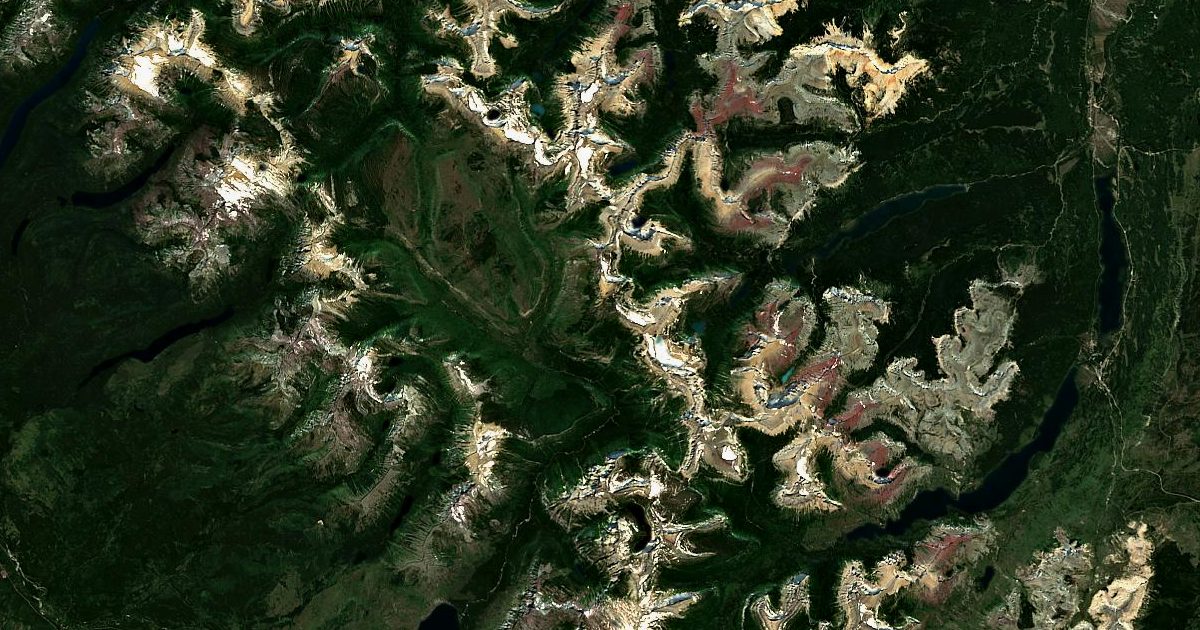
Satellite view of the area around Granite Park Chalet campsite and Trout Lake, Glacier National Park, Montana, United States

Archive / Mountaineering

Night of the Grizzlies: Two Campsites Attacked on the Same Night in Glacier National Park

In August 1967, two grizzlies killed two 19-year-old women on the same night, prompting reforms to bear management in US national parks

Both grizzlies involved were subsequently shot and killed; the park then comprehensively reformed its garbage and food management

Satellite imagery Sentinel-2 cloudless 2024 © EOX (CC BY-NC-SA 4.0)

Date
Summer
Place
Granite Park Chalet campsite and Trout Lake, Glacier National Park, Montana, United StatesUnited States › Montana · Rocky Mountains-113.778°E 48.772°N
Activity
Backpacking and campingInvolves: WildlifeYoung seasonal park workers at two campsites, in groups of 2 and 5
Casualties
Dead 2 Injured 1Two 19-year-old women died; a male companion was rescued after being bitten at the Granite Park campsite
Material
30 facts · 6 sources1 account differs and are shown side by side

01What happened

Glacier National Park was established in 1910, and by the summer of 1967, no human deaths caused by grizzlies had ever been recorded in the park. People in the park generally did not consider grizzlies particularly dangerous. But that summer, as park visitation approached one million, garbage and food management had not kept pace: the incinerator at Granite Park Chalet could not accommodate all the garbage, and the remainder was dumped into a ravine behind the chalet. Grizzlies came every night, becoming a sight for guests to watch.Facts it rests onF09Multiple sourcesGlacier National Park was established in 1910. Before August 1967, there were no recorded human deaths caused by grizzly bears in the park.F10Multiple sourcesAt the time, it was generally believed in the park that grizzly bears posed little danger to people. One ranger had rated the danger posed by Glacier National Park grizzlies at 0 to 1 on a scale of 0 to 10.F01Multiple sourcesIn the summer of 1967, the incinerator at Granite Park Chalet, a mountaintop chalet, did not have enough capacity, and excess kitchen waste was dumped into a ravine behind the chalet.F02Multiple sourcesGrizzly bears came behind the chalet at night to rummage through and eat the garbage, becoming a “show” for visitors staying at the chalet.

In the Trout Lake area, a grizzly had been rummaging through garbage cans and harassing campers all summer. Visitors complained, but the park took no action. A few days before the incident, two rangers visited Granite Park Chalet, saw grizzlies eating garbage there, and expressed their concerns to park headquarters.Facts it rests onF03Multiple sourcesIn the Trout Lake area, a grizzly bear had spent the entire summer rummaging through garbage cans near the cabins and harassing campers; visitors complained to the park, but park authorities took no action.F04Multiple sourcesA few days before the incident, rangers Dave Shea and Bert Gildart visited the chalet, saw grizzly bears eating garbage there, and expressed their concerns at park headquarters.

On 12 August, 19-year-old Julie Helgeson and her friend Roy Ducat hiked to Granite Park Chalet and camped near the chalet. In the early hours of 13 August, a grizzly entered the campsite, bit Ducat, and then dragged Helgeson away from the campsite. After Ducat sought help, search and rescue personnel found Helgeson seriously injured and took her back to the chalet for emergency treatment. She was pronounced dead at 4:12 a.m.; Ducat was airlifted out and reportedly survived.Facts it rests onF05Multiple sourcesOn 12 August, 19-year-old Julie Helgeson and her friend Roy Ducat hiked to Granite Park Chalet and laid out their sleeping bags at a campsite near the chalet. Helgeson was working that summer at a hotel in the East Glacier area.F11Multiple sourcesIn the early hours of 13 August, a grizzly bear entered the Granite Park campsite, bit Ducat on the arm, then turned to Helgeson and dragged her away from the campsite.F12Multiple sourcesDucat went to nearby campers and sought help at the chalet, where staff contacted rangers by radio.F13Multiple sourcesSearch and rescue personnel found Helgeson severely injured and took her back to the chalet. A doctor who happened to be staying there overnight attempted emergency treatment, and she was pronounced dead at 4:12 a.m.F14Multiple sourcesAfter receiving treatment at the chalet, Ducat was flown out. He reportedly survived.

Almost simultaneously, another incident occurred at a campsite at Trout Lake. That day, 19-year-old Michele Koons and four companions encountered a grizzly entering their lakeside campsite and moved to another site. At approximately 4 to 4:30 a.m., the bear returned. Most of the group climbed trees, but Koons was unable to open her sleeping bag zipper in time and was dragged away by the bear. Her companions waited in the trees until daybreak before reporting the incident to the ranger station.Facts it rests onF06Multiple sourcesOn 12 August, 19-year-old Michele Koons and four companions who worked in the park hiked to Trout Lake to spend the night. Koons was working in the Lake McDonald area that summer.F07Multiple sourcesAccording to reports, the group at Trout Lake encountered a grizzly bear that day which entered their campsite and rummaged through and took their food, forcing them to leave their original site and find another place to camp.F15Multiple sourcesBetween about 4:00 and 4:30 a.m. on 13 August, the grizzly bear returned to the new campsite at Trout Lake. Most of the group climbed trees; Koons was unable to open her sleeping bag zipper in time and was dragged away by the bear.F16Multiple sourcesKoons's companions waited in the trees until daybreak, then reported the incident to the ranger station in the lake area.

Afterward, the park closed trails in both areas. Rangers shot and killed three grizzlies at Granite Park Chalet; the investigation concluded that a female with two cubs was most likely the bear that attacked Helgeson. The Trout Lake bear was shot and killed several days later. It was an emaciated female with glass from garbage embedded between its teeth. The later conclusion was that both bears had become accustomed to human food and garbage and had lost their wariness of people.Facts it rests onF22Multiple sourcesAfterward, the park closed the trails leading to Granite Park Chalet and Trout Lake; rangers shot three grizzly bears near the chalet, including a female with two cubs.F23Multiple sourcesInvestigators believed that the female bear with two cubs was most likely the bear that attacked Helgeson and Ducat.F24Multiple sourcesSeveral days after the incident, ranger Gildart shot and killed an emaciated female bear near Trout Lake, which an examination identified as the bear that attacked Koons.F25Multiple sourcesAccording to reports, glass from garbage was lodged between the teeth of the Trout Lake bear, which was regarded as evidence that it had eaten human garbage.F20Multiple sourcesThe later conclusion was that both bears had become accustomed to human food and garbage and had lost their wariness of people; improper garbage disposal and food storage were the root causes.

After that night, Glacier National Park introduced bear-resistant garbage cans, installed steel cables or hooks for hanging food, and implemented rules requiring visitors to pack out garbage, separate cooking and sleeping areas, reserve campsites, and obtain permits. The park's bear management plan reportedly expanded from about 3 pages to about 50 pages. The park's bear biologist called it a turning point for bear management throughout the National Park Service.Facts it rests onF27Multiple sourcesAfterward, Glacier National Park introduced bear-resistant garbage cans and installed steel cables or hooks at campsites so campers could hang food out of bears' reach.F28Multiple sourcesBackcountry campsites adopted a “pack it in, pack it out” policy for garbage, separated cooking areas from sleeping areas, and required campers to reserve campsites and obtain permits to limit numbers.F29Single sourceAccording to reports, Glacier National Park's bear management plan expanded from about 3 pages to about 50 pages almost overnight after the incident.F30Single sourceThe park's bear biologist John Waller called the incident a watershed in bear management, not only for Glacier National Park but for the entire National Park Service.

The number at the end of a paragraph is how many facts it rests on; open it to see each fact and how well it is sourced: Multiple sourcesSingle source. Conflicting accounts and speculation are kept out of the narrative.
  • Reported locations along the route (illustrative)Schematic

Satellite imagery Sentinel-2 cloudless 2024 © EOX · Terrain AWS Terrain Tiles · Orange line is schematic · Place coordinates not individually verified

Route review

7 scenes to understand what happened

Scroll down and the map flies to where each part happened. The line is Schematic, Lines connect the locations mentioned in reports in sequence and show only the approximate direction, not the actual track. Sources for the location coordinates are listed in places.json.

01

Full route

The locations mentioned in the reports are connected in sequence to show the approximate course of events (schematic).

02

Garbage at the mountaintop chalet

The chalet's incinerator could not handle all the garbage, which was dumped into a ravine, where grizzlies came to eat every night.Facts it rests onF01Multiple sourcesIn the summer of 1967, the incinerator at Granite Park Chalet, a mountaintop chalet, did not have enough capacity, and excess kitchen waste was dumped into a ravine behind the chalet.F02Multiple sourcesGrizzly bears came behind the chalet at night to rummage through and eat the garbage, becoming a “show” for visitors staying at the chalet.F04Multiple sourcesA few days before the incident, rangers Dave Shea and Bert Gildart visited the chalet, saw grizzly bears eating garbage there, and expressed their concerns at park headquarters.

05

Running Back to the Chalet for Help

Ducat ran back to the chalet for help. Helgeson was taken back to the chalet for emergency treatment, but died at 4:12 a.m.Facts it rests onF12Multiple sourcesDucat went to nearby campers and sought help at the chalet, where staff contacted rangers by radio.F13Multiple sourcesSearch and rescue personnel found Helgeson severely injured and took her back to the chalet. A doctor who happened to be staying there overnight attempted emergency treatment, and she was pronounced dead at 4:12 a.m.

06

The Night at Trout Lake

The same night, another bear attacked Koons and her group at Trout Lake.Facts it rests onF06Multiple sourcesOn 12 August, 19-year-old Michele Koons and four companions who worked in the park hiked to Trout Lake to spend the night. Koons was working in the Lake McDonald area that summer.F07Multiple sourcesAccording to reports, the group at Trout Lake encountered a grizzly bear that day which entered their campsite and rummaged through and took their food, forcing them to leave their original site and find another place to camp.F15Multiple sourcesBetween about 4:00 and 4:30 a.m. on 13 August, the grizzly bear returned to the new campsite at Trout Lake. Most of the group climbed trees; Koons was unable to open her sleeping bag zipper in time and was dragged away by the bear.

02Timeline

  1. In the summer of 1967, the incinerator at Granite Park Chalet, a mountaintop chalet, did not have enough capacity, and excess kitchen waste was dumped into a ravine behind the chalet. F01

  2. A few days before the incident, rangers Dave Shea and Bert Gildart visited the chalet, saw grizzly bears eating garbage there, and expressed their concerns at park headquarters. F04

  3. On 12 August, 19-year-old Michele Koons and four companions who worked in the park hiked to Trout Lake to spend the night. Koons was working in the Lake McDonald area that summer. F06

  4. On 12 August, 19-year-old Julie Helgeson and her friend Roy Ducat hiked to Granite Park Chalet and laid out their sleeping bags at a campsite near the chalet. Helgeson was working that summer at a hotel in the East Glacier area. F05

  5. According to reports, the group at Trout Lake encountered a grizzly bear that day which entered their campsite and rummaged through and took their food, forcing them to leave their original site and find another place to camp. F07

  6. In the early hours of 13 August, a grizzly bear entered the Granite Park campsite, bit Ducat on the arm, then turned to Helgeson and dragged her away from the campsite. F11

  7. Between about 4:00 and 4:30 a.m. on 13 August, the grizzly bear returned to the new campsite at Trout Lake. Most of the group climbed trees; Koons was unable to open her sleeping bag zipper in time and was dragged away by the bear. F15

  8. Search and rescue personnel found Helgeson severely injured and took her back to the chalet. A doctor who happened to be staying there overnight attempted emergency treatment, and she was pronounced dead at 4:12 a.m. F13

  9. Afterward, the park closed the trails leading to Granite Park Chalet and Trout Lake; rangers shot three grizzly bears near the chalet, including a female with two cubs. F22

  10. Several days after the incident, ranger Gildart shot and killed an emaciated female bear near Trout Lake, which an examination identified as the bear that attacked Koons. F24

  11. Afterward, Glacier National Park introduced bear-resistant garbage cans and installed steel cables or hooks at campsites so campers could hang food out of bears' reach. F27

03Lessons

Closed areas and rules

Allowing bears to eat human food creates danger

Both bears involved had become accustomed to human food and garbage and had lost their wariness of people. Dumping the chalet's garbage in a ravine and leaving food scraps at campsites may seem minor, but they can draw bears to places where people sleep.Facts it rests onF20Multiple sourcesThe later conclusion was that both bears had become accustomed to human food and garbage and had lost their wariness of people; improper garbage disposal and food storage were the root causes.F01Multiple sourcesIn the summer of 1967, the incinerator at Granite Park Chalet, a mountaintop chalet, did not have enough capacity, and excess kitchen waste was dumped into a ravine behind the chalet.F03Multiple sourcesIn the Trout Lake area, a grizzly bear had spent the entire summer rummaging through garbage cans near the cabins and harassing campers; visitors complained to the park, but park authorities took no action.

Closed areas and rules

Hang food and pack out garbage

The bear-resistant garbage cans, steel cables for hanging food, packing out garbage, and separation of cooking and sleeping areas introduced afterward remain basic outdoor camping practices today. Learn the campsite rules before setting out and follow them.Facts it rests onF27Multiple sourcesAfterward, Glacier National Park introduced bear-resistant garbage cans and installed steel cables or hooks at campsites so campers could hang food out of bears' reach.F28Multiple sourcesBackcountry campsites adopted a “pack it in, pack it out” policy for garbage, separated cooking areas from sleeping areas, and required campers to reserve campsites and obtain permits to limit numbers.

Closed areas and rules

Someone must take responsibility for addressing unusual bear behavior

The Trout Lake bear harassed campers all summer, visitors had complained, and rangers had also expressed concern about bears being fed at the chalet, but no action was taken before the incident. When a bear is frequently seen approaching people and food, it should be reported and addressed as early as possible, rather than waiting for it to become a bigger problem.Facts it rests onF03Multiple sourcesIn the Trout Lake area, a grizzly bear had spent the entire summer rummaging through garbage cans near the cabins and harassing campers; visitors complained to the park, but park authorities took no action.F04Multiple sourcesA few days before the incident, rangers Dave Shea and Bert Gildart visited the chalet, saw grizzly bears eating garbage there, and expressed their concerns at park headquarters.

Teams and decisions

After a bear enters a campsite, do not assume it has gone far away

The group at Trout Lake moved campsites after a bear entered their camp, but the bear returned in the early hours. After a bear has appeared at a campsite and taken food, if conditions allow, it is safer to withdraw to a place with more people or facilities rather than continue staying overnight nearby.Facts it rests onF07Multiple sourcesAccording to reports, the group at Trout Lake encountered a grizzly bear that day which entered their campsite and rummaged through and took their food, forcing them to leave their original site and find another place to camp.F15Multiple sourcesBetween about 4:00 and 4:30 a.m. on 13 August, the grizzly bear returned to the new campsite at Trout Lake. Most of the group climbed trees; Koons was unable to open her sleeping bag zipper in time and was dragged away by the bear.

04Fact list 30 facts

Under each fact is a verbatim quote from the original. "Single source" means only one outlet mentioned it; "Accounts differ" means sources contradict each other and this site adopts neither side; "Speculation" is an inference by a reporter or a person involved, not a fact.

  1. F01Multiple sourcesBackground

    In the summer of 1967, the incinerator at Granite Park Chalet, a mountaintop chalet, did not have enough capacity, and excess kitchen waste was dumped into a ravine behind the chalet.

    Quotes from the original 3

    “its incinerator could not contain all their trash”

    Anchorage Daily News · 2017-08-03

    “managers discarded the excess in a gully behind the facility”

    Anchorage Daily News · 2017-08-03

    “was far too small to handle the refuse of even a handful of guests”

    Backpacker · 2025-05-14
  2. F02Multiple sourcesBackground

    Grizzly bears came behind the chalet at night to rummage through and eat the garbage, becoming a “show” for visitors staying at the chalet.

    Quotes from the original 2

    “bears raided garbage containers at nearby dumps”

    Hungry Horse News · 2007-08-09

    “Soon the grizzly bears' nightly foraging there became a tourist attraction.”

    Anchorage Daily News · 2017-08-03
  3. F03Multiple sourcesBackground

    In the Trout Lake area, a grizzly bear had spent the entire summer rummaging through garbage cans near the cabins and harassing campers; visitors complained to the park, but park authorities took no action.

    Quotes from the original 3

    “one grizzly had spent that hot summer rummaging through garbage barrels near a collection of cabins”

    Anchorage Daily News · 2017-08-03

    “park officials took no action.”

    Anchorage Daily News · 2017-08-03

    “Many of those visitors complained to authorities, but from what we can tell, the park largely ignored them.”

    Backpacker · 2025-05-14
  4. F04Multiple sourcesBackground

    A few days before the incident, rangers Dave Shea and Bert Gildart visited the chalet, saw grizzly bears eating garbage there, and expressed their concerns at park headquarters.

    Quotes from the original 2

    “They had witnessed five bears dine on trash at the chalet days before, and both had expressed concern at park headquarters.”

    Anchorage Daily News · 2017-08-03

    “Just four days earlier, Shea and a 27-year-old ranger named Bert Gildart had visited the chalet”

    Outside · 2017-08-11
  5. F05Multiple sourcesMovement

    On 12 August, 19-year-old Julie Helgeson and her friend Roy Ducat hiked to Granite Park Chalet and laid out their sleeping bags at a campsite near the chalet. Helgeson was working that summer at a hotel in the East Glacier area.

    Her name is spelled Helgeson or Helgesen in different sources; the spelling used by most sources is used here.

    Quotes from the original 3

    “had decided to spend the day hiking to the Granite Park Chalet”

    Backpacker · 2025-05-14

    “The pair set up at the Granite Park campground about 500 yards from the Chalet.”

    Hungry Horse News · 2007-08-09

    “the two set up camp not far from the famous Granite Park Chalet”

    Territory Supply · 2023-06-05
  6. F06Multiple sourcesMovement

    On 12 August, 19-year-old Michele Koons and four companions who worked in the park hiked to Trout Lake to spend the night. Koons was working in the Lake McDonald area that summer.

    Her first name is also spelled Michelle.

    Quotes from the original 2

    “hiked into Trout Lake with four fellow college students”

    Hungry Horse News · 2007-08-09

    “had joined some of her friends who were working in the Lake McDonald area”

    Backpacker · 2025-05-14
  7. F07Multiple sourcesEvent

    According to reports, the group at Trout Lake encountered a grizzly bear that day which entered their campsite and rummaged through and took their food, forcing them to leave their original site and find another place to camp.

    Quotes from the original 2

    “forcing the campers to grab their gear and set up elsewhere”

    Backpacker · 2025-05-14

    “prompting the group to grab what they could and make a new camp away from the bear”

    Territory Supply · 2023-06-05
  8. F08Single sourceEvent

    According to Backcountry Journeys, According to a less reliable source, the group encountered two hikers who said they had been forced to climb a tree by a grizzly bear.

    Only Backcountry Journeys mentions this; the source is a commercial blog.

    Quotes from the original 1

    “saying that they had been chased up trees by a menacing grizzly bear”

    Backcountry Journeys ·
  9. F09Multiple sourcesBackground

    Glacier National Park was established in 1910. Before August 1967, there were no recorded human deaths caused by grizzly bears in the park.

    Quotes from the original 3

    “The women were the first victims of a fatal grizzly attack in the 57 years”

    Backpacker · 2025-05-14

    “had recorded no grizzly-caused human fatalities since it was established in 1910”

    Anchorage Daily News · 2017-08-03

    “Never had a Glacier grizzly killed a human.”

    Outside · 2017-08-11
  10. F10Multiple sourcesBackground

    At the time, it was generally believed in the park that grizzly bears posed little danger to people. One ranger had rated the danger posed by Glacier National Park grizzlies at 0 to 1 on a scale of 0 to 10.

    Quotes from the original 2

    “the grizzlies of Glacier Park would have to rate somewhere between zero and one”

    Outside · 2017-08-11

    “but ultimately, no one considered them dangerous”

    Backpacker · 2025-05-14
  11. F11Multiple sourcesEvent

    In the early hours of 13 August, a grizzly bear entered the Granite Park campsite, bit Ducat on the arm, then turned to Helgeson and dragged her away from the campsite.

    Quotes from the original 3

    “It bit into Ducat's arm then moved onto Helgeson.”

    Hungry Horse News · 2007-08-09

    “a bear dragged 19-year-old Julie Helgeson from a campground below the chalet”

    Outside · 2017-08-11

    “settling on Julie and dragging her into the woods”

    Backpacker · 2025-05-14
  12. F12Multiple sourcesEvent

    Ducat went to nearby campers and sought help at the chalet, where staff contacted rangers by radio.

    Some sources are of low reliability.

    Quotes from the original 2

    “Ducat ran to find other campers, and then sprinted up to the chalet for help.”

    Backpacker · 2025-05-14

    “called other rangers by radio”

    Backcountry Journeys ·
  13. F13Multiple sourcesEvent

    Search and rescue personnel found Helgeson severely injured and took her back to the chalet. A doctor who happened to be staying there overnight attempted emergency treatment, and she was pronounced dead at 4:12 a.m.

    Quotes from the original 2

    “was pronounced dead at 4:12 a.m. on a makeshift hospital bed”

    Backpacker · 2025-05-14

    “she died on a makeshift operating table at the chalet at 4:12 am”

    Outside · 2017-08-11
  14. F14Multiple sourcesAftermath

    After receiving treatment at the chalet, Ducat was flown out. He reportedly survived.

    Quotes from the original 2

    “Ducat was later treated at the Chalet and air-lifted out.”

    Hungry Horse News · 2007-08-09

    “though her bitten friend survived”

    Outside · 2017-08-11
  15. F15Multiple sourcesEvent

    Between about 4:00 and 4:30 a.m. on 13 August, the grizzly bear returned to the new campsite at Trout Lake. Most of the group climbed trees; Koons was unable to open her sleeping bag zipper in time and was dragged away by the bear.

    Quotes from the original 3

    “All but Koons, who was zipped in her mummy bag, were able to climb trees to safety.”

    Hungry Horse News · 2007-08-09

    “disengage her zipper, and the grizzly carried her into the night”

    Outside · 2017-08-11

    “between 4 and 4:30 am”

    Territory Supply · 2023-06-05
  16. F16Multiple sourcesEvent

    Koons's companions waited in the trees until daybreak, then reported the incident to the ranger station in the lake area.

    Some sources are of low reliability.

    Quotes from the original 2

    “The remaining four campers spent the night in treetops, waiting for sunrise.”

    Backcountry Journeys ·

    “the young campers who had been with Koons at Trout Lake came to the station”

    Hungry Horse News · 2007-08-09
  17. F17Single sourceAftermath

    According to Hungry Horse News, According to reports, rangers searched along the lakeshore, found Koons's body and removed it by helicopter.

    Quotes from the original 2

    “We spread out and searched for the body”

    Hungry Horse News · 2007-08-09

    “The rangers then put the girl into a body bag and loaded her into a helicopter.”

    Hungry Horse News · 2007-08-09
  18. F18Accounts differBackground

    Sources differ on the distance between the two campsites: about 10 miles, more than 8 miles, and 14 miles; another source says only that they were several miles apart.

    The distances conflict; no specific figure may be used on the page.

    Quotes from the original 3

    “killed two campers 10 miles apart”

    Backpacker · 2025-05-14

    “over 8 miles apart by two different bears”

    Backcountry Journeys ·

    “Just 14 miles away from the first attack”

    Territory Supply · 2023-06-05
  19. F19SpeculationSpeculation

    Speculation: After the incident, some speculated that wildfires caused by lightning and drought, or even bears being drugged by people, were contributing factors; these were only speculations at the time, and later conclusions did not point to them.

    Quotes from the original 2

    “Perhaps lightning and dry conditions, which sparked wildfires that week”

    Anchorage Daily News · 2017-08-03

    “publicized their own hypotheses about lightning, wildfires and even menstruation”

    Backpacker · 2025-05-14
  20. F20Multiple sourcesFound at scene

    The later conclusion was that both bears had become accustomed to human food and garbage and had lost their wariness of people; improper garbage disposal and food storage were the root causes.

    Quotes from the original 3

    “But soon it became clear that the problem was far more mundane: human food and garbage.”

    Anchorage Daily News · 2017-08-03

    “Poor garbage disposal and food storage had created a powder keg of bear danger in the park.”

    Backpacker · 2025-05-14

    “Bears lost their fear of humans and came instead to associate us with free dinner.”

    Outside · 2017-08-11
  21. F21Single sourcePost-incident analysis

    According to Backpacker, Bear biologists across the country called the two deaths on the same night an unfortunate coincidence, but the environmental conditions that contributed to the two attacks were not a coincidence.

    Analysis from a single source

    Quotes from the original 2

    “Bear biologists around the country were quick to label two deaths in one night as a terrible coincidence”

    Backpacker · 2025-05-14

    “the circumstances that led to them were not”

    Backpacker · 2025-05-14
  22. F22Multiple sourcesAftermath

    Afterward, the park closed the trails leading to Granite Park Chalet and Trout Lake; rangers shot three grizzly bears near the chalet, including a female with two cubs.

    Sources differ slightly on the exact dates of the shootings; here, only the two or three days after the incident are stated.

    Quotes from the original 3

    “park personnel shot and killed all 3 of the bears that had been regularly feeding at the chalet”

    Backpacker · 2025-05-14

    “Within two days, rangers had fatally shot three at the chalet.”

    Anchorage Daily News · 2017-08-03

    “Three grizzlies were killed, a sow with two cubs.”

    Hungry Horse News · 2007-08-09
  23. F23Multiple sourcesFound at scene

    Investigators believed that the female bear with two cubs was most likely the bear that attacked Helgeson and Ducat.

    Quotes from the original 2

    “Investigators concluded that this bear had likely killed Helgeson”

    Anchorage Daily News · 2017-08-03

    “Shea said the sow was the one that killed Helgeson.”

    Hungry Horse News · 2007-08-09
  24. F24Multiple sourcesAftermath

    Several days after the incident, ranger Gildart shot and killed an emaciated female bear near Trout Lake, which an examination identified as the bear that attacked Koons.

    Sources give the interval as two or three days; here, it is stated only as several days.

    Quotes from the original 3

    “He shot it two days after the attacks – an emaciated female”

    Anchorage Daily News · 2017-08-03

    “The bear was examined and found to be the one that killed Koons.”

    Hungry Horse News · 2007-08-09

    “A couple days after the attack”

    Territory Supply · 2023-06-05
  25. F25Multiple sourcesFound at scene

    According to reports, glass from garbage was lodged between the teeth of the Trout Lake bear, which was regarded as evidence that it had eaten human garbage.

    Quotes from the original 2

    “glass from garbage embedded between its teeth”

    Anchorage Daily News · 2017-08-03

    “but it had glass in its teeth”

    Hungry Horse News · 2007-08-09
  26. F26Multiple sourcesAftermath

    Afterward, some called for the complete eradication of grizzly bears, but the eventual approach was to manage food sources and educate visitors rather than eliminate the bears.

    Quotes from the original 2

    “A few critics called on authorities to finish off the extirpation of grizzly bears”

    Anchorage Daily News · 2017-08-03

    “Rather than leading to the eradication of bruins”

    Outside · 2017-08-11
  27. F27Multiple sourcesAftermath

    Afterward, Glacier National Park introduced bear-resistant garbage cans and installed steel cables or hooks at campsites so campers could hang food out of bears' reach.

    Quotes from the original 3

    “Glacier brought in bear-resistant garbage cans, installed steel cables for campers to hang their food”

    Backpacker · 2025-05-14

    “Shea suspended steel cables between trees so backpackers could hang their food”

    Outside · 2017-08-11

    “Cables or hooks for hanging food out of bears' reach were put in place.”

    Anchorage Daily News · 2017-08-03
  28. F28Multiple sourcesAftermath

    Backcountry campsites adopted a “pack it in, pack it out” policy for garbage, separated cooking areas from sleeping areas, and required campers to reserve campsites and obtain permits to limit numbers.

    Quotes from the original 3

    “Campers were required to reserve spots, which limited their numbers.”

    Anchorage Daily News · 2017-08-03

    “separating cooking and sleeping areas at campgrounds”

    Outside · 2017-08-11

    “established a permit system for hikers spending the night in the backcountry”

    Backpacker · 2025-05-14
  29. F29Single sourceAftermath

    According to Outside, According to reports, Glacier National Park's bear management plan expanded from about 3 pages to about 50 pages almost overnight after the incident.

    Quotes from the original 1

    “Glacier’s bear management plan expanded, virtually overnight, from three pages long to around 50”

    Outside · 2017-08-11
  30. F30Single sourceParticipant's view

    According to Anchorage Daily News, The park's bear biologist John Waller called the incident a watershed in bear management, not only for Glacier National Park but for the entire National Park Service.

    Quotation of a personal assessment

    Quotes from the original 1

    “It was a watershed moment for bear management, not just in Glacier but the whole National Park Service.”

    Anchorage Daily News · 2017-08-03