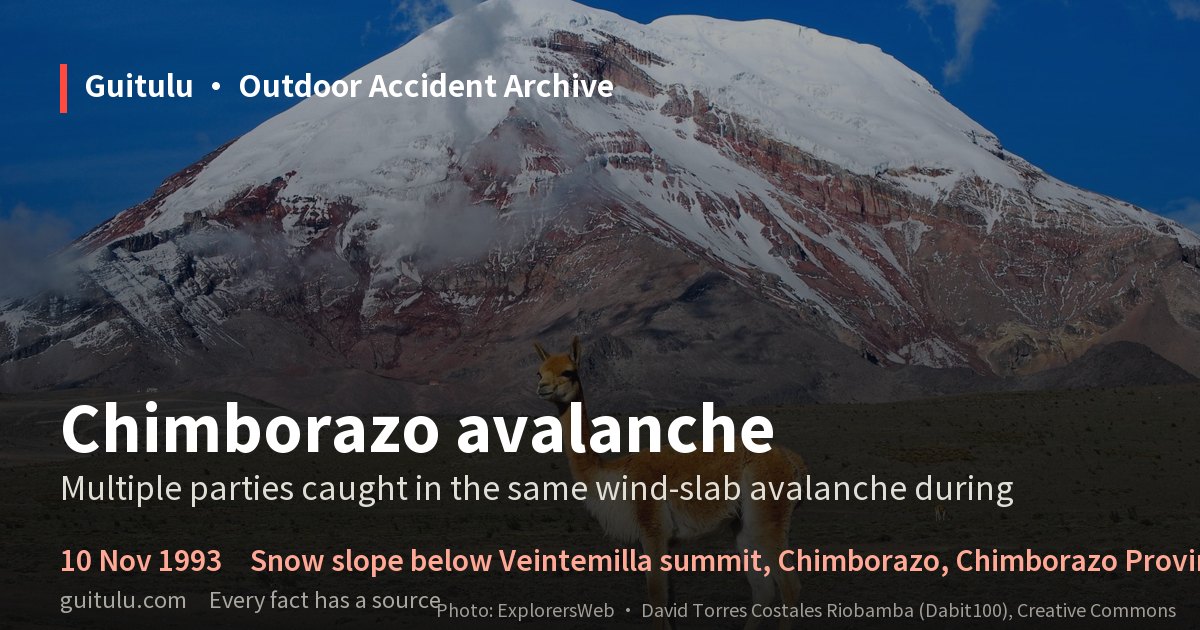
Multiple parties caught in the same wind-slab avalanche during descent; 10 killed
The bodies were located and dug out at the time; three other bodies were found on the mountain in 2015, but whether they belonged to victims of this accident has not been confirmed
The number at the end of a paragraph is how many facts it rests on; open it to see each fact and how well it is sourced:
Multiple sourcesSingle source. Conflicting accounts and speculation are kept out of the narrative.
Reported places along the route (illustrative)Schematic
Scroll down and the map flies to where each part happened. The line is Schematic, The places mentioned in reports are connected in sequence, showing only the approximate direction, not the actual track. Sources for the place coordinates are given in places.json.
01
Full route
The locations mentioned in reports are connected in sequence to show the approximate course of events (schematic).
On their descent, Douillet and his remaining five French clients encountered signs of a fractured wind slab and only then realised that a huge avalanche had occurred. F05
Many climbers, including several from France, searched the avalanche debris and recovered the bodies. F07
On 10 November, several parties set out from the Whymper Refuge on Chimborazo to climb to the summit. F01
The other two parties and the three French climbers from Douillet's party who had turned back were caught in the avalanche and died. F06
Three of the eight clients turned back partway because of the cold. F03
Two other parties, one consisting of two Ecuadorians and one Swiss climber, and the other of three French climbers and one Ecuadorian, reached the summit ahead of Douillet's party and began descending. F04
French guide Bruno Douillet set out for the summit with eight clients. F02
According to the director of the Ecuadorian Mountain Guides Association, ten climbers were killed by an avalanche on Chimborazo in November 1993, at almost the same location as the 2021 avalanche. F08
Behind the Carrel Refuge (altitude 4800 metres) are memorials to those who died on Chimborazo, including one to the Colombian, French and Swiss climbers who died on 10 November 1993. F10
Since November 2012, the Ecuadorian government has prohibited climbing Chimborazo without a certified mountain guide. F12
In August 2015, mountain guides found three frozen bodies while climbing Chimborazo. F13
The three bodies were buried under ice at approximately 5650 metres, still wearing backpacks, with a camera nearby. F14
Under each fact is a verbatim quote from the original. "Single source" means only one outlet mentioned it; "Accounts differ" means sources contradict each other and this site adopts neither side; "Speculation" is an inference by a reporter or a person involved, not a fact.
According to American Alpine Journal, Two other parties, one consisting of two Ecuadorians and one Swiss climber, and the other of three French climbers and one Ecuadorian, reached the summit ahead of Douillet's party and began descending.
Quotes from the original 2
“made rapid progress to the top ahead of them and started back down”
According to American Alpine Journal, On their descent, Douillet and his remaining five French clients encountered signs of a fractured wind slab and only then realised that a huge avalanche had occurred.
Quotes from the original 1
“they came to a break in the windslab and realized that a gigantic avalanche had occurred”
According to American Alpine Journal, The other two parties and the three French climbers from Douillet's party who had turned back were caught in the avalanche and died.
AAJ uses the wording their three French companions, referring to three French climbers in Douillet's party, inferred to be the three of the eight clients who turned back.
According to the director of the Ecuadorian Mountain Guides Association, ten climbers were killed by an avalanche on Chimborazo in November 1993, at almost the same location as the 2021 avalanche.
Climbing and Climbing share the same source; ExplorersWeb gives the year as 1994, see the entry on the conflicting year. All sources agree that ten people died.
Quotes from the original 3
“ten climbers were killed on Chimborazo by another avalanche in almost exactly the same spot”
Accounts differ on the nationalities of those killed: the AAJ report mentions Ecuadorians, a Swiss climber and French climbers; the memorial lists 3 Colombians, 6 French climbers and 1 Swiss climber; BBC says they were 7 French climbers and 3 Ecuadorian guides.
The three accounts cannot all be correct, so a specific breakdown by nationality cannot be given.
According to Mountains of Travel Photos, Behind the Carrel Refuge (altitude 4800 metres) are memorials to those who died on Chimborazo, including one to the Colombian, French and Swiss climbers who died on 10 November 1993.
A single source, a photo caption on a travel photography website.
Quotes from the original 2
“Just behind the Carrel Refuge (4800m) are monuments to those who have died on Chimborazo”
According to Mountains of Travel Photos, The memorial bears an inscription in Spanish, meaning roughly “These young people died because of their love of the mountains”.
According to Carreras de Montaña, Since November 2012, the Ecuadorian government has prohibited climbing Chimborazo without a certified mountain guide.
A single source, and a climbing guide article; it cannot be said that this accident directly prompted the ban.
Quotes from the original 1
“desde noviembre de 2012, el gobierno ecuatoriano prohibió escalar el Chimborazo sin contar con un guía de montaña certificado”
Officials speculated that the three bodies might belong to climbers who went missing in an avalanche twenty years earlier. Investigators were checking and asked relatives of the missing French climbers to help confirm their identities. There has been no confirmation to date.
This is conjecture; their identities have not been confirmed, and it cannot be established that they were the same party involved in the 1993 accident.
Quotes from the original 2
“investigators were working to determine if the remains were those of the climbers”
According to BBC, Investigators said the frozen bodies would first have to thaw naturally before they could be examined. Forensic experts hoped to avoid damaging the clothing, as it might provide clues to their identities and the time of death.
Quotes from the original 2
“the bodies would have to be left to defrost naturally before they can be examined”
According to Climbing, According to the director of the Ecuadorian Mountain Guides Association, the October 2021 avalanche on Chimborazo was the deadliest accident on an Ecuadorian mountain since November 1993.
Climbing and Outside quoted the same association director.
Quotes from the original 2
“the deadliest accident on an Ecuadorian peak since November 1993”
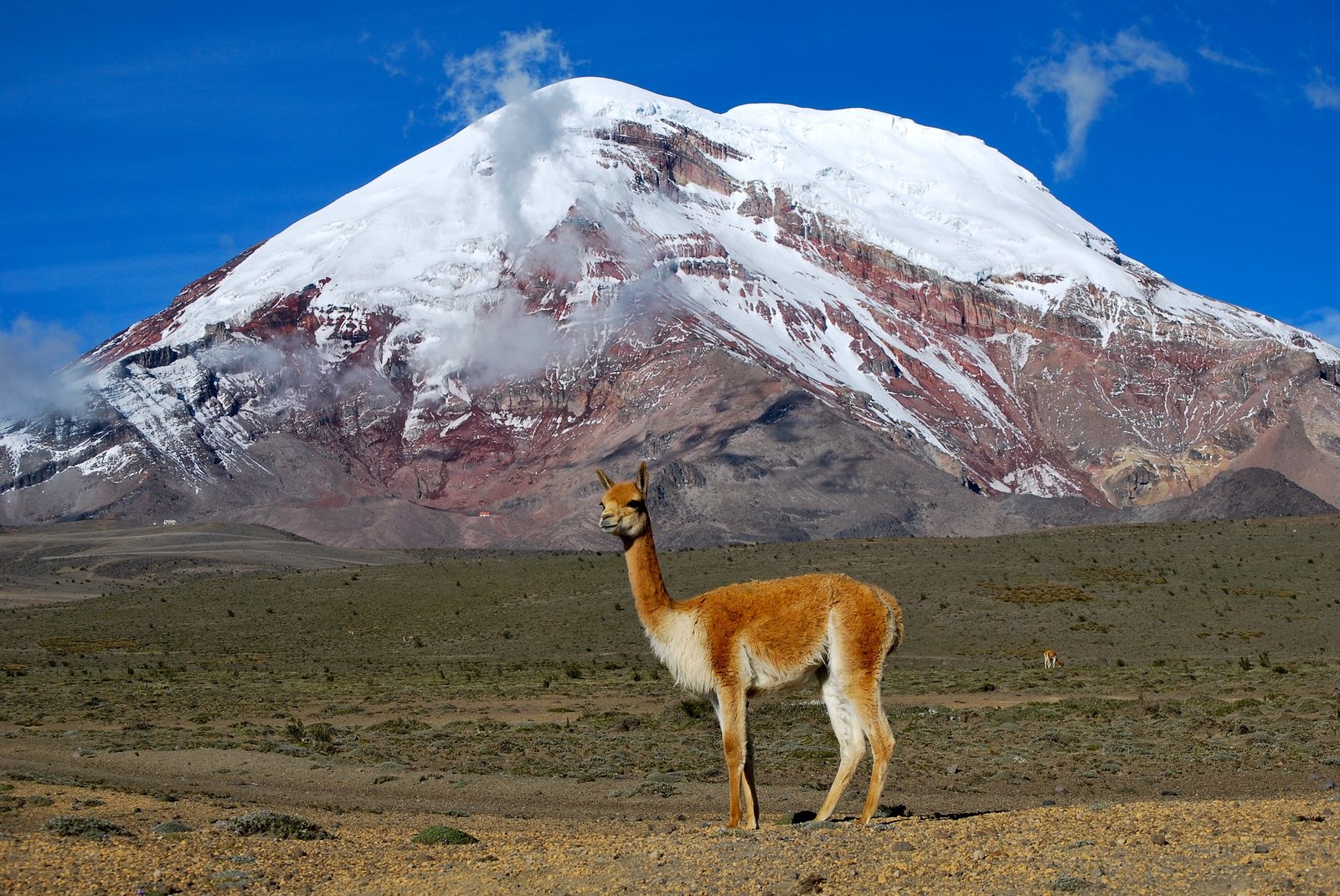
According to BBC, Chimborazo is Ecuador's highest peak, at approximately 6268 metres above sea level. It is a dormant volcano frequently visited by mountaineers.
Quotes from the original 2
“Chimborazo is Ecuador’s highest mountain at 6,268m”
There are two accounts of the year of the accident: the monument and Climbing reports give November 1993, while retrospectives by BBC, AFP and ExplorersWeb give 1994 (AFP gives between 1994 and 1995).
The American Alpine Journal article gives only 10 November, without a year, and was published in the 1994 volume.
 GuituluGlobal Outdoor Accident Archive