The number at the end of a paragraph is how many facts it rests on; open it to see each fact and how well it is sourced:
Multiple sourcesSingle source. Conflicting accounts and speculation are kept out of the narrative.
Reported places along the route (schematic)Schematic
Scroll down and the map flies to where each part happened. The line is Schematic, Connects the reported places along the route in sequence; it shows only the approximate direction, not the actual track.
01
Full route
The locations mentioned in reports are connected in sequence to show the approximate route (illustrative).
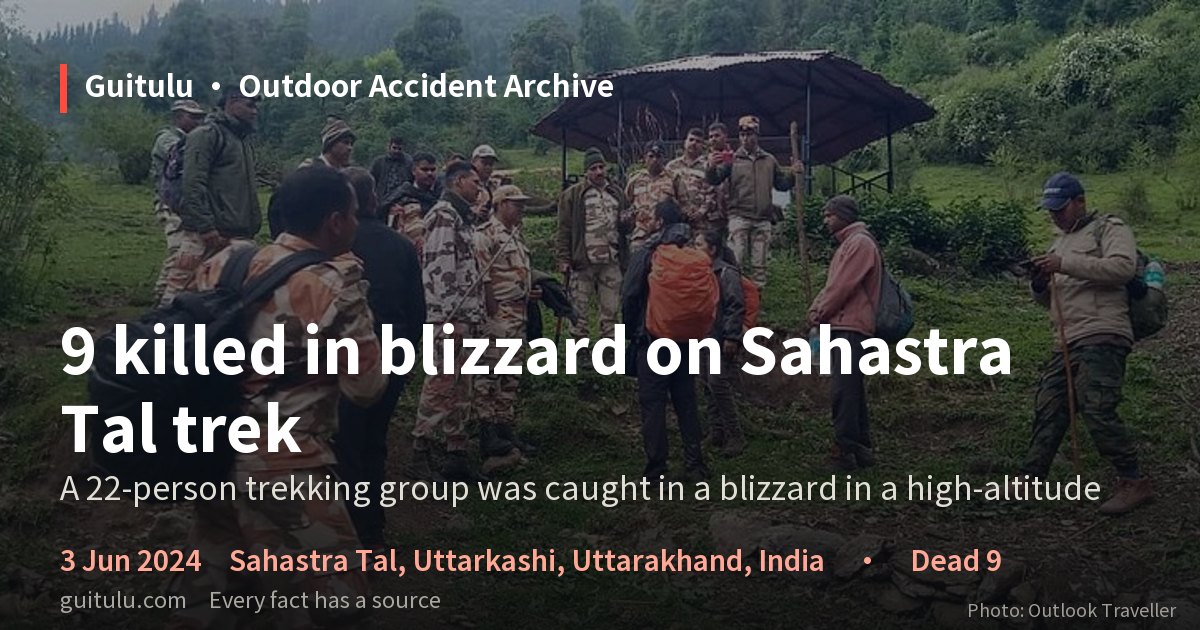
A group of 22 people set out from Uttarkashi on 29 May with the local travel agency Himalayan View, beginning a trek of approximately 35 kilometres to Sahastra Tal. F01
According to reports, on the morning of 3 June, 20 people, including 3 guides, left the Lamb Tal camp (approximately 4268 metres) for a same-day return trip to Sahastra Tal; another 2 people remained at the camp. F09
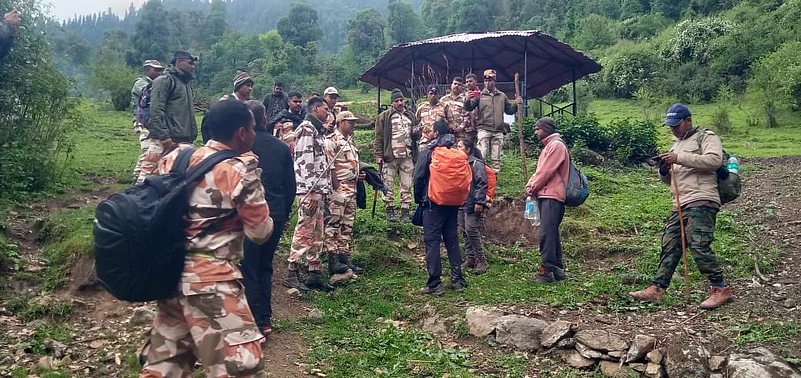
On 4 June, 4 rescue teams from the Nehru Institute of Mountaineering, the Indo-Tibetan Border Police, the State Disaster Response Force and the state sports department set out on foot to search for the group; the border police team encountered 2 members who were descending on the way. F14
A guide descended to look for a mobile phone signal and reported the emergency on the evening of 4 June. F12
On 5 June, the State Disaster Response Force rescued 11 survivors and took them to the Sahastradhara helipad, and recovered 5 bodies from the scene. F19
The Indian Air Force began helicopter rescue operations in the early hours of 5 June. F17
On 6 June, the State Disaster Response Force recovered another 4 bodies; Uttarakhand police said on social media that the rescue operation to find the stranded hikers had been completed. F21
On 6 June, on the chief minister's instructions, the Uttarakhand government's chief secretary ordered a magisterial inquiry, to be conducted by the Garhwal divisional commissioner, with a report to be submitted as soon as possible. F23
After post-mortem examinations in Uttarkashi, the 9 bodies were transported back to Bangalore and handed over to their families for funeral arrangements. F25
Under each fact is a verbatim quote from the original. "Single source" means only one outlet mentioned it; "Accounts differ" means sources contradict each other and this site adopts neither side; "Speculation" is an inference by a reporter or a person involved, not a fact.
A group of 22 people set out from Uttarkashi on 29 May with the local travel agency Himalayan View, beginning a trek of approximately 35 kilometres to Sahastra Tal.
Quotes from the original 2
“A 22-member trekking team was sent by Himalayan View Trekking Agency, Maneri, on May 29 on a 35-km long trek from Uttarkashi.”
Members of the group belonged to the Karnataka Mountaineering Association (KMA), and the trip was part of the association's high-altitude trekking training programme.
Quotes from the original 2
“The party were members of the Karnataka Mountaineering Association (KMA) out of Bengaluru”
According to Outlook Traveller, According to reports, a preliminary investigation by Uttarkashi police indicated that the travel agency may have been negligent, including by failing to conduct comprehensive health assessments and failing to have a guide accompany the group to the summit; this was the police's preliminary account.
Quotes from the original 1
“The operator reportedly did not conduct comprehensive health assessments of the trekkers and failed to provide guides at the summit.”
According to Outlook Traveller, Guide Rajesh Thakur disputed the allegations, saying that all members were experienced trekkers and had provided health certificates.
Quotes from the original 1
“all members were experienced trekkers and had provided their health certificates”
According to Outlook Traveller, A Uttarakhand tourism official said that satellite phones involved national security and that currently only the State Disaster Response Force was permitted to carry them.
Quotes from the original 1
“Only the State Disaster Response Force (SDRF) can carry them.”
According to Outlook Traveller, Environmentalists said that Uttarakhand lacked a unified standard operating procedure for trekking; the Uttarkashi district magistrate said that relevant guidelines were being developed.
Quotes from the original 2
“the state lacks any standardised operating procedure for the trekking sector”
According to Outdoor Journal, According to reports, on the morning of 3 June, 20 people, including 3 guides, left the Lamb Tal camp (approximately 4268 metres) for a same-day return trip to Sahastra Tal; another 2 people remained at the camp.
Quotes from the original 2
“On the morning of June 3 the KMA group of 20, including three guides, embarked on a day hike from their campsite at the village of Lamb Tal (4,268m)”
Accounts differ on the date of the storm: the KMA secretary said the group took shelter beside a large rock because of bad weather on 3 June; Bangkok Post, citing a Karnataka official, said the blizzard struck at around 2 p.m. on Tuesday (4 June); ETV Bharat reported that the group lost its way because of the weather on 4 June.
Sources use different starting dates; most accounts from those involved point to 3 June
Quotes from the original 3
“On June 3, due to bad weather, they all took shelter at the big boulder.”
According to Outdoor Journal, According to reports, at around 11 a.m. the following day (4 June), only a few members who were still physically able could leave the shelter and descend to seek help; the others stayed where they were.
Quotes from the original 1
“The survivors were unable to move from their shelter until 11:00 a.m. the following morning, June 4, and even then, only a few of the party was well enough to go for help.”
According to ThePrint, According to the KMA secretary's account, people were sent from the lower camp with two tents and sleeping bags, and the cook brought hot water, enabling the remaining members to survive.
According to ThePrint, On 4 June, 4 rescue teams from the Nehru Institute of Mountaineering, the Indo-Tibetan Border Police, the State Disaster Response Force and the state sports department set out on foot to search for the group; the border police team encountered 2 members who were descending on the way.
Quotes from the original 2
“On 4 June, four rescue teams from NIM, ITBP, SDRF, and the Uttarakhand government sports department set out on foot to locate the trekkers.”
According to ThePrint, On the evening of 4 June, the chief secretaries of Karnataka and Uttarakhand communicated and coordinated, and sought a helicopter rescue through the Indian Mountaineering Foundation.
Several quotations come from different reports by the same media outlet and are counted as one source
Quotes from the original 2
“This was followed by communication between the chief secretaries of Karnataka and Uttarakhand, and the principal secretary of disaster management, Uttarakhand.”
According to ThePrint, According to reports, at 8:40 a.m. on 5 June, an Air Force Mi-17 and two Cheetah helicopters arrived at the Matli helipad in Uttarkashi.
Quotes from the original 1
“at 8:40 am, the IAF helicopters—one MI-17 and two Cheetahs—reached the Matli helipad in Uttarkashi”
According to Telangana Today, On 5 June, the State Disaster Response Force rescued 11 survivors and took them to the Sahastradhara helipad, and recovered 5 bodies from the scene.
Quotes from the original 1
“a total of five bodies have also been recovered from the incident site by the rescue team”
According to ANI, On 6 June, the State Disaster Response Force recovered another 4 bodies; Uttarakhand police said on social media that the rescue operation to find the stranded hikers had been completed.
Quotes from the original 1
“recovered four more bodies from the incident site after five bodies were recovered yesterday”
On 6 June, on the chief minister's instructions, the Uttarakhand government's chief secretary ordered a magisterial inquiry, to be conducted by the Garhwal divisional commissioner, with a report to be submitted as soon as possible.
Quotes from the original 2
“State Chief Secretary Radha Raturi asked the Garhwal Commissioner to conduct an impartial investigation and provide his report to the government as soon as possible.”
After post-mortem examinations in Uttarkashi, the 9 bodies were transported back to Bangalore and handed over to their families for funeral arrangements.
Quotes from the original 2
“All nine bodies have arrived and been handed over to their respective families for final rites.”
According to ThePrint, The KMA secretary believed the accident was caused solely by bad weather, saying the members were well trained and the terrain was not difficult.
Quotes from the original 2
“This tragedy happened only due to this fatal bad weather.”
According to ThePrint, According to the KMA secretary, the members were aged between 34 and 71 and were described by the secretary as physically fit, experienced hikers.
Quotes from the original 1
“The group comprised physically fit, experienced trekkers in the age group of 34 to 71, he said.”
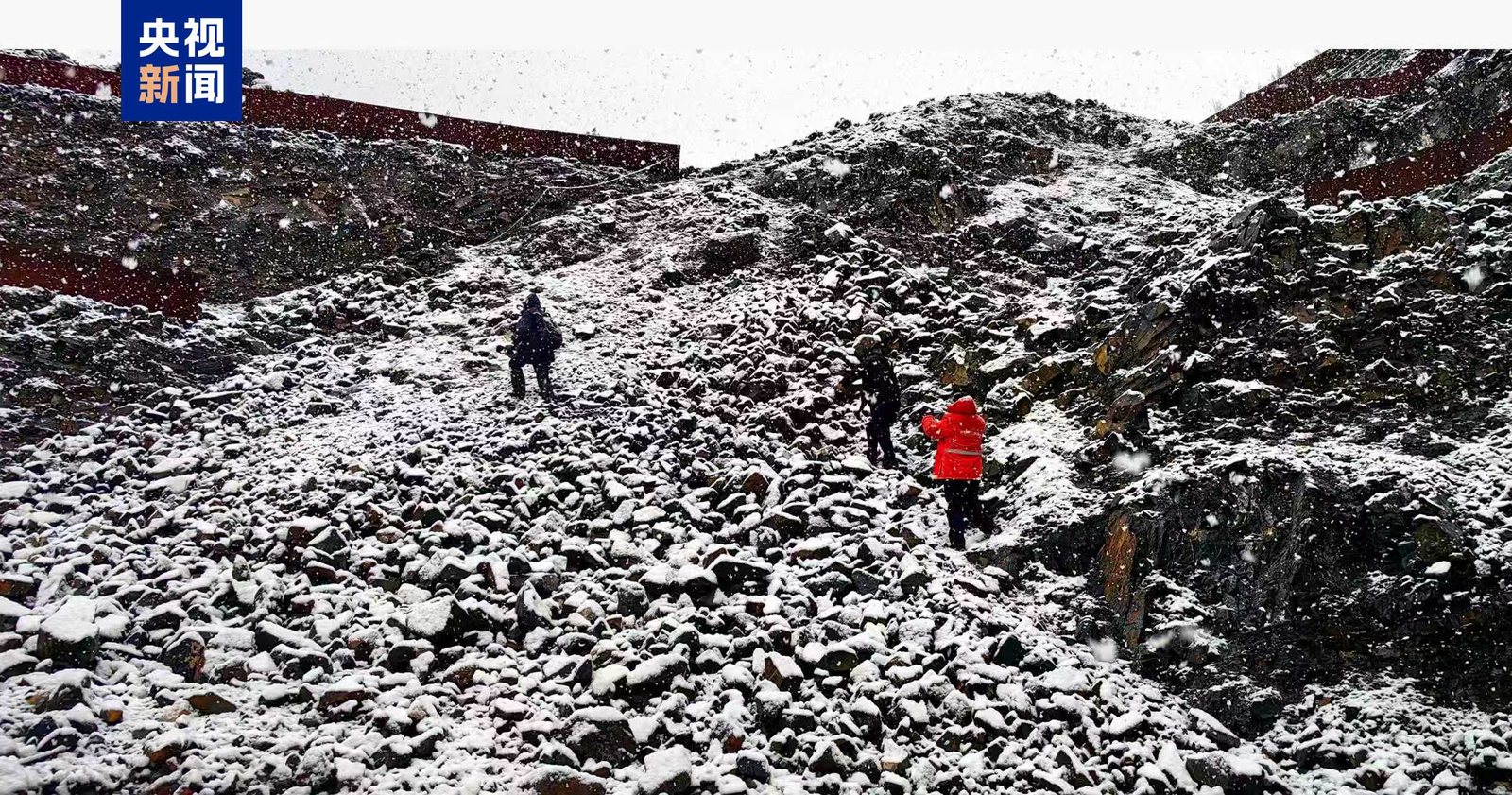
Visibility was almost zero in the strong wind and heavy snow, and the members' jackets and gloves flapped in the wind. The group took shelter beside a large rock.
Quotes from the original 3
“because of heavy wind, their windcheater, jackets and gloves were flying and visibility was zero”
The group spent the night in the open. According to the KMA secretary's account, the members developed hypothermia due to the cold, exhaustion and lack of oxygen, and some began to collapse during the night.
Quotes from the original 2
“Due to intense cold and inclement weather, people went into hypothermia”
According to ThePrint, According to the KMA secretary, survivors said they had brought food, but the wind was too strong for them to open their lunch boxes, so they could not eat.
Quotes from the original 1
“They were carrying food but could not eat because they were unable to open the tiffin boxes amid strong winds.”
According to Outlook Traveller, A guide said bad weather disrupted communications, and they waited all night before re-establishing contact with the camp.
Quotes from the original 1
“adverse weather conditions led to communication disruptions, forcing them to wait an entire night before re-establishing contact with the base camp team”
According to ThePrint, The commentator noted that the itinerary on the KMA website gave a one-way travel time of 4 hours from Lambtal to Sahastra Tal on the final day, but the journey actually took nearly 8 hours.
Quotes from the original 1
“stating it would take four hours one way, while participants took nearly eight hours to reach one way to Sahastra Tal”
According to ThePrint, The commentator argued that the itinerary was described as “moderate” in difficulty and had no buffer or acclimatisation days, while the members spanned a wide age range; this was the author's assessment.
Quotes from the original 1
“The joint organisers prepared an itinerary calling it a ‘moderate’ trek without buffer/ acclimatisation days, despite the diverse age group of 30 to 70 years.”
According to ThePrint, The commentator argued that allowing the members to remain on the mountain until 3 p.m., despite knowing that the weather often worsens on June afternoons, was an error of judgment; this was the author's assessment.
Quotes from the original 1
“Allowing trekkers to remain in the mountains until 3:00 pm, despite knowing that weather typically worsens by 2:00 pm, reflected poor judgement.”
According to ThePrint, At the time the article was published, the commentator noted that no accident report detailing how the nine people died had yet been publicly released.
Quotes from the original 1
“No accident report detailing the circumstances under which nine lives were lost has been shared.”
According to ThePrint, According to sources cited in a commentary article, the rescue cost approximately 50 million rupees (5 crore), and it was unclear who would bear the cost.
Quotes from the original 1
“Sources further indicate that the entire rescue operation cost approximately Rs 5 crore”
 GuituluGlobal Outdoor Accident Archive