GuituluGlobal Outdoor Accident Archive 中文
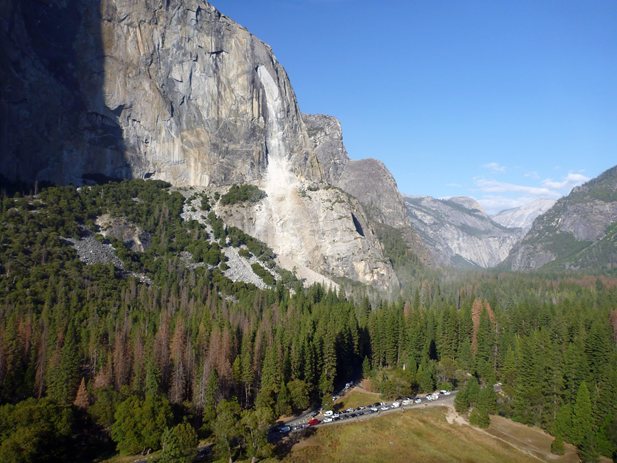
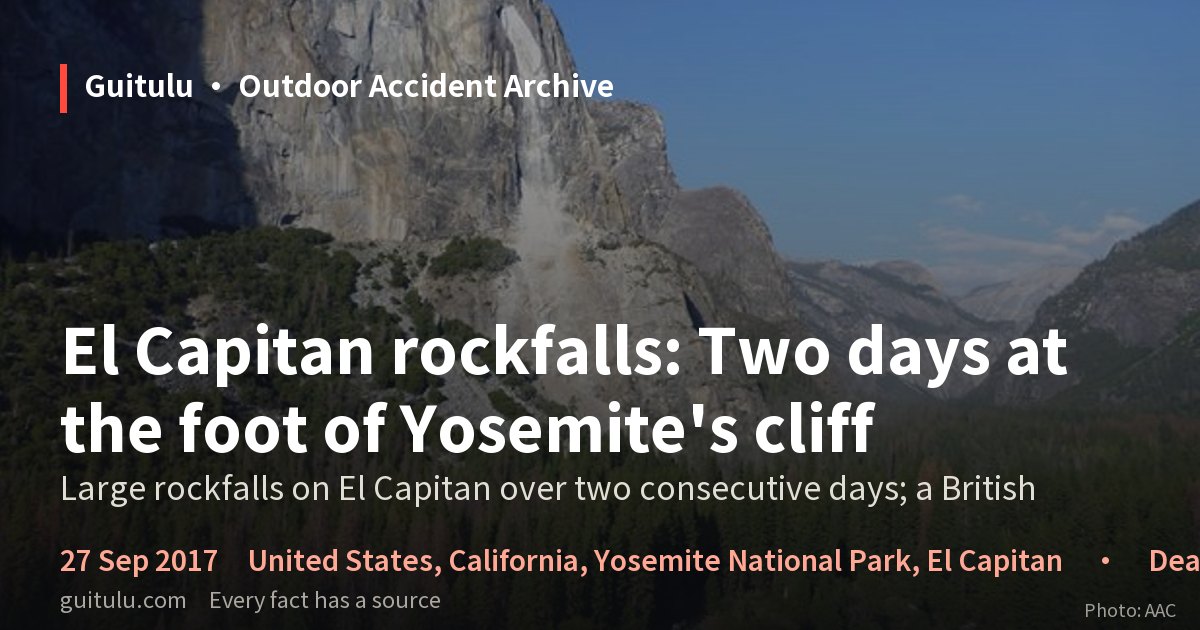
El Capitan's southeast face viewed from Yosemite Valley; the rockfalls occurred on this side of the cliff

Archive / Other

El Capitan rockfalls: Two days at the foot of Yosemite's cliff

Large rockfalls on El Capitan over two consecutive days; a British climber died at the foot of the cliff

The park has released the identity of the deceased and published an analysis of the rockfall volumes

Photo: AAC

Date
Autumn
Place
United States, California, Yosemite National Park, El CapitanUnited States › California · Sierra Nevada-119.628°E 37.731°N
Activity
Rock climbingInvolves: Rockfall and collapseTwo British climbers, a married couple
Casualties
Dead 1 Injured 2Rockfall on 27 September killed one person and seriously injured another; a larger rockfall on 28 September caused a head injury to a motorist
Material
43 facts · 10 sources2 accounts differ and are shown side by side

01What happened

In September 2017, Andrew Foster, a 32-year-old climber from Wales, and his wife Lucy came to Yosemite National Park in the United States to mark their first wedding anniversary. Both were active members of the Cardiff University Mountaineering Club. The park said they had come to climb, but were not climbing when the incident occurred.Facts it rests onF38Multiple sourcesThe person killed was Andrew Foster, a 32-year-old climber from Wales in the United Kingdom.F03Multiple sourcesThe trip to Yosemite was to mark the couple's first wedding anniversary.F39Multiple sourcesThe Fosters were active members of the Cardiff University Mountaineering Club and had taught beginners to climb at the club.F08Multiple sourcesAccording to a park statement, the British couple had come to the park to climb but were not climbing when the rockfall occurred.

El Capitan's southeast face viewed from Yosemite Valley; the rockfalls occurred on this side of the cliffPhoto source: AAC

At about 1:55 p.m. local time on 27 September, a slab of rock detached near the popular Waterfall Route on El Capitan's East Buttress. The couple were walking at the foot of the cliff and had reportedly just descended from the East Buttress route. It was peak climbing season, and at least 30 climbers were on the rock face. Seven rockfalls occurred there that day, with a combined volume of about 450 cubic metres.Facts it rests onF12Multiple sourcesAt about 1:55 p.m. local time on 27 September, a rockfall occurred near the popular Waterfall Route on El Capitan's East Buttress.F09Multiple sourcesThe two were walking at the foot of El Capitan's cliff when the rockfall occurred.F10Single sourceThe two were walking along the foot of the cliff after retreating from the East Buttress route.F18Multiple sourcesThe rockfall occurred during peak climbing season on El Capitan, with at least 30 climbers on the rock face.F15Multiple sourcesThere were seven rockfalls on 27 September, with a total volume of about 450 cubic metres, equivalent to about 1,300 tonnes.

Dust raised by a rockfall envelops a valley road as vehicles travel through itPhoto source: NPR

Park rangers and search and rescue teams entered the rockfall area and found the couple: one had died and the other was seriously injured. Lucy, who was seriously injured, was flown out of the park by helicopter for treatment. According to a witness account cited in the American Alpine Club's review, Foster was rushing to shield his wife when he was struck; Lucy also later told her family that her husband had saved her by throwing himself over her.Facts it rests onF21Multiple sourcesAfter the first rockfall, park rangers and search and rescue teams entered the rockfall area and found the two: one had died and the other was seriously injured.F22Multiple sourcesThe seriously injured wife was flown out of the park by helicopter for treatment.F19Single sourceThe American Alpine Club's review quoted a witness as saying that Foster was rushing over to shield his wife with his body when he was struck.F20Multiple sourcesFoster's aunt told The Times that Lucy had told her afterward that her husband had saved her by immediately throwing himself over her when he saw the danger.

The East Buttress area of El Capitan, with a yellow line marking the estimated extent of the rockfallPhoto source: NBC News

On the afternoon of 28 September, a much larger rockfall occurred in the same area. Its volume was about 10,000 cubic metres, making it the 29th largest rockfall on record in Yosemite. Debris struck a car, injuring the driver's head; the driver was flown to hospital by helicopter. The road on the north side leading out of Yosemite Valley was temporarily closed.Facts it rests onF28Multiple sourcesOn the afternoon of 28 September, a much larger rockfall occurred in the same area.F29Multiple sourcesThe 28 September rockfall had a volume of about 10,000 cubic metres: the American Alpine Club recorded it as 10,250 cubic metres (about 30,000 tonnes); a paper measured the rock slab itself at about 9,811 cubic metres, with its impact dislodging another approximately 430 cubic metres from the cliff below.F31Multiple sourcesThe 28 September rockfall was the 29th largest on record in Yosemite.F32Multiple sourcesDebris from the 28 September rockfall struck a car, injuring the driver's head.F33Multiple sourcesThe person injured in the 28 September rockfall was flown to hospital by helicopter.F34Multiple sourcesAfter the 28 September rockfall, Northside Drive, the road on the north side leading out of Yosemite Valley, was temporarily closed.

Rockfall dust rising, photographed by a climber on the cliffPhoto source: NBC News · Peter Zabrok

This was the first death from a rockfall in Yosemite in 18 years; the previous one was in 1999. According to a paper co-authored by a park geologist, sporadic rockfalls had occurred in this area of El Capitan since October 2010, and the collapses over these two days developed upward from the location of the first rockfall.Facts it rests onF01Multiple sourcesBefore this, the last fatal rockfall in Yosemite had been on 13 June 1999, when climber Peter Terbush was struck and killed by falling rock at Glacier Point, 18 years earlier.F02Single sourceAccording to the paper, rockfall activity began in this area of El Capitan in October 2010, followed by sporadic rockfalls over the next few years, reaching a peak on 27–28 September 2017.F06Multiple sourcesThe rockfalls generally progressed upward from the location of the first rockfall, in a progressive collapse.

The number at the end of a paragraph is how many facts it rests on; open it to see each fact and how well it is sourced: Multiple sourcesSingle source. Conflicting accounts and speculation are kept out of the narrative.

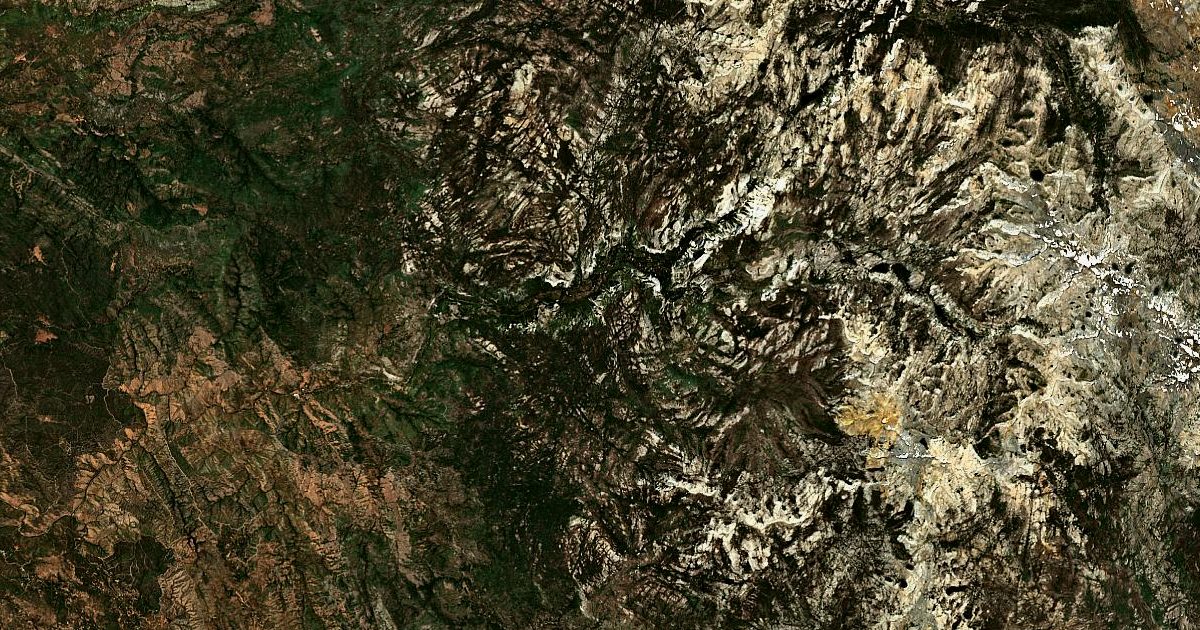
  • Reported places along the way (schematic)Schematic

Satellite imagery Sentinel-2 cloudless 2024 © EOX · Terrain AWS Terrain Tiles · Orange line is schematic · Place coordinates not individually verified

Route review

5 scenes to understand what happened

Scroll down and the map flies to where each part happened. The line is Schematic, A line connects the places mentioned in reports in sequence. It shows only the approximate direction, not the actual track. Sources for place coordinates are in places.json.

01

Full route

The locations mentioned in reports are connected in sequence to show the approximate course of events (schematic).

04

Search and rescue at the cliff base

Search and rescue teams found the couple at the foot of the cliff; one had died and the other was seriously injured. According to the American Alpine Club, the injured person was hoisted by helicopter to El Capitan Meadow, then transferred to hospital.Facts it rests onF21Multiple sourcesAfter the first rockfall, park rangers and search and rescue teams entered the rockfall area and found the two: one had died and the other was seriously injured.F23Single sourceThe injured person was first taken by helicopter short-haul to El Cap Meadow, then transferred to a nearby hospital.

05

Larger collapse the next day

On 28 September, the same area collapsed again, with a volume of about 10,000 cubic metres. Debris struck a car, and the north-side road was temporarily closed.Facts it rests onF28Multiple sourcesOn the afternoon of 28 September, a much larger rockfall occurred in the same area.F29Multiple sourcesThe 28 September rockfall had a volume of about 10,000 cubic metres: the American Alpine Club recorded it as 10,250 cubic metres (about 30,000 tonnes); a paper measured the rock slab itself at about 9,811 cubic metres, with its impact dislodging another approximately 430 cubic metres from the cliff below.F32Multiple sourcesDebris from the 28 September rockfall struck a car, injuring the driver's head.F34Multiple sourcesAfter the 28 September rockfall, Northside Drive, the road on the north side leading out of Yosemite Valley, was temporarily closed.

02Timeline

  1. According to the paper, rockfall activity began in this area of El Capitan in October 2010, followed by sporadic rockfalls over the next few years, reaching a peak on 27–28 September 2017. F02

  2. The trip to Yosemite was to mark the couple's first wedding anniversary. F03

  3. The seriously injured wife was flown out of the park by helicopter for treatment. F22

  4. The two were walking at the foot of El Capitan's cliff when the rockfall occurred. F09

  5. At about 1:55 p.m. local time on 27 September, a rockfall occurred near the popular Waterfall Route on El Capitan's East Buttress. F12

  6. There were seven rockfalls on 27 September, with a total volume of about 450 cubic metres, equivalent to about 1,300 tonnes. F15

  7. After the first rockfall, park rangers and search and rescue teams entered the rockfall area and found the two: one had died and the other was seriously injured. F21

  8. On the afternoon of 28 September, a much larger rockfall occurred in the same area. F28

  9. Debris from the 28 September rockfall struck a car, injuring the driver's head. F32

  10. After the 28 September rockfall, Northside Drive, the road on the north side leading out of Yosemite Valley, was temporarily closed. F34

  11. A Yosemite National Park geologist later told the Associated Press that, after the two large rockfalls, the risk of another giant rockfall was no higher than usual. F35

  12. In October and November 2017, several smaller rockfalls occurred in the same area. F36

03Lessons

Closed areas and rules

Rockfall areas can remain active

After the first rockfall on 27 September, several more followed that day, and a larger collapse the next day developed upward from the location of the first rockfall. The American Alpine Club's review notes that rockfall areas often remain active for hours, days or even months, and advises avoiding areas where rockfalls have recently occurred.Facts it rests onF15Multiple sourcesThere were seven rockfalls on 27 September, with a total volume of about 450 cubic metres, equivalent to about 1,300 tonnes.F06Multiple sourcesThe rockfalls generally progressed upward from the location of the first rockfall, in a progressive collapse.F28Multiple sourcesOn the afternoon of 28 September, a much larger rockfall occurred in the same area.F42Single sourceThe American Alpine Club's review advised that rockfall areas often remain active for hours, days or even months, and that areas where rockfalls have recently occurred should be avoided. Fresh debris or damaged vegetation at the start of a climb are signs of recent rockfall, while cracking and popping sounds from a cliff are often precursors to rockfall.

Weather and retreat

Clear weather does not mean no rockfall risk

The weather was reportedly clear on the day of the incident. The American Alpine Club's review notes that most rockfalls in Yosemite occur during rain, snowmelt or freezing periods in winter and early spring, but large rockfalls like those on El Capitan have also occurred in warm, stable weather.Facts it rests onF26Single sourceThe weather was clear on the day of the incident.F41Single sourceThe American Alpine Club's review noted that rockfalls in Yosemite mostly occur during periods of heavy rain, snowmelt or freezing in winter and early spring, but large rockfalls like those at El Capitan have also occurred in warm, stable weather.

Teams and decisions

Spend less time at the foot of cliffs

The couple were not climbing when the incident occurred; they were walking at the foot of the cliff. The review recommends minimising time spent approaching or bivouacking at the foot of cliffs, especially in known rockfall areas. Fresh debris and damaged vegetation at the foot of a cliff, and cracking sounds from the rock face, are signs to watch for. A helmet cannot stop large falling rocks, but can protect against flying fragments.Facts it rests onF09Multiple sourcesThe two were walking at the foot of El Capitan's cliff when the rockfall occurred.F42Single sourceThe American Alpine Club's review advised that rockfall areas often remain active for hours, days or even months, and that areas where rockfalls have recently occurred should be avoided. Fresh debris or damaged vegetation at the start of a climb are signs of recent rockfall, while cracking and popping sounds from a cliff are often precursors to rockfall.F43Single sourceThe American Alpine Club's review also noted that helmets cannot stop large falling rocks but can protect against fragments scattered by rockfalls. Time spent approaching or bivouacking at the foot of a cliff should be kept to a minimum, especially in known rockfall areas.

04Fact list 43 facts

Under each fact is a verbatim quote from the original. "Single source" means only one outlet mentioned it; "Accounts differ" means sources contradict each other and this site adopts neither side; "Speculation" is an inference by a reporter or a person involved, not a fact.

  1. F01Multiple sourcesBackground

    Before this, the last fatal rockfall in Yosemite had been on 13 June 1999, when climber Peter Terbush was struck and killed by falling rock at Glacier Point, 18 years earlier.

    Quotes from the original 3

    “It had been 18 years since the last rockfall-related fatality in the park, when climber Peter Terbush was killed by a rockfall from Glacier Point on June 13, 1999.”

    AAC ·

    “It has been 18 years since the last rockfall-related fatality in Yosemite National Park.”

    NPR · 2017-09-28

    “In that incident, rock climber Peter Terbush was killed by a rockfall from Glacier Point June 13 1999.”

    NPR · 2017-09-28
  2. F02Single sourceBackground

    According to GSA Today, According to the paper, rockfall activity began in this area of El Capitan in October 2010, followed by sporadic rockfalls over the next few years, reaching a peak on 27–28 September 2017.

    Quotes from the original 1

    “This area of El Capitan became active in Oct. 2010 (the first activity since at least 1976), with rockfalls occurring sporadically over the next several years, culminating in the large rockfalls on 27–28 Sept. 2017”

    GSA Today · 2018-06-12
  3. F03Multiple sourcesPlan

    The trip to Yosemite was to mark the couple's first wedding anniversary.

    Quotes from the original 2

    “They decided to take a trip to Yosemite in Northern California to commemorate their first wedding anniversary.”

    NBC News · 2017-09-28

    “Their trip to Yosemite this month had been a “dream holiday” to celebrate their one-year wedding anniversary, the Guardian reported.”

    The Gazette · 2017-09-29
  4. F04Multiple sourcesAftermath

    The injured wife was Lucy, 28, who was hospitalised for treatment afterward.

    Quotes from the original 3

    “The falling rock also seriously injured Foster’s wife, 28-year-old Lucy Foster, according to the BBC”

    The Gazette · 2017-09-29

    “his wife Lucy - who was also hiking - was injured and remains in hospital”

    ITV · 2017-09-29

    “According to aunt Gillian Stephens, Lucy, 28, later told her”

    NBC News · 2017-09-28
  5. F05Single sourceAftermath

    According to GSA Today, After using three-dimensional data to assess the situation, the park concluded that another rockfall capable of reaching the road was unlikely in the short term and subsequently reopened the road.

    Quotes from the original 1

    “indicated low potential for an imminent rockfall that could reach the road, allowing the road to be reopened”

    GSA Today · 2018-06-12
  6. F06Multiple sourcesPost-incident analysis

    The rockfalls generally progressed upward from the location of the first rockfall, in a progressive collapse.

    Quotes from the original 4

    “The rockfall generally propagated upward and outward from the origin of the September 27 rockfall”

    AAC ·

    “the rockfalls generally propagated upward from the location of the first event”

    GSA Today · 2018-06-12

    “The “progressive” nature of the El Cap rockfalls, with several events from the same location”

    AAC ·

    “Typical of progressive exfoliation-type failures”

    GSA Today · 2018-06-12
  7. F07Single sourceEvent

    According to NBC News, Zabrok told NBC that he and two companions had previously spent six nights on the rock face directly below the rockfall area.

    Quotes from the original 1

    “he and the two friends he was climbing with had just spent six nights "directly under the rockfall."”

    NBC News · 2017-09-28
  8. F08Multiple sourcesEvent

    According to a park statement, the British couple had come to the park to climb but were not climbing when the rockfall occurred.

    The reports all cited the same National Park Service statement.

    Quotes from the original 3

    “The victims, a couple visiting the park from Great Britain, were in the park to rock climb but were not climbing at the time of the initial rockfall.”

    KQED · 2017-09-28

    “The officials said the couple were in the park to climb but were not climbing at the time of the fall.”

    NPR · 2017-09-28

    “They were not climbing at the time of the rockfall, park officials said.”

    The Gazette · 2017-09-29
  9. F09Multiple sourcesEvent

    The two were walking at the foot of El Capitan's cliff when the rockfall occurred.

    Quotes from the original 3

    “struck two climbers who were walking along the base of the cliff”

    AAC ·

    “rock debris struck two rock climbers walking along the base of the cliff”

    GSA Today · 2018-06-12

    “were hiking at the bottom of El Capitan when a chunk of granite about 12 stories tall broke free and plunged down”

    AP · 2017-09-29
  10. F10Single sourceMovement

    According to AAC, The two were walking along the foot of the cliff after retreating from the East Buttress route.

    Quotes from the original 1

    “who were walking along the base of the cliff after retreating from the East Buttress route”

    AAC ·
  11. F11SpeculationSpeculation

    Some British media speculated that the two were carrying climbing equipment and may have been looking for the start of a climbing route along the trail.

    ITV and Daily Post used similar wording, possibly from the same news agency report.

    Quotes from the original 2

    “The pair, found with climbing equipment, are believed to have been scouting out the ascent from a trail”

    ITV · 2017-09-29

    “Mr Foster and his wife Lucy are believed to have been looking for the ascent from a trail”

    Daily Post · 2017-09-30
  12. F12Multiple sourcesEvent

    At about 1:55 p.m. local time on 27 September, a rockfall occurred near the popular Waterfall Route on El Capitan's East Buttress.

    Quotes from the original 3

    “occurred at around 1:55 p.m. local time (4:55 p.m. ET) near the Waterfall Route, a popular climbing trail.”

    NBC News · 2017-09-28

    “The rock that killed Andrew Foster dropped around 1:55 p.m. local time near the “Waterfall Route,” a popular climbing route on the East Buttress”

    The Gazette · 2017-09-29

    “The rockslide began near the park's "Waterfall Route" on the East Buttress of El Capitan at around 1:55 p.m. Wednesday afternoon.”

    National Geographic · 2017-09-27
  13. F13Accounts differFound at scene

    Accounts differ on the height from which the first rockfall fell: the National Park Service initially estimated the release point at about 650 feet (about 200 metres) above the base of the cliff; British media reported that the rock slab fell from a height of about 200 metres; a paper co-authored by a park geologist said the slab detached from the southeast face at a height of about 230 metres.

    The park's figure was a preliminary estimate made the day after the event; the paper's figure was calculated afterward using a three-dimensional model.

    Quotes from the original 3

    “The source point is about 650 feet above the base of El Capitan”

    KQED · 2017-09-28

    “plummeted from a height of 200 metres”

    ITV · 2017-09-29

    “a rock slab detached from 230 m up the southeast face of El Capitan”

    GSA Today · 2018-06-12
  14. F14Multiple sourcesFound at scene

    The National Park Service estimated that the irregular slab that detached was about 130 feet (about 40 metres) high, 65 feet (about 20 metres) wide and 3 to 10 feet thick.

    Quotes from the original 2

    “The irregular “sheet” of rock that fell is estimated to be 130 feet tall, 65 feet wide, and 3-10 feet thick.”

    KQED · 2017-09-28

    “the irregular “sheet” that fell was about 130 feet tall, 65 feet wide and three to 10 feet thick”

    The Gazette · 2017-09-29
  15. F15Multiple sourcesEvent

    There were seven rockfalls on 27 September, with a total volume of about 450 cubic metres, equivalent to about 1,300 tonnes.

    Quotes from the original 4

    “A preliminary estimate for the cumulative volume of all seven rockfalls is about 16,000 cubic feet (450 cubic meters), or about 1,300 tons.”

    KQED · 2017-09-28

    “six more rockfalls occurred, for a total volume of about 450 cubic meters”

    AAC ·

    “The cumulative volume of all rockfalls on 27 Sept. was 453.3 ± 42.3 m3”

    GSA Today · 2018-06-12

    “Officials added that there were an estimated seven rockfalls on Wednesday, about the equivalent of 1,300 tons that fell.”

    NBC News · 2017-09-28
  16. F16Accounts differEvent

    Accounts differ on the period over which the six subsequent rockfalls occurred after the first: the National Park Service and the American Alpine Club say approximately 4 hours; a paper co-authored by a park geologist says the following 3 hours.

    Quotes from the original 3

    “Over four hours, six more rockfalls occurred”

    AAC ·

    “one of seven successive rockfalls that took place over a four-hour period that day”

    The Gazette · 2017-09-29

    “Over the next three hours, as the park’s search and rescue team worked to extract the climbers, six more rockfalls originating from the new scar pummeled the base of the cliff.”

    GSA Today · 2018-06-12
  17. F17Single sourceFound at scene

    According to GSA Today, According to a subsequent three-dimensional analysis, the first of the rockfalls on 27 September was the largest, at about 290 cubic metres.

    Quotes from the original 1

    “with the first event being the largest at 290.0 ± 27.8 m3”

    GSA Today · 2018-06-12
  18. F18Multiple sourcesEvent

    The rockfall occurred during peak climbing season on El Capitan, with at least 30 climbers on the rock face.

    This figure came from a park statement cited by the Associated Press.

    Quotes from the original 3

    “The park says at least 30 climbers were on the formation Wednesday during the deadly rock fall.”

    AP · 2017-09-29

    “The park said at least 30 climbers were on the formation Wednesday during the deadly rockfall.”

    NBC News · 2017-09-28

    “The collapses come at the peak of climbing season for El Capitan”

    AP · 2017-09-29
  19. F19Single sourceEvent

    According to AAC, The American Alpine Club's review quoted a witness as saying that Foster was rushing over to shield his wife with his body when he was struck.

    Quotes from the original 1

    “Witnesses reported that he had rushed to shield his wife from the debris when he was hit.”

    AAC ·
  20. F20Multiple sourcesEvent

    Foster's aunt told The Times that Lucy had told her afterward that her husband had saved her by immediately throwing himself over her when he saw the danger.

    The wife's account was relayed to The Times by a family member, and other media cited the newspaper.

    Quotes from the original 3

    “Mrs Foster spoke to her husband's aunt and said she was only alive because Andrew jumped to save her.”

    Daily Post · 2017-09-30

    “Lucy, 28, later told her: "Andrew saved my life. He dived on top of me as soon as he could see what was going to happen."”

    NBC News · 2017-09-28

    “Just before he died, Andrew Foster tried to shield his wife from the falling slab, family members told the Times.”

    The Gazette · 2017-09-29
  21. F21Multiple sourcesEvent

    After the first rockfall, park rangers and search and rescue teams entered the rockfall area and found the two: one had died and the other was seriously injured.

    Quotes from the original 2

    “After the initial rockfall, Yosemite National Park Rangers and the Search and Rescue team entered the area looking for people at the base of the rockfall. Two people were found”

    KQED · 2017-09-28

    “park rangers began searching for people at the base and discovered one fatality and one injury”

    The Gazette · 2017-09-29
  22. F22Multiple sourcesEvent

    The seriously injured wife was flown out of the park by helicopter for treatment.

    Quotes from the original 3

    “The male was found dead and the female was flown out of the park with serious injuries.”

    NBC News · 2017-09-28

    “She was seriously injured and was transported by short-haul helicopter rescue to El Cap Meadow and then to an area hospital for treatment.”

    AAC ·

    “The injured woman was flown to a hospital from the park”

    The Gazette · 2017-09-29
  23. F23Single sourceEvent

    According to AAC, The injured person was first taken by helicopter short-haul to El Cap Meadow, then transferred to a nearby hospital.

    Quotes from the original 1

    “was transported by short-haul helicopter rescue to El Cap Meadow and then to an area hospital for treatment”

    AAC ·
  24. F24Single sourceParticipant's view

    According to KQED, Climber Peter Zabrok, who was on the cliff at the time, believed that rescuers were taking a great risk because three more rockfalls of almost the same size subsequently struck the foot of the cliff.

    Quotes from the original 1

    “It was done at tremendous peril to the rescuers because there were three subsequent rockfalls that were all nearly as big and would have killed anybody at the base”

    KQED · 2017-09-28
  25. F25Single sourceAftermath

    According to KQED, The park reported that everyone else at the scene had been confirmed safe and the search had ended.

    Quotes from the original 1

    “All other people in the area have been accounted for and search efforts have been concluded.”

    KQED · 2017-09-28
  26. F26Single sourceEvent

    According to The Gazette, The weather was clear on the day of the incident.

    Quotes from the original 1

    “which occurred on a day with clear blue skies at the height of climbing season”

    The Gazette · 2017-09-29
  27. F27Multiple sourcesEvent

    When the rockfall occurred, Canadian climber Peter Zabrok and a partner were climbing the Waterfall Route on the right side of El Capitan, above the rockfall.

    Quotes from the original 3

    “Zabrok said he and friends were in the middle of a six-day climb of the Waterfall route on the right side of El Capitan when they saw it.”

    KQED · 2017-09-28

    “said Canadian climber Peter Zabrok, 57, who was scaling El Capitan and was above the rockfall”

    KQED · 2017-09-28

    “Peter Zabrok, 58, a climber making his 58th El Capitan climb on Wednesday”

    NBC News · 2017-09-28
  28. F28Multiple sourcesEvent

    On the afternoon of 28 September, a much larger rockfall occurred in the same area.

    Quotes from the original 3

    “A much larger rockfall occurred in the same general area on September 28.”

    AAC ·

    “The following afternoon at 14:21 PST, a much larger rockfall occurred from the same location.”

    GSA Today · 2018-06-12

    “a larger rockfall has hurt someone in the same place in California's Yosemite National Park”

    NPR · 2017-09-28
  29. F29Multiple sourcesFound at scene

    The 28 September rockfall had a volume of about 10,000 cubic metres: the American Alpine Club recorded it as 10,250 cubic metres (about 30,000 tonnes); a paper measured the rock slab itself at about 9,811 cubic metres, with its impact dislodging another approximately 430 cubic metres from the cliff below.

    Quotes from the original 2

    “This one measured 10,250 cubic meters in volume, or about 30,500 tons.”

    AAC ·

    “with a total volume of 9,811.0 ± 408.2 m3. The impact of the collapsed slab on the cliff below dislodged another 430.2 ± 68.0 m3.”

    GSA Today · 2018-06-12
  30. F30Single sourceFound at scene

    According to GSA Today, According to calculations in the paper, the rock slab that detached on 28 September was about 120 metres high, 45 metres wide and 8 metres thick at its thickest point. Its volume was 23 times the combined volume of the previous day's rockfalls.

    Quotes from the original 2

    “The 28 Sept. rockfall was 120 m tall, 45 m wide, and up to 8 m thick”

    GSA Today · 2018-06-12

    “the 28 Sept. rockfall was 23 times larger than the rockfalls that occurred the previous day”

    GSA Today · 2018-06-12
  31. F31Multiple sourcesFound at scene

    The 28 September rockfall was the 29th largest on record in Yosemite.

    Quotes from the original 2

    “The September 28 rockfall ranks as the 29th largest on record in Yosemite.”

    AAC ·

    “the 28 Sept. rockfall was the 29th largest rockfall occurring in Yosemite since 1857”

    GSA Today · 2018-06-12
  32. F32Multiple sourcesEvent

    Debris from the 28 September rockfall struck a car, injuring the driver's head.

    Quotes from the original 2

    “One piece struck a vehicle, hitting the driver and causing a head injury.”

    AAC ·

    “A rock fragment struck a vehicle, puncturing the sunroof and injuring the driver”

    GSA Today · 2018-06-12
  33. F33Multiple sourcesEvent

    The person injured in the 28 September rockfall was flown to hospital by helicopter.

    Quotes from the original 3

    “A park spokesman said the person injured Thursday has been flown out to a hospital.”

    NPR · 2017-09-28

    “A second rock fall from El Capitan on Thursday injured one person, who was airlifted to a hospital.”

    AP · 2017-09-29

    “Park spokesman Scott Gediman said the person was airlifted to a hospital with a fractured skull.”

    NBC News · 2017-09-28
  34. F34Multiple sourcesAftermath

    After the 28 September rockfall, Northside Drive, the road on the north side leading out of Yosemite Valley, was temporarily closed.

    Quotes from the original 3

    “Later Thursday, the park announced that Northside Drive exiting the Yosemite Valley was closed due to the rock fall”

    NPR · 2017-09-28

    “which prompted the closure of the Northside Drive exit from Yosemite Valley”

    KQED · 2017-09-28

    “prompting temporary closure of the main road exiting Yosemite Valley”

    GSA Today · 2018-06-12
  35. F35Single sourceAftermath

    According to NBC News, A Yosemite National Park geologist later told the Associated Press that, after the two large rockfalls, the risk of another giant rockfall was no higher than usual.

    Quotes from the original 1

    “Yosemite National Park's geologist told The Associated Press there is no more danger than usual of another giant rockfall after two huge slides this week.”

    NBC News · 2017-09-28
  36. F36Single sourceAftermath

    According to GSA Today, In October and November 2017, several smaller rockfalls occurred in the same area.

    Quotes from the original 1

    “Subsequently, several smaller rocks fell in Oct. and Nov. 2017.”

    GSA Today · 2018-06-12
  37. F37Multiple sourcesBackground

    El Capitan is a granite cliff about 900 metres high in Yosemite Valley, known for its difficult climbing routes.

    Quotes from the original 2

    “El Capitan, a 900-m-tall granitic cliff famous for its challenging climbing routes”

    GSA Today · 2018-06-12

    “The steep, sheer cliff face is frequented heavily by climbers, and at 3,000 feet, it's one of the most challenging climbs in the park.”

    National Geographic · 2017-09-27
  38. F38Multiple sourcesBackground

    The person killed was Andrew Foster, a 32-year-old climber from Wales in the United Kingdom.

    Quotes from the original 4

    “One of the climbers, Andrew Foster, 32, from Wales, was killed by the rockfall.”

    AAC ·

    “Park officials said the man killed in yesterday's rockfall was Andrew Foster, 32, of Wales”

    NPR · 2017-09-28

    “has been named as Andrew Foster from Wales”

    ITV · 2017-09-29

    “Mr Foster, 32, was trapped when more than 1,000 tonnes of rock fell from the face of the El Capitan monolith on Wednesday.”

    ITV · 2017-09-29
  39. F39Multiple sourcesBackground

    The Fosters were active members of the Cardiff University Mountaineering Club and had taught beginners to climb at the club.

    Quotes from the original 3

    “The couple were active members of Cardiff University Mountaineering Club.”

    ITV · 2017-09-29

    “Both took on leadership roles within the club, teaching beginners to climb”

    ITV · 2017-09-29

    “The couple was also active with the Cardiff University Mountaineering Club. The school's Students' Union said in a statement that the pair taught beginning climbers and played a key role in the club.”

    NBC News · 2017-09-28
  40. F40Multiple sourcesBackground

    About 80 rockfalls are recorded in Yosemite each year; since records began in 1857, rockfalls have killed 16 people and injured more than 100.

    All figures come from a National Park Service statement.

    Quotes from the original 4

    “There have now been 16 fatalities and more than 100 injuries from rockfalls since park records began in 1857.”

    NPR · 2017-09-28

    “There have been a total of 16 fatalities and more than 100 injuries since record keeping began in 1857, park officials said.”

    NBC News · 2017-09-28

    “the park records about 80 rockfalls per year; though many more rockfalls go unreported”

    The Gazette · 2017-09-29

    “Rockfalls are a common occurrence in Yosemite Valley and the park records about 80 rockfalls per year”

    NPR · 2017-09-28
  41. F41Single sourcePost-incident analysis

    According to AAC, The American Alpine Club's review noted that rockfalls in Yosemite mostly occur during periods of heavy rain, snowmelt or freezing in winter and early spring, but large rockfalls like those at El Capitan have also occurred in warm, stable weather.

    Quotes from the original 1

    “Most rockfalls in Yosemite occur in the winter and early spring, during periods of intense rainfall, snowmelt, and/or subfreezing temperatures, but large rockfalls—like these ones from El Capitan—have occurred during periods of warm, stable weather.”

    AAC ·
  42. F42Single sourcePost-incident analysis

    According to AAC, The American Alpine Club's review advised that rockfall areas often remain active for hours, days or even months, and that areas where rockfalls have recently occurred should be avoided. Fresh debris or damaged vegetation at the start of a climb are signs of recent rockfall, while cracking and popping sounds from a cliff are often precursors to rockfall.

    Quotes from the original 3

    “rockfall areas are often active for many hours, days, or even months, so avoid climbing in recent rockfall zones”

    AAC ·

    “Fresh talus and/or damaged vegetation at the base of your intended climb are good indicators of recent activity.”

    AAC ·

    “Be especially aware of cracking or popping sounds emanating from the cliffs, as these sounds have preceded many rockfalls.”

    AAC ·
  43. F43Single sourcePost-incident analysis

    According to AAC, The American Alpine Club's review also noted that helmets cannot stop large falling rocks but can protect against fragments scattered by rockfalls. Time spent approaching or bivouacking at the foot of a cliff should be kept to a minimum, especially in known rockfall areas.

    Quotes from the original 2

    “A helmet may not save you from a large rockfall, but it could offer protection from “flyrock” that accompanies most rockfalls.”

    AAC ·

    “Minimize your time approaching or bivying at the bases of cliffs, particularly those in known rockfall zones.”

    AAC ·