GuituluGlobal Outdoor Accident Archive 中文
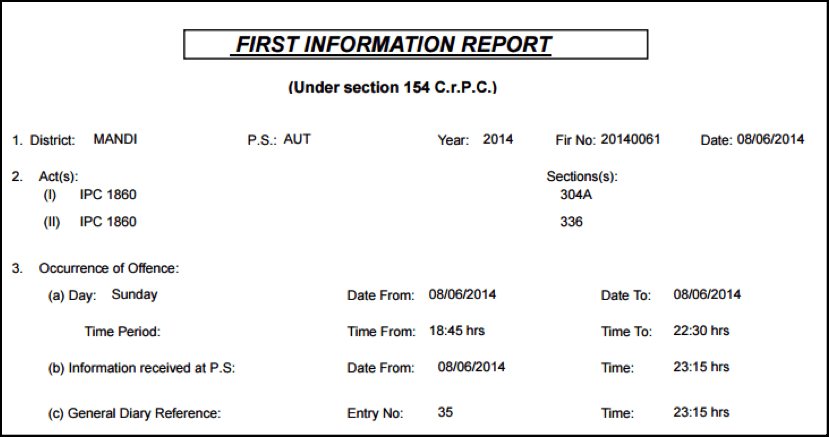
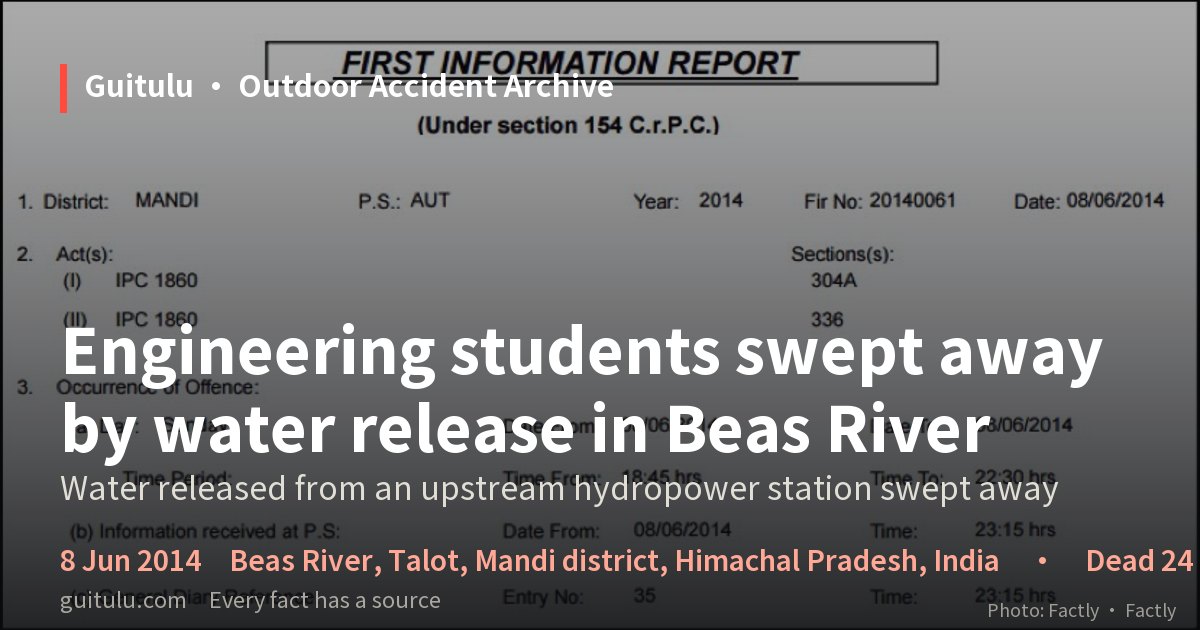
Screenshot of the first information report (FIR) registered by Aut police station in Mandi district concerning the incident, dated 8 June 2014

Archive / Other

Engineering students swept away by water release in Beas River

Water released from an upstream hydropower station swept away engineering students taking photographs on the riverbed

The local administrative inquiry has been completed, and the High Court has awarded compensation. According to ANI, from August 2025, the case against 6 dam officials and 3 accompanying teachers for causing death by negligence continued in a Mandi court.

Photo: Factly · Factly

Date
Summer
Place
Beas River, Talot, Mandi district, Himachal Pradesh, IndiaIndia › Himachal Pradesh · Himalaya77.201°E 31.712°N
Activity
Recreation on a riverbankInvolves: Flash floods and rising waterA study tour group of second-year students from VNR Vignana Jyothi Institute of Engineering and Technology in Hyderabad (about 48 students and accompanying teachers)
Casualties
Dead 24 Missing 1 Most reports said 24 students and 1 travel agency employee were swept away; another report said 25 students. According to reports, the body of student Sri Harsha was never found, and he is counted as missing.
Material
45 facts · 16 sources1 account differs and are shown side by side

01What happened

In June 2014, about 48 second-year engineering students from VNR Vignana Jyothi Institute of Engineering and Technology in Hyderabad travelled to Himachal Pradesh, heading for the Manali area.Facts it rests onF01Multiple sourcesThe students who died were from VNR Vignana Jyothi Institute of Engineering and Technology in Hyderabad and were travelling to or visiting the Manali area at the time.F02Multiple sourcesAbout 48 students took part in the trip.F03Multiple sourcesThose on the trip were second-year engineering students.

Screenshot of the first information report (FIR) registered by Aut police station in Mandi district concerning the incident, dated 8 June 2014Photo source: Factly · Factly

On the evening of Sunday, 8 June, the group took photographs by the Beas River in the Talot area of Mandi district. Before the incident, there appeared to be little water in the river, and many students went down onto the riverbed and stood on boulders in the river.Facts it rests onF09Multiple sourcesOn the evening of Sunday, 8 June 2014, the students were taking photographs beside the Beas River when they were swept away by water released upstream.F10Multiple sourcesThe incident occurred beside the Beas River in the Talot (Thalot / Thalaut) area of Mandi district.F12Multiple sourcesMany students went down onto the riverbed and stood on boulders in the river to take photographs.F13Multiple sourcesThere appeared to be very little water in the river before the incident.

Breakdown of compensation per student awarded by the High Court: state electricity board 12 lakh, college 6 lakh, state government 2 lakh, totalling 20 lakh rupees (2 million rupees)Photo source: Factly · Factly

The 126 MW Larji hydropower station upstream released water, and the river rose suddenly, sweeping away students, including 6 female students. According to reports, an accompanying professor saw the water rising and called on the students to move back, but the water level rose suddenly within one or two seconds; some students climbed back to safety.Facts it rests onF14Multiple sourcesThe river rose suddenly because water was released from the 126-megawatt Larji hydroelectric power station upstream.F19Multiple sourcesSix of the students swept away were female.F16Single sourceAccompanying professor Kiran Kumar said he saw the water level rising and told the students to move back from the bank, but the water level suddenly rose within one or two seconds and some students were swept away before his eyes.F17Single sourceA surviving student said a wall of water was seen rushing towards the people on the bank, who were then engulfed by the wave; some students at the river climbed back to safety.

Screenshot from a video filmed from the road at the time of the incident: students stand on boulders in the Beas River as the water rises (image blurred)Photo source: River Resource Hub · Video screenshot, published via River Resource Hub

Search and rescue was interrupted by darkness that evening. Multiple rescue teams subsequently conducted a large-scale search downstream and used sonar. Most of those found had been caught under boulders or trapped in silt on the riverbed. According to reports, the last victim was found 42 days after the incident, while student Sri Harsha was never found.Facts it rests onF20Multiple sourcesSearch and rescue could not proceed that night because of darkness.F05Multiple sourcesMultiple teams, including the National Disaster Response Force (NDRF), the Indo-Tibetan Border Police and the navy, conducted a large-scale search downstream and used sonar equipment.F07Multiple sourcesMost of the victims found were trapped under boulders in the river or stuck in silt on the riverbed.F39Single sourceThe last person who died was found 42 days after the incident; the student Sri Harsha was never found.

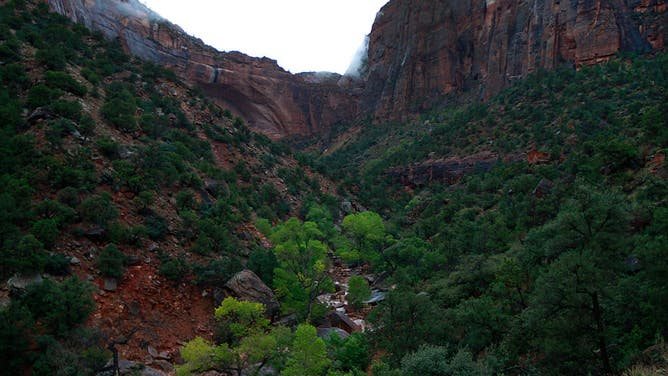
The Beas River near the incident site, where boulders protruding from the water can be reached from the bankPhoto source: River Resource Hub · Ashwin Bahulkar

An administrative inquiry report by the Mandi divisional commissioner found that the spillway discharge increased from 20 cubic metres per second to 450 cubic metres per second within an hour, and that there were no standard operating procedures for releasing water. A report submitted to the High Court stated that no early warning system or warning signs had been installed at the site. The High Court reportedly awarded 2 million rupees in compensation to the parents of each student who died. In August 2025, the High Court rejected a request by the three accompanying teachers to have the charges dismissed, and the case continued in the Mandi court.Facts it rests onF32Multiple sourcesThe administrative inquiry report by the Mandi divisional commissioner found that the spillway discharge increased from 20 cubic metres per second to 450 cubic metres per second within an hour.F33Multiple sourcesThe inquiry report noted that there was no standard operating procedure for releasing water from the Larji barrage.F31Multiple sourcesA report submitted to the High Court showed that no early warning system had been installed at the incident site and there were no warning signs.F45Single sourceThe High Court awarded 2 million rupees in compensation to the parents of each student who died, to be shared by the state electricity board, the college and the state government in a 60:30:10 ratio.F40Single sourceOn 8 August 2025, the Himachal Pradesh High Court dismissed a request by three accompanying teachers to have the charges against them quashed, finding that they knew mountain rivers were dangerous and water could be released suddenly, yet allowed the students onto the riverbed to take photographs; the case against 6 dam officials and 3 teachers will continue in a Mandi court.

The number at the end of a paragraph is how many facts it rests on; open it to see each fact and how well it is sourced: Multiple sourcesSingle source. Conflicting accounts and speculation are kept out of the narrative.

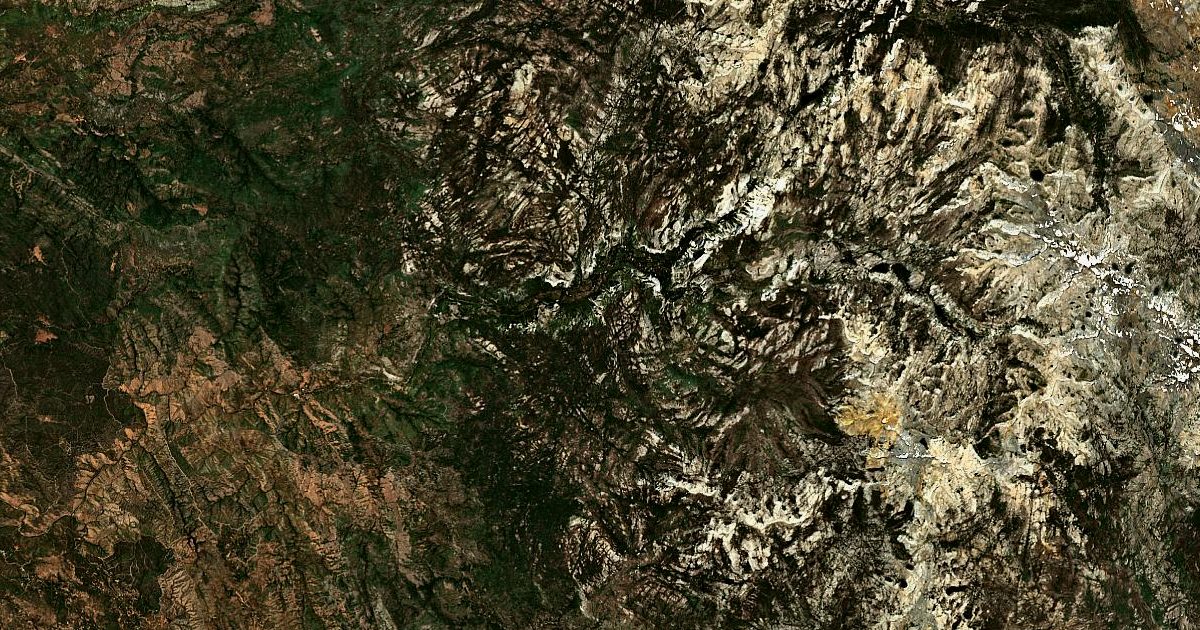
Satellite imagery Sentinel-2 cloudless 2024 © EOX · Terrain AWS Terrain Tiles · Position is schematic, geocoded from place names · Place coordinates not individually verified

Route review

6 scenes to understand what happened

Scroll down and the map flies to where each part happened.

01

Incident area

Reports do not provide enough locations along the way, so the map shows only the approximate location and terrain of the incident area.

03

Photographs on the riverbed

On the evening of 8 June, the group took photographs by the Beas River in the Talot area, and many students went down onto the riverbed and stood on boulders.Facts it rests onF09Multiple sourcesOn the evening of Sunday, 8 June 2014, the students were taking photographs beside the Beas River when they were swept away by water released upstream.F10Multiple sourcesThe incident occurred beside the Beas River in the Talot (Thalot / Thalaut) area of Mandi district.F12Multiple sourcesMany students went down onto the riverbed and stood on boulders in the river to take photographs.

06

Investigation findings

The investigation found that the discharge had increased from 20 to 450 cubic metres per second within one hour, that there was no standard operating procedure for releasing water, and that there was no warning system at the site.Facts it rests onF32Multiple sourcesThe administrative inquiry report by the Mandi divisional commissioner found that the spillway discharge increased from 20 cubic metres per second to 450 cubic metres per second within an hour.F33Multiple sourcesThe inquiry report noted that there was no standard operating procedure for releasing water from the Larji barrage.F31Multiple sourcesA report submitted to the High Court showed that no early warning system had been installed at the incident site and there were no warning signs.

02Timeline

  1. On the evening of Sunday, 8 June 2014, the students were taking photographs beside the Beas River when they were swept away by water released upstream. F09

  2. Search and rescue could not proceed that night because of darkness. F20

  3. The incident occurred at around 7 p.m. F11

  4. The river rose suddenly because water was released from the 126-megawatt Larji hydroelectric power station upstream. F14

  5. Himachal Pradesh Chief Minister Virbhadra Singh ordered an inquiry and called for the suspension of engineers at the Larji hydropower station. F26

  6. Police registered a case against the Larji hydropower station authorities under sections 336 (endangering the life or safety of others) and 304-A (causing death by negligence) of the Indian Penal Code. F29

  7. A report submitted to the High Court showed that no early warning system had been installed at the incident site and there were no warning signs. F31

  8. The administrative inquiry report by the Mandi divisional commissioner found that the spillway discharge increased from 20 cubic metres per second to 450 cubic metres per second within an hour. F32

  9. According to the state chief secretary's report, a total of 17 people who died had been found by 22 June. F37

  10. The last person who died was found 42 days after the incident; the student Sri Harsha was never found. F39

  11. On 8 August 2025, the Himachal Pradesh High Court dismissed a request by three accompanying teachers to have the charges against them quashed, finding that they knew mountain rivers were dangerous and water could be released suddenly, yet allowed the students onto the riverbed to take photographs; the case against 6 dam officials and 3 teachers will continue in a Mandi court. F40

03Lessons

Water, streams and caves

Water can rise at any time on a riverbed below a dam

In this incident, there appeared to be little water in the river before the incident, and students stood on boulders in the river taking photographs. The water level rose suddenly after the upstream hydropower station released water. Downstream of a hydropower station, a riverbed with little water and exposed boulders is not necessarily safe.Facts it rests onF13Multiple sourcesThere appeared to be very little water in the river before the incident.F12Multiple sourcesMany students went down onto the riverbed and stood on boulders in the river to take photographs.F14Multiple sourcesThe river rose suddenly because water was released from the 126-megawatt Larji hydroelectric power station upstream.

Closed areas and rules

Not hearing an alarm does not mean water will not be released

The inquiry found that there was no early warning system or warning signs at the site and no standard operating procedure for releasing water. According to reports, the police investigation said one of three sirens had failed and the other two were unattended. The presence or absence of an alarm cannot be used as a basis for judging safety.Facts it rests onF31Multiple sourcesA report submitted to the High Court showed that no early warning system had been installed at the incident site and there were no warning signs.F33Multiple sourcesThe inquiry report noted that there was no standard operating procedure for releasing water from the Larji barrage.F43Single sourceAccording to the police investigation findings as reported by ANI, one of the three sirens was out of order and the other two were unattended; no vehicles or guards were sent to warn the public, and there were no warning signs.

Water, streams and caves

Water levels in snowmelt-fed rivers can change

According to rescuers, the Beas River is fed by melting ice and snow upstream, and the water was rising at the time of the incident. When spending time beside a snowmelt-fed river in summer, the possibility that the water level may rise at any time must be taken into account.Facts it rests onF04Multiple sourcesRescue personnel said the Beas River was fed by snow and ice melt from upstream and was in a period of rising water at the time.

Teams and decisions

Set boundaries first when a group stops

According to reports, the chief minister said afterwards that the teachers should have prevented the students from going down onto the riverbed. In its 2025 ruling, the High Court also found that the accompanying teachers knew mountain rivers were dangerous but still allowed the students onto the riverbed to take photographs. On group trips, where people must not go should be made clear at the stopping point.Facts it rests onF27Single sourceThe chief minister said the teachers should have prevented the students from going down to the riverbed; he also disputed the claim that there had been no warning.F40Single sourceOn 8 August 2025, the Himachal Pradesh High Court dismissed a request by three accompanying teachers to have the charges against them quashed, finding that they knew mountain rivers were dangerous and water could be released suddenly, yet allowed the students onto the riverbed to take photographs; the case against 6 dam officials and 3 teachers will continue in a Mandi court.

04Fact list 45 facts

Under each fact is a verbatim quote from the original. "Single source" means only one outlet mentioned it; "Accounts differ" means sources contradict each other and this site adopts neither side; "Speculation" is an inference by a reporter or a person involved, not a fact.

  1. F01Multiple sourcesBackground

    The students who died were from VNR Vignana Jyothi Institute of Engineering and Technology in Hyderabad and were travelling to or visiting the Manali area at the time.

    Quotes from the original 2

    “The students, from the VNR Vignana Jyothi Institute of Engineering and Technology in the southern city of Hyderabad, had been travelling to the resort town of Manali further north.”

    Al Jazeera · 2014-06-09

    “The students were from the V.N.R. Vignana Jyothi Institute of Engineering and Technology and they were on an excursion to Manali.”

    IANS · 2014-06-18
  2. F02Multiple sourcesBackground

    About 48 students took part in the trip.

    Quotes from the original 3

    “A group of 48 students studying 2nd year Electronics and Instrumentation at a city-based private engineering college were on a study tour of HP when the tragedy struck.”

    Deccan Chronicle · 2014-06-09

    “In all, 48 students accompanied by two lecturers were on an industrial tour as a part of their curriculum when tragedy struck.”

    Deccan Herald · 2015-06-09

    “They had been part of a larger field trip of some 48 students spending 10 days near Manali.”

    AP ·
  3. F03Multiple sourcesBackground

    Those on the trip were second-year engineering students.

    Quotes from the original 2

    “A group of 48 students studying 2nd year Electronics and Instrumentation”

    Deccan Chronicle · 2014-06-09

    “We send second-year engineering students on industrial tour every year.”

    Governance Now · 2014-06-13
  4. F04Multiple sourcesBackground

    Rescue personnel said the Beas River was fed by snow and ice melt from upstream and was in a period of rising water at the time.

    Quotes from the original 2

    “Rescue workers said the Beas river was in spate due to thawing of glaciers and melting of snow in the higher reaches of Manali.”

    IANS · 2014-06-09

    “Officials said that Beas being a snowfed river, the water level increases as the day advances and reaches its peak at night.”

    Deccan Herald · 2014-06-11
  5. F05Multiple sourcesEvent

    Multiple teams, including the National Disaster Response Force (NDRF), the Indo-Tibetan Border Police and the navy, conducted a large-scale search downstream and used sonar equipment.

    Quotes from the original 3

    “A large contingent of rescue teams drawn from the ITBP, HP Police, AP Special Police, NDRF, SSB and Indian Navy had launched a massive search operation downstream with the help of sonar technology”

    Deccan Herald · 2015-06-09

    “Over 550 rescue workers, comprising about 50 divers of the NDRF, the army, the navy and the ITBP, are involved in the search operation”

    IANS · 2014-06-15

    “We deployed side scan sonar to capture pictures of the riverbed to locate the bodies.”

    IANS · 2014-06-15
  6. F06Single sourceEvent

    According to IANS, The search focused on the stretch of river between Larji Dam and Pandoh Dam downstream. Pandoh Dam is about 12 kilometres downstream of the incident site.

    Quotes from the original 2

    “focusing on the 15-km-long downstream stretch of the river from the Larji hydropower project dam to the Pandoh dam”

    IANS · 2014-06-15

    “surfaced near the Pandoh dam, some 12 km downstream from the accident spot”

    IANS · 2014-06-18
  7. F07Multiple sourcesFound at scene

    Most of the victims found were trapped under boulders in the river or stuck in silt on the riverbed.

    Quotes from the original 3

    “The bodies are either trapped under boulders or sunk in the silt and we are searching every boulder,”

    Deccan Herald · 2014-06-11

    “Most of the bodies recovered, officials said, were either trapped under the rocks or buried in the riverbed silt within a three-km radius of the accident spot”

    IANS · 2014-06-15

    “Many who were submerged by the river were found wedged under boulders or sunk and trapped in the silt.”

    River Resource Hub ·
  8. F08Multiple sourcesAftermath

    The Himachal Pradesh High Court took up the case on its own initiative based on a news report and heard it as public interest litigation.

    Quotes from the original 2

    “The Himachal Pradesh high court took suo motu cognizance of the incident based on a news item.”

    Factly · 2016-01-03

    “which treated a media report as a public interest litigation”

    IANS · 2014-06-19
  9. F09Multiple sourcesEvent

    On the evening of Sunday, 8 June 2014, the students were taking photographs beside the Beas River when they were swept away by water released upstream.

    Quotes from the original 3

    “The engineering students had stopped to take photographs on the edge of the Beas river in Himachal Pradesh on Sunday evening when water released from a dam washed them downstream”

    Al Jazeera · 2014-06-09

    “had been taking photographs Sunday evening on the banks of the Beas River when they were hit by the rush of water from the Larji hydropower station”

    AP ·

    “they got down from their tourist bus to take photographs on the banks of Beas”

    Millennium Post · 2014-06-12
  10. F10Multiple sourcesEvent

    The incident occurred beside the Beas River in the Talot (Thalot / Thalaut) area of Mandi district.

    Quotes from the original 3

    “were getting themselves photographed on the banks of the river in Thalaut area near the Hanogi Mata temple”

    IANS · 2014-06-09

    “from Thalot (the accident spot) to Pandoh Dam”

    Deccan Herald · 2014-06-11

    “drowning in the waters of Beas near Thalot, a village in Himachal Pradesh”

    Millennium Post · 2014-06-12
  11. F11Single sourceEvent

    According to IANS, The incident occurred at around 7 p.m.

    Quotes from the original 1

    “The incident occurred around 7 PM on Sunday.”

    IANS · 2014-06-09
  12. F12Multiple sourcesEvent

    Many students went down onto the riverbed and stood on boulders in the river to take photographs.

    Quotes from the original 3

    “many students moved into the dry riverbed”

    ANI · 2025-08-08

    “The students, who were standing on boulders in the river for a picture-postcard shoot, were caught unawares by the strong current which washed them away.”

    IANS · 2014-06-24

    “excitedly hopped across and on to the boulders to get photographed near the cool snowmelt waters”

    River Resource Hub ·
  13. F13Multiple sourcesEvent

    There appeared to be very little water in the river before the incident.

    Quotes from the original 2

    “With the river level appearing low”

    ANI · 2025-08-08

    “At that (disaster) time, there was very less water in the river.”

    IANS · 2014-06-24
  14. F14Multiple sourcesEvent

    The river rose suddenly because water was released from the 126-megawatt Larji hydroelectric power station upstream.

    Quotes from the original 5

    “The water was released by the Larji power project dam”

    Al Jazeera · 2014-06-09

    “the discharge of water in the river suddenly increased due to release of water from the reservoir of 126 MW Larji hydropower project”

    Deccan Chronicle · 2014-06-09

    “Suddenly, the water level of the river increased reportedly due to water being released from the Larji hydropower project”

    IANS · 2014-06-09

    “when they were hit by the rush of water from the Larji hydropower station”

    AP ·

    “when water was released into the river without warning from a nearby 126 MW Larji hydropower project”

    IANS · 2014-06-15
  15. F15Single sourceEvent

    According to River Resource Hub, The water level suddenly rose by about 4 to 6 feet, and the students were unable to get back to the bank.

    Quotes from the original 1

    “the students were ambushed by a sudden 4 to 6 foot rise in water levels. They failed to get back to the safety of the riverbank”

    River Resource Hub ·
  16. F16Single sourceEvent

    According to AP, Accompanying professor Kiran Kumar said he saw the water level rising and told the students to move back from the bank, but the water level suddenly rose within one or two seconds and some students were swept away before his eyes.

    Quotes from the original 2

    “Kiran Kumar, a professor who was accompanying the students, said he saw the water level rising and told the students to step back from the bank.”

    AP ·

    “within one or two seconds, the water level increased all of a sudden. Some of the students were washed away right in front of me,”

    AP ·
  17. F17Single sourceEvent

    According to AP, A surviving student said a wall of water was seen rushing towards the people on the bank, who were then engulfed by the wave; some students at the river climbed back to safety.

    Quotes from the original 2

    “We saw a wall of water hit those who were on the banks. They fell flat and disappeared under the waves,”

    AP ·

    “Some students at the river managed to scramble to safety.”

    AP ·
  18. F18Accounts differEvent

    Accounts differ on the number of people swept away: most reports said 24 students and 1 travel agency employee; some reported 25 students.

    The list published by Deccan Chronicle named 24 students and 1 travel agency employee; the figure of 25 may include the travel agency employee.

    Quotes from the original 4

    “Twenty-four students from a Hyderabad engineering college and a tour operator were washed away in the Beas river last Sunday.”

    IANS · 2014-06-15

    “the remaining 15 of the 24 students and a tour operator”

    IANS · 2014-06-18

    “sweeping away 25 students and a tour manager”

    ANI · 2025-08-08

    “The 25 students from the southern city of Hyderabad had been taking photographs Sunday evening”

    AP ·
  19. F19Multiple sourcesEvent

    Six of the students swept away were female.

    Quotes from the original 2

    “including six girls”

    IANS · 2014-06-09

    “A motley group of six girls and 18 boys from Hyderabad”

    Millennium Post · 2014-06-12
  20. F20Multiple sourcesEvent

    Search and rescue could not proceed that night because of darkness.

    Quotes from the original 2

    “Additional District Magistrate Pankaj Rai said the rescue operation was stopped due to darkness.”

    IANS · 2014-06-09

    “Search operations have been launched to trace the missing students but there had been no success due to the darkness”

    Al Jazeera · 2014-06-09
  21. F21Single sourceEvent

    According to IANS, Villagers and private rafting operators began rescue efforts before the authorities arrived.

    Quotes from the original 1

    “villagers and private rafters started rescue operations well before the authorities could reach the spot”

    IANS · 2014-06-09
  22. F22Multiple sourcesAftermath

    After the incident, local villagers blocked the national highway beside the river, protesting that no warning had been issued before the power station released water.

    Quotes from the original 2

    “Angry locals and tourists blocked the main highway near the river in protest over the incident, saying authorities had failed to issue a warning about the release of water from the dam”

    Al Jazeera · 2014-06-09

    “Villagers blocked the national highway after the incident, protesting the release of water by the hydropower authorities without any warning”

    IANS · 2014-06-09
  23. F23Single sourceFound at scene

    According to Hill Post, According to the state government's status report, the Larji barrage was already at full reservoir level (969.50 metres) before the gates were opened on 8 June; starting at 18:15, operators first opened radial gate No. 5 to 50 centimetres, releasing 50 cubic metres per second, then gradually opened it further, increasing the discharge to 150 cubic metres per second.

    Quotes from the original 2

    “the Larji barrage was at full reservoir level (969.50 meters) even prior to opening of the spill way gates on June 8.”

    Hill Post · 2014-06-16

    “At 6.15 p.m., the operating staff first opened Radial gate no 5 to 50 cm, released 50 cumecs of water, subsequently it was opened to 1.50 meters and then to 2.50 meters that increased water spillage to 150 cumecs.”

    Hill Post · 2014-06-16
  24. F24Multiple sourcesFound at scene

    On the day of the incident, the state load dispatch centre asked Larji and other state-run power stations to reduce generation.

    Quotes from the original 3

    “the load dispatch centre directed two state-run projects - Larji and Bhava (120 MW) - to reduce generation on the day of the tragedy”

    IANS · 2014-06-24

    “Despite receiving instructions from the SLDC, Shimla, to reduce electricity generation before the incident”

    ANI · 2025-08-08

    “two of the state government owned projects including the Larji hydroelectric project were ordered to reduce generation”

    River Resource Hub ·
  25. F25Single sourceFound at scene

    According to IANS, Official sources told IANS that the Larji power station reduced generation as requested and shut down that day, leaving no option but to release the water accumulated in the reservoir.

    Quotes from the original 1

    “the Larji hydropower project had been asked to reduce generation on the day of the tragedy, and plant officials had shut it down. As a result, water that had built up in its reservoir had to be released”

    IANS · 2014-06-24
  26. F26Multiple sourcesAftermath

    Himachal Pradesh Chief Minister Virbhadra Singh ordered an inquiry and called for the suspension of engineers at the Larji hydropower station.

    Quotes from the original 2

    “Chief minister Virbhadra Singh ordered a magisterial inquiry and suspension of Resident Engineer of Larji hydropower project.”

    Deccan Chronicle · 2014-06-09

    “Himachal Pradesh Chief Minister Virbhadra Singh demanded the dam's engineer be suspended while the incident is investigated.”

    AP ·
  27. F27Single sourceParticipant's view

    According to Deccan Chronicle, The chief minister said the teachers should have prevented the students from going down to the riverbed; he also disputed the claim that there had been no warning.

    Quotes from the original 2

    “I think the teachers should have taken precaution that the students did not go to the riverbed.”

    Deccan Chronicle · 2014-06-09

    “I object to the point that there was no warning.”

    Deccan Chronicle · 2014-06-09
  28. F28Multiple sourcesAftermath

    Family members complained that they had received no information about the incident from the college.

    Quotes from the original 2

    “The parents and relatives complained that they did not receive any information regarding the incident from the college management.”

    Deccan Chronicle · 2014-06-09

    “We got all information through TV channels.”

    Governance Now · 2014-06-13
  29. F29Multiple sourcesAftermath

    Police registered a case against the Larji hydropower station authorities under sections 336 (endangering the life or safety of others) and 304-A (causing death by negligence) of the Indian Penal Code.

    Quotes from the original 2

    “a case under sections 336 (act endangering life or personal safety of others) and 304-A (causing death by negligence) of the IPC has been registered against the authorities of Larji project.”

    Deccan Herald · 2014-06-11

    “Police have registered a case against the Larji hydropower project authorities for causing death by negligence and endangering the life of people.”

    IANS · 2014-06-15
  30. F30Multiple sourcesAftermath

    The chief minister announced that fencing would be installed along river stretches 2 to 3 kilometres downstream of all dams.

    Quotes from the original 2

    “He said fencing on a two-three km stretch would be done at all dams besides other sensitive and dangerous zones and proper sign boards would be displayed to alert the people.”

    Deccan Herald · 2014-06-11

    “the Chief Minister announced a red-herring plan to fence off a two to three km stretch downstream of all dams in the state”

    River Resource Hub ·
  31. F31Multiple sourcesFound at scene

    A report submitted to the High Court showed that no early warning system had been installed at the incident site and there were no warning signs.

    Quotes from the original 2

    “no warning system whatsoever was found installed at the site and there were no notice boards carrying message of warning etc.”

    Hill Post · 2014-06-16

    “No warning systems were found installed at the site and there were reportedly no notice boards warning visitors of fluctuation in water levels.”

    River Resource Hub ·
  32. F32Multiple sourcesFound at scene

    The administrative inquiry report by the Mandi divisional commissioner found that the spillway discharge increased from 20 cubic metres per second to 450 cubic metres per second within an hour.

    Quotes from the original 2

    “the discharge of water in spillways was raised from 20 cumecs or cubic metres per second to 450 cumecs within one hour.”

    IANS · 2014-06-19

    “Discharge increased from 20 to 450 cumecs within an hour, the court noted.”

    ANI · 2025-08-08
  33. F33Multiple sourcesFound at scene

    The inquiry report noted that there was no standard operating procedure for releasing water from the Larji barrage.

    Quotes from the original 2

    “There are no standard operating procedures related to release of water from the barrage.”

    IANS · 2014-06-19

    “The report also mentioned non-existent standard operating procedures.”

    River Resource Hub ·
  34. F34Single sourceFound at scene

    According to IANS, The inquiry report said the early warning system was inadequate and that releasing water without warning was a systemic failure.

    Several quotations are from different reports by the same media outlet and are counted as one source

    Quotes from the original 2

    “There was a systemic failure in releasing water into the Beas river without a warning from a dam, and the warning system itself was inadequate”

    IANS · 2014-06-19

    “The warning system is also inadequate. All this constitutes a systemic failure”

    IANS · 2014-06-24
  35. F35Single sourceFound at scene

    According to IANS, The inquiry report also said that local people had alerted the students to the approaching water by shouting, signalling and whistling, and concluded that the students would not have been swept away had they not ignored these warnings.

    Quotes from the original 2

    “It said the students were also informed and warned by locals (about the release of water into the river)”

    IANS · 2014-06-19

    “had they not turned a blind eye towards the warning calls, signals and whistling by locals, they could not have been drowned or washed away.”

    IANS · 2014-06-19
  36. F36Multiple sourcesPost-incident analysis

    The inquiry report questioned why a 300-megawatt private power station had been allowed to operate at full capacity, finding that the reduction in generation should have been shared proportionally among the power stations.

    Quotes from the original 3

    “The state load dispatch centre should have looked into the issue of pro-rata basis load shedding across the state,”

    IANS · 2014-06-24

    “the inquiry report questioned why a privately owned 300 MW project was allowed to run at full capacity and load shedding was not proportional among projects”

    River Resource Hub ·

    “whereas the 300 MW Baspa project owned by Jaiprakash Hydro Power Ltd was allowed to run at full capacity”

    IANS · 2014-06-24
  37. F37Single sourceEvent

    According to IANS, According to the state chief secretary's report, a total of 17 people who died had been found by 22 June.

    Quotes from the original 1

    “17 bodies were recovered till June 22”

    IANS · 2014-06-24
  38. F38Single sourceBackground

    According to IANS, In an affidavit to the High Court, the college said that 55 of the 143 students had registered, 48 ultimately went on the trip, and the students had signed undertakings before departure.

    Quotes from the original 1

    “A total of 55 out of 143 students opted for the tour. But only 48 students joined. Prior to their visit, an undertaking was taken from the students,”

    IANS · 2014-06-24
  39. F39Single sourceAftermath

    According to Deccan Herald, The last person who died was found 42 days after the incident; the student Sri Harsha was never found.

    Quotes from the original 1

    “The last body was fished out 42 days later. However the search failed to locate the body of Sri Harsha of New Nallakunta.”

    Deccan Herald · 2015-06-09
  40. F40Single sourceAftermath

    According to ANI, On 8 August 2025, the Himachal Pradesh High Court dismissed a request by three accompanying teachers to have the charges against them quashed, finding that they knew mountain rivers were dangerous and water could be released suddenly, yet allowed the students onto the riverbed to take photographs; the case against 6 dam officials and 3 teachers will continue in a Mandi court.

    Quotes from the original 2

    “allowed students to venture down to the riverbed for photographs, despite being aware of the dangerous nature of mountain rivers and the possibility of sudden water surges from dam releases.”

    ANI · 2025-08-08

    “the case will now proceed at the Mandi Court against all the accused, including six dam officials and the three faculty members.”

    ANI · 2025-08-08
  41. F41Single sourceBackground

    According to IANS, Talot, the incident site, is beside National Highway 21 between Chandigarh and Manali.

    Quotes from the original 1

    “the accident spot at Thalaut on the Chandigarh-Manali National Highway No.21”

    IANS · 2014-06-15
  42. F42Single sourceBackground

    According to River Resource Hub, The Larji hydropower station's barrage is about 3 kilometres upstream of the incident site.

    Quotes from the original 1

    “the 126-megawatt Larji hydroelectric project, three kilometers upstream”

    River Resource Hub ·
  43. F43Single sourceFound at scene

    According to ANI, According to the police investigation findings as reported by ANI, one of the three sirens was out of order and the other two were unattended; no vehicles or guards were sent to warn the public, and there were no warning signs.

    Quotes from the original 1

    “Out of three hooters, one was non-functional, and the others were not manned. No vehicle or guard was deployed to warn the public. There were no danger boards.”

    ANI · 2025-08-08
  44. F44Single sourcePost-incident analysis

    According to Factly, The High Court found that the incident would not have happened if the authorities had installed warning signs, alarms and signals and taken precautions when releasing water; the college should also have anticipated where the students would go.

    Quotes from the original 2

    “the incident would not have occurred if the authorities had put boards, hoardings, sirens, signals and taken precautions at the relevant time, while discharging the water from the barrage/reservoir.”

    Factly · 2016-01-03

    “The court also found fault with the college authorities that they should have anticipated where the students were going and the result of the same.”

    Factly · 2016-01-03
  45. F45Single sourceAftermath

    According to Factly, The High Court awarded 2 million rupees in compensation to the parents of each student who died, to be shared by the state electricity board, the college and the state government in a 60:30:10 ratio.

    Quotes from the original 2

    “The court directed that a compensation of 20 lakh rupees per student be awarded to the parents with an interest of 7.5% per annum from the date of accident to the date of final payment.”

    Factly · 2016-01-03

    “The 20 lakh rupees will be shared in the ratio 60:30:10 by the Electricity Board, the College & the State of Himachal Pradesh.”

    Factly · 2016-01-03