Solo polar ski crossingInvolves: Sudden illness and exhaustion1 person (solo and unsupported, with satellite phone contact and a logistics company on standby)
Casualties
Dead 1 Worsley died in a hospital in Punta Arenas, Chile, on the third day after his evacuation
Material
29 facts · 9 sources2 accounts differ and are shown side by side
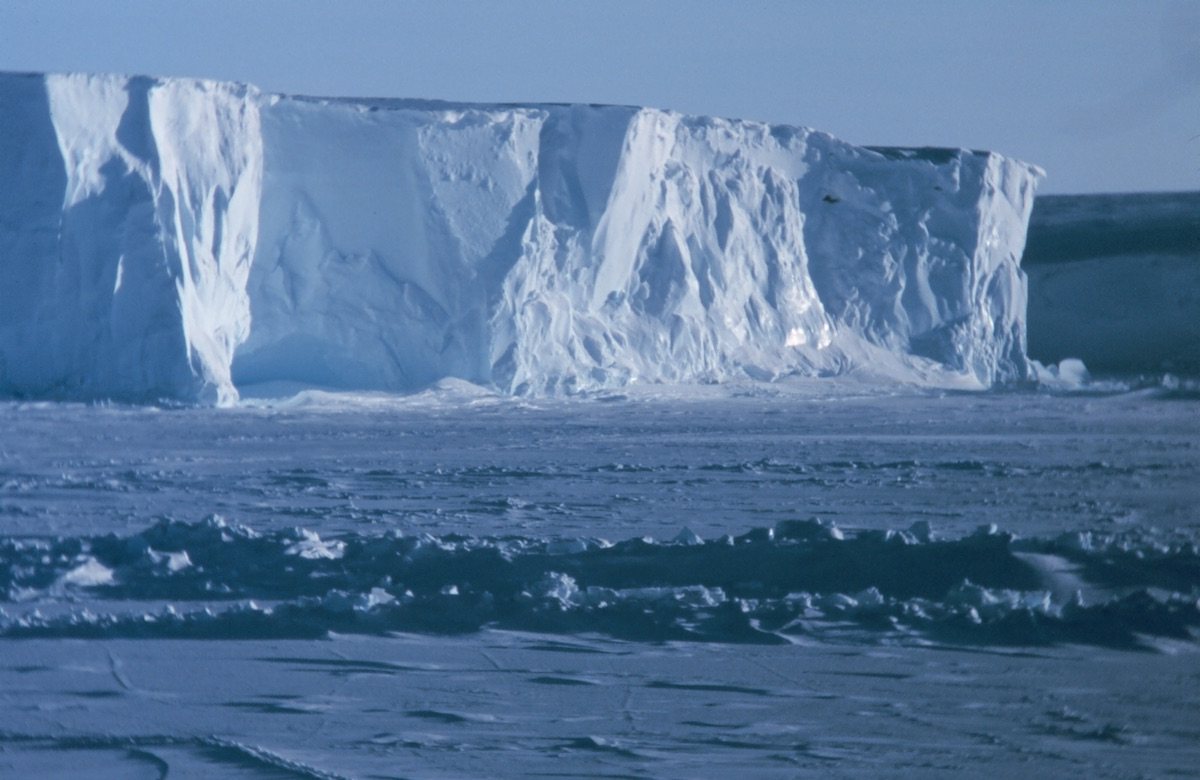
Ice cliffs of the Ross Ice Shelf at the Bay of Whales, showing the ice shelf landscape where the planned endpoint was located (illustrative, not the scene of the incident)Photo source: Live Science
The number at the end of a paragraph is how many facts it rests on; open it to see each fact and how well it is sourced:
Multiple sourcesSingle source. Conflicting accounts and speculation are kept out of the narrative.
Reported points along the route (illustrative)Schematic
Scroll down and the map flies to where each part happened. The line is Schematic, Lines connect the points mentioned in reports in sequence and indicate only the approximate direction, not the actual track. Sources for the place coordinates are in places.json.
01
Full journey
Places mentioned in reports are connected in sequence to show the approximate route (illustrative).
The expedition was intended to mark the 100th anniversary of Shackleton's Endurance expedition and raise money for the Endeavour Fund, which supports wounded servicemen and women. F03
He planned to complete the first solo, unsupported and unassisted crossing of Antarctica, starting from Berkner Island, passing through the South Pole and ending at the Ross Ice Shelf. F01
On 20 January (Wednesday), his pace slowed markedly; he reportedly covered only about 4 miles in 5 hours, then collapsed in his tent. F17
After he arrived at Union Glacier, two ALE doctors treated him for extreme exhaustion and dehydration. F23
On 22 January, he contacted ALE to request a pickup and was subsequently flown to Union Glacier Camp in a Twin Otter aircraft. F19
After being unable to leave his tent for two days, he decided to abandon the journey. F18
In his final statement, he said that 71 days travelling alone and a journey of more than 900 miles had gradually depleted his strength, and that the journey was at an end. F20
He was then flown to Punta Arenas, Chile, and taken to hospital by ambulance, where he was diagnosed with peritonitis and admitted for surgery. F24
Worsley died in a hospital in Punta Arenas on 24 January. F25
Under each fact is a verbatim quote from the original. "Single source" means only one outlet mentioned it; "Accounts differ" means sources contradict each other and this site adopts neither side; "Speculation" is an inference by a reporter or a person involved, not a fact.
He planned to complete the first solo, unsupported and unassisted crossing of Antarctica, starting from Berkner Island, passing through the South Pole and ending at the Ross Ice Shelf.
Quotes from the original 2
“He was attempting the first unsupported and unassisted solo crossing of the Antarctic landmass, a journey from Berkner Island to the Ross Ice Shelf via the South Pole.”
The expedition was intended to mark the 100th anniversary of Shackleton's Endurance expedition and raise money for the Endeavour Fund, which supports wounded servicemen and women.
Quotes from the original 2
“to mark the 100th anniversary of Sir Ernest Shackleton”
According to CBS News, According to David Grann's account, Worsley ran into problems early in the journey, encountering successive whiteout conditions and being trapped in his tent.
Quotes from the original 1
“He found himself in one white-out after another. He was pinned down in his tent.”
According to CBS News, According to Grann's account, his wife urged him during a call to abandon the journey and call for evacuation. Worsley replied that he knew he could not continue and would call, but asked to be allowed to make the call himself.
Quotes from the original 2
“She urged him to abandon his expedition and call to be airlifted out”
According to NZ Herald, According to the New Zealand Herald, his wife asked the team to bring him off the ice, but the support team, although it had flown nearby and was on standby, insisted on waiting for Worsley to call himself.
Quotes from the original 1
“they insisted they had to wait until Mr Worsley made the call”
According to NZ Herald, According to a family statement, he raised more than £100,000 for the Endeavour Fund, with total donations reportedly reaching approximately £107,000.
According to Live Science, Martin Siegert, an Antarctic scientist at the University of Bristol, said in his analysis that modern communication and evacuation methods can get a person off the ice within about 12 hours, but Worsley and those in contact with him failed to recognise early enough how serious the situation was.
Quotes from the original 2
“the real issue was that Worsley, and those he communicated with, did not recognize how dire the situation had become until it was too late”
Inference: Siegert believed that people in regular contact with Worsley could have recognised earlier, before the evacuation, that his judgment or abilities had become impaired.
Quotes from the original 1
“could have noticed his judgment or ability was impaired well before he was airlifted”
According to Live Science, Siegert said dehydration and fatigue can impair the ability to think, causing people to make irrational decisions and become caught in a vicious cycle.
Quotes from the original 1
“Dehydration and exhaustion also impair thinking, leading a person to make irrational decisions and causing a dangerous downward spiral”
In his final statement, he said that 71 days travelling alone and a journey of more than 900 miles had gradually depleted his strength, and that the journey was at an end.
Quotes from the original 2
“The 71 days alone on the Antarctic with over 900 statute miles covered and a gradual grinding down of my physical endurance finally took its toll today”
“The 71 days alone on the Antarctic with over 900 statute miles covered and a gradual grinding down of my physical endurance finally took its toll today”
His wife said in a statement that he died of complete organ failure; according to Grann, he went into septic shock and his organs failed one after another.
According to NZ Herald, According to reports, he encountered a storm during the journey and was confined to his tent for two days; temperatures along the route could fall as low as minus 44 degrees Celsius.
 GuituluGlobal Outdoor Accident Archive