The number at the end of a paragraph is how many facts it rests on; open it to see each fact and how well it is sourced:
Multiple sourcesSingle source. Conflicting accounts and speculation are kept out of the narrative.
Actual route traveled (GPS)Digitised from a GPS map
Scroll down and the map flies to where each part happened. The line is Digitised from a GPS map, Digitized and smoothed from a publicly available GPS track map; subject to error
On 30 September 2014, he posted his plan to cross Changtang online. F08
He departed from Lhasa during the 2014 National Day holiday; his camera contained a photo taken when he departed Lhasa on 1 October. F09
On 4 October 2014, he logged in to the forum for the last time, leaving the message “Now that I have decided to go, I will press straight ahead”. F10
There are two accounts of milestones on the journey: Biketo says Li Congming departed from Jieshan Pass on 4 October 2014; Qiji, citing GPS data, says he left the road on 7 October at the south shore of Longmu Co, about 50 kilometres south of Jieshan Pass, officially entering Changtang. F11
The GPS track shows that after reaching Yang Lake on day 30, he did not follow the originally planned route along the southern side of Songzhi Ridge, but instead headed east along the northern side of the range. F32
The last photograph in the camera was taken on 11 December 2014. F21
In early 2015, friends began posting missing-person notices online; Biketo records that the first was posted on his Weibo account on 3 February 2015, by which time he had been out of contact for three and a half months. F14
On 24 April 2016, the Old Boys team encountered a whiteout blizzard near Taiyang Lake. The next day, they made an unplanned route change, taking a shortcut from Lexie Wudan Lake through to Xiangyang Lake. F17
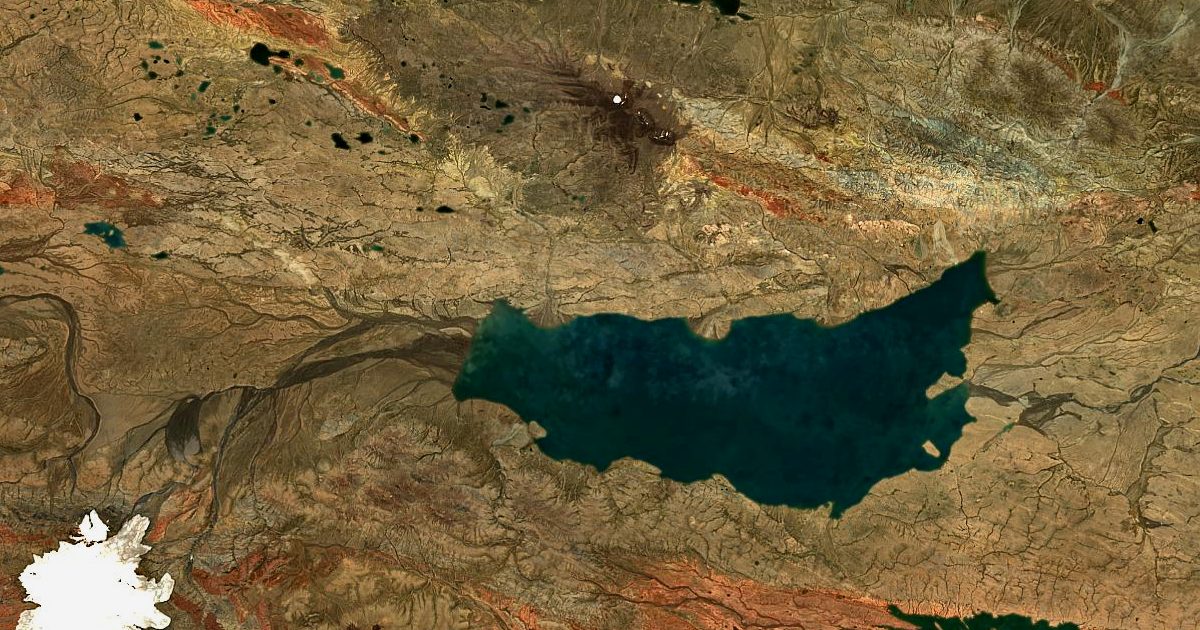
On 25 April 2016, the Beijing Old Boys team got their vehicle stuck on the north shore of Lexie Wudan Lake in Hoh Xil. While trying to free it themselves, they found Li Congming's bicycle and some of his luggage on the shore about 200 metres away. F18
The first photograph in the camera showed him setting out from Lhasa, and a cyclist from Fujian on the team recognized him. F20
The convoy set the bicycle upright and secured it in place, then took his belongings out of the uninhabited wilderness and handed them to his family. F36
In 2018, the Old Boy convoy returned to the uninhabited wilderness and erected a memorial to him at the site of his disappearance on the northwest shore of Lexie Wudan Lake. F37
The bicycle had fallen into the lake and was retrieved once by a member of the Old Boy convoy; when someone visited in November 2020, the memorial was still there, but the bicycle was no longer in its original place. F38
Under each fact is a verbatim quote from the original. "Single source" means only one outlet mentioned it; "Accounts differ" means sources contradict each other and this site adopts neither side; "Speculation" is an inference by a reporter or a person involved, not a fact.
In 1989, in an issue of Liaoning Youth magazine priced at one yuan, Li Congming read an article about Yu Chunshun, “Traveling Alone Around China on Foot” (machine translation)
He cycled for about 25 years, covering approximately 110,000 kilometres in total and visiting all 31 provincial-level administrative divisions of mainland China.
Quotes from the original 3
“25年骑遍中国11万公里的轮迹”
25 years of cycling across China, leaving tracks over 110,000 kilometres (machine translation)
His bicycle tracks were left across 31 mainland provinces, municipalities and autonomous regions, covering more than 110,000 kilometres. (machine translation)
He planned to cross Changtang and Hoh Xil from Jieshan Pass to Tuotuo River on the Qinghai–Tibet route, expecting to take about 80 days and cover about 1600 kilometres.
He planned to travel that October from Jieshan Pass to Tuotuo River on the Qinghai–Tibet route, crossing from Changtang through the Hoh Xil uninhabited wilderness. The journey was expected to take 80 days and cover about 1600 kilometres. (machine translation)
On 4 October 2014, he logged in to the forum for the last time, leaving the message “Now that I have decided to go, I will press straight ahead”.
Quotes from the original 2
““既然决定走了,便一往无前。”2014年10月4日最后一次登录论坛的他留下这样的话。”
“Now that I have decided to go, I will press straight ahead.” He left these words when he logged in to the forum for the last time on 4 October 2014. (machine translation)
There are two accounts of milestones on the journey: Biketo says Li Congming departed from Jieshan Pass on 4 October 2014; Qiji, citing GPS data, says he left the road on 7 October at the south shore of Longmu Co, about 50 kilometres south of Jieshan Pass, officially entering Changtang.
Biketo records his departure from Jieshan Pass, while Qiji records his departure from the road on the south shore of Longmu Co to officially enter Changtang. The two accounts may refer to different milestones on the journey and are not necessarily contradictory.
Quotes from the original 2
“2014年10月4日,李聪明从西藏日土县界山达坂出发”
On 4 October 2014, Li Congming departed from Jieshan Pass in Rutog County, Tibet (machine translation)
On 7 October, Li Congming left the road on the south shore of Longmu Co, 50 kilometres south of Jieshan Pass, and officially entered Changtang (machine translation)
Sources differ on the number of days into the journey around 11 December 2014: Qiji says “day 66”, while Biketo and NetEase Hao say “69 days”.
Qiji counts from his entry into Changtang on 7 October, while Biketo counts from his departure from Jieshan Pass on 4 October; the different starting points result in different day counts.
Quotes from the original 3
“推断该位置为穿越第66日”
It was inferred that this location was reached on day 66 of the crossing (machine translation)
In early 2015, friends began posting missing-person notices online; Biketo records that the first was posted on his Weibo account on 3 February 2015, by which time he had been out of contact for three and a half months.
Only Biketo gives a specific date.
Quotes from the original 2
“2015年2月3日,因长达三个半月联系不上李聪明,友人首次在李的微博上发布寻人启事。”
On 3 February 2015, after being unable to contact Li Congming for three and a half months, a friend posted a missing-person notice on Li's Weibo account for the first time. (machine translation)
Accounts differ on whether a search and rescue operation was organized after contact was lost: one says no community resources were mobilized to search, while another says the authorities and members of the public organized a large-scale search and rescue operation.
Tibet Guide says no community resources were mobilized to search; a NetEase account says there was a large-scale search and rescue operation by the authorities and members of the public, but gives no source and is low-credibility corroborating evidence. Early reports do not mention this claim.
Quotes from the original 2
“失联后,未动用任何社会资源进行搜寻与查找。”
After contact was lost, no community resources were mobilized to conduct a search. (machine translation)
According to China Exploration Association, On 24 April 2016, the Old Boys team encountered a whiteout blizzard near Taiyang Lake. The next day, they made an unplanned route change, taking a shortcut from Lexie Wudan Lake through to Xiangyang Lake.
Quotes from the original 2
“2016年4月24日,太阳湖附近一场突如其来的白毛风,阻挡了老男孩车队前进的路。”
On 24 April 2016, a sudden whiteout blizzard near Taiyang Lake blocked the Old Boys team's way forward. (machine translation)
The next day, Zeng Ming decided to change the route at short notice, taking a shortcut from Lexie Wudan Lake through to Xiangyang Lake. (machine translation)
On 25 April 2016, the Beijing Old Boys team got their vehicle stuck on the north shore of Lexie Wudan Lake in Hoh Xil. While trying to free it themselves, they found Li Congming's bicycle and some of his luggage on the shore about 200 metres away.
Tibet Guide says “northwest shore”; the others say “north shore”.
On 25 April 2016, after their vehicle got stuck on the north shore of Lexie Wudan Lake in the Hoh Xil uninhabited wilderness, the Beijing Old Boys team unexpectedly found Li Congming's bicycle and some of his luggage 200 metres away. (machine translation)
The first photograph in the camera showed him setting out from Lhasa, and a cyclist from Fujian on the team recognized him.
Quotes from the original 2
“相机第一张照片,一个男子拉萨出发的留影,让一位队友惊呆了,这分明是他福建骑友李聪明的模样。”
The first photograph in the camera, a picture of a man setting out from Lhasa, stunned one team member: it was unmistakably his cycling friend from Fujian, Li Congming. (machine translation)
The following were not found at the scene: eating utensils, an oil stove, fuel, food, a tent, a sleeping bag, two rear panniers, the other front pannier, and the Canon camera.
Quotes from the original 2
“其他没有找到的主要装备有:餐具、油炉、燃料、食物、帐篷、睡袋、两个后驮包、另一个前驮包。”
The other main equipment not found included: eating utensils, an oil stove, fuel, food, a tent, a sleeping bag, two rear panniers, and the other front pannier. (machine translation)
A small diary at the scene contained the words: “When you reach middle age, your passion and will may remain unchanged, but your physical ability cannot fool anyone, including yourself.”
The two quotations differ by one character, “是”; no photograph of the original has been seen, so the Qiji wording is used.
Quotes from the original 2
“人到中年,你的豪情和意志是可以不改变,但你的体能是骗不了任何人的,包括你自己。”
When you reach middle age, your passion and will can indeed remain unchanged, but your physical ability cannot fool anyone, including yourself. (machine translation)
When you reach middle age, your passion and will may remain unchanged, but your physical ability cannot fool anyone, including yourself. (machine translation)
According to Biketo, The electronic equipment he took when he set out included two cameras, a smartphone, a GPS and a solar charging panel.
NetEase Account says “two Sony cameras”, which conflicts with Biketo and Qiji's “one Canon and one Sony”; Biketo is used. None of the sources mentions a satellite phone or satellite communications equipment.
The electronic equipment Li Congming took when he set out mainly included two cameras (one Canon and one Sony), a smartphone, a GPS and a solar charging panel. (machine translation)
According to Qiji, According to data exported from the GPS at the scene, he passed Yang Lake, north of Songzhi Ridge, Changhong Lake and Xiangyang Lake, reaching the north shore of Lexie Wudan Lake on 11 December, a total journey of approximately 1200 kilometers.
He passed Yang Lake, north of the snow-covered Songzhi Ridge, Changhong Lake and Xiangyang Lake, and went missing after reaching the north shore of Lexie Wudan Lake on 11 December, over a period of 66 days and approximately 1200 kilometers (machine translation)
He completed approximately two-thirds of the planned route.
Both Biketo and Qiji estimated that he had completed approximately two-thirds of the planned route; this proportion is an analytical estimate based on the discovery location or the GPS route.
Quotes from the original 2
“那么整条计划路线他已经完成了2/3”
So he had already completed 2/3 of the entire planned route (machine translation)
According to Qiji, The GPS track shows that after reaching Yang Lake on day 30, he did not follow the originally planned route along the southern side of Songzhi Ridge, but instead headed east along the northern side of the range.
Quotes from the original 1
“他在D30抵达羊湖之后,没按原计划走耸峙岭雪山南面,而从山脉北面朝东前行。”
After he reached Yang Lake on D30, he did not follow the original plan to go along the southern side of the snow-covered Songzhi Ridge, but traveled east along the northern side of the range. (machine translation)
According to Qiji, According to an analysis of the GPS data, Li Congming was unfamiliar with using the GPS and generally turned it on only briefly each day to make a record; he also said he had “suffered a great deal and taken the wrong route several times”.
Qiji quoted this statement alongside his earlier experience traversing the area, but the quotation does not directly say that he took wrong turns because he was unfamiliar with GPS.
Quotes from the original 2
“数据显示,李聪明对GPS使用不熟悉,基本每天只打开GPS一会,仅作记录打点。”
The data shows that Li Congming was unfamiliar with using GPS. He basically turned it on for only a short while each day, solely to record waypoints. (machine translation)
Accounts differ on his activity in the final days: Qiji, citing GPS data, says he averaged about 18 km per day from 7 to 10 December; the China Exploration Association quotes Zeng Ming as saying that the photographs from the final three or four days show the same location.
Qiji's account is based on GPS analysis; the China Exploration Association quotes Zeng Ming's recollection from the scene. Photographs showing the same location do not necessarily mean there was no movement during that period.
Quotes from the original 2
“最后5天中,12.7-10这4天,平均每天18公里左右,总体速度正常”
Of the final 5 days, on the 4 days from 12.7-10, the average was around 18 km per day, and the overall speed was normal (machine translation)
The convoy set the bicycle upright and secured it in place, then took his belongings out of the uninhabited wilderness and handed them to his family.
Quotes from the original 2
“第一时间将自行车固定树立,将所遗留遗物带出无人区交给李聪明的家人”
Immediately secured the bicycle upright and took the belongings left behind out of the uninhabited wilderness and handed them to Li Congming's family (machine translation)
In 2018, the Old Boy convoy returned to the uninhabited wilderness and erected a memorial to him at the site of his disappearance on the northwest shore of Lexie Wudan Lake.
Only China Exploration Association gives the year.
Quotes from the original 2
“2018年,穿越羌塘N35,给李聪明、王勇立纪念碑”
In 2018, traversed Changtang N35 and erected memorials to Li Congming and Wang Yong (machine translation)
Afterwards, funds were raised to return to the uninhabited wilderness and erect a memorial to Li Congming at the site of his disappearance on the northwest shore of Lexie Wudan Lake (machine translation)
According to Tibet Guide, The bicycle had fallen into the lake and was retrieved once by a member of the Old Boy convoy; when someone visited in November 2020, the memorial was still there, but the bicycle was no longer in its original place.
Both pieces of information come from Tibet Guide; the article attributes the account of the bicycle's retrieval to the leader of the Old Boy convoy.
Quotes from the original 2
“李聪明的自行车已经被他们老男孩4*4陕西分队的队员从勒斜武担湖里打捞出来过一次了”
Li Congming's bicycle had already been retrieved once from Lexie Wudan Lake by a member of their Old Boy 4*4 Shaanxi team (machine translation)
Hypothesis one: after camping by the lake, he travelled light to scout a route eastward and came to grief on the shore or ice.
Both Qiji and Tibet Guide present the possibility that he came to grief while scouting a route with little equipment; this cannot be regarded as established fact.
Quotes from the original 2
“12月11日傍晚扎营后,因遇地形阻碍,前行探路,方向正东,沿湖岸或走冰面,往湖东探路。”
After making camp on the evening of 11 December, he encountered an obstacle in the terrain and went ahead to scout the route, heading due east, along the lakeshore or on the ice, to scout a route toward the east of the lake. (machine translation)
Hypothesis two: the ice on saltwater lakes in December is very unstable, and he may have fallen into the lake.
Hypothesis.
Quotes from the original 2
“12月份,羌塘咸水湖的冰层极不稳定,潜伏众多危险且又易麻痹人”
In December, the ice on Changtang's saltwater lakes is extremely unstable, concealing many dangers and easily lulling people into a false sense of security (machine translation)
Li Congming may have lost his bearings and become stranded on the lake's surface, then fallen into the lake when the ice thawed in early spring the following year (machine translation)
Hypothesis three: he may have encountered wild animals. An article by the China Exploration Association quotes Zeng Ming as saying this was a possibility; Qiji's analysis puts the possibility of an attack by a pack of wolves at zero.
The China Exploration Association article quotes Zeng Ming's assessment at the scene; Qiji explicitly rules out the possibility of an attack by a pack of wolves. The two accounts do not discuss exactly the same range of possibilities: the former refers to wild animals generally, while the latter refers specifically to an attack by a pack of wolves.
Quotes from the original 2
“还有极大一种可能,就是遇到了野兽。”
There is also a very strong possibility that he encountered wild animals. (machine translation)
According to China Exploration Association, Zeng Ming, the expedition team’s initiator, believed there was a patrol station at Zhuonai Lake, approximately 200 kilometers farther on.
The person's view; the distance has not been verified.
Quotes from the original 1
““其实他只要再坚持200公里,走到卓乃湖就能获救了,那有巡护站。””
“In fact, if he had just carried on for another 200 kilometers and reached Zhuonai Lake, he could have been rescued; there is a patrol station there.” (machine translation)
The ice on Lexie Wudan Lake in April was about 30 centimeters thick; a vehicle became trapped in an ice fissure after driving onto the ice; Zeng Ming mentioned the unpredictable factor of warm springs on the lakebed.
Only the China Exploration Association mentions the ice thickness and warm springs; Qiji supports that a vehicle became trapped in an ice fissure after driving onto the ice, but does not say it was the second vehicle or mention any assessment made while scouting the route.
Quotes from the original 3
“4月的勒斜武担湖,结的冰有30厘米厚”
In April, the ice on Lexie Wudan Lake was 30 centimeters thick (machine translation)
 GuituluGlobal Outdoor Accident Archive