The number at the end of a paragraph is how many facts it rests on; open it to see each fact and how well it is sourced:
Multiple sourcesSingle source. Conflicting accounts and speculation are kept out of the narrative.
Scroll down and the map flies to where each part happened.
01
The area of the incident
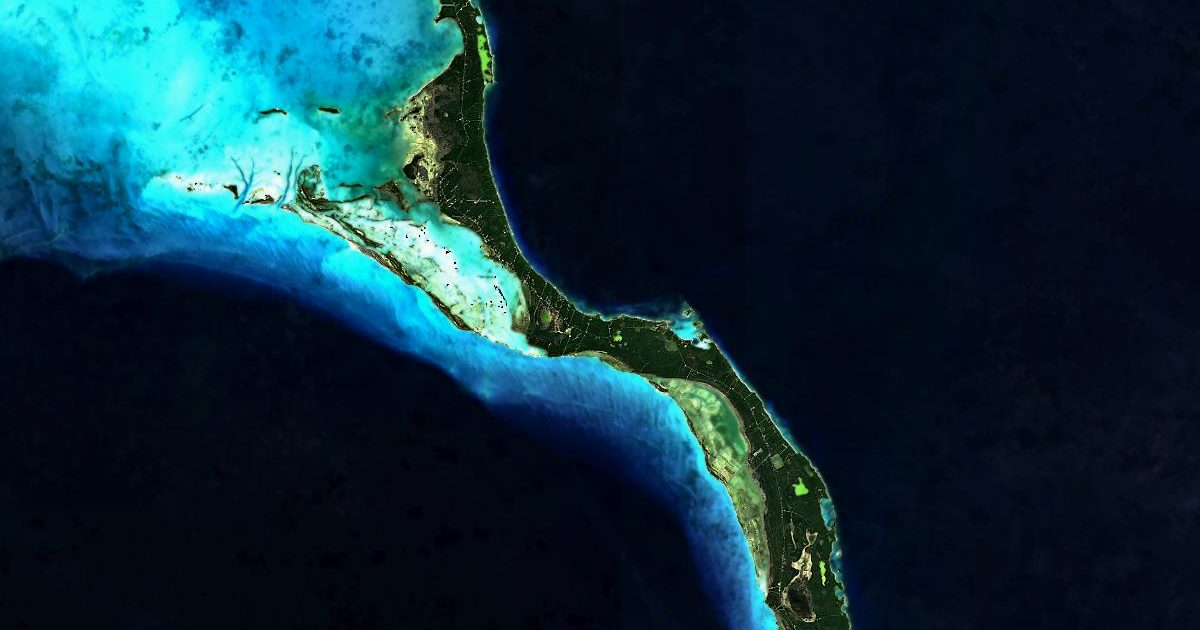
The reports do not provide enough locations along the route, so the map shows only the approximate location and terrain of the area where the incident occurred.
Mevoli began competing in freediving in 2012 and soon broke the US constant weight record. F02
In May 2013, Mevoli dived to 100 metres, becoming the first American to reach 100 metres without assistance. F05
AIDA announced that it would review the accident. F12
On 15 November (Friday), Mevoli attempted to dive to 96 metres, turned back at 80 metres and was assisted to the surface, with blood at the corner of his mouth when he surfaced. F17
After about 15 minutes, Mevoli had no pulse; resuscitation efforts continued for about 90 minutes without success. F28
On 17 November, Mevoli attempted a 72-metre constant weight without fins dive at Dean's Blue Hole, aiming to set a US record. F20
Mevoli encountered trouble at 68 metres and appeared ready to turn back, but then continued down to complete his target. F22
After surfacing, Mevoli gave the OK hand signal, but his speech was slurred as he said “I am OK” while completing the surface protocol. He then lost consciousness. F26
Mevoli was pronounced dead at around 1:44 pm that afternoon. F30
Mevoli returned to the surface under his own power. The entire dive lasted 3 minutes 38 seconds. F25
The day after the accident, freedivers held a memorial ceremony at Dean's Blue Hole. F34
In December 2013, a dedicated AIDA working group was investigating the factors that led to Mevoli's death. President Lahtinen said the report might recommend rule changes similar to those at the Dahab competition. F35
Under each fact is a verbatim quote from the original. "Single source" means only one outlet mentioned it; "Accounts differ" means sources contradict each other and this site adopts neither side; "Speculation" is an inference by a reporter or a person involved, not a fact.
According to The New York Times, Mevoli wrote on his blog that after a 75-metre constant weight dive, he would occasionally cough up blood while walking down the street.
Quotes from the original 1
“he told of wandering the city streets after a constant-weight dive to 75 meters, occasionally spitting blood on the sidewalk”
Accounts differ on Mevoli's placing in the constant weight without fins event at the 2013 world championships in Greece: The New York Times reported on 18 November that he won bronze; an AIDA statement and Pacific Standard said he won silver.
Quotes from the original 3
“took bronze in Constant Weight Without Fins at the world championships in Greece this September”
Accounts differ on the number of participants in this edition of Vertical Blue: The New York Times said there were 34 athletes from 16 countries; AP said there were 56 divers from 21 countries.
Quotes from the original 2
“This year, 34 athletes came to compete, representing 16 countries”
According to The New York Times, More than one competitor at the event was diagnosed with sinus or tracheal squeeze and subsequently allowed to continue competing the next day.
Quotes from the original 1
“more than one athlete in this competition had been found to have a sinus squeeze or a tracheal squeeze, and then received clearance to compete the next day”
According to AP, Bahamian authorities said the autopsy findings were consistent with drowning. Police did not release the autopsy report.
Quotes from the original 2
“An autopsy has found that the death of a 32-year-old New York City man during a freediving competition in the Bahamas was consistent with a drowning, authorities said Friday.”
Accounts differ on how many years had passed since a previous death: AIDA and AP said it was the first in more than 20 years of competition; sponsor Suunto said it was the first in 10 years of AIDA-regulated events.
Quotes from the original 3
“AIDA noted it was the first fatality in more than 20 years of competitions.”
According to The New York Times, AIDA president Kimmo Lahtinen believed that Mevoli's talent may have brought him to the sport's top level too quickly.
Quotes from the original 1
“suggested that Mevoli’s natural talent may have pushed him to the sport’s top tier too fast”
According to NPR, Writer James Nestor said on an NPR programme that Mevoli had dived beyond 200 feet after about half a year of training, and that many people thought he had progressed too quickly.
Quotes from the original 2
“he was able to get down past 200 feet within about six months of training”
According to The New York Times, British record holder Michael Board said there was too little medical information about lung squeeze, and that competitors only thought they understood the risks.
Quotes from the original 1
“Because there is so little proper medical information on lung squeezes, we only think we know the risks”
On 15 November (Friday), Mevoli attempted to dive to 96 metres, turned back at 80 metres and was assisted to the surface, with blood at the corner of his mouth when he surfaced.
The original text says “Friday”, meaning 15 November. The accounts from these sources all derive from on-site reporting or a book by New York Times reporter Adam Skolnick and are not entirely independent.
Quotes from the original 4
“His attempt to reach 96 meters on Friday went awry, however, when he turned at 80 meters and had to be assisted to the surface.”
According to The New York Times, At 12:25 p.m. on 17 November, Mevoli began his dive, with 15 other competitors and observers and 5 safety divers around him.
Quotes from the original 1
“At 12:25 p.m. Sunday, surrounded by 15 other athletes and observers, as well as five safety divers, he turned and submerged”
“He cruised down to 68 before he appeared to have trouble equalizing, pausing for nearly 30 seconds. But instead of coming back up, he began to descend again.”
After surfacing, Mevoli gave the OK hand signal, but his speech was slurred as he said “I am OK” while completing the surface protocol. He then lost consciousness.
Safety divers lifted Mevoli onto the competition platform, where the event doctor attempted to resuscitate him.
The accounts from these sources all derive from New York Times reporter Adam Skolnick's on-site reporting or his book, and are not entirely independent.
Quotes from the original 3
“hefted him onto a nearby platform, where the event physician, Barbara Jeschke of Germany, went to work trying to revive him”
Mevoli was taken to the Vid Simms Memorial Health Centre.
The accounts from these sources all derive from New York Times reporter Adam Skolnick's on-site reporting or his book, and are not entirely independent.
Quotes from the original 2
“It was a 10-minute ride to the Vid Simms Memorial Health Center”
Mevoli was pronounced dead at around 1:44 pm that afternoon.
The accounts from these sources all derive from New York Times reporter Adam Skolnick's on-site reporting or his book, and are not entirely independent.
According to The New York Times, According to a person at the scene, Mevoli developed pulmonary oedema, and 800 millilitres of fluid was drained from his lungs.
Quotes from the original 1
“Mevoli had pulmonary edema, according to one person at the scene, and 800 cubic centimeters of fluid was pulled from his lungs.”
According to NPR, In December 2013, a dedicated AIDA working group was investigating the factors that led to Mevoli's death. President Lahtinen said the report might recommend rule changes similar to those at the Dahab competition.
Quotes from the original 2
“Currently there is a special AIDA work group investigating the factors that contributed to Mevoli's death.”
According to NPR, At a competition in Dahab, Egypt, in December 2013, organisers required competitors who had suffered a squeeze injury within the previous month not to compete, and limited how far competitors could exceed their personal records.
Quotes from the original 1
“organizers asked divers not to compete if they had experienced a squeeze in the past month. They also limited the depth by which divers could attempt to exceed their personal record.”
According to NPR, Four-time world record holder Sara Campbell criticised AIDA for not being proactive enough in releasing the accident report; AIDA president Lahtinen responded that the organisation had not covered up anything.
Quotes from the original 2
“She says the group isn't proactive enough in publishing accident reports.”
According to Pacific Standard, The autopsy found that the capillaries in Mevoli's lung alveoli had repeatedly been stretched to their limits, that his lungs showed fibrosis, and that he had an enlarged right ventricle and thickening of the pulmonary artery.
This account comes from Adam Skolnick's book One Breath, as reported in a Pacific Standard book review.
Quotes from the original 3
“In Mevoli’s autopsy, doctors found alveolar capillaries that had been stretched to their limits many times during dives”
According to Pacific Standard, Before Mevoli's death, lung squeeze injuries had long been regarded in the freediving community as a minor nuisance rather than a danger.
This is a summary by the Pacific Standard book review.
Quotes from the original 1
“Until Mevoli died, lung squeezes were considered more annoyance than hazard.”
 GuituluGlobal Outdoor Accident Archive