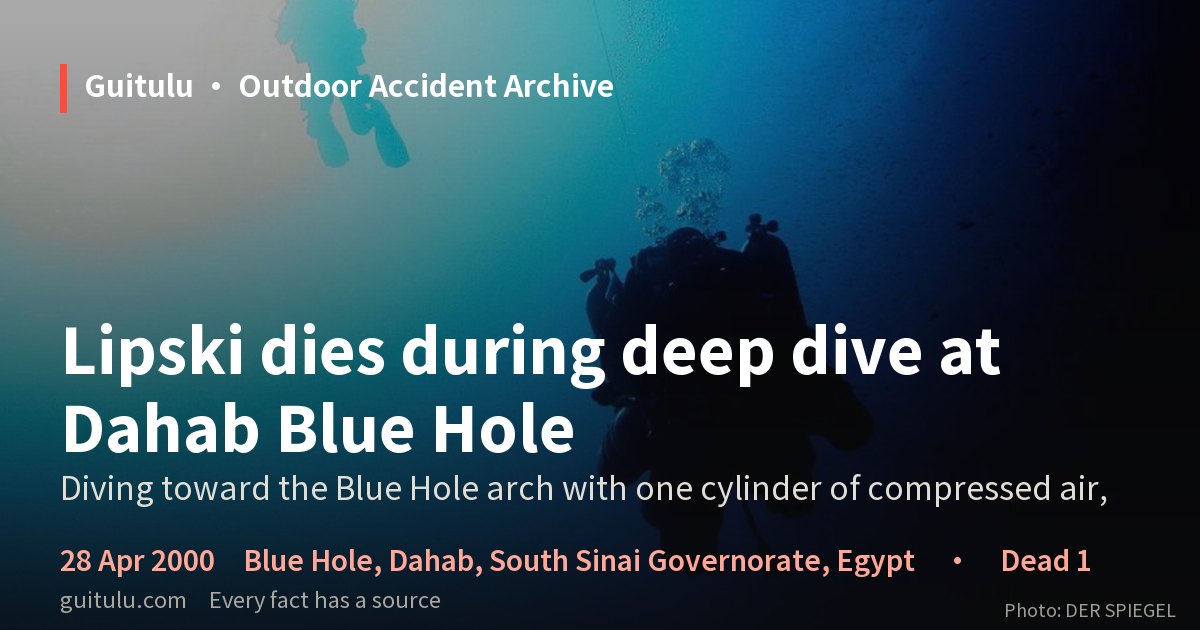
The number at the end of a paragraph is how many facts it rests on; open it to see each fact and how well it is sourced:
Multiple sourcesSingle source. Conflicting accounts and speculation are kept out of the narrative.
ImgScene photos all from news coverage; copyright belongs to the original authors
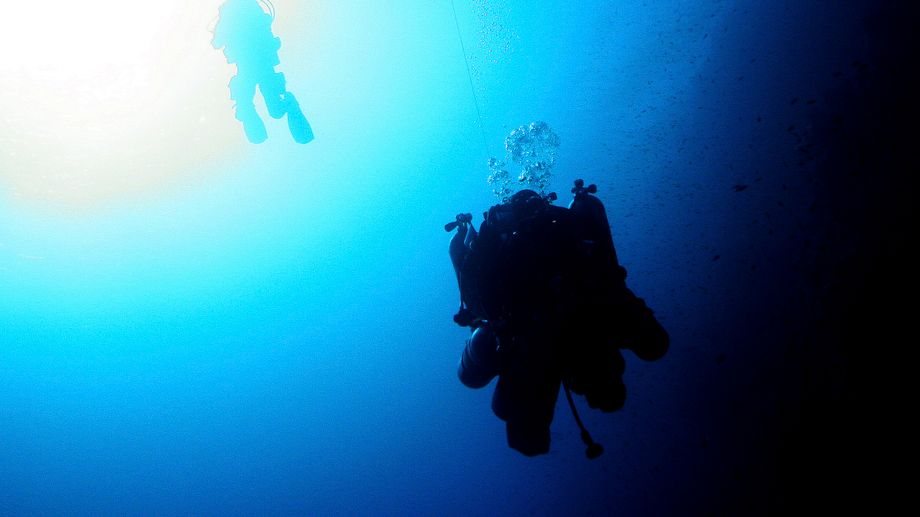
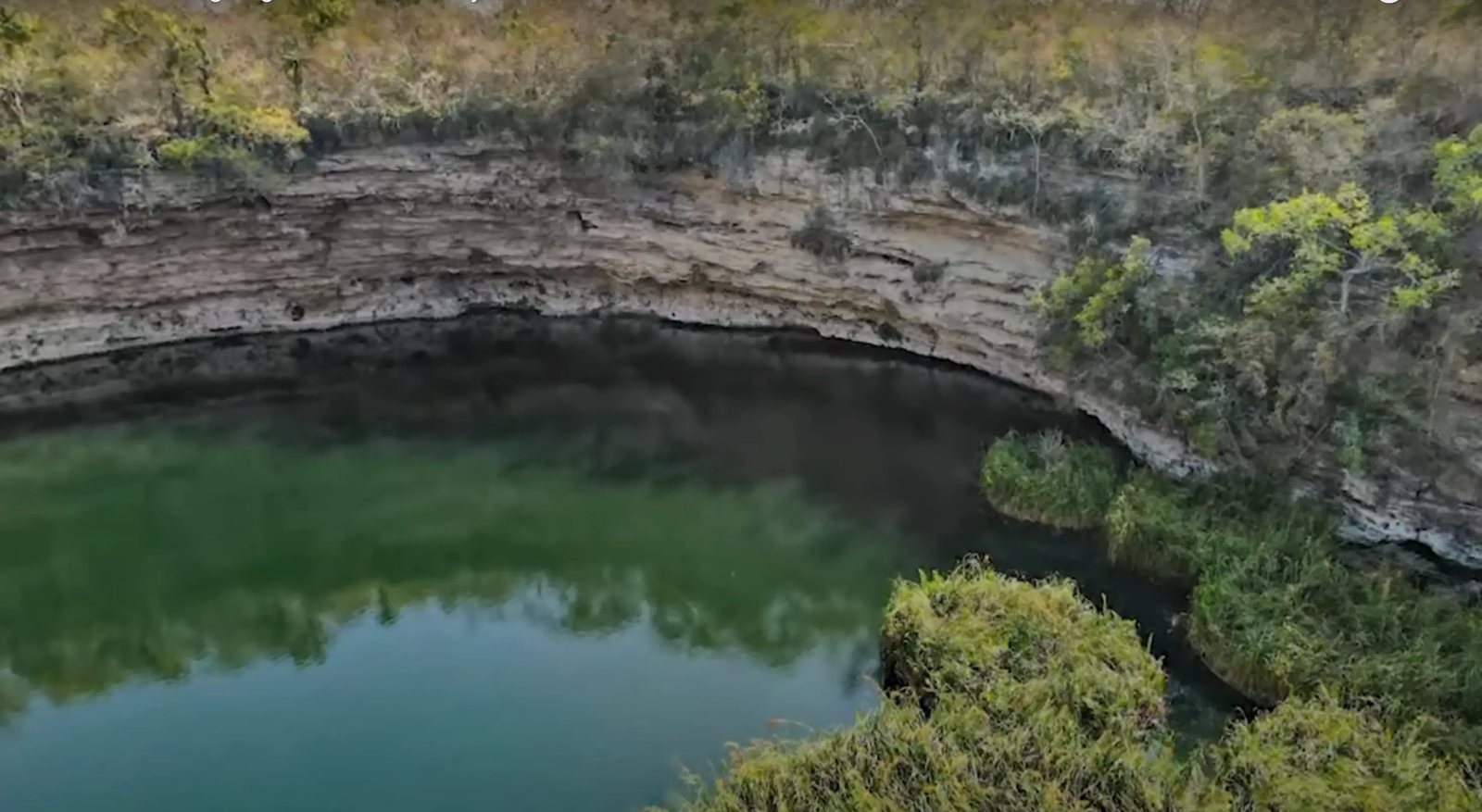
Diagram showing the Blue Hole, the Arch and the open seaPhoto source: IFLScienceAn ambulance now standing by on the shore of the Blue HolePhoto source: כיכר השבתThe Blue Hole seen from above, its deep blue opening surrounded by a light-colored reef flatPhoto source: כיכר השבתThe Arch inside the Blue Hole, with a diver at the openingPhoto source: כיכר השבת
Under each fact is a verbatim quote from the original. "Single source" means only one outlet mentioned it; "Accounts differ" means sources contradict each other and this site adopts neither side; "Speculation" is an inference by a reporter or a person involved, not a fact.
According to DER SPIEGEL, His dive computer can be seen displaying depths of 81.7 metres and then 85.3 metres, before he finally reached the bottom at 91.6 metres.
Quotes from the original 1
“His dive computer, visible in the picture, shows 81.7 meters, then 85.3 meters and, finally, 91.6 meters, when he hits the bottom.”
Accounts differ on the depth at which the body was found: The Guardian quoted Omar as saying it was recovered at 92 metres; DER SPIEGEL quoted Omar as saying the body was at 115 metres; Slate said he died at more than 300 feet (approximately over 90 metres).
The same person who recovered the body gave different depths in two interviews
Quotes from the original 3
“The following morning, Omar retrieved his body from 92 metres down.”
An arch in the inner wall of the Blue Hole, with its top more than 50 metres underwater (52 to 56 metres according to different sources), leads to a tunnel approximately 26 metres long through the reef to the open sea.
Quotes from the original 3
“At a depth of 52 meters, an arch opens into a 26-meter-long tunnel that leads through the reef and into the open sea.”
“At this depth, it’s possible to succumb to a condition known as nitrogen narcosis, in which breathing gases at high pressure causes mental, and sometimes physical, impairment.”
Technical divers can use special gas mixtures such as trimix to reduce nitrogen narcosis at depth; crossing the Arch using compressed air is more difficult.
Quotes from the original 2
“It's easy to dive through the tunnel in the Blue Hole with Trimix or Heliox, but not with compressed air.”
Omar believed Lipski was carrying too much weight, beyond the capacity of his buoyancy vest, and that the extra weight of the camera may have been decisive.
Quotes from the original 2
““He was too heavy for his buoyancy device,” says Omar, who thinks the extra weight of a camera might have tipped the balance.”
According to The Guardian, Omar believed that Lipski had passed the depth at which nitrogen narcosis begins to set in and was no longer in control of himself by 80 meters.
Quotes from the original 1
““He passes the point where narcosis sets in and by 80 metres, he’s under the control of the sea.””
Several reports suggested that nitrogen narcosis may have been an important reason why Lipski lost his judgment and was unable to save himself.
These include sources of low credibility
Quotes from the original 2
“After reaching a depth of 91 metres, it is believed that the diver passed away, as the intense pressure this far below sea level causes people to experience a health condition known as nitrogen narcosis”
Estimates of the number of deaths at the Blue Hole vary: DER SPIEGEL quoted Omar as estimating that more than 130 divers died over 15 years; The Guardian said local divers estimated as many as 200 in recent years; Undercurrent said at least 40 scuba divers had died since 1980.
The counts use different criteria and cover different periods
Quotes from the original 3
“Omar estimates that more than 130 divers have lost their lives in the hole in the last 15 years.”
According to כיכר השבת, Divers at the Blue Hole must now be accompanied by a local guide throughout, and police and medical support are available on site.
Quotes from the original 1
“יש במקום אבטחה משטרתית ורפואית וניתן לצלול רק עם מדריך מקומי צמוד.”
According to כיכר השבת, Roy Lieberman, head of the Tel Aviv diving team of Israel's ZAKA, believed that accidents here resulted from failure to follow international diving rules, taking unnecessary risks, poor planning and errors of judgment.
Quotes from the original 1
“התאונות אשר ארעו בעבר ואף חוזרות מידי פעם כיום מתרחשות בשל אי ציות לחוקי הצלילה הבינלאומיים, לקיחת סיכונים מיותרים, תכנון לקוי והפעלת שיקול דעת שגוי.”
According to Undercurrent, Diving journalist John Bantin believed that the danger lay not in the Blue Hole itself, but in people attempting extremely deep dives there.
Quotes from the original 1
“but it isn’t the site – it’s what people attempt to do in it. Dive very deep.”
 GuituluGlobal Outdoor Accident Archive