Deep-diving challenge (sinkhole)Involves: Drowning and divingExley and Jim Bowden each used a separate descent line, with underwater and surface support
Casualties
Dead 1 Injured 1Exley died; Bowden developed decompression sickness after surfacing and was treated in the water
Material
37 facts · 6 sources3 accounts differ and are shown side by side
The number at the end of a paragraph is how many facts it rests on; open it to see each fact and how well it is sourced:
Multiple sourcesSingle source. Conflicting accounts and speculation are kept out of the narrative.
Reported locations along the route (illustrative)Schematic
Scroll down and the map flies to where each part happened. The line is Schematic, The locations mentioned in reports are connected in sequence to show the approximate direction only, not the actual track.
01
The full route
The locations mentioned in reports are connected in sequence to show the approximate course of events (schematic).
In March 1989, Exley used trimix to dive to 881 feet in Mexico's Mante spring cave, a world-record depth at the time. F01
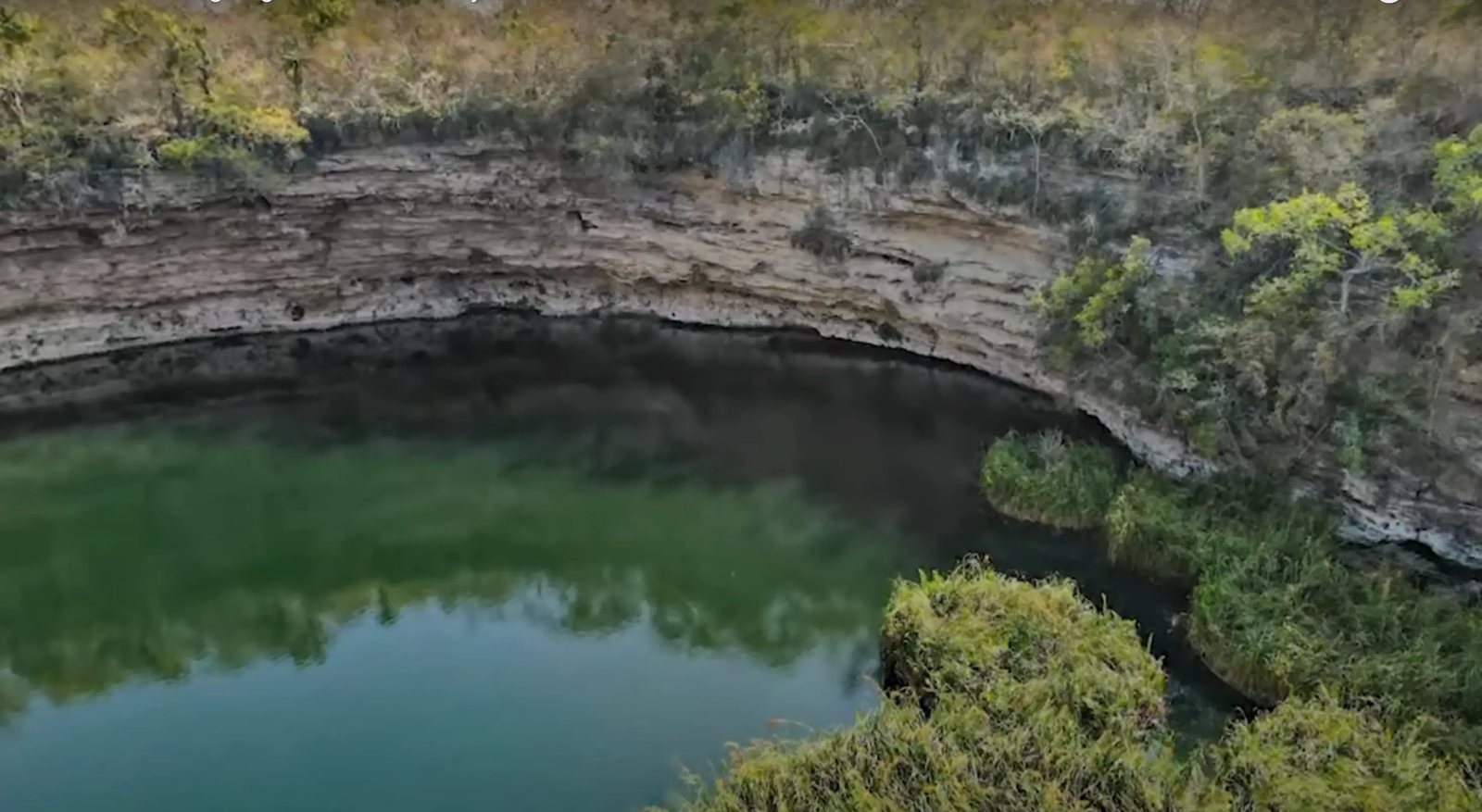
In May 1990, Jim Bowden and Gary Walten followed the flow through the Nacimiento cave, emerging underwater at Zacatón at a depth of 26 feet. F02
In April 1993, Exley and Bowden made an air dive at Zacatón and discovered that the previously measured depth of 250 feet was incorrect. F03
In April 1993, Bowden used mixed gas to dive to 504 feet, and Exley dived to 721 feet. F05
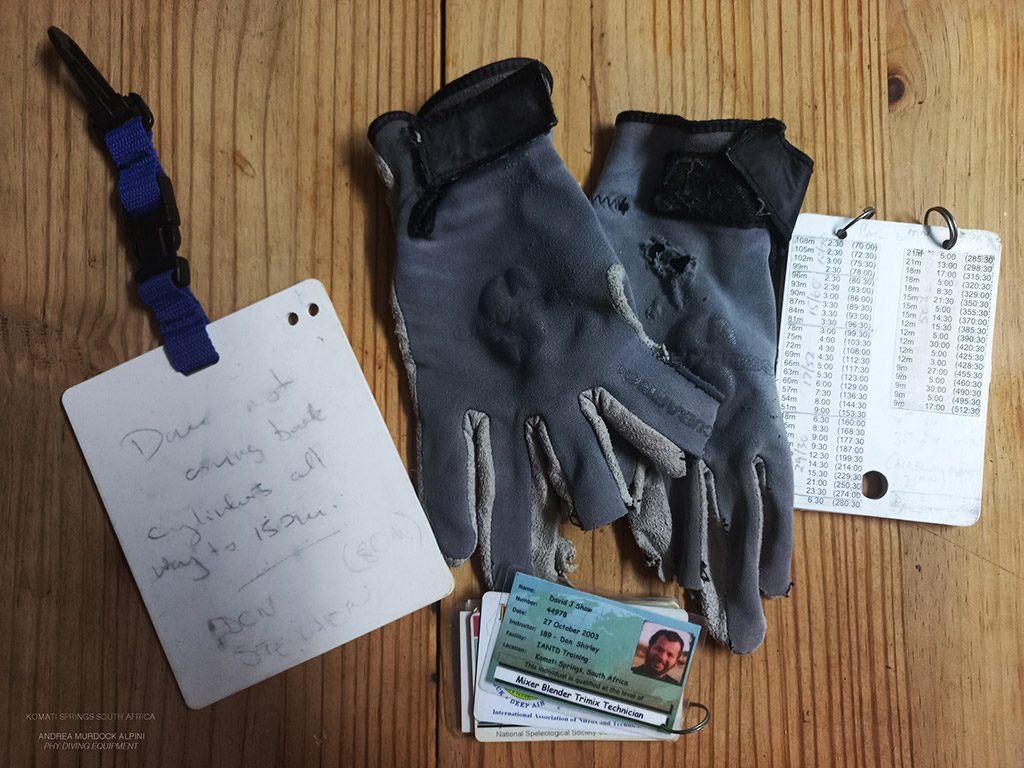
In August 1993, Exley dived to 863 feet at Bushmansgat in South Africa. During the descent, he experienced visual, physical and neurological symptoms of high-pressure nervous syndrome (HPNS), which subsided before he ascended to the first decompression stop. F07
According to Bowden, as recounted by Gilliam, Exley dived to 420 feet on 4 April, two days before the incident, setting a new cave air-diving depth record. F11
Mary Ellen Eckhoff descended to about 280 feet to look for bubbles but found no trace of Exley. F24
The two began their descent at about 9:50 a.m. Central Standard Time. F15
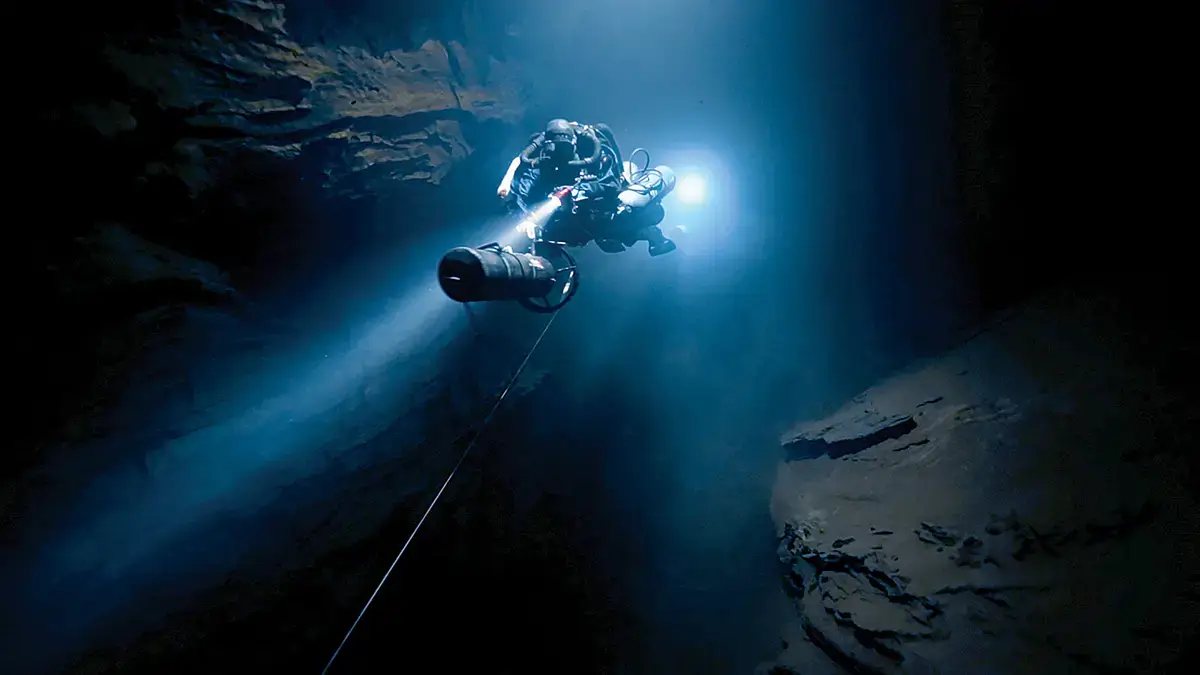
During his descent, Bowden found that he was using far more gas than planned. He stopped descending at 925 feet and began to ascend; that depth was a new record. F17
Three days later, the team found Exley's body tangled in the line while retrieving the descent line and remaining equipment. F29
Under each fact is a verbatim quote from the original. "Single source" means only one outlet mentioned it; "Accounts differ" means sources contradict each other and this site adopts neither side; "Speculation" is an inference by a reporter or a person involved, not a fact.
According to Undercurrent, In May 1990, Jim Bowden and Gary Walten followed the flow through the Nacimiento cave, emerging underwater at Zacatón at a depth of 26 feet.
Quotes from the original 1
“The exuberant divers emerged into Zacaton at a depth of 26′ and surfaced”
According to Undercurrent, In April 1993, Exley and Bowden made an air dive at Zacatón and discovered that the previously measured depth of 250 feet was incorrect.
Quotes from the original 1
“The previously plumbed depth of 250 ft. was proven to be an error!”
Accounts of Zacatón's measured depth differ: Undercurrent says the sounding line stopped after about 1080 feet had been let out, while LADbible says the actual depth is 1112 feet.
1080 feet was the sounding-line reading; the source for 1112 feet did not specify the measurement method
Quotes from the original 2
“The weight finally stopped after some 1080′ had been measured.”
In August 1993, Exley dived to 863 feet at Bushmansgat in South Africa. During the descent, he experienced visual, physical and neurological symptoms of high-pressure nervous syndrome (HPNS), which subsided before he ascended to the first decompression stop.
Quotes from the original 2
“During this dive, Sheck experienced visual, somatic, and neurological symptoms of high pressure nervous syndrome (HPNS).”
According to Undercurrent, In April 1994, the team gathered at the ranch and spent two days placing decompression cylinders in position underwater in Zacatón and El Nacimiento.
Quotes from the original 1
“Two days were spent staging the required decompression bottles at their specified depths in Zacaton and El Nacimiento.”
The two planned to descend on separate lines to avoid contact or interference with each other during the rapid descent; each had to complete the dive alone.
Quotes from the original 2
“The dive would be accomplished on independent descent lines, a condition both divers favored to avoid contact and potential interference during the very rapid descent.”
According to Undercurrent, According to Bowden, as recounted by Gilliam, Exley dived to 420 feet on 4 April, two days before the incident, setting a new cave air-diving depth record.
Quotes from the original 1
“soon eclipsed by Sheck with his dive to 420 ffw on April 4th two days before our attempt for the bottom”
According to IUCRR, Sheck Exley was a 45-year-old mathematics teacher from Live Oak, Florida, who died on 6 April 1994 while attempting to dive beyond 1000 feet in a cave in Mexico.
Quotes from the original 1
“Exley, a 45 year old mathematics teacher from Live Oak, Florida, died on April 6, 1994 as he attempted to descend to a depth of over 1,000 feet in a cave in Mexico.”
According to Undercurrent, Those present on 6 April included Exley, Bowden, Mary Ellen Eckhoff, Karen Hohle and Ann Kristovich, as well as media personnel including a Sports Illustrated reporter and photographer.
Quotes from the original 1
“Present on the day of the dive was the team consisting of Exley, Bowden, Mary Ellen Eckhoff (Exley’s ex-wife), Karen Hohle (Bowden’s wife), Ann Kristovich, and Marcos Gary.”
During his descent, Bowden found that he was using far more gas than planned. He stopped descending at 925 feet and began to ascend; that depth was a new record.
Quotes from the original 3
“I inflated my BCD wings and managed to stop my descent at 925 feet.”
According to Undercurrent, After surfacing, Bowden developed symptoms of decompression sickness in his left shoulder and received in-water recompression treatment at the site.
Quotes from the original 1
“suffered a left shoulder DCS hit that then was treated with in-water therapy on the site”
According to Undercurrent, Kristovich, at the surface, saw only one set of bubbles reappear after about 15 minutes; she could not tell whose they were.
Quotes from the original 1
“Only one set of bubbles re-appeared after about 15 minutes and she couldn’t be sure if they were Bowden’s or Exley’s.”
According to Undercurrent, When Kristovich descended to assist Bowden, she saw that Exley's backup cylinder was still hanging on the line, but there was no sign of him.
Quotes from the original 1
“chilled to see Sheck’s stage equipment still hanging with no sign of him”
According to Undercurrent, The team did not consider organising a recovery of the body at the time, because the person recognised as the only one capable of carrying out such a recovery was already underwater.
Quotes from the original 1
“There was no consideration given to mounting a body recovery for Sheck since it was accepted that the only man capable of effecting such a recovery was the man who was already down there.”
Speculation: Exley may have experienced high-pressure nervous syndrome (HPNS); he had shown similar symptoms while diving in South Africa, and severe tremors may have triggered an oxygen toxicity convulsion or prevented him from switching breathing gas.
Quotes from the original 3
“The best educated guess would point to an HPNS incident.”
There are discrepancies in the reported maximum depth shown on Exley's dive computer: Gilliam gives 904 feet in one place, while elsewhere he and the Valdosta Daily Times give 906 feet.
According to InDEPTH, That year, aquaCORPS magazine published an accident analysis report titled “What happened to Sheck Exley?”, written by Bill Hamilton, Ann Kristovich and Jim Bowden.
This archive was unable to obtain the full report
Quotes from the original 1
“Accident Analysis Report from aquaCORPS #9 Wreckers (JAN95): What happened to Sheck Exley? by Bill Hamilton, Ann Kristovich And Jim Bowden”
According to aquaCORPS, A 1995 aquaCORPS report said that an unexpected increase in gas consumption nearly cost Bowden his life, and that an extra 80-cubic-foot backup cylinder saved him.
Quotes from the original 1
“An unpredicted increase in gas consumption nearly cost Bowden his life on his this prior 94APR dive to 925 f/284 m. An extra 80cf stage cylinder saved it.”
According to Valdosta Daily Times, The National Speleological Society Cave Diving Section (NSS-CDS) still presents the “Sheck Exley Safe Cave Diving Award” to divers who have completed 1000 safe cave dives.
Quotes from the original 1
“presents the “Sheck Exley Safe Cave Diving Award” to divers who have completed 1,000 safe cave dives”
 GuituluGlobal Outdoor Accident Archive