GuituluGlobal Outdoor Accident Archive 中文
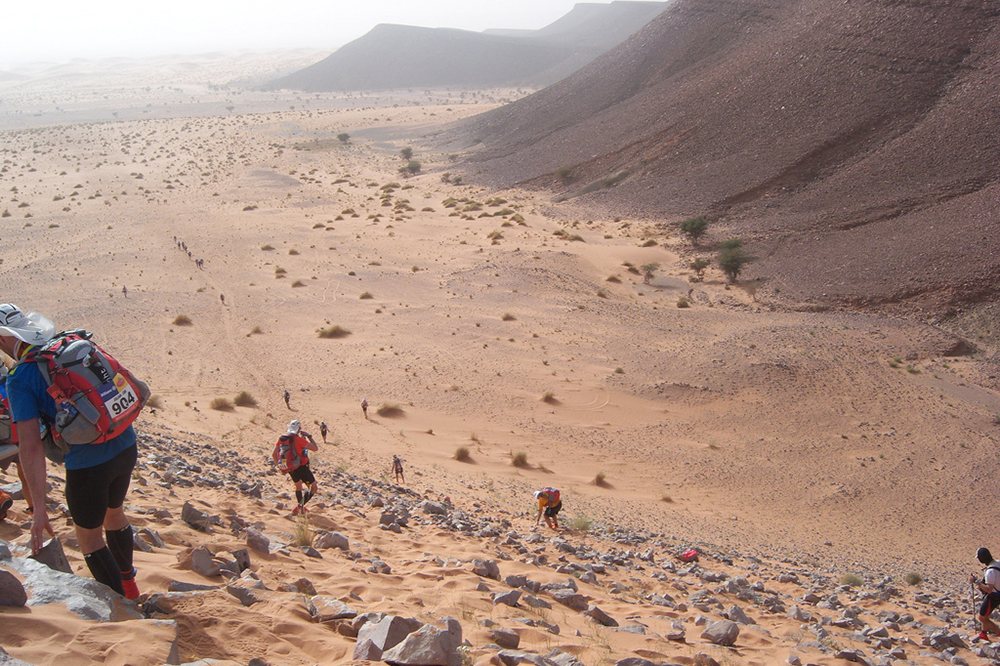
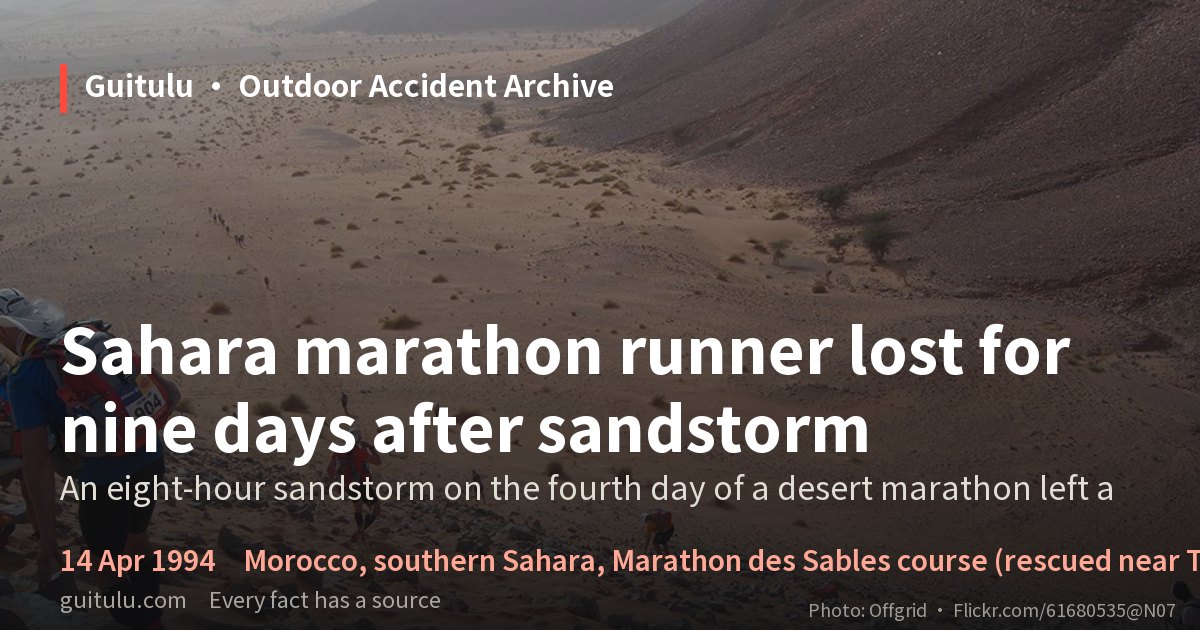
Marathon des Sables runners on a desert slope (recent race)

Archive / Other

Sahara marathon runner lost for nine days after sandstorm

An eight-hour sandstorm on the fourth day of a desert marathon left a runner lost and surviving alone before his rescue in Algeria

The runner was rescued

Photo: Offgrid · Flickr.com/61680535@N07

Date
Spring
Place
Morocco, southern Sahara, Marathon des Sables course (rescued near Tindouf, Algeria)Morocco › Southern Sahara · Sahara Desert-8.129°E 27.675°N
Activity
Desert trail runningInvolves: Getting lost and losing contact · Heat and lack of water · Extreme weather1 person (race participant, alone)
Casualties
Injured 1The runner was rescued with severe dehydration and liver damage; recovery took nearly two years
Material
45 facts · 7 sources5 accounts differ and are shown side by side

01What happened

In 1994, Prosperi, a 39-year-old Italian police officer and former Olympic modern pentathlete, took part in the Marathon des Sables. The six-day stage race was held in the Moroccan Sahara and covered approximately 250 kilometres. Competitors had to carry a week's food and equipment themselves. There were few participants that year, and he ran alone most of the time.Facts it rests onF01Multiple sourcesProsperi was an Italian police officer and former Olympic modern pentathlete.F02Multiple sourcesProsperi was 39 when he took part in the Marathon des Sables in 1994.F40Multiple sourcesThe Marathon des Sables is a six-day multistage race held in the Sahara Desert in Morocco, covering about 250 kilometres (155 miles).F41Multiple sourcesThe race requires runners to be self-sufficient and carry their own food and equipment for a week.F06Multiple sourcesThere were few participants that year, and he ran alone for most of the race.

Marathon des Sables runners on a desert slope (recent race)Photo source: Offgrid · Flickr.com/61680535@N07

The fourth day was the longest stage of the race, and he encountered a sandstorm along the way. The storm lasted about eight hours. He could see almost nothing and could not see the other runners. By the time the wind stopped it was late, so he spent the night among the dunes. The next morning he woke to find that the terrain had completely changed. He had a compass and map, but without landmarks he found it difficult to determine his direction. According to reports, the other runners reached the fourth checkpoint that night, and ground and air searches the following day did not find him.Facts it rests onF07Multiple sourcesThe fourth day of the race was its longest stage, and a sandstorm struck that day.F31Multiple sourcesThe sandstorm lasted about eight hours.F30Multiple sourcesHe could barely see in the sandstorm and could not see the other runners.F33Multiple sourcesIt was nearly dark when the wind stopped. He spent the night among the dunes and woke the next day to find the surrounding terrain completely unfamiliar.F35Multiple sourcesHe had a compass and a map, but after the sandstorm there were no landmarks, making it difficult to determine his direction.F36Single sourceAccording to reports, the other runners waited for the sandstorm to pass and reached the fourth checkpoint before dark, but he was missing. A ground and air search began early the next morning, with Moroccan military personnel and Bedouin guides taking part, but no trace of him was found.

According to the Offgrid caption, this is the marabout tomb where Prosperi took shelter while lost, still standing in the desertPhoto source: Offgrid

He had only about half a bottle of water left when the sandstorm began. On the evening of the second day after he became lost, a helicopter flew low overhead, but the flare he fired was not seen. He later found shelter in an unoccupied Islamic shrine, where he caught and ate bats to maintain his strength. When a plane passed, he lit a fire to signal for help, but another sandstorm followed and he was again not found. After both attempts failed, he fell into despair for a time.Facts it rests onF34Multiple sourcesWhen the sandstorm began, he had only about half a bottle of water left.F09Multiple sourcesOn the evening of the second day after he got lost, a helicopter flew overhead at low altitude. He fired a flare, but it was not seen.F10Multiple sourcesHe found an unoccupied Islamic shrine (marabout) in the desert and took shelter there.F11Multiple sourcesNear the shrine, he sustained himself by catching and eating bats that roosted there.F12Multiple sourcesWhile he was at the shrine, a plane passed overhead and he lit a fire to signal for help, but another sandstorm then arose and he again went unnoticed.F13Multiple sourcesAfter both attempts to signal for help went unnoticed, he fell into despair and attempted to end his life, but survived.

Runners crossing tall dunes in the Marathon des SablesPhoto source: IBTimes

He left the shrine and set out again, walking only in the cool of early morning and evening. Along the way, he caught and ate snakes and lizards and squeezed juice from plants to quench his thirst. On the eighth day after becoming lost, he found a small oasis, where he could only sip water slowly. He then followed footprints to a nomadic camp, where he drank sheep's milk. Local military police subsequently took him away and, after establishing his identity, sent him for medical treatment. By then, he had crossed the border into Algeria.Facts it rests onF14Multiple sourcesHe then left the shrine and set out again, heading towards something in the distance (in his own account, clouds on the early morning horizon; in Offgrid's account, distant mountains).F16Multiple sourcesHe walked only in the cool of the early morning and evening, and sought shelter from the heat during the day.F17Multiple sourcesAlong the way, he caught and ate snakes and lizards and squeezed juice from plants to quench his thirst.F18Multiple sourcesOn the eighth day after he got lost, he found a small oasis, where he could drink water only slowly, one small sip at a time.F19Multiple sourcesHe then followed goat and human tracks and came upon a nomads' camp, where the people gave him sheep's milk to drink.F23Multiple sourcesLocal military police initially did not know his identity and took him to a military camp. After establishing that he was the missing runner, they took him to a hospital.F21Multiple sourcesBy the time he was rescued, he had unknowingly crossed the border into Algeria.

By the time he was rescued, he had lost about 16 kilograms and weighed only about 45 kilograms. His liver was severely damaged. For several months afterward he could eat only liquids, and it took nearly two years for him to recover fully. Several years later he returned to the race and finished it. The race's founder, Bauer, publicly questioned his account.Facts it rests onF25Multiple sourcesBy the time he was rescued, he had lost about 16 kilograms (35 pounds) and weighed only about 45 kilograms.F26Multiple sourcesHis liver was severely damaged, but his kidney function was still good.F05Multiple sourcesFor several months afterwards, he could eat only liquids, and it took nearly two years for him to recover fully.F39Multiple sourcesA few years later, he returned to the Marathon des Sables and completed it.F43Multiple sourcesRace founder Patrick Bauer doubted his account and told Men's Journal that the story was “fabricated” and “physiologically impossible”.

The number at the end of a paragraph is how many facts it rests on; open it to see each fact and how well it is sourced: Multiple sourcesSingle source. Conflicting accounts and speculation are kept out of the narrative.

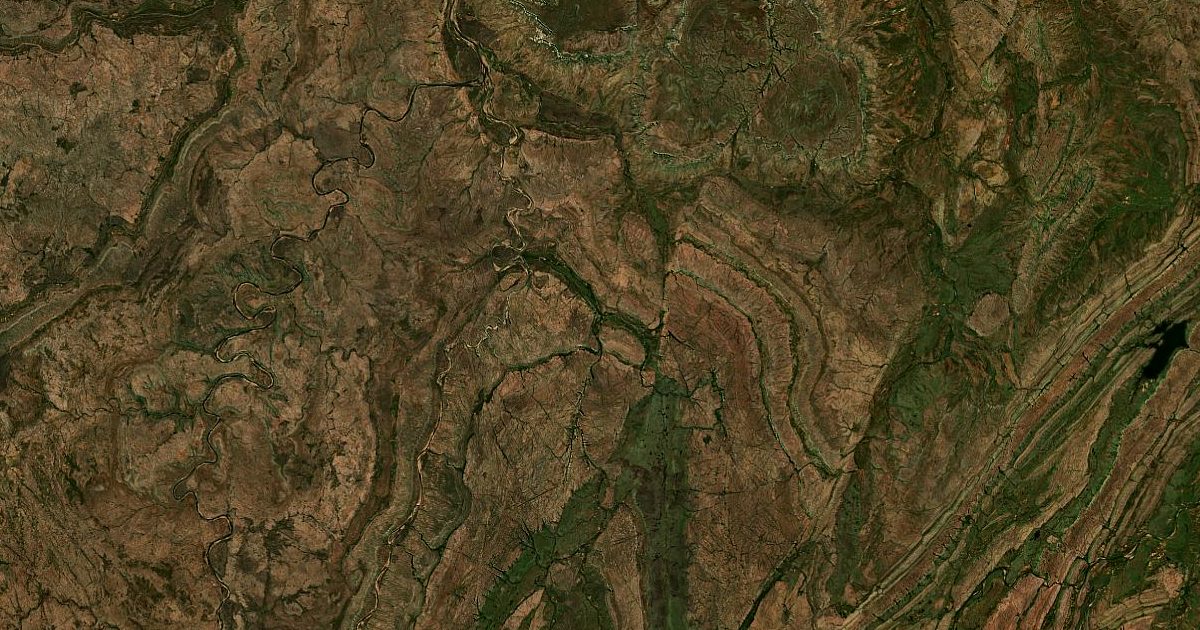
Satellite imagery Sentinel-2 cloudless 2024 © EOX · Terrain AWS Terrain Tiles · Position is schematic, geocoded from place names · Place coordinates not individually verified

Route review

6 scenes to understand what happened

Scroll down and the map flies to where each part happened.

01

Incident area

The reports do not provide enough locations along the way, so the map shows only the approximate location and terrain of the incident area.

03

Lost direction

After the wind stopped, he spent the night among the dunes. He woke to find the terrain completely changed, and even with a compass and map he found it difficult to determine his direction.Facts it rests onF33Multiple sourcesIt was nearly dark when the wind stopped. He spent the night among the dunes and woke the next day to find the surrounding terrain completely unfamiliar.F35Multiple sourcesHe had a compass and a map, but after the sandstorm there were no landmarks, making it difficult to determine his direction.

04

Shelter in a shrine

A helicopter and a plane passed in succession without finding him. He sheltered in an unoccupied Islamic shrine.Facts it rests onF09Multiple sourcesOn the evening of the second day after he got lost, a helicopter flew overhead at low altitude. He fired a flare, but it was not seen.F10Multiple sourcesHe found an unoccupied Islamic shrine (marabout) in the desert and took shelter there.F12Multiple sourcesWhile he was at the shrine, a plane passed overhead and he lit a fire to signal for help, but another sandstorm then arose and he again went unnoticed.

05

Finding water

He walked only in the early morning and evening. On the eighth day, he found a small oasis and later came upon a nomads' camp.Facts it rests onF16Multiple sourcesHe walked only in the cool of the early morning and evening, and sought shelter from the heat during the day.F18Multiple sourcesOn the eighth day after he got lost, he found a small oasis, where he could drink water only slowly, one small sip at a time.F19Multiple sourcesHe then followed goat and human tracks and came upon a nomads' camp, where the people gave him sheep's milk to drink.

06

Rescued across the border

He had crossed the border into Algeria. After local military police established his identity, he was taken to a hospital, which he said was in Tindouf.Facts it rests onF21Multiple sourcesBy the time he was rescued, he had unknowingly crossed the border into Algeria.F23Multiple sourcesLocal military police initially did not know his identity and took him to a military camp. After establishing that he was the missing runner, they took him to a hospital.F24Single sourceAccording to him, he was taken to a hospital in Tindouf, Algeria.

02Timeline

  1. For several months afterwards, he could eat only liquids, and it took nearly two years for him to recover fully. F05

  2. The fourth day of the race was its longest stage, and a sandstorm struck that day. F07

  3. According to him, he was taken to a hospital in Tindouf, Algeria. F24

  4. He found an unoccupied Islamic shrine (marabout) in the desert and took shelter there. F10

  5. He then followed goat and human tracks and came upon a nomads' camp, where the people gave him sheep's milk to drink. F19

  6. By the time he was rescued, he had unknowingly crossed the border into Algeria. F21

  7. Local military police initially did not know his identity and took him to a military camp. After establishing that he was the missing runner, they took him to a hospital. F23

  8. On the eighth day after he got lost, he found a small oasis, where he could drink water only slowly, one small sip at a time. F18

  9. On the evening of the second day after he got lost, a helicopter flew overhead at low altitude. He fired a flare, but it was not seen. F09

  10. He then left the shrine and set out again, heading towards something in the distance (in his own account, clouds on the early morning horizon; in Offgrid's account, distant mountains). F14

  11. While he was at the shrine, a plane passed overhead and he lit a fire to signal for help, but another sandstorm then arose and he again went unnoticed. F12

  12. The sandstorm lasted about eight hours. F31

  13. It was nearly dark when the wind stopped. He spent the night among the dunes and woke the next day to find the surrounding terrain completely unfamiliar. F33

  14. According to reports, the fourth stage took place on 14 April 1994, when the temperature under the blazing sun reached 115 degrees Fahrenheit (about 46 degrees Celsius). F27

  15. According to reports, the other runners waited for the sandstorm to pass and reached the fourth checkpoint before dark, but he was missing. A ground and air search began early the next morning, with Moroccan military personnel and Bedouin guides taking part, but no trace of him was found. F36

  16. A few years later, he returned to the Marathon des Sables and completed it. F39

03Lessons

Weather and retreat

Landmarks can disappear in a sandstorm

After the eight-hour sandstorm, he woke the next day to completely unfamiliar terrain and found it difficult to determine his direction even with a compass and map. In dune country, sandstorms can erase markers and footprints. Recording the last reliable position and direction before visibility returns is more important than continuing by instinct.Facts it rests onF31Multiple sourcesThe sandstorm lasted about eight hours.F33Multiple sourcesIt was nearly dark when the wind stopped. He spent the night among the dunes and woke the next day to find the surrounding terrain completely unfamiliar.F35Multiple sourcesHe had a compass and a map, but after the sandstorm there were no landmarks, making it difficult to determine his direction.

Communication and location

Signals must be visible from the air

When a helicopter flew low overhead, the flare he fired was not seen; when he later lit a fire to signal for help, another sandstorm followed. According to the runner, the flares issued to competitors at the time were only the size of a ballpoint pen; from 1995, the race switched to marine flares. In open terrain, the brightness and duration of a distress signal determine whether it can be seen.Facts it rests onF09Multiple sourcesOn the evening of the second day after he got lost, a helicopter flew overhead at low altitude. He fired a flare, but it was not seen.F12Multiple sourcesWhile he was at the shrine, a plane passed overhead and he lit a fire to signal for help, but another sandstorm then arose and he again went unnoticed.F38Single sourceAccording to him, the signal flares issued to runners at the time were only the size of a ballpoint pen; from 1995, the race began issuing runners with marine signal flares instead.

Rescue and self-rescue

Water is the first thing to run out in the desert

He had only about half a bottle of water left when the sandstorm began. By the time he was rescued, he had lost about 16 kilograms and his liver was severely damaged; recovery took nearly two years. According to a researcher interviewed by Discover, water loss equal to 11% to 12% of body weight is life-threatening. In a desert race, each stage should include a reserve for the worst case.Facts it rests onF34Multiple sourcesWhen the sandstorm began, he had only about half a bottle of water left.F25Multiple sourcesBy the time he was rescued, he had lost about 16 kilograms (35 pounds) and weighed only about 45 kilograms.F26Multiple sourcesHis liver was severely damaged, but his kidney function was still good.F05Multiple sourcesFor several months afterwards, he could eat only liquids, and it took nearly two years for him to recover fully.F45Single sourceAccording to a dehydration researcher interviewed by Discover, most medical textbooks consider fluid loss of 11% to 12% of body weight incompatible with life.

Rescue and self-rescue

Travel outside the hottest hours

After setting out again, he walked only in the cool of early morning and evening, sheltering from the heat during the day. He found water on the eighth day. Even after finding it, he could only sip it slowly. When lost, limiting sweat can extend survival time more than pressing on.Facts it rests onF16Multiple sourcesHe walked only in the cool of the early morning and evening, and sought shelter from the heat during the day.F18Multiple sourcesOn the eighth day after he got lost, he found a small oasis, where he could drink water only slowly, one small sip at a time.

04Fact list 45 facts

Under each fact is a verbatim quote from the original. "Single source" means only one outlet mentioned it; "Accounts differ" means sources contradict each other and this site adopts neither side; "Speculation" is an inference by a reporter or a person involved, not a fact.

  1. F01Multiple sourcesBackground

    Prosperi was an Italian police officer and former Olympic modern pentathlete.

    Quotes from the original 2

    “In 1994, Italian police officer and former Olympic pentathlete Mauro Prosperi was looking to push his physical limits.”

    Offgrid · 2018-04-08

    “Mauro Prosperi is an Italian police officer who gained worldwide fame after getting lost in the Sahara Desert in 1994.”

    History.com · 2019-06-05
  2. F02Multiple sourcesBackground

    Prosperi was 39 when he took part in the Marathon des Sables in 1994.

    Quotes from the original 2

    “Transcurría 1994 y a sus 39 años, Mauro Prosperi participó en la Maratón de las Arenas”

    El Diario NY · 2014-11-30

    “In 1994, 39-year-old Mauro Prosperi went missing in the Sahara Desert while running the Marathon Des Sables”

    Discover · 2021-03-08
  3. F03Multiple sourcesPlan

    Before the race, he trained by running 40 kilometres a day and deliberately reduced his water intake, hoping to accustom his body to dehydration.

    Quotes from the original 2

    “running 40km (25 miles) a day, reducing the amount of water I was drinking to get used to dehydration”

    Offgrid · 2018-04-08

    “corriendo 40 kilómetros al día. Además, reduje la cantidad de agua que bebía, para acostumbrarme a la deshidratación”

    El Diario NY · 2014-11-30
  4. F04Accounts differBackground

    Accounts differ on the number of participants in the 1994 race: Offgrid says about 134; Prosperi's own account and IBTimes say only 80.

    Sources differ on the number of participants that year.

    Quotes from the original 3

    “the 1994 event reportedly had only 134 competitors”

    Offgrid · 2018-04-08

    “En 1994, en cambio, solo éramos 80 participantes”

    El Diario NY · 2014-11-30

    “Prosperi was one of 80 participants”

    IBTimes · 2014-11-27
  5. F05Multiple sourcesAftermath

    For several months afterwards, he could eat only liquids, and it took nearly two years for him to recover fully.

    Quotes from the original 3

    “No pude comer nada más que sopa o líquidos por meses. Me tomó casi dos años recuperarme.”

    El Diario NY · 2014-11-30

    “he says that he didn’t recover for almost two years”

    Offgrid · 2018-04-08

    “spent the next two years recovering from the effects of severe dehydration on his body”

    Discover · 2021-03-08
  6. F06Multiple sourcesMovement

    There were few participants that year, and he ran alone for most of the race.

    Quotes from the original 2

    “Prosperi says he was on his own for most of the six-day journey.”

    Offgrid · 2018-04-08

    “De modo que durante la mayoría del tiempo estuve solo.”

    El Diario NY · 2014-11-30
  7. F07Multiple sourcesEvent

    The fourth day of the race was its longest stage, and a sandstorm struck that day.

    Quotes from the original 3

    “The fourth day of the Marathon des Sables constitutes its longest single stage”

    Offgrid · 2018-04-08

    “El cuarto día, durante la etapa más larga y difícil de la carrera, las cosas se complicaron.”

    El Diario NY · 2014-11-30

    “when a sandstorm hit on the fourth day and sent him off course”

    Discover · 2021-03-08
  8. F08Multiple sourcesFound at scene

    His equipment included a knife, a compass, a sleeping bag and dehydrated food.

    Quotes from the original 2

    “tenía un cuchillo, una brújula, un saco de dormir y un montón de comida deshidrata en mi mochila”

    El Diario NY · 2014-11-30

    “Prosperi was only left with a knife, a compass, a sleeping bag and some dehydrated food.”

    IBTimes · 2014-11-27
  9. F09Multiple sourcesEvent

    On the evening of the second day after he got lost, a helicopter flew overhead at low altitude. He fired a flare, but it was not seen.

    Quotes from the original 3

    “saqué mi bengala y la tiré al aire. Volaba tan bajo que llegué a ver el casco del piloto. Pero no, él no me vio.”

    El Diario NY · 2014-11-30

    “In the afternoon, he says a rescue helicopter flew almost directly above his position, but failed to notice him.”

    Offgrid · 2018-04-08

    “he fired the supplied flare gun toward the sky, but it was not noticed because the light was too small”

    GIGAZINE · 2021-07-20
  10. F10Multiple sourcesMovement

    He found an unoccupied Islamic shrine (marabout) in the desert and took shelter there.

    Quotes from the original 3

    “me encontré con un morabito, un santuario musulmán”

    El Diario NY · 2014-11-30

    “he recognized it as a marabout shrine”

    Offgrid · 2018-04-08

    “he found himself in an abandoned Muslim shrine”

    History.com · 2019-06-05
  11. F11Multiple sourcesEvent

    Near the shrine, he sustained himself by catching and eating bats that roosted there.

    This detail comes entirely from Prosperi's own account.

    Quotes from the original 3

    “Me comí al menos 20 de ellos, crudos.”

    El Diario NY · 2014-11-30

    “Prosperi found a colony of bats.”

    IBTimes · 2014-11-27

    “In order to survive, he killed and ate bats.”

    History.com · 2019-06-05
  12. F12Multiple sourcesEvent

    While he was at the shrine, a plane passed overhead and he lit a fire to signal for help, but another sandstorm then arose and he again went unnoticed.

    Quotes from the original 2

    “Pero justo entonces otra tormenta de arena golpeó. Duró 12 horas. De nuevo, no me vieron.”

    El Diario NY · 2014-11-30

    “He says he tried to signal by lighting a small fire and writing “SOS” in the sand, but the plane continued towards the horizon.”

    Offgrid · 2018-04-08
  13. F13Multiple sourcesEvent

    After both attempts to signal for help went unnoticed, he fell into despair and attempted to end his life, but survived.

    Quotes from the original 2

    “After two failed attempts of being spotted by planes, Prosperi tried to commit suicide, but after failing in his attempt”

    IBTimes · 2014-11-27

    “No había logrado suicidarme.”

    El Diario NY · 2014-11-30
  14. F14Multiple sourcesMovement

    He then left the shrine and set out again, heading towards something in the distance (in his own account, clouds on the early morning horizon; in Offgrid's account, distant mountains).

    Quotes from the original 3

    “Así que decidí ir hacia esas nubes míticas en el horizonte.”

    El Diario NY · 2014-11-30

    “decided to head towards the clouds”

    IBTimes · 2014-11-27

    “began walking towards mountains in the distance”

    Offgrid · 2018-04-08
  15. F15Single sourcePost-incident analysis

    According to Offgrid, According to reports, the direction he took actually led him deeper into the desert.

    Quotes from the original 1

    “Although he believed the mountains to be in the direction of the marathon’s trail, this route would actually take him even further into the Sahara.”

    Offgrid · 2018-04-08
  16. F16Multiple sourcesMovement

    He walked only in the cool of the early morning and evening, and sought shelter from the heat during the day.

    Quotes from the original 2

    “Solo caminaba cuando esta fresco, en las mañanas, y luego de nuevo en la noche.”

    El Diario NY · 2014-11-30

    “traveling in the early morning and late evening to avoid the heat of the day”

    Offgrid · 2018-04-08
  17. F17Multiple sourcesEvent

    Along the way, he caught and ate snakes and lizards and squeezed juice from plants to quench his thirst.

    Quotes from the original 3

    “Maté serpientes y lagartos y me los comí crudos.”

    El Diario NY · 2014-11-30

    “He had survived by eating snakes and drinking his urine, Bauer said.”

    Reuters · 2000-04-06

    “he squeezed liquid from plant roots”

    Offgrid · 2018-04-08
  18. F18Multiple sourcesEvent

    On the eighth day after he got lost, he found a small oasis, where he could drink water only slowly, one small sip at a time.

    Quotes from the original 3

    “En el octavo día me topé con un pequeño oasis.”

    El Diario NY · 2014-11-30

    “Then, after eight days in the desert, Prosperi found a desert oasis.”

    Offgrid · 2018-04-08

    “sipped the water little by little”

    GIGAZINE · 2021-07-20
  19. F19Multiple sourcesEvent

    He then followed goat and human tracks and came upon a nomads' camp, where the people gave him sheep's milk to drink.

    Quotes from the original 3

    “Una mujer mayor salió de la tienda y de inmediato me dio leche de cabra para beber.”

    El Diario NY · 2014-11-30

    “who immediately gave Prosperi goat’s milk”

    Offgrid · 2018-04-08

    “he stumbled upon a group of women in a tent who contacted the police for help”

    IBTimes · 2014-11-27
  20. F20Accounts differEvent

    Accounts differ on how many days he was missing: his own account and IBTimes say about nine days; Discover says ten days; an account quoted by Reuters in 2000 says he was found only after 12 days.

    Quotes from the original 4

    “He finally made human contact after nine days”

    IBTimes · 2014-11-27

    “Después de nueve días en el desierto”

    El Diario NY · 2014-11-30

    “10 consecutive days wandering through the desert”

    Discover · 2021-03-08

    “found 12 days later”

    Reuters · 2000-04-06
  21. F21Multiple sourcesFound at scene

    By the time he was rescued, he had unknowingly crossed the border into Algeria.

    Quotes from the original 3

    “Descubrí que había cruzado la frontera con Argelia.”

    El Diario NY · 2014-11-30

    “unknowingly wandering into Algeria”

    Offgrid · 2018-04-08

    “181 miles off course in the neighboring country of Algeria”

    Discover · 2021-03-08
  22. F22Accounts differFound at scene

    Accounts differ on how far he had strayed: his own account says he was 291 kilometres off the course; Offgrid says he travelled about 180 miles from where he went missing; Discover says he strayed 181 miles; IBTimes says 219 kilometres; and a 2000 Reuters report says he was found 400 kilometres away.

    Quotes from the original 5

    “Estaba 291 kilómetros fuera de curso.”

    El Diario NY · 2014-11-30

    “Prosperi had traveled 180 miles from where he disappeared”

    Offgrid · 2018-04-08

    “181 miles off course”

    Discover · 2021-03-08

    “now in Algeria, 219km off course”

    IBTimes · 2014-11-27

    “400 km (250 miles) away in Algeria”

    Reuters · 2000-04-06
  23. F23Multiple sourcesEvent

    Local military police initially did not know his identity and took him to a military camp. After establishing that he was the missing runner, they took him to a hospital.

    Quotes from the original 2

    “Me llevaron a su base militar, con los ojos vendados, porque no sabían quién era yo.”

    El Diario NY · 2014-11-30

    “Local military police initially confronted him due to tensions between the two countries, but after finding out who he was, they took him to a hospital.”

    Offgrid · 2018-04-08
  24. F24Single sourceAftermath

    According to El Diario NY, According to him, he was taken to a hospital in Tindouf, Algeria.

    Quotes from the original 1

    “Ellos me trasladaron al hospital de Tinduf”

    El Diario NY · 2014-11-30
  25. F25Multiple sourcesFound at scene

    By the time he was rescued, he had lost about 16 kilograms (35 pounds) and weighed only about 45 kilograms.

    Quotes from the original 3

    “había perdido 16 kilogramos, pesaba solo 45kg”

    El Diario NY · 2014-11-30

    “he was 16kg less from his starting point and weighed only 45kg”

    IBTimes · 2014-11-27

    “He had dropped 35 pounds during his time in the desert”

    Discover · 2021-03-08
  26. F26Multiple sourcesFound at scene

    His liver was severely damaged, but his kidney function was still good.

    Quotes from the original 3

    “Mis ojos y mi hígado sufrieron daños, pero mis riñones estaban bien.”

    El Diario NY · 2014-11-30

    “he sustained extensive damage to his liver from his time in the Sahara, but his kidneys were somehow still functional”

    Discover · 2021-03-08

    “Doctors said his liver had almost completely failed”

    Offgrid · 2018-04-08
  27. F27Single sourceEvent

    According to Offgrid, According to reports, the fourth stage took place on 14 April 1994, when the temperature under the blazing sun reached 115 degrees Fahrenheit (about 46 degrees Celsius).

    Quotes from the original 1

    “On April 14th, 1994, blistering sun elevated temperatures to 115°F”

    Offgrid · 2018-04-08
  28. F28Accounts differMovement

    Accounts differ on which checkpoint he had passed before the sandstorm struck: Offgrid says he had just passed the third checkpoint; in his own account, he said he had passed four checkpoints and entered the dunes.

    Quotes from the original 2

    “as Prosperi passed the third checkpoint, 20 miles into the day’s journey”

    Offgrid · 2018-04-08

    “Tras pasar cuatro puestos de control, entré a una zona de dunas de arena.”

    El Diario NY · 2014-11-30
  29. F29Single sourceEvent

    According to Offgrid, According to reports, after 1 p.m. strong winds brought a sandstorm, prompting the organisers to suspend that day's race.

    Quotes from the original 1

    “Shortly after 1:00, high winds brought on an unexpected sandstorm that caused organizers to pause the race for the day.”

    Offgrid · 2018-04-08
  30. F30Multiple sourcesEvent

    He could barely see in the sandstorm and could not see the other runners.

    Quotes from the original 3

    “When the sandstorm started to blow, I lost sight of everybody else.”

    Offgrid · 2018-04-08

    “Estaba ciego, no podía respirar.”

    El Diario NY · 2014-11-30

    “causing a sandstorm that robbed Prosperi of his sight”

    GIGAZINE · 2021-07-20
  31. F31Multiple sourcesEvent

    The sandstorm lasted about eight hours.

    Quotes from the original 3

    “Duró ocho horas.”

    El Diario NY · 2014-11-30

    “following a violent eight-hour storm”

    IBTimes · 2014-11-27

    “the sandstorm that lasted for eight hours”

    GIGAZINE · 2021-07-20
  32. F32Accounts differBackground

    Accounts differ on his position when the sandstorm struck: in a 1998 Men's Journal interview, he said he was seventh; in a 2014 account, he said he was fourth.

    Quotes from the original 2

    “I was in seventh place and didn’t want to lose my standing.”

    Offgrid · 2018-04-08

    “había estado ocupando el cuarto lugar”

    El Diario NY · 2014-11-30
  33. F33Multiple sourcesEvent

    It was nearly dark when the wind stopped. He spent the night among the dunes and woke the next day to find the surrounding terrain completely unfamiliar.

    Quotes from the original 2

    “Cuando el viento se calmó, ya era de noche, así que dormí en las dunas.”

    El Diario NY · 2014-11-30

    “He made camp and resumed the search at dawn, only to find his surroundings completely unfamiliar.”

    Offgrid · 2018-04-08
  34. F34Multiple sourcesFound at scene

    When the sandstorm began, he had only about half a bottle of water left.

    Quotes from the original 2

    “cuando empezó la tormenta solo me quedaba la mitad de una botella”

    El Diario NY · 2014-11-30

    “He had little food and almost no water left.”

    Offgrid · 2018-04-08
  35. F35Multiple sourcesEvent

    He had a compass and a map, but after the sandstorm there were no landmarks, making it difficult to determine his direction.

    Both quotations come from the same passage of his BBC interview.

    Quotes from the original 2

    “Tenía una brújula y un mapa, así que pensé que podía andar perfectamente bien. Sin embargo, sin puntos de referencia, todo es mucho más complicado.”

    El Diario NY · 2014-11-30

    “I had a compass and a map so I thought I could navigate perfectly well, but without points of reference it’s a lot more complicated.”

    Offgrid · 2018-04-08
  36. F36Single sourceEvent

    According to Offgrid, According to reports, the other runners waited for the sandstorm to pass and reached the fourth checkpoint before dark, but he was missing. A ground and air search began early the next morning, with Moroccan military personnel and Bedouin guides taking part, but no trace of him was found.

    Quotes from the original 2

    “Other competitors waited out the storm and eventually made it to the fourth checkpoint by nightfall, but Mauro Prosperi had disappeared.”

    Offgrid · 2018-04-08

    “The Moroccan military and Bedouin trackers aided in the search. However, they found no trace of Prosperi.”

    Offgrid · 2018-04-08
  37. F37Multiple sourcesEvent

    After realising he was lost, he collected his urine in a spare water bottle to drink later.

    Quotes from the original 2

    “lo primero que hice fue a orinar en mi botella de agua de repuesto”

    El Diario NY · 2014-11-30

    “so he stocked up his urine in a water bottle”

    IBTimes · 2014-11-27
  38. F38Single sourceAftermath

    According to El Diario NY, According to him, the signal flares issued to runners at the time were only the size of a ballpoint pen; from 1995, the race began issuing runners with marine signal flares instead.

    Quotes from the original 2

    “Desde 1995, debido a mi experiencia, los corredores han sido equipados con los mismos tipos de bengalas que se utilizan en el mar.”

    El Diario NY · 2014-11-30

    “las bengalas que teníamos eran muy pequeñas, del tamaño de un bolígrafo”

    El Diario NY · 2014-11-30
  39. F39Multiple sourcesAftermath

    A few years later, he returned to the Marathon des Sables and completed it.

    Quotes from the original 3

    “Cuatro años más tarde estaba de vuelta en el Marathon des Sables.”

    El Diario NY · 2014-11-30

    “Four years after the gruelling marathon, Prosperi was back to Marathon des Sables”

    IBTimes · 2014-11-27

    “The third year we allowed him and he made it.”

    Reuters · 2000-04-06
  40. F40Multiple sourcesBackground

    The Marathon des Sables is a six-day multistage race held in the Sahara Desert in Morocco, covering about 250 kilometres (155 miles).

    Quotes from the original 3

    “una carrera de 250 kilómetros en seis días por el Sahara”

    El Diario NY · 2014-11-30

    “the six-day, 155-mile Marathon des Sables through the Sahara desert”

    IBTimes · 2014-11-27

    “a 155-mile race across Morocco”

    Discover · 2021-03-08
  41. F41Multiple sourcesBackground

    The race requires runners to be self-sufficient and carry their own food and equipment for a week.

    Quotes from the original 2

    “You have to be self-sufficient and carry all your own food and equipment for the week on your back.”

    Offgrid · 2018-04-08

    “Cuando se corre el Maratón de las arenas, haya que ser autosuficiente.”

    El Diario NY · 2014-11-30
  42. F42Multiple sourcesBackground

    Participants must sign a form specifying where their remains should be sent or buried if they die.

    Quotes from the original 3

    “the race is so risky that you have to sign a form to say where you want your body to be sent in case you die”

    Offgrid · 2018-04-08

    “hay que firmar un formulario donde uno especifique dónde quieren que entierren su cuerpo en caso de muerte”

    El Diario NY · 2014-11-30

    “signed on an agreement telling the organizers of his preferred burial site”

    IBTimes · 2014-11-27
  43. F43Multiple sourcesParticipant's view

    Race founder Patrick Bauer doubted his account and told Men's Journal that the story was “fabricated” and “physiologically impossible”.

    His words to Men's Journal are reported by Offgrid; in a Reuters report, Bauer also said he was “not so sure” about the account.

    Quotes from the original 2

    “Marathon des Sables founder Patrick Bauer told Men’s Journal that the story is “a fabrication” and “physiologically impossible””

    Offgrid · 2018-04-08

    “after all the stories woven around him we were not so sure”

    Reuters · 2000-04-06
  44. F44Single sourceFound at scene

    According to Offgrid, According to reports, a documentary team later revisited the marabout tomb and found bat bones and personal belongings he had left behind, consistent with his account.

    Quotes from the original 1

    “Documentary teams have also revisited the marabout shrine, identifying bat skeletons and discarded personal belongings that corroborated his account.”

    Offgrid · 2018-04-08
  45. F45Single sourcePost-incident analysis

    According to Discover, According to a dehydration researcher interviewed by Discover, most medical textbooks consider fluid loss of 11% to 12% of body weight incompatible with life.

    Quotes from the original 1

    “most medical textbooks consider a loss of 11 or 12 percent of water incompatible with life”

    Discover · 2021-03-08